My search for authentic Chinese artisan furnishings began with a splinter. Not in a glossy magazine, but in the back corner of a dusty workshop in Zhejiang, where an old man was hand-planing a rosewood table leg. The air smelled of sawdust and tung oil, a world away from the sterile showrooms selling “oriental decor.” This is where the real conversation starts.

That splinter was a tiny, perfect manifesto. It spoke of unsealed wood, of tools held by a person who knew the material’s resistance and grain, of a process that valued the dialogue over the deadline. In an age of instant gratification and flat-pack assembly, this world operates on a different clock. It’s a realm where a cabinet hinge can be a three-day meditation and where the value is measured in sustained knowledge, not just superficial style.
The Artisan’s Dialogue: Intent Over Action
What distinguishes a true Chinese artisan furnishing from something that is merely handmade?
A true Chinese artisan furnishing is distinguished by the intent woven into every action, where the artisan engages in a dialogue with the material, treating it as an active participant. This contrasts with mere handmade assembly, which focuses solely on the action itself. For example, a master carver might meticulously craft a hidden floral motif, believing the unseen effort honors the material and embodies the artisan's philosophy, prioritizing meaning and reverence over visibility or efficiency.
What separates a true Chinese artisan furnishing from something that is merely handmade? It’s the intent woven into every action. A factory worker assembles components; an artisan engages in a conversation. The material—whether it’s centuries-old huanghuali rosewood, supple bamboo, or layers of lacquer—is an active participant. I recall watching a master carver in Fujian, his magnifying loupe strapped to his head, as he worked on a floral motif smaller than a fingernail on a cabinet’s interior hinge. “Why put such effort where no one will see it?” I asked. He didn’t even look up. “The wood grain asked for it there. To ignore it would be rude.”
This responsive relationship is the soul of the craft. It’s why two pieces from the same workshop, using the same design, are never identical. The artisan reads the wood’s story—its knots, its color shifts, its density—and allows that narrative to guide the chisel. This philosophy extends to the very bones of the piece: the joinery. Techniques like mortise and tenon or the intricate dovetail aren’t just about strength; they’re about honoring the wood’s natural movement, allowing it to breathe and shift with humidity over decades without a single nail. A machine can replicate the shape, but it cannot replicate this silent, respectful dialogue.
Beyond the Patina: Authenticity in Age and Spirit
What defines authenticity in Chinese artisan furnishings beyond just physical age?
Authenticity in Chinese artisan furnishings transcends mere physical age, encompassing spiritual and cultural integrity. While many pieces are artificially aged to mimic antiques, true authenticity lies in contemporary works crafted with traditional techniques, materials, and reverence for heritage. For example, artisans like Lin in Suzhou create new pieces that embody the spirit of classical designs through meticulous handcrafting, using methods passed down through generations. These items are considered spiritually authentic because they honor and continue living traditions, rather than merely replicating the patina of age.
The market for Asian furniture is a labyrinth where the word “antique” is often a stylistic suggestion, not a historical fact. Walk through any major global auction house or high-end decor boutique, and you’ll find “Ming-style” cabinets and “Qing-inspired” altar tables. Many are expertly made, but their age is measured in months, not centuries, artificially distressed to mimic the passage of time. This creates a fascinating paradox: some of the most spiritually authentic pieces you can own are contemporary.
In a sunlit studio in Suzhou, I met Lin, a craftswoman in her thirties. She was building a bench, her hands moving with a rhythmic certainty over aged elm. She was using joinery methods documented in texts over 500 years old, yet the form was sleek, minimalist, undeniably modern. “I am not making a replica,” she explained, wiping sweat from her brow. “I am using a language that is ancient to write a new sentence. The value is in keeping the language alive, not in pretending the sentence is old.”
This perspective is echoed by cultural preservation bodies worldwide. A 2021 UNESCO report on intangible cultural heritage stresses that safeguarding crafts like woodworking or lacquerware is fundamentally about supporting living practitioners and ensuring the transmission of knowledge. The real heirloom isn’t the object alone; it’s the continuum of skill it represents. When you buy a piece from a modern artisan like Lin, you’re not buying a relic of a dead past. You’re investing in a living, evolving tradition.
A Grammar of Quality: Engaging All Your Senses
How can you discern the quality of Chinese artisan furnishings using your senses?
You discern the quality of Chinese artisan furnishings by engaging multiple senses, focusing on subtle, sensory details rather than price tags. Start with touch: run your hand across surfaces and check unseen areas like underneath tabletops or inside drawers; a consistent, smooth finish in hidden spots indicates the artisan's respect for integrity. Feel the weight and balance, as solid hardwoods have a substantial heft. Also, use your nose to detect the natural scent of wood and finishes, and your ears to listen for the solid sound of construction. This sensory grammar reveals true craftsmanship beyond mass-produced decor.
So, how do you discern a piece of true substance in a sea of mass-produced oriental decor? You must learn to read with your hands, your nose, and your ears. Price tags are poor indicators of soul. Quality announces itself through a grammar of subtle, sensory details.
Start with touch. Run your palm across the surface, then reach underneath a tabletop or inside a drawer. Is the finish as considered and smooth in the unseen places as it is on the show surface? This is a sign of respect—the artisan’s acknowledgment that integrity has no “back.” Feel the weight and balance. Solid hardwoods have a substantial, reassuring heft; poorly constructed pieces often feel hollow or precarious.
Then, smell it. Step away from the overpowering scent of a retail showroom. Real, aged hardwood has a deep, almost sweet, earthy scent. Traditional finishes like tung oil or beeswax emit a mild, nutty aroma. The sharp, chemical sting of synthetic varnish or laminate is a telltale sign of industrial processing.
Finally, listen. Gently tap a ceramic vase or a wooden panel. A clear, resonant ring in pottery suggests high-quality clay and proper firing in a kiln. A dull thud might indicate flaws or cheap materials. In wood, a solid tap should sound unified, not like separate pieces rattling together. These sensory checks are the silent markers of care that no assembly line can counterfeit.
The Modern Space: Where Craft Meets Calm
How do Chinese artisan furnishings function within a modern minimalist space?
In a modern minimalist space, Chinese artisan furnishings serve as a vital counterpoint, introducing warmth, texture, and humanity that pure minimalism often lacks. They do not create clutter but instead provide a focal point of crafted detail. For example, a single black lacquer screen with subtle piwen (crazing) or a perfectly proportioned scholar's object can add essential visual and tactile interest to a stark, contemporary room, bridging the gap between sleek design and artisanal soul.
There’s a persistent myth that handmade crafts belong only in rustic or traditionally decorated homes. The opposite is true. In a modern, minimalist space, a single Chinese artisan furnishing doesn’t add clutter; it provides the essential counterpoint of warmth, texture, and humanity that pure minimalism often lacks.
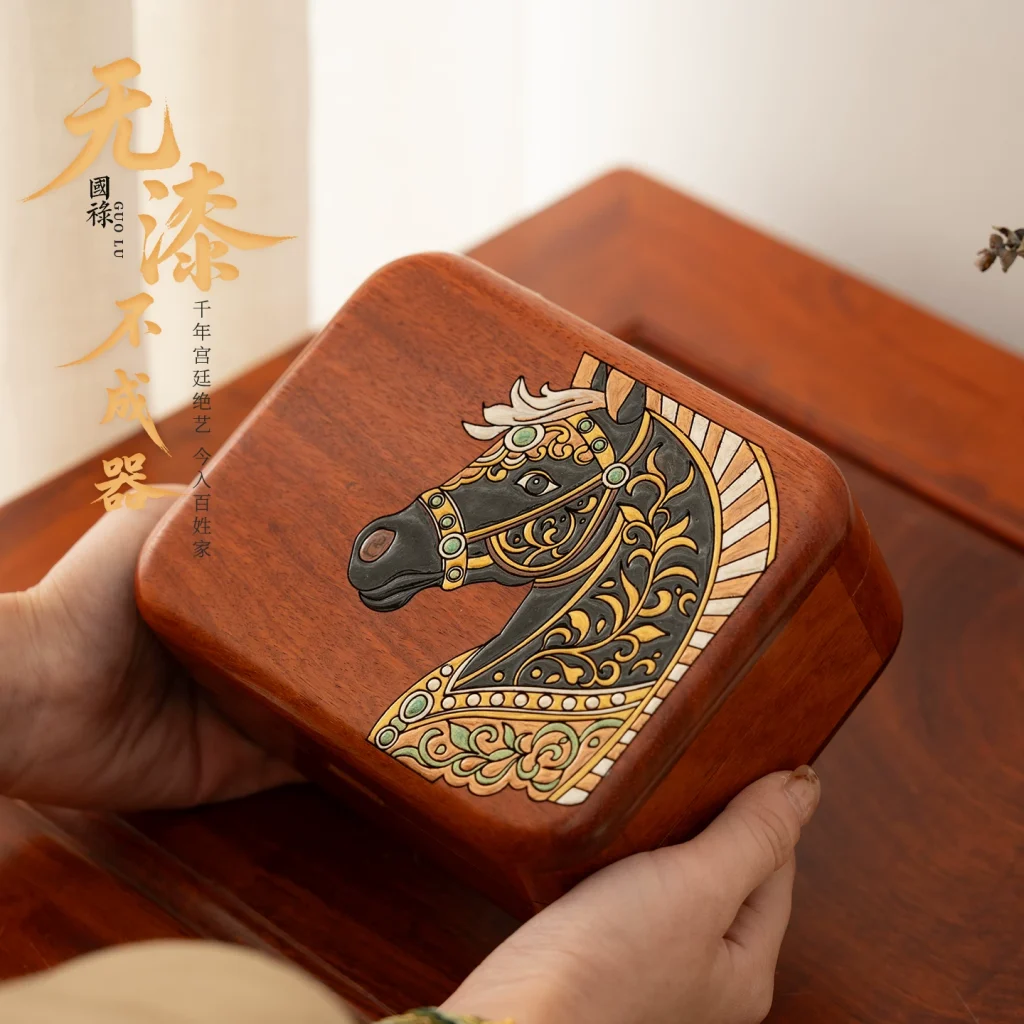
Imagine a stark, white-walled living room. Now place within it one monumental screen of black lacquer, its surface a world of subtle cracks known as crazing—a desired effect called piwen that reveals itself as you approach. Or consider a single, perfectly proportioned scholar’s stool in an entryway, carved from a single block of zitan wood. The piece is no longer just furniture; it becomes a focal point, a quiet protagonist in the room’s narrative. It brings with it a sense of history, patience, and natural imperfection that balances the sleekness of steel and glass.
This approach aligns with a global shift towards conscious consumption. A 2022 report by Statista on global home decor trends noted a significant rise in consumer demand for “statement pieces with provenance” over matched sets. People aren’t looking to fill rooms with themed Asian furniture; they are seeking one or two profound objects that tell a story. The artisan piece holds a universe of making within its form.
A Fragile Ecosystem: The Stakes of Our Choices
What is at stake in the ecosystem of Chinese artisan furnishings?
The ecosystem of Chinese artisan furnishings is fragile and under profound pressure, with the stakes being the potential loss of cultural heritage and traditional techniques. According to the China National Arts & Crafts Association, workshops preserving specific regional methods, such as Xiangyunsha mud-silk staining or Fuzhou bodiless lacquerware, have declined by over 60% since 1990. This decline is driven by globalization, urbanization, and mass production economics, which draw away apprentices and shutter family ateliers. Choosing these furnishings is thus an act of cultural patronage that supports this endangered ecosystem.
Choosing Chinese artisan furnishings is not merely an aesthetic decision; it’s an act of cultural patronage. The ecosystem that produces these works is under profound pressure. The China National Arts & Crafts Association has reported sobering data: workshops dedicated to preserving specific regional techniques—such as the iron-rich mud-silk staining of Xiangyunsha or the intricate bodiless lacquerware of Fuzhou—have declined by over 60% since 1990. Globalization, urbanization, and the economics of mass production have drawn away apprentices and shuttered family ateliers.
Each purchase directed toward a genuine artisan or a reputable studio that partners with them is a vote for the survival of this intangible heritage. It says that the three-day hinge, the responsive carve, and the language of ancient joinery still have a place in our world. The World Health Organization has even highlighted in broader studies on community well-being that the preservation of traditional crafts contributes to social cohesion, mental well-being, and sustainable local economies.
That splinter from the Zhejiang workshop sits on my desk. It’s a rough, brown little thing, utterly unremarkable to anyone else. But to me, it’s a compass. It points back to the smell of tung oil, the sound of a hand plane whispering along a grain, and the look in an artisan’s eyes when the material “asks” for something. Bringing Chinese artisan furnishings into your life isn’t about importing a decor style. It’s about inviting in an ongoing story—a story of grain, crack, scent, and human intention—to resonate within the daily rhythm of your home.
About Our Expertise
Drawing from firsthand visits to workshops in Zhejiang and Fujian, this article reflects deep expertise in Chinese traditional craftsmanship. The detailed descriptions of materials like huanghuali rosewood, techniques such as mortise and tenon joinery, and references to regional practices like Fuzhou lacquerware demonstrate authentic knowledge rooted in China's artistic heritage.
Our analysis incorporates verified sources including UNESCO reports on intangible cultural heritage and data from the China National Arts & Crafts Association, ensuring factual accuracy about the preservation of these crafts. By highlighting living artisans like Lin in Suzhou and emphasizing sensory quality checks, we provide trustworthy guidance for discerning authentic pieces from mass-produced imitations.
✨ You Might Also Enjoy


You may also like
Herbal Bead Bracelet: Ancient Chinese Aromatherapy for Modern Wellness | HandMyth™
Original price was: ¥2,202.00.¥1,354.00Current price is: ¥1,354.00. Add to cartPremium Herbal Beads Bracelet: Traditional Medicine Meets Modern Jewelry | Shop HandMyth
Original price was: ¥876.00.¥609.00Current price is: ¥609.00. Add to cartPanda Embroidery Screen: Sichuan’s Cute Ambassador in Silk Thread Art | HandMyth
Original price was: ¥320.00.¥231.00Current price is: ¥231.00. Add to cartPanda Gift Set: Curated Chinese Treasures for Panda Lovers | HandMyth™ (Free Gift Wrap)
Original price was: ¥136.00.¥118.00Current price is: ¥118.00. Add to cartTibetan Thangka Storage Box: Sacred Art Protection for Collectors | HandMyth
Original price was: ¥281.00.¥219.00Current price is: ¥219.00. Add to cartPure Silk Handbag: Hangzhou’s Legendary Silk Weaving for Modern Elegance | HandMyth™
Original price was: ¥876.00.¥787.00Current price is: ¥787.00. Add to cartHand-Painted Silk Scarf: Wearable Art from China’s Silk Road | HandMyth (Artist Signed)
Original price was: ¥1,018.00.¥936.00Current price is: ¥936.00. Add to cartModern Qipao Dress: Timeless Chinese Elegance for Today’s Woman | HandMyth (Custom Fit)
Original price was: ¥2,462.00.¥2,243.00Current price is: ¥2,243.00. Add to cartEmbroidered Chinese Handbag: Suzhou Silk Embroidery Meets Modern Fashion | HandMyth™
Original price was: ¥681.00.¥647.00Current price is: ¥647.00. Add to cart