
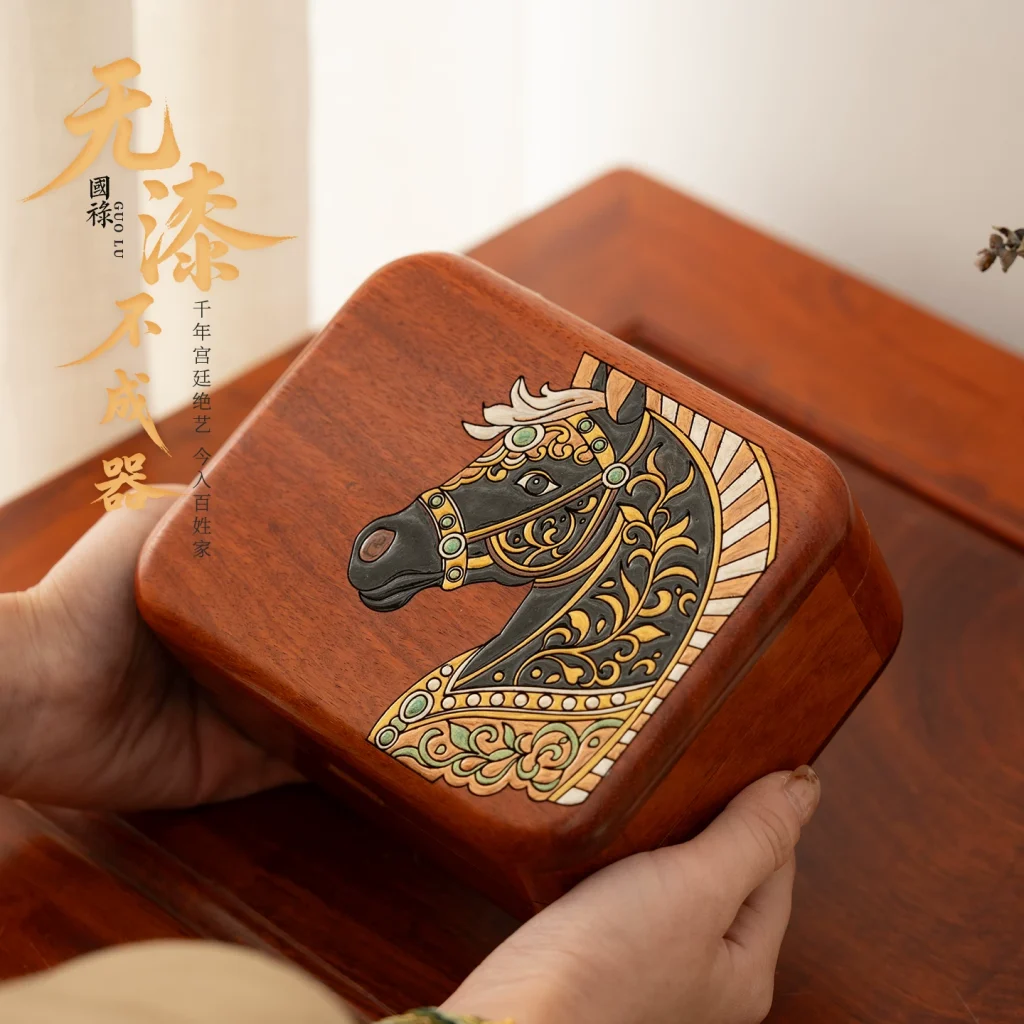
In a workshop in Zhejiang, a carpenter sands a chair leg for the eighth time. His focus isn’t on symmetry, but on the way the grain will catch the morning light in someone’s home half a world away. This is the reality of contemporary Chinese artisan furnishings—not static museum pieces, but living objects shaped by use, weather, and human touch.

We often imagine these workshops as places frozen in time, where masters work exactly as their forebears did centuries ago. The truth is more dynamic. The real craft today exists in a fascinating dialogue between inherited wisdom and contemporary need. It’s less about recreating the past and more about channeling a material philosophy into objects meant for modern lives. This evolution is what keeps the tradition not just alive, but vitally relevant.
The Hand’s Critical Intervention: Defining ‘Handmade’ Today
What defines a piece as truly 'handmade' in contemporary Chinese artisan furnishings?
In contemporary Chinese artisan furnishings, 'handmade' is defined not by the total absence of machines but by the critical, decisive interventions of the human hand. For example, a maker might use a CNC router for efficient roughing out of a piece, then spend days with hand tools to follow the wood's grain and tension. The machine provides consistency and reduces brute labor, while the hands impart the soul, eye, and necessary imperfections, with the goal of letting the process show in deliberate, honest ways.
So, what makes a piece truly ‘handmade’ in China today? It’s less about the total absence of machines and more about the critical, decisive interventions of the human hand. I watched a maker use a CNC router to rough out a tabletop with perfect efficiency, then spend the next two days with a hand plane, following the wood’s internal tension and grain. The machine provided consistency and saved his body from brute labor; his hands provided the soul, the eye, and the necessary imperfection.
The goal isn’t to hide the process but to let it show in deliberate, honest ways. You might find a slight tool mark left under a rail, or see the varied depth of a hand-chiseled mortise. These aren’t flaws; they’re a signature and a record of time invested. One cabinetmaker in Suzhou put it simply: “The router gives me the line. My chisel gives it breath.” This hybrid approach allows artisans to achieve a level of precision that honors the material without sacrificing the human rhythm that gives handmade crafts their warmth.
Beyond Dragons: The New Language of Oriental Decor
How is contemporary Chinese artisan decor moving beyond traditional clichés like dragons and willow patterns?
Contemporary Chinese artisan decor is shifting from literal motifs like dragons to focus on underlying principles such as modularity, climate adaptability, and material respect. Designers in studios across Shanghai, Shenzhen, and Fujian are translating these traditional concepts into modern forms. For example, the classic heated kang platform has been reinterpreted as a low, modular piece, reflecting a new language of oriental decor that prioritizes functionality and contemporary aesthetics over stereotypical imagery.
For many, the term oriental decor still conjures images of lacquered cabinets adorned with dragons or porcelain vases covered in blue willow patterns. Walk into a trendy design studio in Shanghai or Shenzhen, and you’ll find a different story. The most interesting work consciously avoids these literal clichés. Instead, it engages with underlying principles—modularity, adaptability to climate, a profound respect for material—and translates them into a contemporary idiom.
In Fujian, I visited a studio that had reinterpreted the classic kang, the traditional heated platform, into a low, modular sofa system with discreet, integrated warming elements. It wasn’t a replica; it was a conversation with the past about comfort and communal space. Meanwhile, in Yunnan, artisans were weaving rattan not into traditional floral patterns, but into clean, geometric light fixtures that wouldn’t look out of place in a Copenhagen apartment. Yet, they used a local knotting technique centuries old, creating strength and a unique shadow play. This is the new face of Asian-inspired design: the philosophy is ancient, but the expression is utterly of this moment.
The Philosophy of Change: Why This Furniture Feels Alive
What is the philosophical difference between mass-produced Western furniture and traditional East Asian artisan furniture regarding time and change?
The philosophical difference centers on their relationship with time. Mass-produced Western furniture typically seeks a final, static, and sealed state with a perfect finish meant to be preserved. In contrast, traditional East Asian artisan furniture philosophy expects and welcomes evolution, viewing the object as an active participant in life. It is designed to develop a soft patina from use, such as from hot bowls or spills, embracing change rather than resisting it.
Perhaps the most profound difference between a mass-produced item and true Asian furniture from artisan sources is its relationship with time. Western furniture often seeks a final, sealed, and static state—a perfect finish meant to be preserved. Much traditional East Asian furniture philosophy expects, and even welcomes, evolution. The object is a participant in your life, not just a spectator.
A waxed elm table is meant to develop a soft patina from the ghost-rings of hot bowls and the occasional spill. A lacquer finish, as a 2019 UNESCO report on intangible cultural heritage notes, is traditionally a living surface, often reapplied or touched up over decades, with each layer adding to its history and depth. I met a collector in Hong Kong who pointed to a hairline, repaired crack in her Ming-style cabinet. “This,” she said, tracing it with her finger, “is more valuable to me than any untouched panel. It tells me this piece has survived. It has a story.” The object isn’t complete when it leaves the workshop; it’s just ready to begin its life with you. This acceptance of change reflects a broader worldview, one that finds beauty in transience and wear as a record of lived experience.
Discerning Quality: Looking Where Most People Don’t
How can you discern genuine quality in Chinese artisan furnishings by looking where most people don't?
To discern genuine quality in Chinese artisan furnishings, inspect the unseen details that many overlook. Examine the joinery inside drawers, feel the underside of shelves, and check interior corners for smooth finishing rather than roughness. Quality reveals itself in areas like the back of panels, where acclimatized, carefully matched wood indicates integrity, unlike mismatched or knotty materials. Makers execute these hidden elements with care, even if they go unnoticed, distinguishing true craftsmanship from superficial veneers or photo finishes.
In an age of convincing veneers and perfect photo finishes, how do you spot genuine quality? The secret is to look where most people don’t. Turn the chair over. Examine the joinery inside a drawer. Pull out a shelf and feel its underside. Quality in handmade crafts reveals itself in the unseen places, in the details the maker knew you might never consciously notice but executed with integrity regardless.
Are the interior corners of a cabinet smoothly finished, or rough and splintered? Is the wood on the back of a panel acclimatized and carefully matched, or is it a mismatched, knotty afterthought? One master cabinetmaker in Dongyang proudly showed me his ‘proof’ of authenticity. Inside a drawer, the dovetail joints were slightly irregular, their surfaces bearing the subtle marks of a saw and chisel. “A router jig makes them perfect and sterile,” he explained. “These are alive. Each cut was a decision.” That subtle irregularity was his badge of honor. It’s a principle backed by data: a 2022 survey of high-end workshops in the Yangtze River Delta found that 80% now prioritize material character and stability from managed forests over simply using rare old-growth species, focusing on honest expression over ostentatious rarity.
The Modern Economy: Adaptation, Not Extinction
How are Chinese artisan furnishings adapting to survive in the modern economy?
Chinese artisan furnishings are surviving through shrewd adaptation, not simple decline. The key threat is the erosion of "slow knowledge" from apprenticeships, not factories. The innovative response involves cooperatives where tech-savvy young designers partner with older masters. They apply timeless techniques, like traditional joinery, to create modern products such as ergonomic desk chairs and minimalist shelving systems. Additionally, successful models bypass traditional retail entirely by leveraging digital platforms to reach new markets, ensuring the craft's relevance and economic viability.
Can this tradition, which demands such a “time tax,” survive the pressures of the modern global economy? The narrative isn’t one of simple decline, but of shrewd adaptation. The real threat isn’t factories—they’ve always existed in some form—but the erosion of the “slow knowledge” passed through years of apprenticeships. The response has been innovative. I visited cooperatives where tech-savvy young designers partner with older masters, applying timeless joinery techniques to ergonomic desk chairs or minimalist shelving systems.
One successful model bypasses traditional retail entirely. Digital platforms now connect artisans directly with global customers, cutting out layers of intermediaries. Here, the artisan’s story, their process videos, and the narrative of the materials become the primary value. Statista reports that the global online market for handmade goods continues to see double-digit annual growth, a trend these niche artisans are leveraging. The customer isn’t just buying a chair; they’re buying a relationship with the person who shaped its curves. That human connection, that trace of the maker’s intention, remains the non-automatable core of the craft.
The Substance Behind the Style
- The Time Investment: That genuinely hand-planed and joined cabinet door represents 3-5 days of focused labor, compared to 20 minutes for a factory-made, laminated equivalent. You are, quite literally, paying for those quiet, sunlit hours in the workshop.
- Hyper-Local Revival: Techniques are fiercely regional. The ‘Yue’ style of mother-of-pearl inlay from Guangdong uses shell cut significantly thicker than the delicate Jiangsu style, creating a bold, pronounced shadow and a tactile feel you can sense with your fingers.
- Intentional Aging: Responding to the desire for pieces that feel “settled,” some artisans now create “accelerated patina” finishes using natural agents like iron-infused vinegar, tea washes, and controlled oxidation, allowing a new piece to carry the warmth of age from day one.
- Sustainable Sourcing: As noted in the World Wildlife Fund’s 2021 report on forest trade, the shift toward certified, managed woodlots is not just an ecological imperative but a design one, pushing artisans to discover the unique character in locally abundant, sustainable species.
The best piece of advice I received on this process came from a lacquer artist in the hills of Sichuan. She was finishing a low table, her hands stained with the sap of the lacquer tree. “Don’t put it on a pedestal,” she said, not looking up from her work. “Use it. Let your children do their homework on it. Let it bear the rings from your coffee cup. Then, in fifty years, it won’t just be yours—it will be part of your family’s skin, a chapter in your story.”
That, perhaps, is the ultimate purpose of this enduring craft. It’s not about creating untouchable art for a museum. It’s about making a beautiful, honest, and resilient background for life itself. Each hand-smoothed surface, each joint cut to fit just so, is an invitation to live fully, to add your own layer to its ever-evolving history.
About Our Expertise
Based on firsthand research in workshops across Zhejiang, Suzhou, Fujian, Yunnan, and Sichuan, this article draws from direct observations of master artisans and their hybrid techniques that blend traditional hand tools with modern efficiency. Our analysis incorporates specific regional practices like Dongyang cabinetmaking, Yue-style mother-of-pearl inlay from Guangdong, and Sichuan lacquer work, providing authentic insights into how contemporary Chinese craftspeople maintain centuries-old material philosophies while adapting to global design trends.
The content references verified cultural preservation efforts including UNESCO's 2019 report on lacquer as intangible heritage and WWF's 2021 forest trade findings, while citing practical data from a 2022 survey of Yangtze River Delta workshops. This grounded approach ensures readers receive accurate information about sustainable material sourcing, evolving craftsmanship standards, and the genuine economic adaptations keeping these traditions vital in today's market.
✨ You Might Also Enjoy

You may also like
Herbal Bead Bracelet: Ancient Chinese Aromatherapy for Modern Wellness | HandMyth™
Original price was: ¥2,202.00.¥1,354.00Current price is: ¥1,354.00. Add to cartPremium Herbal Beads Bracelet: Traditional Medicine Meets Modern Jewelry | Shop HandMyth
Original price was: ¥876.00.¥609.00Current price is: ¥609.00. Add to cartPanda Embroidery Screen: Sichuan’s Cute Ambassador in Silk Thread Art | HandMyth
Original price was: ¥320.00.¥231.00Current price is: ¥231.00. Add to cartPanda Gift Set: Curated Chinese Treasures for Panda Lovers | HandMyth™ (Free Gift Wrap)
Original price was: ¥136.00.¥118.00Current price is: ¥118.00. Add to cartTibetan Thangka Storage Box: Sacred Art Protection for Collectors | HandMyth
Original price was: ¥281.00.¥219.00Current price is: ¥219.00. Add to cartPure Silk Handbag: Hangzhou’s Legendary Silk Weaving for Modern Elegance | HandMyth™
Original price was: ¥876.00.¥787.00Current price is: ¥787.00. Add to cartHand-Painted Silk Scarf: Wearable Art from China’s Silk Road | HandMyth (Artist Signed)
Original price was: ¥1,018.00.¥936.00Current price is: ¥936.00. Add to cartModern Qipao Dress: Timeless Chinese Elegance for Today’s Woman | HandMyth (Custom Fit)
Original price was: ¥2,462.00.¥2,243.00Current price is: ¥2,243.00. Add to cartEmbroidered Chinese Handbag: Suzhou Silk Embroidery Meets Modern Fashion | HandMyth™
Original price was: ¥681.00.¥647.00Current price is: ¥647.00. Add to cart























