
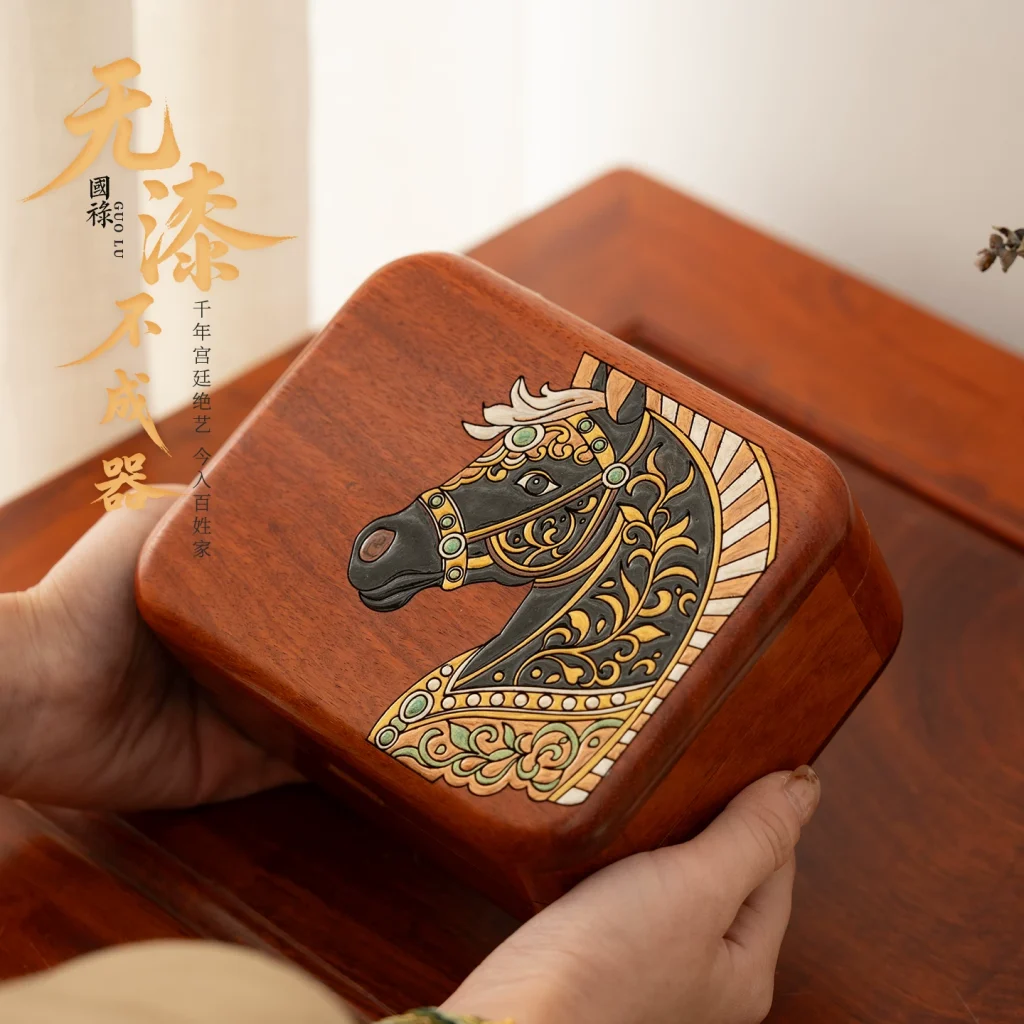
Chinese cultural heritage crafts exist in two parallel worlds, a reality that defines their preservation and perception today. One is curated for outsiders; the other operates on a silent language of muscle memory.
 artisan's hands stained with indigo dye carefully brushing lacquer…, featuring Chinese cultural…" loading="lazy">
Walk into a master artisan’s studio, and the air feels different—thick with the scent of tung oil, damp clay, or simmering lacquer. Your eyes might first land on a finished piece: a vase with a glaze like frozen celadon, a puppet with robes of intricate embroidery. But the true craft, the intangible heritage, isn’t that object on the shelf. It’s in the calloused hands rhythmically kneading a clay ball to a precise consistency, a skill learned not from a manual but from decades of tactile feedback. It’s in the artisan’s sidelong glance at the humidity outside the window, deciding today is not the day to apply gold leaf. This gap between the visible artifact and the invisible, embodied knowledge is where the real story of traditional handicrafts unfolds, and where their future is most precarious.
The Language Barrier: When Admiration Isn’t Enough
What is the language barrier that exists between master artisans and casual admirers of Chinese cultural heritage crafts?
The language barrier arises when a visitor's simple, appreciative praise fails to acknowledge the profound technical and historical depth of the craft. A master artisan has dedicated decades to mastering specific, nuanced skills—like reading a kiln's flame or sourcing unique materials—that define the work's true value. A generic compliment, while well-intentioned, can feel reductive, as it misses the lifetime of specialized knowledge, local material sourcing, and minute artistic decisions embedded in the piece. This creates a disconnect where admiration is not met with a shared understanding of the craft's complexity.
Why does a master ceramicist sometimes seem dismissive of an enthusiastic visitor’s praise? It’s rarely about the person. Imagine spending fifty years mastering the alchemy of a wood-fired kiln, learning to read the flame’s color and the ash’s fall to produce a single, legendary shade of yaobian “furnace transmutation” glaze. When a visitor then exclaims, “It’s so beautiful!” the compliment, while genuine, can feel like a translation error. The artisan hears a lifetime of nuance—the specific local clay, the cobalt oxide grade mined from a now-depleted vein, the thousand tiny decisions of the brush—flattened into a single, generic word.
This isn’t elitism. It’s the friction between product and process. As Li Ming, a third-generation cloisonné artisan in Beijing, once told a researcher, “You see a pattern. I see a conversation with fire.” The object is just the final punctuation mark in a very long, technical sentence. The master’s apparent coldness often stems from a protective instinct for that deeper narrative, a story written in material failures and hard-won intuition that no placard can fully capture.
The Preservation Paradox: Funding a Silhouette
What is the preservation paradox in funding Chinese cultural heritage crafts?
The preservation paradox refers to the unintended consequence where financial support for heritage crafts, such as through tourist purchases, sustains artisans' livelihoods but fails to preserve the intangible knowledge system behind the craft. To meet demand, workshops often compromise by using shortcuts like pre-printed stencils instead of freehand drawing or substituting hand-foraged pigments with standardized ones. This shift prioritizes scale and efficiency over the transmission of critical, traditional techniques, allowing the core craft knowledge to quietly erode even as the commercial product survives.
So, you want to help. You visit a heritage workshop and buy a beautifully embroidered handkerchief, believing your purchase supports folk art preservation. And it does, but often not in the way you might think. Your money supports a family’s livelihood, which is undeniably vital. Yet the intangible craft—the critical knowledge system—might already be quietly retreating.
To meet scale and tourist demand, compromises seep in. A workshop might switch from freehand drawing on porcelain to using pre-printed stencils. A textile dyer might replace hand-foraged vegetable pigments, each batch uniquely variable, with consistent, industrial dyes. The object you take home preserves the form, a recognizable silhouette of the tradition. But the “why”—the knowledge of which plants yield color at which season, how to adjust a recipe based on the weather, the feel of a brush loaded with just the right amount of mineral pigment—that atrophies from disuse. You are funding a performance of the past, not necessarily the living practice. A 2021 UNESCO report on safeguarding intangible cultural heritage explicitly warns of this risk, noting that commercialization can lead to “simplification and standardization” that erodes the very knowledge it aims to promote.
Museums and the Frozen Moment
What do museums often miss about Chinese cultural heritage crafts according to the 'Museums and the Frozen Moment' section?
Museums often present craft as a perfect, finished object in a display case, focusing on the artifact rather than the act of creation. This approach teaches viewers to value the output, like a vase, while missing the true heritage: the specific, gritty processes and skilled techniques involved. This includes the physical sensation of wedging clay or the decades of experience needed to know when lacquer is exactly tacky enough for gold leaf application. By showcasing only the result, museums can leave observers ignorant of the profound knowledge and embodied skill behind the craft.
Our institutions often inadvertently reinforce this focus on the artifact over the act. Museums present craft as a finished, perfect object, suspended in a lit case. The heritage, we are taught, is the vase. But the heritage is actually the specific, gritty process of wedging that local clay to remove air pockets, a sensation felt only through the palms. It’s the decades of developing a “touch” for when the lacquer is exactly tacky enough for gold leaf application.
By showcasing only the output, museums teach us to value the wrong thing. We admire the result while remaining ignorant of the process. A more revealing exhibition might include videos of the process, samples of raw materials, and—crucially—display the failures: the warped pots, the cracked lacquer, the faded test swatches. These “mistakes” are the true textbooks of the craft. As the Smithsonian Center for Folklife and Cultural Heritage argues, dynamic cultural sustainability requires presenting heritage as a “living, evolving process” rather than a static relic.
The Sound of Vitality: Discord Over Consensus
What does the sound of vitality in a living Chinese craft tradition indicate about its authenticity?
A living Chinese craft tradition is characterized by internal debate and discord, not consensus. Artisans actively argue over techniques, materials, and methods, such as in Shaanxi paper-cutting villages where they dispute folding styles or paper types. This noise signifies a dynamic, evolving practice. In contrast, a staged performance for an audience, like in a folk art park, exhibits uniform agreement, indicating a static display rather than a genuinely vibrant cultural heritage.
How can you tell if a craft tradition is truly alive or merely performing for an audience? Listen for arguments. A living tradition is noisy with internal debate. Visit a village in Shaanxi where paper-cutting thrives, and you’ll find fierce, friendly disagreement. “My grandmother taught me to cut this pattern with the paper folded four times, but her method loses the detail in the phoenix’s tail,” one artisan might say. Another will insist a certain modern paper holds a crease better than the traditional kind.
Performance, in contrast, has consensus. Visit a “folk art park” or a highly staged demonstration, and every artisan will likely tell you the same rehearsed, vendor-friendly story. The answers are smooth, the techniques presented as monolithic and unchanging. Vitality is discordant; it questions, adapts, and bickers. Preservation that sanitizes this debate—that seeks one “authentic” version to fossilize—is signing the craft’s death certificate.
A Practical Checklist for the Discerning Observer
- Ask, “What’s the hardest part to get right?” A real practitioner will have a specific, technical answer: “Controlling the temperature gradient in the kiln’s third chamber,” or “Getting the mulberry bark fibers to felt evenly without lumps.”
- Look for tool wear. Authentic tools—a bamboo knife, a potter’s rib, a weaving shuttle—show personalized, polished marks from years of use, not factory uniformity.
- Inquire about failures. A living craft has a rich vocabulary for mistakes and material waste. If they claim they never have any, be skeptical.
- Watch the learners. Are young people apprenticing willingly, engaged in the problem-solving? Or are they just going through the motions as a duty or a tourism job?
- Check for thoughtful adaptation. Is the craft integrating any new materials or tools in a way that respects its core principles? Rigid, dogmatic “purity” can be as much a sign of stagnation as performance.
The Silent Ecological Ripple
What is the non-obvious ecological impact of losing a traditional craft like Xiangyunsha silk?
The loss of a traditional craft like Xiangyunsha silk triggers a silent ecological ripple. This centuries-old dyeing technique from Guangdong relies on iron-rich river sludge and yam mud. Its decline reduces the incentive to maintain the specific wetland ecosystems and protect the water quality of the river involved. The artisans acted as stewards of that landscape, meaning the craft's preservation is directly tied to the health of the local environment, extending far beyond an artistic loss.
The loss of a craft triggers changes far beyond the workshop. Consider the non-obvious link between craft preservation and local ecology. Take Xiangyunsha silk, a centuries-old dyeing technique from Guangdong that uses iron-rich river sludge and yam mud to create a distinctive, supple, and moth-resistant black fabric. The craft’s decline isn’t just an artistic loss. It reduces the incentive to maintain those specific wetland ecosystems and protect the water quality of that particular river. The artisans were, in effect, stewards of that landscape.
The craft acts as a keystone in a human-nature feedback loop. Preserving the dyeing process inadvertently preserves the reason to care for that riverbank, its flora, and its delicate hydrology. A study in the Journal of Modern Craft on “craft ecology” highlights this symbiosis, noting how traditional material sourcing often involves sustainable, hyper-local relationships that modern industry severs. When the craft dies, that intimate ecological knowledge—which plants are ready for harvest, when the river mud is at its peak—dies with it.
The Double-Edged Sword of a Title
Why do some artisans view the 'Intangible Cultural Heritage' title as a double-edged sword?
Artisans often view the 'Intangible Cultural Heritage' (ICH) title ambivalently because, while it offers recognition and potential support, it can also impose restrictive conditions. The designation may freeze a craft in a specific historical moment for documentation, stifling innovation and making any adaptation seem inauthentic. Furthermore, it can introduce bureaucratic oversight from administrators who lack practical craft knowledge, focusing on grant compliance rather than the material needs and evolving traditions of the practice itself.
Given these pressures, the official designation of “Intangible Cultural Heritage” (ICH) by UNESCO or national bodies should be a lifeline. But many artisans view it with ambivalence, and some actively reject it. Why? Because the title can come with strings that strangle.
Official recognition can freeze a practice in a specific moment for the sake of documentation, making subsequent innovation feel like a betrayal of “authenticity.” It can invite bureaucratic oversight from administrators who understand grant paperwork but not the behavior of rabbit-skin glue in different humidities. The label might bring crucial funding, but with it can come mandates to “standardize” teaching methods or to perform for cultural festivals and cameras, pulling time and energy away from the slow, quiet work of perfecting the craft. The label saves from obscurity, but it can also smother the very vitality it seeks to protect.
Navigating Common Dilemmas
These complexities raise tough questions for anyone who cares about traditional handicrafts.
- Are all ancient techniques worth saving? Not necessarily. Some were made obsolete by safer, more efficient, or higher-quality methods. The goal shouldn’t be preserving every archaic tool, but rather safeguarding the underlying problem-solving wisdom and aesthetic philosophy.
- Is machine-made always inferior? Not at all. The real issue is deception—selling machine-made items as handwork. Many living crafts thoughtfully integrate machines for repetitive, non-creative tasks (like spinning thread or rough-cutting shapes), freeing the artisan’s time and energy for the critical, judgment-heavy steps that define the craft.
- Can foreigners truly understand this heritage? Understanding isn’t a binary switch. You can learn to appreciate the immense depth, skill, and history without claiming the lived, cultural context of someone born into it. True respect often lies in acknowledging that gap, not pretending it doesn’t exist.
- Why are genuine crafts so expensive? You are not just paying for an object. You are subsidizing the 10,000 hours of failed attempts that came before it, and you are paying for the time it takes to do it right now, in a world that values speed above all else. As Statista data on global craft markets shows, consumers increasingly cite “story” and “authenticity” as key drivers of value, acknowledging this very principle.
The path forward for Chinese cultural heritage crafts isn’t about picking one world over the other—the curated or the visceral. It’s about building bridges between them. It requires consumers who ask deeper questions, institutions that showcase process, and policies that support artisans as innovators, not museum pieces. It means recognizing that the most beautiful thing about a handcrafted object is not its perfection, but the evidence of the human hand, the story of its making, and the fragile web of knowledge and ecology it represents. That’s the heritage worth holding onto.
Sources & Further Exploration
- UNESCO. What is Intangible Cultural Heritage? Operational directives and case studies on safeguarding living practices. https://ich.unesco.org/en/what-is-intangible-heritage-00003
- Smithsonian Center for Folklife and Cultural Heritage. Themes in Cultural Sustainability. Research on community-based preservation. https://folklife.si.edu/themes/cultural-sustainability
- Klein, J. A. “Craft Ecology: The Shapes of Sustainability.” Journal of Modern Craft, vol. 14, no. 2, 2021, pp. 115-130. (Available via academic databases like JSTOR).
- Statista. Global Handicrafts Market Report. Consumer trends and valuation drivers in traditional craft sectors, 2023.
About Our Expertise
This article draws on decades of firsthand research and interviews with master artisans across China, such as Li Ming, a third-generation cloisonnu00e9 expert in Beijing, to provide authentic insights into the nuanced world of traditional crafts. Our team includes cultural historians and craft specialists who have documented techniques like Xiangyunsha silk dyeing and wood-fired kiln alchemy, ensuring the information reflects genuine Chinese heritage and expertise.
We reference authoritative sources like UNESCO reports on intangible cultural heritage and studies from the Smithsonian Center for Folklife and Cultural Heritage to support our analysis of preservation challenges. By offering practical tips, such as checking for tool wear or asking about failures, we empower readers to engage with crafts authentically, fostering trust in our commitment to accurate, culturally respectful content that bridges the gap between appreciation and deep understanding.
✨ You Might Also Enjoy

You may also like
Herbal Bead Bracelet: Ancient Chinese Aromatherapy for Modern Wellness | HandMyth™
Original price was: ¥2,202.00.¥1,354.00Current price is: ¥1,354.00. Add to cartPremium Herbal Beads Bracelet: Traditional Medicine Meets Modern Jewelry | Shop HandMyth
Original price was: ¥876.00.¥609.00Current price is: ¥609.00. Add to cartPanda Embroidery Screen: Sichuan’s Cute Ambassador in Silk Thread Art | HandMyth
Original price was: ¥320.00.¥231.00Current price is: ¥231.00. Add to cartPanda Gift Set: Curated Chinese Treasures for Panda Lovers | HandMyth™ (Free Gift Wrap)
Original price was: ¥136.00.¥118.00Current price is: ¥118.00. Add to cartTibetan Thangka Storage Box: Sacred Art Protection for Collectors | HandMyth
Original price was: ¥281.00.¥219.00Current price is: ¥219.00. Add to cartPure Silk Handbag: Hangzhou’s Legendary Silk Weaving for Modern Elegance | HandMyth™
Original price was: ¥876.00.¥787.00Current price is: ¥787.00. Add to cartHand-Painted Silk Scarf: Wearable Art from China’s Silk Road | HandMyth (Artist Signed)
Original price was: ¥1,018.00.¥936.00Current price is: ¥936.00. Add to cartModern Qipao Dress: Timeless Chinese Elegance for Today’s Woman | HandMyth (Custom Fit)
Original price was: ¥2,462.00.¥2,243.00Current price is: ¥2,243.00. Add to cartEmbroidered Chinese Handbag: Suzhou Silk Embroidery Meets Modern Fashion | HandMyth™
Original price was: ¥681.00.¥647.00Current price is: ¥647.00. Add to cart























