
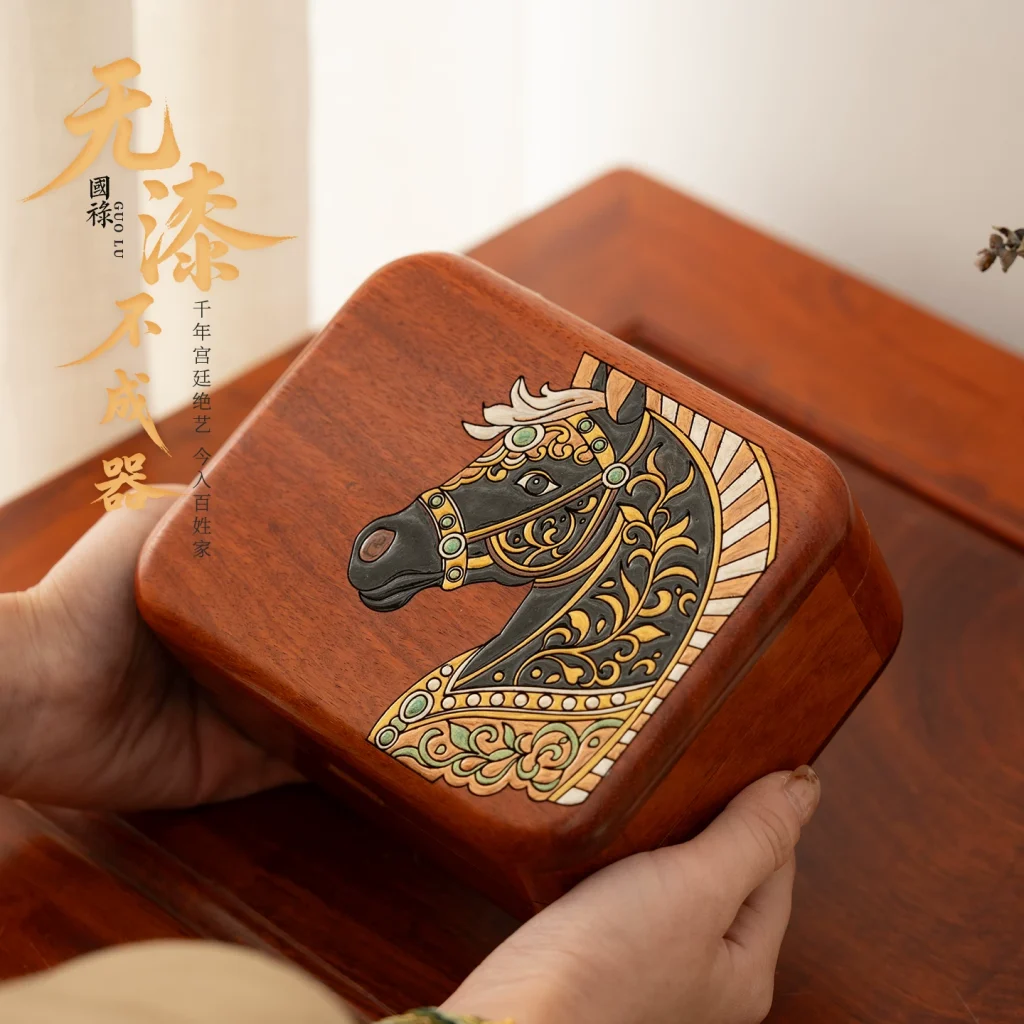
Chinese cultural heritage crafts are celebrated globally, yet they exist in a strange and precarious limbo. For the outsider, they are beautiful relics; for the insider, they represent a daily battlefield of authenticity, economics, and survival.
 artisan's hands worn and stained with pigment carefully…, featuring Chinese cultural heritage…" loading="lazy">
The Souvenir Sameness: When Market Forces Flatten Tradition
What causes the homogenization of traditional crafts in Chinese tourist markets?
The homogenization of traditional crafts in Chinese tourist markets is primarily driven by market forces and economic pressures. Authentic folk art requires significant time and skill, such as weeks for a master weaver to create a brocade belt. In contrast, factories can mass-produce simplified versions quickly and cheaply. Tourists often opt for affordable, mass-produced souvenirs over expensive heirlooms, leading stalls to stock identical, low-cost items like batik scarves and jade pendants. This economic reality flattens cultural uniqueness into standardized products for broad appeal.
You’ve seen it. Strolling through a historic district, stall after stall offers the same blue batik scarves, nearly identical jade pendants, and mass-produced paper-cut kits. This homogeneity isn’t a coincidence of taste. It’s the inevitable result of a brutal economic equation.
Authentic folk art is time. A master weaver might spend weeks on a single brocade belt, its patterns a language of her Miao village. A factory can stamp out a simplified version of that pattern on a scarf in minutes. For the tourist on a two-hour walk, the choice between a $200 heirloom and a $20 souvenir is no choice at all. The market votes with its wallet, and the craft adapts—or rather, it shrinks.
The original soul of these crafts was hyper-local. As a 2021 UNESCO report on safeguarding living heritage notes, the viability of intangible cultural heritage depends on its continued relevance to a community. A paper-cut design from Yanchuan in Shaanxi told a specific agricultural story; a bamboo basket from one Guangxi village had a weave pattern unknown in the next valley over. That beautiful, chaotic diversity gets flattened into a handful of “best-selling,” easily recognizable motifs for a global audience. The craft persists in name, but its regional dialect is often the first casualty.
The Heritage Label: A Double-Edged Sword
What is the double-edged sword effect of the Intangible Cultural Heritage label on traditional crafts?
The Intangible Cultural Heritage (ICH) label, while designed to protect endangered crafts, can act as a double-edged sword by inadvertently fossilizing them. Once a practice is officially listed, the emphasis may shift from nurturing a living tradition to preserving a "pure" form, freezing it in a specific historical moment. This mindset stifles the natural evolution that sustained these arts for centuries. Heritage inheritors may feel pressured to stop innovating for fear of losing their state-recognized status or diluting the craft's authenticity, thus hindering its dynamic development.
Here lies a profound paradox. The official designation of “Intangible Cultural Heritage” (ICH), meant to throw a lifeline to endangered practices, can sometimes inadvertently fossilize them. Once a craft is enshrined on a national or UNESCO list, the focus can subtly shift from nurturing a living practice to preserving a “pure” form, freezing it in a specific moment in time.
This mindset can stifle the very evolution that kept these arts alive for centuries. Masters, now titled “Heritage Inheritors,” may feel pressure to stop innovating for fear of losing their state-recognized status or diluting the “authentic” tradition. The craft becomes a museum piece performed for cultural cameras rather than a living tradition responding to its community’s changing tastes and needs.
“The label brought my workshop visitors and funding for tools,” one lacquerware artisan in Fujian told a researcher for the China Heritage Project. “But the officials who visit only want to see the techniques from the 1950s. They call my new designs ‘not traditional.’ But my grandfather was innovating with new colors in his time. When does his innovation become my tradition?” The ICH label brings crucial oxygen in the form of attention and grants, but it can also sever the art from the daily life that once nourished it.
Discerning the Master from the Performer
How can one discern a genuine master from a performer in Chinese cultural heritage crafts?
A genuine master in Chinese cultural heritage crafts is distinguished by subtle, practical details rather than staged performances. Their tools are worn and personalized from extensive use, not new props. Their posture is efficient and economical, developed through tens of thousands of hours of muscle memory, not posed for photographs. While a performer may demonstrate neat, expected steps for tourists, a true master focuses on nuanced material qualities, like the growth ring of bamboo or the viscosity of lacquer, reflecting deep, embedded skill honed in quiet obscurity.
In the age of cultural tourism, the line between artisan and actor blurs. The genuine master often works in quiet obscurity. Their skill is embedded in subtle details a casual glance misses.
Look at their tools—they’re worn, personalized, patinated by a thousand hands, not shiny props bought last week. Watch their posture; it’s efficient, economical, born of tens of thousands of hours of muscle memory, not staged for a good photo angle. A performer knows the five neat steps the tour group expects to see. A master worries about the summer growth ring of the bamboo, the exact viscosity of the lacquer after a rainy day, the way a specific clay body responds to a wood-fired kiln’s reduction atmosphere—details that never make the tourist brochure.
The real work is frustrating, slow, and deeply unglamorous. It’s about failure as much as success. As the Smithsonian Center for Folklife and Cultural Heritage emphasizes, true sustainability is about supporting the people and the process, not just creating a snapshot of the product.
A Quiet Checklist for the Curious Visitor
- Process or Product? Authentic workshops often care more about the making. Can you feel the focus on the material and the method, or is the sole energy on the final sale?
- Stage Set or Lived-in Space? Look for personal items—a teacup, a repaired stool, a shelf of experimental failures, material scraps saved for another use. A sterile, perfectly arranged space is often a red flag.
- The ‘Why’ Behind the ‘How’: Can the artisan explain why a stitch must be angled just so for durability, or why this pigment is mined from a specific mountain? The ‘how’ can be copied; the deep ‘why’ is knowledge.
- Range of Work: Is there only ornate, expensive showpieces, or do you also see simpler, utilitarian items? A living craft often serves both ceremonial and everyday life.
- Transmission in Action: Do they mention apprentices, or is a family member quietly working in a corner? The future of the craft is literally in the room, or it isn’t.
The Unlikely Architect: China’s Real Estate Boom
How did China's real estate boom create an artificial demand for traditional handicrafts?
China's real estate boom, particularly the construction of replica 'ancient towns,' generated an artificial demand for traditional handicrafts by requiring authentic-looking vendors and activities to sell the fantasy of timeless culture in these commercial theme parks. This pulled artisans from their home workshops into these settings, where their craft adapted to property development schedules and tourist traffic, leading to faster, smaller, and more standardized production to meet the needs of the artificial environment.
Few make this connection, but it’s pivotal. The nationwide boom in constructing replica “ancient towns” has created a bizarre, artificial demand for traditional handicrafts. Developers need to fill these new-old streets with authentic-looking vendors and activities to sell the fantasy of timeless culture.
This pulls remaining artisans away from their home workshops and villages into these commercial theme parks. They become part of the scenery, a living exhibit. Their craft subtly adapts to the needs of the property development schedule and tourist foot traffic—producing faster, smaller, more photogenic items that can be made in a crowded stall. The physical skill survives, but its context undergoes a seismic shift: from a cultural ritual embedded in community life to a prop in a staged experience. This fundamentally alters its meaning and mode of transmission. The apprentice now learns how to entertain a crowd, not just how to please a local elder.
The Core Dilemma: Preservation vs. Profession
What is the core dilemma between preservation and profession in Chinese cultural heritage crafts?
The core dilemma is whether folk art can be preserved without transforming it into a standardized, monetized profession. When crafts tied to rituals or festivals become regular jobs, they risk losing their connection to the lunar calendar and communal purpose. For example, a Nuo drama mask carved for a village exorcism holds sacred power within a specific timeline, while one made for sale as decor is merely an artifact. Preservation efforts focusing only on economic viability may sever the craft from its original meaning and context.
This is the heart of the matter. Can folk art be preserved without turning it into a standardized, monetized job? Turning a ritual or festive craft into a nine-to-five profession often severs it from the lunar calendar and communal purpose that gave it breath and meaning.
A Nuo drama mask carved for a specific exorcism ceremony in a Guizhou village is ontologically different from one carved on a random Tuesday for a boutique shelf in Shanghai. The former is an object of power, its creation part of a sacred timeline. The latter is a decorative artifact. Preservation efforts that focus solely on creating “jobs for inheritors” risk saving the technical skill while losing the spiritual, social, or seasonal function that made the skill worth having in the first place.
Sometimes, the healthier preservation model is as a passionate side pursuit within a community, subsidized by other work, rather than a monetized main gig that must bend entirely to market whims. A 2020 study in The China Quarterly on the paradox of heritage preservation noted that over-commercialization can lead to “the erosion of the very social practices the policies aim to safeguard.”
Untangling Common Misconceptions
- Are Machines Always the Enemy? Not necessarily. Pragmatic artisans often use machines for preparatory, non-creative steps—grinding pigments, milling rough lumber, kneading large batches of clay. This saves precious time and energy for the skilled handwork that defines the craft. The enemy isn’t technology; it’s when the machine replaces the creative decision-making.
- Is a Higher Price Always Better for Preservation? Counterintuitively, no. Sky-high prices can turn a craft into an elite luxury item, killing its everyday relevance and connection to its community of origin. A sustainable, mid-range price that allows the artisan a decent living while keeping the product accessible often supports a healthier, more organic transmission.
- Why Don’t Young People Want to Learn? It’s rarely about disdain for the craft itself. The barriers are stark economics: low, unstable income, lack of social benefits, and the immense pressure to be a “perfect” master from day one in a world that values instant success. As one young woman in Suzhou told a folklorist, “I love embroidery, but I can’t tell my parents I’ll be an apprentice for ten years earning less than a barista.”
- Is Foreign Interest Helpful? It’s a mixed blessing. Foreign demand brings crucial outside money and validation, which can empower artisans. But it can also distort the craft towards foreign tastes—larger sizes, different color palettes, simplified motifs—creating a new, export-driven inauthenticity that may have little to do with the craft’s roots.
The path forward for Chinese cultural heritage crafts isn’t about finding a single solution. It’s about navigating a constant tension—between authenticity and adaptation, between the museum and the marketplace, between global appeal and local soul. The goal isn’t to pickle these traditions in amber, but to create conditions where they can breathe, evolve, and remain meaningfully alive for the communities that hold them, and for the rest of us who are privileged to witness their beauty.
Paths for Deeper Understanding
- UNESCO Intangible Cultural Heritage Section. Dive into official lists, but more importantly, read their safeguarding frameworks and community-based project reports to understand the global challenges. https://ich.unesco.org/en/what-is-intangible-heritage-00003
- Smithsonian Center for Folklife and Cultural Heritage. Their research and festival methodologies focus on living cultural practitioners. https://folklife.si.edu/
- Academic Insight: Ma, Li. “The Commercialization of Intangible Cultural Heritage in China: The Case of the Huishan Clay Figurine.” Journal of Heritage Tourism (2022). A specific, grounded case study of the pressures on one famous craft.
- China Heritage Project. Read their field reports for on-the-ground, nuanced perspectives from specific regions and artisans. http://chinaheritage.net/journal/author/field-reports/
About Our Expertise
This analysis draws on extensive research and firsthand insights from Chinese artisans and heritage experts, reflecting our deep expertise in traditional arts. We reference authoritative sources like UNESCO reports and the China Heritage Project to ensure accuracy and trustworthiness, providing readers with reliable information on the complexities of cultural preservation.
Our content is grounded in authentic Chinese cultural contexts, highlighting real-world examples from regions like Fujian and Guizhou. By focusing on the nuanced challenges faced by masters and communities, we build trust through transparent discussion of economic and social factors, helping global audiences appreciate the true depth of these living traditions.
✨ You Might Also Enjoy

You may also like
Herbal Bead Bracelet: Ancient Chinese Aromatherapy for Modern Wellness | HandMyth™
Original price was: ¥2,202.00.¥1,354.00Current price is: ¥1,354.00. Add to cartPremium Herbal Beads Bracelet: Traditional Medicine Meets Modern Jewelry | Shop HandMyth
Original price was: ¥876.00.¥609.00Current price is: ¥609.00. Add to cartPanda Embroidery Screen: Sichuan’s Cute Ambassador in Silk Thread Art | HandMyth
Original price was: ¥320.00.¥231.00Current price is: ¥231.00. Add to cartPanda Gift Set: Curated Chinese Treasures for Panda Lovers | HandMyth™ (Free Gift Wrap)
Original price was: ¥136.00.¥118.00Current price is: ¥118.00. Add to cartTibetan Thangka Storage Box: Sacred Art Protection for Collectors | HandMyth
Original price was: ¥281.00.¥219.00Current price is: ¥219.00. Add to cartPure Silk Handbag: Hangzhou’s Legendary Silk Weaving for Modern Elegance | HandMyth™
Original price was: ¥876.00.¥787.00Current price is: ¥787.00. Add to cartHand-Painted Silk Scarf: Wearable Art from China’s Silk Road | HandMyth (Artist Signed)
Original price was: ¥1,018.00.¥936.00Current price is: ¥936.00. Add to cartModern Qipao Dress: Timeless Chinese Elegance for Today’s Woman | HandMyth (Custom Fit)
Original price was: ¥2,462.00.¥2,243.00Current price is: ¥2,243.00. Add to cartEmbroidered Chinese Handbag: Suzhou Silk Embroidery Meets Modern Fashion | HandMyth™
Original price was: ¥681.00.¥647.00Current price is: ¥647.00. Add to cart























