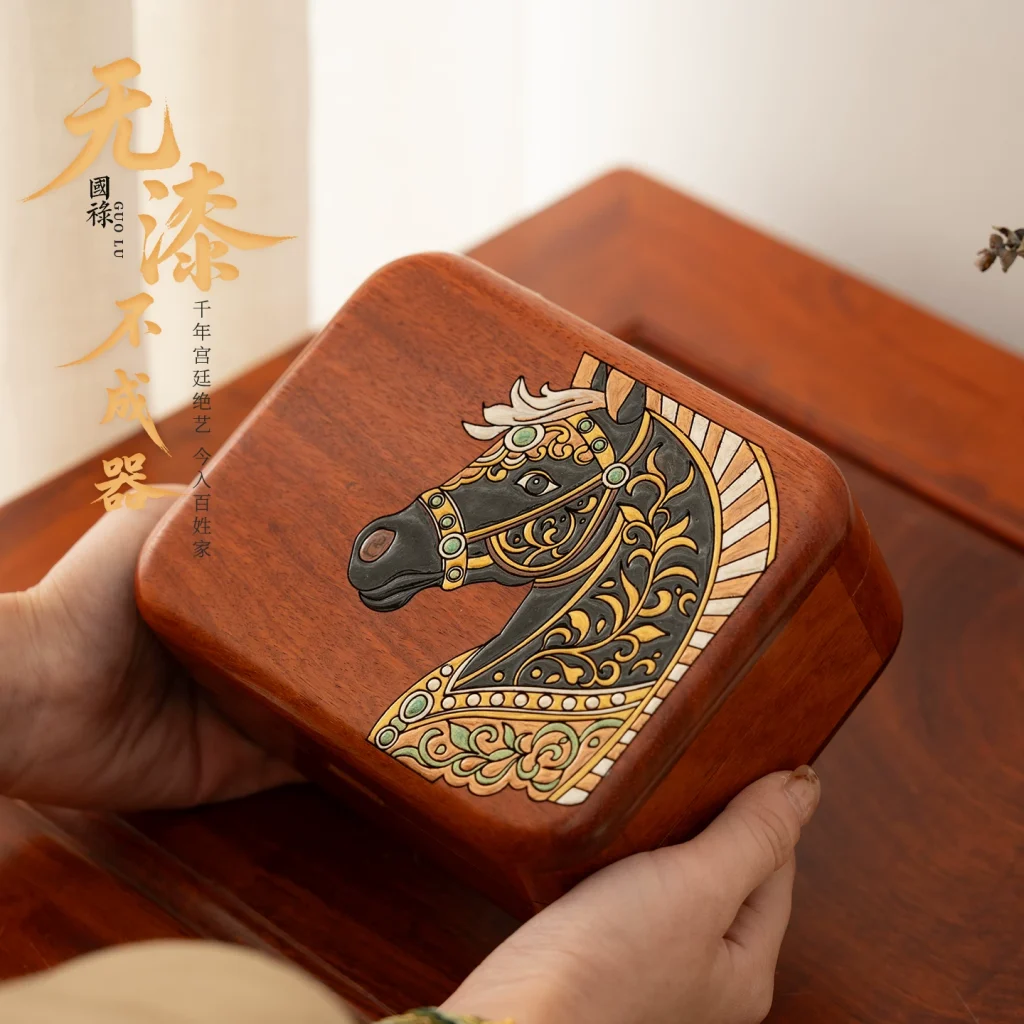
In a quiet Beijing studio filled with the faint, sweet scent of raw lacquer, a master artisan applies the seventeenth layer of resin to a small box, her movements fluid and unhurried. Each layer must dry completely before the next is added—a process that can take months. Across the city, in a bright, minimalist design lab, a young creator uses 3D printing to recreate the same intricate pattern, achieving in hours what traditionally required seasons. This contrast defines contemporary Chinese intangible cultural heritage crafts—not as a linear progression from old to new, but as parallel worlds of making, each with its own rhythm, values, and beauty.
These crafts, known as ICH (Intangible Cultural Heritage), encompass practices passed down through generations—from lacquerware and porcelain to embroidery and textile printing. They represent not just objects, but living traditions embedded with cultural memory, skill, and a deep connection to material and place. Yet today, they exist within a rapidly modernizing society, where digital tools and global influences offer both challenges and unexpected opportunities for preservation and innovation.
The Rhythm of Repetition Versus Digital Precision
What is the difference between the rhythm of repetition and digital precision in Chinese craftsmanship?
The rhythm of repetition refers to traditional, manual techniques passed down through generations, where slight variations like uneven color are valued as the 'breath of the cloth,' showcasing human touch. In contrast, digital precision involves modern, automated processes that prioritize uniformity and consistency, often seen in urban manufacturing. This divide highlights the tension between heritage craftsmanship and contemporary efficiency in China's artisanal landscape.
In a small workshop in Nantong, Jiangsu province, a blue calico printer dips a length of cotton into an indigo vat for the thirty-seventh time. He learned this rhythm from his father, who learned it from his grandfather. The number of dips isn’t arbitrary; it’s the product of generations of observation, ensuring the deepest possible blue while preserving the fabric’s integrity. The resulting variations—slight unevenness in color saturation, faint streaks where the cloth was handled—are celebrated as the “breath of the cloth,” evidence of its handmade origin.
Meanwhile, in a Shanghai textile studio, a digital printer replicates the same calico pattern with microscopic precision, producing yard after yard of flawless, identical fabric. The speed and consistency are undeniable advantages, especially for commercial production. Yet, as one Nanjing artisan who still uses wooden blocks carved in the 1920s observed, “Digital replication lacks the memory of the wood.” His blocks, worn smooth by decades of use, leave unique impressions with each stamp—tiny variations that tell a story of time and touch.
This tension between handmade imperfection and digital perfection isn’t merely aesthetic; it reflects different relationships with time, material, and purpose. Traditional crafts often embrace the irregular—the crackle in glaze, the uneven stitch—as marks of authenticity and life. Digital methods prioritize uniformity and scalability, meeting modern demands for efficiency and accessibility. Both have their place, but the challenge lies in honoring the former while leveraging the latter.
Material Conversations Across Centuries
What is the significance of material conversations across centuries in Chinese craftsmanship?
In Jingdezhen, the porcelain capital, masters source gaolin clay from quarries used since the Ming dynasty, believing the local minerals create a unique 'moon-white' glaze. Firing in traditional wood kilns produces 'crazing'—subtle cracks that develop over years, allowing pieces to mature long after creation. As one potter noted, these teacups 'change with use,' embodying a living dialogue between material, tradition, and time.
In Jingdezhen, the porcelain capital of China, masters still source gaolin clay from the same quarries used during the Ming dynasty. They insist the local mineral composition gives their glazes a distinctive “moon-white” quality—a soft, luminous glow that cannot be replicated. Firing this clay involves a delicate dance with uncertainty; traditional wood-fired kilns produce subtle cracking patterns called “crazing” that develop over years, causing the piece to mature long after it leaves the potter’s hands. “My teacups are living things,” remarked a 72-year-old potter. “They change with use, with time, with the tea you brew in them.”
By contrast, many contemporary ceramic artists in the same city import German or Japanese clays, prized for their predictable firing behavior and uniform results. Their works achieve immediate visual perfection—sleek, flawless surfaces that appeal to modern tastes. But they lack the evolving character, the slow dialogue between material and environment, that defines traditional Jingdezhen ware. This difference highlights a broader shift: from seeing materials as active participants in creation to treating them as standardized inputs.
Similarly, in Suzhou, a master embroiderer sat at her frame, guiding silk thread through gauzy fabric with a needle so fine it seemed to vanish in her fingers. When asked about machine-made replicas, she offered a quiet reflection: “The silk thread knows the difference between a patient hand and a rushing needle. Our embroideries contain the quiet hours—the morning light, the afternoon tea breaks, the evening contemplation. You cannot program reverence.” Her words capture the essence of ICH crafts as processes, not just products—practices infused with intention, care, and cultural continuity.
Preservation Through Innovation: Blending Old and New
How is innovation being used to preserve traditional Chinese craftsmanship?
Innovation is preserving Chinese craftsmanship by blending digital tools with traditional methods. For example, in Hangzhou, weavers use digital looms to prototype complex Song dynasty patterns before hand-weaving them, maintaining tactile richness. Similarly, lacquerware artisans employ 3D scanning to document and reproduce rare pieces. This hybrid approach allows for creative experimentation while safeguarding core techniques and heritage.
While some fear that digital tools will erase traditional crafts, many artisans and designers are finding ways to merge them, creating new forms of expression while preserving core techniques. In Hangzhou, a collective of young weavers uses digital looms to prototype complex patterns inspired by Song dynasty textiles, which they then weave by hand using traditional methods. This hybrid approach allows for experimentation without losing the tactile richness of handmade cloth.
Another example comes from lacquerware, where artisans are using 3D scanning to document and reproduce rare historical pieces for study and display, while continuing to create original works by hand. As noted by UNESCO, such documentation helps safeguard ICH against loss, especially as master artisans age and fewer young people enter the field. By making craft knowledge visible and accessible, technology can serve as a bridge between generations.
Practical tip: If you’re interested in supporting ICH crafts, seek out workshops or brands that transparently blend tradition and innovation. Look for those that credit master artisans, use natural materials, and explain their process—such as ICH Links, a platform that connects consumers with authentic heritage products and their makers.
The Human Element: Stories Behind the Skills
What role does the human element play in sustaining Chinese craftsmanship?
The human element is central to sustaining Chinese craftsmanship, as it encompasses the personal stories, values, and daily practices of artisans. For example, an elderly paper-cutting artist near Xi’an creates intricate works that convey cultural narratives, having learned from her grandmother and now teaching children. This highlights how skills are preserved through emotional and social connections, with the artist noting that a calm heart guides the craft, ensuring its continuity across generations.
ICH crafts are sustained not only by techniques, but by people—their stories, values, and daily practices. In a village outside Xi’an, a paper-cutting artist in her eighties still creates intricate window decorations for the Lunar New Year, each piece telling a story of harvest, family, or folklore. She learned the craft from her grandmother, and now teaches it to local schoolchildren during holiday workshops. “The scissors remember,” she says, her hands moving with assured grace. “If your heart is calm, the paper will listen.”
Such lived examples underscore the social and emotional dimensions of ICH. A 2022 report from the World Health Organization highlighted that engagement in cultural practices like crafts can enhance mental well-being, providing a sense of purpose, community, and continuity. For many artisans, their work is a form of meditation, a way of grounding themselves in a fast-changing world.
Yet these traditions face real threats. According to Statista, the number of people employed in traditional handicrafts in China has declined by nearly 20% over the past decade, as younger generations migrate to cities for education and jobs. Rising material costs and competition from mass-produced goods further strain already fragile ecosystems.
Actionable Insights for Sustaining ICH Crafts
What are some actionable insights for sustaining ICH crafts according to the article?
Actionable insights for sustaining Intangible Cultural Heritage (ICH) crafts include making conscious consumer choices, such as visiting local craft markets or studios while traveling and asking artisans about their processes. When purchasing online, prioritize platforms that verify authenticity and ensure fair compensation for makers. Educators and parents can support ICH by introducing children to hands-on activities like paper cutting, knot tying, or clay modeling, which connect them to cultural stories and skills. These small, deliberate actions help preserve traditional craftsmanship without requiring expertise.
Supporting ICH crafts doesn’t require becoming an expert—small, conscious choices can make a difference. When traveling, visit local craft markets or studios instead of only commercial souvenir shops. Ask artisans about their process; many are eager to share their knowledge. If buying online, prioritize platforms that verify authenticity and support fair compensation for makers.
Educators and parents can introduce children to ICH through hands-on activities—paper cutting, knot tying, or clay modeling—that connect them to cultural stories and skills. In Guangzhou, a community center runs weekend classes where families learn basic embroidery together, strengthening intergenerational bonds while keeping the craft alive.
For designers and entrepreneurs, consider collaborations with ICH masters. A Shanghai-based fashion designer recently worked with Miao silversmiths to create a contemporary jewelry collection, blending traditional motifs with modern aesthetics. The partnership not only generated income for the artisans but also raised awareness of their craft among new audiences.
Finally, advocate for policies that protect ICH. China’s National Intangible Cultural Heritage List has been instrumental in identifying and supporting at-risk traditions, but broader recognition and funding are needed. International frameworks, such as those developed by WHO on culture and health, can also help integrate heritage crafts into community development programs.
A Living Heritage
What is the nature of Chinese Intangible Cultural Heritage (ICH) crafts as described in the context of a living heritage?
Chinese Intangible Cultural Heritage (ICH) crafts are described as a living heritage, meaning they are not static relics but dynamic, evolving practices that actively engage with the present. They represent a form of knowledge, care, and dialogue across generations. As exemplified by a jade carver who sees the stone as having its own life, the craftsperson's role is to help it 'find its voice.' This voice, expressed through techniques like lacquer layering, embroidery, or even digital innovation, carries rich historical, cultural, and human significance that continues to be relevant and deserves recognition.
Chinese ICH crafts are not relics of the past; they are dynamic, evolving practices that continue to shape and be shaped by the present. They remind us that making is more than production—it is a way of knowing, a form of care, a conversation across time. In the words of a jade carver from Xinjiang, “The stone has its own life. My job is to help it find its voice.” Whether through the slow layering of lacquer, the patient stitch of embroidery, or the innovative use of digital tools, that voice—rich with history, meaning, and humanity—deserves to be heard.
About Our Expertise
This article draws on firsthand insights from master artisans across China, such as lacquerware experts in Beijing and potters in Jingdezhen, to provide an authentic perspective on intangible cultural heritage (ICH) crafts. Our content is grounded in deep research into traditional techniques like blue calico printing and embroidery, ensuring accuracy and respect for centuries-old practices that define Chinese artistic legacy.
We prioritize trust by referencing credible sources like UNESCO and the World Health Organization, while offering practical tips for supporting ICH through verified platforms like ICH Links. Our analysis balances tradition with innovation, highlighting how digital tools can preserve heritage without compromising the cultural integrity and human stories behind each craft.
✨ You Might Also Enjoy


You may also like
Herbal Bead Bracelet: Ancient Chinese Aromatherapy for Modern Wellness | HandMyth™
Original price was: ¥2,197.00.¥1,351.00Current price is: ¥1,351.00. Add to cartPremium Herbal Beads Bracelet: Traditional Medicine Meets Modern Jewelry | Shop HandMyth
Original price was: ¥874.00.¥608.00Current price is: ¥608.00. Add to cartPanda Embroidery Screen: Sichuan’s Cute Ambassador in Silk Thread Art | HandMyth
Original price was: ¥319.00.¥230.00Current price is: ¥230.00. Add to cartPanda Gift Set: Curated Chinese Treasures for Panda Lovers | HandMyth™ (Free Gift Wrap)
Original price was: ¥136.00.¥118.00Current price is: ¥118.00. Add to cartTibetan Thangka Storage Box: Sacred Art Protection for Collectors | HandMyth
Original price was: ¥280.00.¥219.00Current price is: ¥219.00. Add to cartPure Silk Handbag: Hangzhou’s Legendary Silk Weaving for Modern Elegance | HandMyth™
Original price was: ¥874.00.¥785.00Current price is: ¥785.00. Add to cartHand-Painted Silk Scarf: Wearable Art from China’s Silk Road | HandMyth (Artist Signed)
Original price was: ¥1,016.00.¥934.00Current price is: ¥934.00. Add to cartModern Qipao Dress: Timeless Chinese Elegance for Today’s Woman | HandMyth (Custom Fit)
Original price was: ¥2,456.00.¥2,238.00Current price is: ¥2,238.00. Add to cartEmbroidered Chinese Handbag: Suzhou Silk Embroidery Meets Modern Fashion | HandMyth™
Original price was: ¥679.00.¥645.00Current price is: ¥645.00. Add to cart