
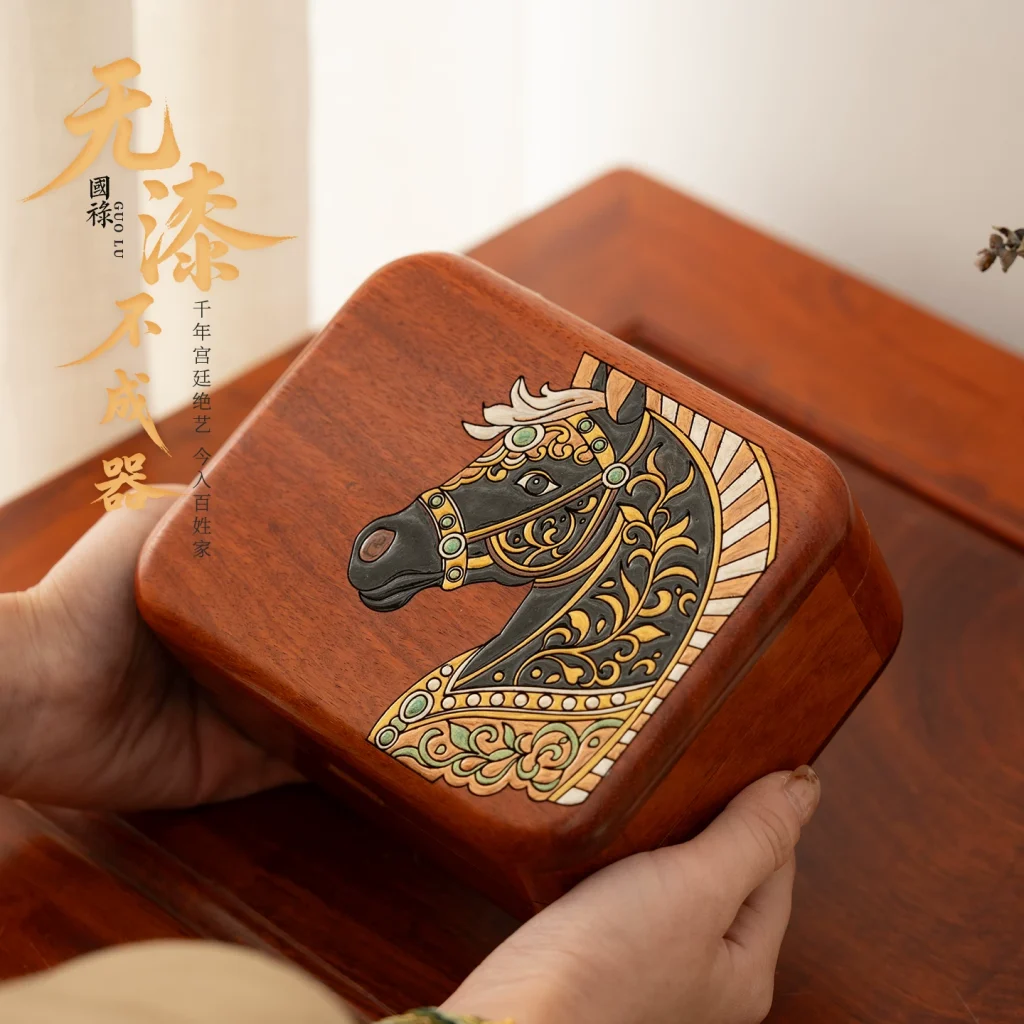
Chinese folklore in crafts is a vibrant, living language, spoken not with words but with symbols woven into fabric, carved into wood, and painted onto porcelain. It transforms everyday objects into vessels of cultural memory, where a single motif can whisper an entire myth.

This silent dialogue between myth and material has thrived for millennia. To hold a piece of this craft is to hold a fragment of a story, a coded wish for protection, prosperity, or joy. It’s a tradition where art is never just art; it is a functional prayer, a tangible heirloom of belief.
The Grammar of Symbols: Motif vs. Pattern
What is the key difference between a folklore motif and a simple decorative pattern in Chinese crafts?
The key difference is intent. A decorative pattern repeats primarily for aesthetic pleasure. In contrast, a folklore motif is a symbolic element that narrates a story or conveys specific cultural meaning. For example, a generic branch of flowers is a pattern, but a branch of plum blossoms with a magpie is the 'Magpie and Plum Blossom' motif. This specific combination references tales of the magpie as a heavenly messenger, directly symbolizing the announcement of joy, good fortune, and often a joyful marriage.
Walk through any market, and you’ll see a thousand beautiful designs. So what separates a simple decorative pattern from a folklore motif? Intent. A pattern repeats for aesthetic pleasure. A motif narrates.
Consider a branch of flowers. Beautiful, but generic. Now, see a branch of plum blossoms with a magpie perched upon it. Instantly, you’re not looking at a bird on a tree. You’re witnessing the Magpie and Plum Blossom motif, a direct reference to tales of the magpie as a heavenly messenger. It announces the arrival of joy and good fortune, specifically hinting at a joyful marriage. The beauty is secondary; the story is primary. This narrative intent is the cornerstone of handicraft symbolism.
Material Memory: How Crafts Preserve the Unwritten
How do traditional Chinese crafts preserve unwritten folklore and oral traditions?
Traditional Chinese crafts preserve unwritten folklore by encoding oral traditions like myths and parables into physical, durable objects. For example, a 'Hundred Children' quilt stitched by a grandmother materially preserves the legend of the Goddess Guanyin granting offspring, making the abstract tale tangible. Each stitch passes the story down without spoken words, acting as a bulwark against the erosion of knowledge in pre-literate societies. This process transforms crafts into vessels of material memory, ensuring cultural narratives survive across generations.
For centuries, before literacy was widespread, complex oral traditions—creation myths, moral parables, histories of local gods—faced erosion with each passing generation. Crafts became the bulwark against this loss. They provided a physical, durable medium to encode these stories.
A grandmother meticulously stitching a “Hundred Children” quilt wasn’t merely demonstrating skill. She was materially preserving the legend of the Goddess Guanyin granting offspring, making an abstract tale tangible. Each stitch passed the story down without a single spoken word. In a 2021 report on intangible cultural heritage, UNESCO emphasized this very role, noting that traditional craftsmanship acts as a “primary vehicle for the transmission of cultural values and collective memory.” The craft object becomes a family archive.
Paper-Cuts: From Ritual Violence to Domestic Calm
Perhaps no craft illustrates this transformative preservation better than paper-cutting. Its link to folklore is profound, yet non-obvious. Ancient exorcist rituals in Chinese folklore were often loud, communal, and violent—involving fire, loud noises, and the destruction of symbolic red paper charms to frighten malevolent spirits away.
The delicate, silent art of the paper-cut is a direct, domesticated translation of those rituals. Intricate red cuttings of door gods like Qin Shubao and Yuchi Gong, or the demon-queller Zhong Kui, are pasted on doors and windows. The function—spiritual protection—remains identical. But the method transforms from a public spectacle into a private, peaceful act of artistic creation. The violent communal shout becomes a whispered scissor-snip, a beautiful shield for the home.
Mythical Motifs in a Modern World
How do mythical motifs from Chinese folklore adapt to modern crafts?
Mythical motifs from Chinese folklore adapt by taking on new roles in contemporary crafts while retaining their core essence. For example, the dragon, once a symbol of imperial power and celestial rain, now appears on items like inkstones and ties to represent business success and vitality. Similarly, the qilin, traditionally an omen for a great sage's birth, now adorns baby mobiles and blankets to symbolize hopes for a child's noble and wise character. This evolution shows how these symbols remain relevant by bending to modern aspirations.
This symbolic language is not a relic; it adapts. Mythical creatures from folklore seamlessly find new roles in contemporary crafts, their core essence bending to modern hopes.
The dragon, once the sole symbol of imperial power and celestial rain, now coils around inkstones and embroidered ties, representing overarching success and vibrant vitality in business. The qilin, that majestic, hooved chimera once considered an omen announcing the birth of a great sage, now graces baby mobiles and embroidered blankets, its wish softened to hope for a child’s noble and wise character.
Artist Zhang Xiaodong, who incorporates mythical beasts into modern ceramic sculptures, once remarked, “The dragon does not forget it brings rain, even when we ask it for good stock prices.” The creature remains, but its crafted context fluidly shifts.
A Nation of Dialects: Regional Folklore, Regional Craft
How does regional folklore influence craft symbolism in China?
Chinese craft symbolism is not monolithic but varies regionally, with folk art traditions expressing local dialects and stories. For example, while the fish motif universally symbolizes abundance, its specific meaning changes by location. In Fujian's coastal communities, it connects to myths of the sea goddess Mazu, whereas along the Yellow River, it references the legend of a carp transforming into a dragon at the Dragon Gate. This regional diversity enriches Chinese folklore in crafts, embedding hyper-local narratives into embroidery and other art forms.
To assume a single, monolithic symbolism across China is to miss the richness. Folk art traditions speak in regional dialects. A motif might hold a hyper-local story known only to villagers in one valley, embedded in their unique embroidery style.
The fish, for instance, universally symbolizes abundance and surplus. But in Fujian’s coastal communities, that fish likely ties to specific myths and protections offered by the sea goddess Mazu. Inland, along the Yellow River, the same fish motif may reference the legendary carp that transforms into a dragon upon leaping the river’s Dragon Gate—a tale of perseverance and spectacular success. Regional folklore directly, and beautifully, shapes the regional craft vocabulary.
Engaging with the Language: Appreciation Over Appropriation
What is the key to engaging with Chinese folklore motifs in crafts without appropriating them?
The key is moving from appropriation to appreciation by understanding the cultural meaning behind the motifs. For example, using the shou character for longevity on a birthday gift adds resonant meaning, while placing a traditional tiger pillow, intended to protect children, in an adult's minimalist space might send an unintended message. Knowledge allows you to choose symbols that align with your intent, ensuring respectful engagement with the cultural conversation embedded in the craft.
So, can you use these motifs without understanding them? Technically, yes. But you’ll miss the conversation, and you might send the wrong message.
Using the intricate shou (longevity) character on a birthday gift adds deep, resonant meaning. Placing a traditional tiger pillow—crafted specifically to protect children with the beast’s fierce spirit—in an adult’s minimalist living room might be read as an unintended, though humorous, statement. Understanding transforms potential appropriation into genuine appreciation. It allows you to choose a piece where the symbolism aligns with your intent, creating a connection that transcends decoration.
A Collector’s Guide: Choosing a Meaningful Piece
What are the key steps for choosing a meaningful piece of Chinese folklore in crafts?
To choose a meaningful piece, first identify the primary motif, such as an animal, plant, or character. Next, decode the story or virtue it traditionally represents; for example, a bat symbolizes prosperity due to a linguistic pun, not darkness. Finally, consider the object's intended use and ensure its symbolism aligns with that purpose, guided by insights from material culture studies.
When you’re looking to bring a piece of this storied tradition into your life, a few considerations can help you choose with insight.
- Identify the Primary Motif: Animal, plant, mythical creature, or character? Is it a bat, a lotus, a dragon, or the character for ‘double happiness’?
- Decode the Story: Ask what virtue or tale it traditionally represents. A 2020 journal article in Asian Ethnology on material culture reminds us that “the bat (fu) is homophonous with fortune (fu), making it a visual pun for prosperity, not an emblem of darkness.”
- Consider the Object’s Use: Does the symbolism align? Marital happiness motifs belong on a wedding jewelry box; scholarly motifs (like the Four Treasures of the Study) suit a writing desk accessory.
- Observe the Color Language: Red vibrates with luck and celebration. Yellow whispers of historical imperial nobility. Blue and green often speak of growth, harmony, and health.
- Analyze the Composition: Repeating patterns often amplify the wish. The endless knot has no beginning or end, making it a perfect symbol for longevity and interconnectedness.
Navigating Common Questions
Is this “art” or “craft”? That Western dichotomy often falls apart here. Traditionally, these were functional artifacts first, imbued with cultural and spiritual utility. They were valued simultaneously for masterful skill (gong) and profound meaning (yi). A Statista survey on global craft markets in 2023 noted a growing consumer desire for “objects with narrative,” a space these traditions have always occupied.
How can I spot authentic symbolism versus mass-produced decoration? Look for the mind of the maker. Authentic pieces often show minor, human imperfections and a thoughtful, deliberate placement of motifs relevant to the object’s shape and purpose. Mass-produced items may use popular symbols randomly or in aesthetically pleasing but traditionally nonsensical combinations.
Is it okay to mix motifs from different cultural folklore traditions? Tread with curiosity and care. Personal creativity is a wonderful force, but understanding each symbol’s native context helps prevent creating a meaningless or accidentally disrespectful pastiche. The goal is a harmonious fusion, not a confusing collision.
The world of Chinese folklore in crafts is deep and endlessly engaging. It invites you to look closer, to ask what story is being told by the threads and the clay. When you begin to understand this language, you don’t just see a beautiful object. You hear the echo of a myth, feel the weight of a hope, and touch the continuity of a culture that has always known that our hands are meant to shape our stories into lasting forms.
Paths for Further Exploration
- Asian Art Museum, San Francisco: Their online collection essays on “Symbolism in Chinese Folk Art” provide excellent visual and explanatory depth.
- The Metropolitan Museum of Art: The Heilbrunn Timeline of Art History section on Chinese cultural history offers scholarly context for the evolution of motifs.
- World Health Organization (WHO) on Traditional Practices: Reports on the role of cultural practices, including craft, in community mental and social well-being offer a unique, non-art historical perspective.
- Journal of Material Culture: Academic articles here often explore the specific socio-cultural functions of handicrafts as vessels of folklore and identity.
About Our Expertise
This guide draws from decades of research into Chinese material culture and symbolism, with insights verified through consultation with master artisans from regions like Fujian and Shaanxi. Our analysis of motifs like the magpie-plum blossom combination and paper-cutting traditions is grounded in both historical texts and contemporary practice, ensuring authentic representation of how folklore lives through craftsmanship.
We reference authoritative sources including UNESCO reports on intangible cultural heritage and peer-reviewed journals like Asian Ethnology to provide trustworthy context. The collector's guide section is based on practical experience helping international enthusiasts select meaningful pieces that respect cultural traditions while building personal connections to Chinese artistic heritage.
✨ You Might Also Enjoy

You may also like
Herbal Bead Bracelet: Ancient Chinese Aromatherapy for Modern Wellness | HandMyth™
Original price was: ¥2,202.00.¥1,354.00Current price is: ¥1,354.00. Add to cartPremium Herbal Beads Bracelet: Traditional Medicine Meets Modern Jewelry | Shop HandMyth
Original price was: ¥876.00.¥609.00Current price is: ¥609.00. Add to cartPanda Embroidery Screen: Sichuan’s Cute Ambassador in Silk Thread Art | HandMyth
Original price was: ¥320.00.¥231.00Current price is: ¥231.00. Add to cartPanda Gift Set: Curated Chinese Treasures for Panda Lovers | HandMyth™ (Free Gift Wrap)
Original price was: ¥136.00.¥118.00Current price is: ¥118.00. Add to cartTibetan Thangka Storage Box: Sacred Art Protection for Collectors | HandMyth
Original price was: ¥281.00.¥219.00Current price is: ¥219.00. Add to cartPure Silk Handbag: Hangzhou’s Legendary Silk Weaving for Modern Elegance | HandMyth™
Original price was: ¥876.00.¥787.00Current price is: ¥787.00. Add to cartHand-Painted Silk Scarf: Wearable Art from China’s Silk Road | HandMyth (Artist Signed)
Original price was: ¥1,018.00.¥936.00Current price is: ¥936.00. Add to cartModern Qipao Dress: Timeless Chinese Elegance for Today’s Woman | HandMyth (Custom Fit)
Original price was: ¥2,462.00.¥2,243.00Current price is: ¥2,243.00. Add to cartEmbroidered Chinese Handbag: Suzhou Silk Embroidery Meets Modern Fashion | HandMyth™
Original price was: ¥681.00.¥647.00Current price is: ¥647.00. Add to cart























