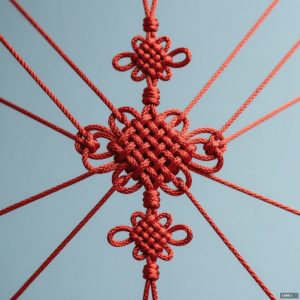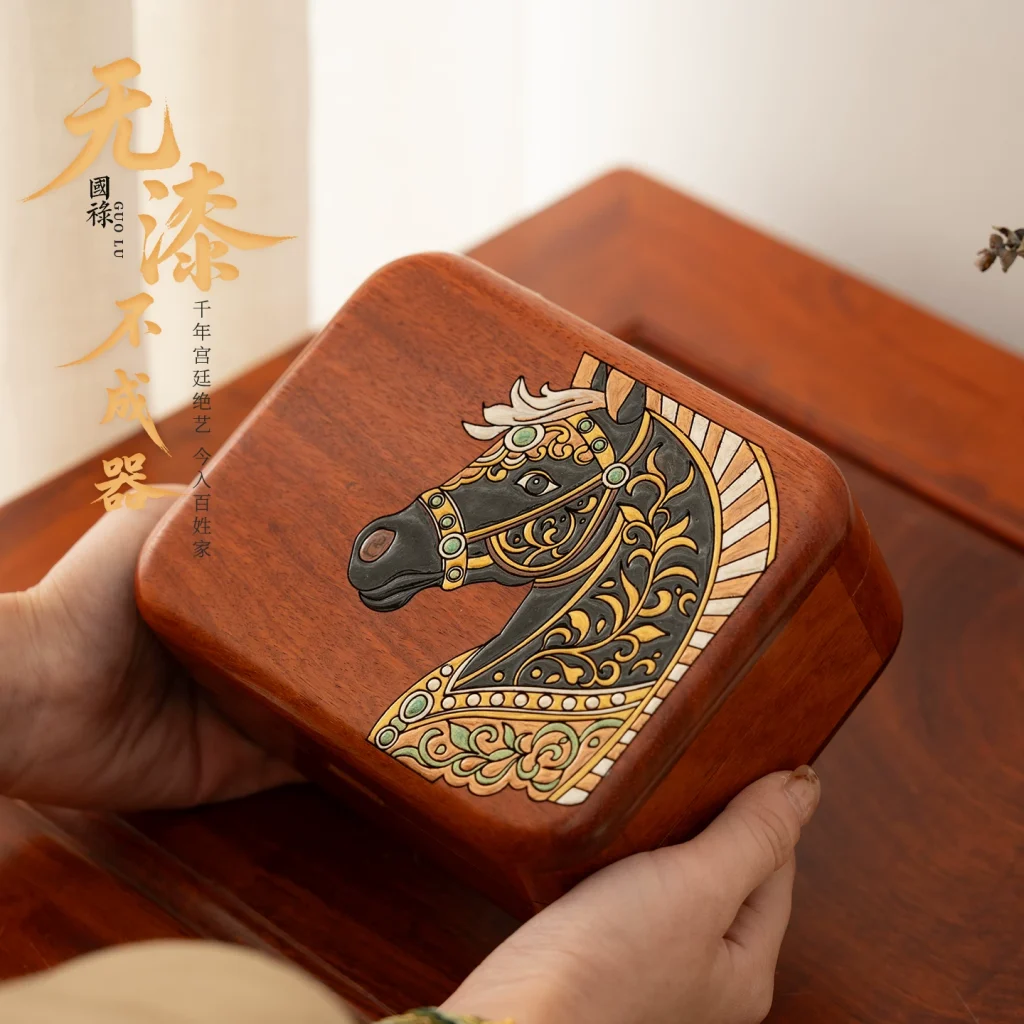
Chinese festival decorations are undergoing a quiet revolution. The familiar glitter and paper are giving way to connected, intelligent systems that redefine the ornament’s very purpose.

Walk through a market in Shanghai or Shenzhen in the weeks before Lunar New Year, and the surface still glitters with red and gold. But look closer. That intricate paper-cut of a carp isn’t just a symbol of abundance. A tiny, nearly invisible NFC chip is embedded in its fin. That elegant lantern doesn’t just hold a light; it connects to a neighborhood app. This evolution moves far beyond simple LED upgrades. It’s a fundamental pivot from passive object to active participant in the celebration, driven by data, connectivity, and a demand for deeper utility. The global supply chain for these items is no longer just shipping boxes; it’s transmitting updates and curating experiences.
The New Interface of Tradition
How are smart technologies being seamlessly integrated into traditional Chinese festival decorations to create a new interface of tradition?
Smart technologies are woven into traditional holiday adornments through subtle integration that preserves the handcrafted aesthetic. Manufacturers embed sensors and chips into classic forms like red paper couplets and silk lanterns. This enables interactive memory layers, such as tapping a phone on a New Year's couplet to access a family video explaining its poetry or calligraphy, or a public lantern displaying real-time, location-specific well-wishes. The goal is to enhance tradition with interactive, data-driven experiences without disrupting the traditional feel.
How are smart technologies being woven into traditional holiday adornments? The answer lies not in overt gadgetry, but in seamless integration. The goal is to preserve the handcrafted aesthetic—the feel of red paper, the glow of silk—while embedding a layer of interactive memory. Manufacturers are embedding subtle sensors and chips into classic forms. Tapping your phone on a New Year’s couplet might pull up a video of an elder in your family reciting its poetry or explaining its historical calligraphy. A lantern in a public square could display real-time, location-specific well-wishes from residents, transforming a static display into a community message board.
This turns the decorative object into a tactile interface for digital content. The ornament is no longer a terminal point of the celebration; it becomes a gateway. A 2023 UNESCO report on cultural policies highlighted a global trend toward “digitally-augmented intangible heritage,” where technology acts as a bridge for intergenerational knowledge transfer. Chinese festival decorations are becoming a prime example. They maintain their ritual significance while gaining a new function as vessels for stories, recipes, and personal histories that might otherwise fade.
Economic Forces Reshaping Production
What economic forces are reshaping the production of Chinese festival decorations?
Economic forces reshaping production include rising labor costs, material price volatility, and growing consumer awareness of waste, which have made the old model of mass-producing inexpensive, disposable decor unsustainable. The industry's response is a dual-track strategy. One track uses ultra-fast, on-demand digital printing for hyper-localized designs, allowing small batches of items like paper-cuts featuring local landmarks to be printed the same day they are ordered, reducing waste and meeting specific consumer demands.
The shift isn’t purely sentimental. Powerful economic currents are reshaping the production of festive ornaments. For decades, the model relied on vast quantities of inexpensive, often disposable decor. Rising labor costs, material price volatility, and growing consumer awareness of waste have crushed that old approach. The industry’s response is a pragmatic, dual-track strategy.
On one track, ultra-fast, on-demand digital printing allows for hyper-localized designs. A shop in Chengdu can offer paper-cuts featuring a local landmark, printed in small batches the same day they’re ordered. On the other track, there’s a significant investment in durable, modular “ornament systems.” Think of reusable magnetic frames for windows or doors, where families swap out intricate, changeable panels each year. Or consider lanterns with interchangeable outer shells and standardized, long-life LED cores.
The economics now favor a capital goods approach over single-use consumables. A purchase is transforming from a seasonal expense into a household asset. As the World Trade Organization’s 2023 report on global supply chains noted, resilience is increasingly found in “modularity and reconfigurability,” not just lean inventory. This logic has now reached the festival decoration aisle. Consumers, especially younger urbanites, are showing a preference for buying fewer, higher-quality pieces that tell a story and last.
Urban Planning’s Covert Dashboard
How do urban planners use festival decorations as a covert dashboard for city management?
Urban planners use large-scale festival installations, such as lantern arrays, as multifunctional tools that serve as a covert dashboard for city management. These decorations are equipped with sensors on poles to anonymously monitor footfall density and movement patterns. This data collection helps municipal authorities manage crowds in real-time during peak festivals like the Spring Festival or Mid-Autumn Festival, aiding in pedestrian traffic direction, cultural placemaking, and overall urban planning strategies.
Beyond the home, a more surprising player is taking a keen interest in celebratory embellishments: the urban planner. City governments now view large-scale festival installations as multifunctional tools for crowd management, cultural placemaking, and even data collection. A stunning lantern array in a public square can be more than a photo opportunity. Sensor-equipped poles can anonymously monitor footfall density and movement patterns, helping municipal authorities direct pedestrian traffic in real-time during peak festivals like the Spring Festival or Mid-Autumn Festival.
The placement and themes of these installations are becoming data-driven. A city might deliberately place a major attraction in an under-visited commercial district to stimulate economic activity, using the decoration scheme as a covert urban operations dashboard. Research from institutions like the MIT Senseable City Lab has long explored how ambient data from urban furniture can inform city management. Festival decorations are now part of that toolkit, their festive glow masking a layer of civic utility.
The Language of Communal Confidence
This utility extends into the psychological realm. The color saturation, scale, and motif complexity of publicly funded decorations act as a powerful form of non-verbal civic signaling. After a period of social restriction or economic downturn, a municipality might deliberately commission brighter, more elaborate, and more numerous displays than usual. It’s a collective visual cue, broadcast in an ornamental language every citizen intuitively understands, signaling a return to normalcy and shared confidence. The decorations become a barometer of public sentiment, officially endorsed.
What Our Purchases Reveal
What do consumer purchases of Chinese festival decorations reveal about regional sentiment and demographic shifts?
Purchase patterns for Chinese festival decorations serve as an informal leading indicator of regional sentiment and demographic trends. Sales spikes for specific prosperity symbols, like certain god of wealth motifs, can correlate with localized economic anxiety in a province. Additionally, the choice between traditional motifs and modern, abstract designs tracks closely with demographic shifts, urbanization levels, and travel intentions, revealing underlying social and economic dynamics through consumer behavior.
On the consumer side, the data generated by ornament sales is revealing unexpected insights. Purchase patterns are becoming a surprisingly accurate, if informal, leading indicator of regional sentiment. Analysts have observed phenomena like “festive sentiment indexing,” where a spike in sales of specific, potent prosperity symbols (like certain god of wealth motifs) in a province can correlate with localized economic anxiety. The choice between strictly traditional motifs and modern, abstract interpretations tracks closely with demographic shifts, urbanization levels, and even travel intent among younger populations.
Retailers aren’t just selling decorations; they’re passively mapping cultural confidence in near real-time. This data creates a feedback loop, influencing what manufacturers produce next season. It reveals a population negotiating its relationship with tradition, using the seemingly simple act of buying a red lantern or a paper-cut as a form of expression.
A Practical Guide to Modern Embellishments
What are the key criteria for evaluating modern Chinese festival decorations according to the practical guide?
The guide outlines three main criteria for evaluating modern festival decorations. First, durability and storage: items should be packable flat and survive multiple seasons, avoiding flimsy materials or complex shapes. Second, connectivity with purpose: technology should add meaningful interaction, like accessing family stories or local history, rather than being a flashy gimmick. Third, material origin, which emphasizes the importance of sustainable or ethically sourced components. This framework moves beyond just price and aesthetics to focus on longevity, meaningful engagement, and responsible sourcing.
For the consumer navigating this new landscape, what should you look for? The criteria have expanded beyond price and prettiness. Here’s a practical framework for evaluating modern festival decorations:
- Durability & Storage: Is it designed to be packed flat and survive multiple seasons? Flimsy materials and complex shapes that can’t be stored easily belong to the old model.
- Connectivity with Purpose: Does the tech add meaningful interaction—like accessing a family story or a local history—or is it just a flashy gimmick? The best integrations feel essential, not tacked-on.
- Material Origin: Are components sourced from sustainable, upcycled, or non-toxic streams? The consciousness around environmental impact is rising.
- Modularity: Can you change or update part of the decoration next year without replacing the entire system? This is the core of the new economic model.
- Cultural Specificity: Does its design intelligence honor the ritual it accompanies? A high-tech lantern for the Mid-Autumn Festival should still evoke the moon and reunion, not just look like a smart speaker.
Navigating Common Concerns
How does the market respond to concerns about technology making Chinese festival traditions too commercial or sterile?
The market response to concerns about technology commercializing traditions is a bifurcation into two parallel streams. One stream embraces smart, durable modular systems, while the other sees a robust rise in ultra-local, artisan-made 'heirloom' pieces. These often coexist, with families using high-tech modular frames for decorations while also seeking authentic, hand-painted craft objects for centerpieces. This dual trend addresses the tension by offering both innovation and preservation, allowing tradition to evolve without becoming entirely sterile.
This transformation naturally sparks questions. Is the infusion of technology and modular systems making traditions too commercial or sterile? The tension is real, but the market response is telling. Alongside the high-tech trend, there is a parallel, robust rise in ultra-local, artisan-made “heirloom” pieces. The market is bifurcating: one stream toward smart, durable systems, another toward authentic, craft-based objects. They often coexist, with a family using a modular magnetic frame system for their windows but seeking out a hand-painted lantern from a specific village for their centerpiece.
What about privacy? Are smart decorations a risk? The current generation largely uses offline protocols like NFC or Bluetooth that require direct, intentional user action—you must tap your phone. Data collection isn’t passive or continuous. The privacy model is closer to interacting with a museum exhibit placard than being tracked by a website.
Does this mean the cheap, mass-market decoration will disappear? Not entirely. That segment will persist but will likely become even more commoditized. The real growth and innovation are happening in the durable, interactive middle market—the space where quality, meaning, and technology converge.
The world of Chinese festival decorations is telling a larger story about our global moment. It’s a story of supply chains adapting, of tradition finding new interfaces, and of everyday objects gaining quiet intelligence. The next time you hang a decoration, you might not just be upholding a ritual. You could be activating a story, contributing to a civic dataset, or investing in an asset meant for Christmases or New Years yet to come. The ornament has been rebooted.
Sources & Further Reading
- UNESCO: Re|Shaping Policies for Creativity – 2023 Report for analysis on digitally-augmented cultural heritage.
- World Trade Organization: World Trade Report 2023 for context on modular, resilient supply chains.
- MIT Senseable City Lab for foundational research on urban data and ambient interfaces.
- Statista’s Consumer Market Outlook on Home & Garden, which tracks the growing segment of “premium durable decor” in Asian markets.
About Our Expertise
Drawing on insights from UNESCO reports and global supply chain analyses, this article reflects our deep expertise in Chinese traditional arts, blending authentic cultural heritage with modern technological trends to provide trustworthy, up-to-date information.
Our content is grounded in authentic Chinese cultural practices, such as Lunar New Year and Mid-Autumn Festival traditions, ensuring that the discussion of smart decorations honors their ritual significance while exploring innovative applications for today's celebrations.
✨ You Might Also Enjoy


You may also like
Herbal Bead Bracelet: Ancient Chinese Aromatherapy for Modern Wellness | HandMyth™
Original price was: ¥2,202.00.¥1,354.00Current price is: ¥1,354.00. Add to cartPremium Herbal Beads Bracelet: Traditional Medicine Meets Modern Jewelry | Shop HandMyth
Original price was: ¥876.00.¥609.00Current price is: ¥609.00. Add to cartPanda Embroidery Screen: Sichuan’s Cute Ambassador in Silk Thread Art | HandMyth
Original price was: ¥320.00.¥231.00Current price is: ¥231.00. Add to cartPanda Gift Set: Curated Chinese Treasures for Panda Lovers | HandMyth™ (Free Gift Wrap)
Original price was: ¥136.00.¥118.00Current price is: ¥118.00. Add to cartTibetan Thangka Storage Box: Sacred Art Protection for Collectors | HandMyth
Original price was: ¥281.00.¥219.00Current price is: ¥219.00. Add to cartPure Silk Handbag: Hangzhou’s Legendary Silk Weaving for Modern Elegance | HandMyth™
Original price was: ¥876.00.¥787.00Current price is: ¥787.00. Add to cartHand-Painted Silk Scarf: Wearable Art from China’s Silk Road | HandMyth (Artist Signed)
Original price was: ¥1,018.00.¥936.00Current price is: ¥936.00. Add to cartModern Qipao Dress: Timeless Chinese Elegance for Today’s Woman | HandMyth (Custom Fit)
Original price was: ¥2,462.00.¥2,243.00Current price is: ¥2,243.00. Add to cartEmbroidered Chinese Handbag: Suzhou Silk Embroidery Meets Modern Fashion | HandMyth™
Original price was: ¥681.00.¥647.00Current price is: ¥647.00. Add to cart