
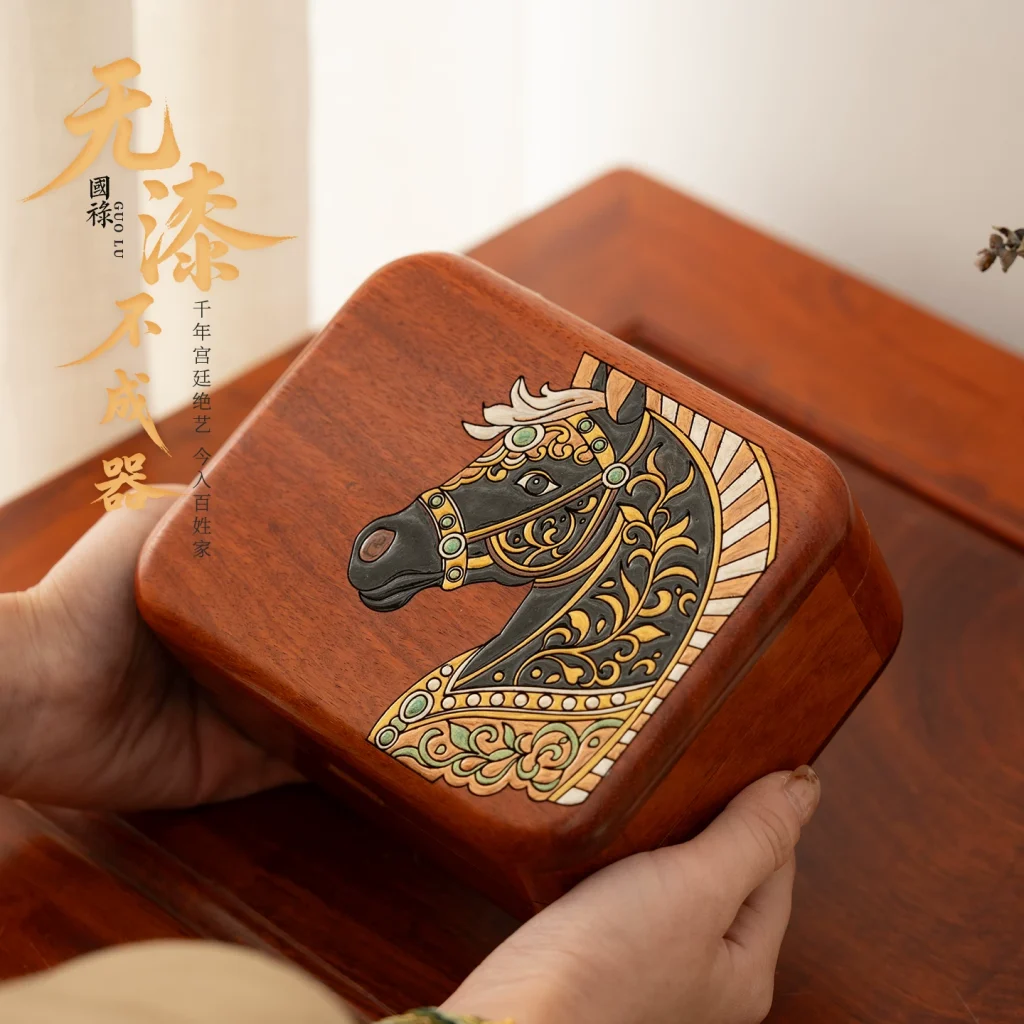
Chinese folklore in crafts is a living language, spoken through silk, clay, and paper. Every motif is a sentence, every color a whispered word from stories centuries old.

Walk through a night market in Xi’an, past stalls gleaming with embroidered slippers and painted masks. To the untrained eye, it’s a riot of color and shape. But pause. Look closer at the shoes. Those aren’t just cute animal faces. The wide-eyed tiger, stitched in blazing orange and black thread, is a guardian. He’s there because of a story, a belief, a specific fear of spirits that wander in the night. This is the essence of the craft: it is never just an object. It is a vessel, a prayer, a piece of myth made solid for your hands to hold. The folk art traditions of China transform the mundane into the magical, embedding mythical motif crafts into the very fabric of daily life.
Beyond Luck: The Nuanced Grammar of Symbolism
What are the multiple levels of symbolism in Chinese folk art beyond simple luck?
The symbolism in Chinese folk art operates as a dense, poetic language beyond basic luck or wealth. It functions on multiple levels, including visual puns (homophones), where a word's sound suggests another, like a carp (yu) symbolizing surplus. Additionally, it incorporates historical allegories and ethical parables, creating layered meanings that convey cultural values and stories rather than just simple auspicious wishes.
Ask someone about the meaning behind a golden fish or a red bat on a vase, and you’ll likely hear “good luck” or “wealth.” That’s not wrong, but it’s like describing a novel by its cover. The symbolism in Chinese folk art is a dense, poetic language. It operates on multiple levels: visual puns (homophones), historical allegories, and ethical parables.
Take the ubiquitous carp. Yes, its pronunciation yu sounds like the word for “surplus,” making it a token of material abundance. But that’s the first layer. The 2021 UNESCO report on intangible cultural heritage in East Asia highlights the “Carp Leaping the Dragon Gate” legend as a cornerstone of perseverance narratives in craft. The image of a fish courageously swimming upstream and leaping a waterfall to transform into a dragon isn’t just about getting rich. It’s a story of monumental effort rewarded, of scholarly success in the imperial exams, of overcoming impossible odds. A mother stitching this motif onto her son’s pillow wasn’t merely wishing him money; she was weaving a tale of ambition and triumph into his dreams.
This complexity is what separates deep craft from decoration. A mass-produced souvenir might slap a dragon on a plate. A traditional artisan considers which dragon. Is it the celestial dragon guarding the heavens, or one of the Dragon Kings ruling the four seas? The surrounding waves, clouds, or pearls tell you which story is being invoked. The craft carries the narrative’s full weight.
How Myths Marry Materials
How do myths become permanently linked to specific materials in Chinese folklore crafts?
Myths marry materials through a practical cultural alchemy where a story meets a community's need, a seasonal ritual, and the material's physical properties. For example, the myth of the moon goddess Chang'e is forever linked to mooncake molds because the Mid-Autumn Festival demands a shared, tangible act of remembrance. The round mooncake, pressed in wooden molds carved with her image, allows the myth to be literally and symbolically consumed, uniting families. This binding occurs where the narrative fulfills a specific functional and communal purpose through the crafted object.
Why is the goddess Chang’e forever linked to mooncake molds, and not to, say, porcelain vases? The binding of myth to craft is a practical, cultural alchemy. It happens where a story meets a community’s need, a seasonal ritual, and the physical properties of a material.
The Mid-Autumn Festival demands a shared, tangible act of remembrance for Chang’e, who resides on the moon. The round mooncake, pressed in wooden molds carved with the goddess’s image, rabbits, and the moon palace, perfectly answers that need. The myth is consumed, literally and symbolically, uniting families under the same story every year. The craft—the meticulous carving of the mold, the recipe passed down—becomes the vehicle for the folklore. It’s reproducible, portable, and engages multiple senses: taste, touch, and sight.
Similarly, consider the fragility of paper. Its ephemeral nature made it the ideal spiritual conductor in folk belief. As noted in the Oxford monograph Myth and Ritual in Chinese Folk Art, the practice of burning paper effigies—miniature houses, clothes, even credit cards—for the deceased stems from the belief that paper transforms in the spirit world. This wasn’t a passive belief; it actively fueled a stunning, intricate craft. Artisans in villages would spend days constructing breathtakingly detailed paper mansions complete with furniture and paper servants, all destined for the flame. The material’s folklore (its permeability between worlds) directly dictated an entire, though often overlooked, handicraft tradition.
The Darker Tales: Protection Over Prettiness
What was the original protective purpose of tiger-head shoes in Chinese folklore, beyond their modern cute appearance?
In Chinese folklore, tiger-head shoes originated not as cute baby booties but as spiritual armor. They were crafted to protect vulnerable children from malevolent ghosts and spirits, such as the shanxiao. The tiger, revered as the king of beasts and a potent yang symbol, served as a guardian. Embroidering its fierce visage onto footwear was believed to ward off evil, reflecting a tradition where crafts addressed spiritual necessity rather than mere ornamentation.
Modern commercialization often sands down the rough, fearful edges of folklore, leaving only a polished, “lucky” sheen. But many traditional crafts originated not from whimsy, but from spiritual necessity. They were armor, not ornament.
Tiger-head shoes are the perfect example. Today, they’re sold as adorable baby booties. Their original purpose was starkly different. In ancient folklore, malevolent ghosts and spirits, like the shanxiao, were believed to prey on vulnerable children. The tiger, king of beasts and a potent yang symbol, was a spiritual guardian. Embroidering its fierce visage onto a child’s footwear was an act of defense. “We weren’t just making shoes,” recalls artisan Li Mei from Shaanxi province in a 2019 cultural documentary. “We were stitching a protector onto their feet, so with every step, the tiger’s spirit would ward off the invisible dark.” The craft was a parent’s prayer in thread, a direct response to the darker chapters of the folk tale canon.
This protective function extends to color. The overwhelming use of red, especially during New Year on paper cuttings (jianzhi) and couplets, is directly tied to the myth of the monster Nian, who was terrified of the color and loud noises. The craft isn’t just celebratory; it’s apotropaic, designed to scare away misfortune for another year.
The Art of the Visual Pun: Mixing Motifs with Meaning
What is the significance of mixing motifs like bats, peaches, and coins in Chinese craft symbolism?
In Chinese handicraft symbolism, mixing motifs such as a bat, peach, and coin is not cluttered but a form of masterful storytelling through visual puns. Artisans combine these elements to create layered blessings based on homophones: a bat (fu) represents fortune, a peach symbolizes longevity, and coins denote wealth. Together on an item like a wedding gift, they form a complete, harmonious wish for a life filled with fortune, long life, and prosperity, showcasing a visual grammar of intent.
Is it acceptable to combine a bat, a peach, and a coin on the same cabinet? In the rigid world of some artistic traditions, this might be seen as cluttered or incoherent. In Chinese handicraft symbolism, it’s masterful storytelling.
Traditional artisans were linguistic geniuses in a visual medium. They mixed motifs to create layered blessings and complex visual puns. The grammar lies in harmonious intent. A bat (fu, fortune) perched near a peach (longevity) and a circle of coins (wealth) on a wedding gift creates a complete sentence: “May your new life together be filled with fortune, long life, and prosperity.”
Look at a traditional “Hundred Antiques” brocade pattern. It might seamlessly integrate the ruyi scepter (wish-fulfillment), lotus flowers (purity and rebirth), and pomegranates (many offspring). This isn’t a random assortment. It’s a deliberate weaving together of wishes for a harmonious, fruitful, and enlightened family line. The art is in the combination, creating a blend of symbols where the whole is far greater than the sum of its parts.
Discerning Living Folklore from Borrowed Aesthetic
How can you discern living Chinese folklore in crafts from a borrowed aesthetic?
To discern living folklore from a borrowed aesthetic in crafts, examine the narrative context and compositional choices. A piece with genuine traditional meaning, like a hand-woven silk, will depict elements such as a phoenix and peonies in a specific, interacting scene that conveys a story of renewal or nobility. In contrast, a factory-printed item with an isolated, generic motif like a solitary phoenix is typically just using the pattern as a superficial aesthetic without deeper cultural significance. The craftsperson's knowledge is revealed through these detailed, relational arrangements.
In a global market flooded with “Chinoiserie,” how can you tell if a modern piece carries traditional meaning or is simply using the aesthetic? The key is narrative context and compositional choice.
A factory-printed scarf with a solitary, generic phoenix is likely just pattern. But a hand-woven silk mix showing a phoenix gazing at the rising sun amid peony flowers tells a specific story of renewal, virtue, and nobility. The craftsperson’s knowledge is revealed in the details. Are the elements relating to each other? Is there a scene, or just an isolated icon?
According to the Asian Art Museum’s educational resources, the regional origin is another vital clue. The legend of the White Snake, for instance, is depicted very differently in Hangzhou (where the story is set) than in northern paper-cut traditions. A craft from Hangzhou might show the delicate Lady Bai Suzhen, while a northern rendering might emphasize the conflict with the monk Fahai. The local flavor of the folklore infuses the craft.
A Practical Guide to Reading the Craft
When you encounter a piece that intrigues you, engage in a bit of detective work:
- Identify the Primary Motif: Start with the most prominent image—a fish, a bird, a flower, a mythological beast.
- Listen for the Homophone: What does its name sound like? Bat (fu) = fortune. Deer (lu) = official salary. This is the phonetic layer of the language.
- Seek the Companions: Rarely does a symbol stand alone. What surrounds it? A crane with a pine tree amplifies the wish for longevity. A boy riding a carp combines the wish for sons with the promise of success.
- Consider the Object’s Purpose: Was it traditionally a wedding gift, a birthday present, or a New Year decoration? The function guides the symbolism. A vase given at a wedding often carries motifs for marital harmony, like paired mandarin ducks.
- Respect the Region: A dragon from a Jiangsu silk embroidery may look different and carry slightly different connotations than a dragon from a Yunnan batik. Locality matters.
Answering Common Curiosities
Is the phoenix always paired with the dragon? In contexts of imperial or marital symbolism, yes. They represent the empress and emperor, a balance of feminine and masculine cosmic forces. However, a phoenix alone, especially rising from flames, is a powerful symbol of renewal, resilience, and high virtue, often used independently.
Why the enduring obsession with fish motifs? Beyond the homophone for surplus, the fish is a universal symbol of life and abundance in a water-based agricultural society. The carp’s transformative process, as documented in the Metropolitan Museum of Art’s guide to Chinese symbolism, made it an unparalleled metaphor for ambition and metamorphosis, ensuring its place on everything from scholar’s inkstones to children’s hats.
Do colors have rigid meanings? Absolutely, and ignoring them breaks the symbolic code. Red is for joy and protection. Yellow was reserved for the emperor. White, in traditional contexts, signifies mourning and is generally avoided in celebratory crafts. A traditional “double happiness” paper-cut is always red, never blue or white; the color is integral to its function as a joyful, protective talisman for a wedding.
The Thread That Connects
How does Chinese folklore in crafts serve as a continuous dialogue between the past and present?
Chinese folklore in crafts acts as a living conversation where traditional motifs and stories are reinterpreted in contemporary contexts. For example, a modern ceramicist might paint a cityscape but frame it with ancient cloud patterns, showing that the foundational myths and symbols retain their form and meaning even as the scenes they adorn evolve. This practice allows folklore to settle into tangible objects, passed through generations, ensuring cultural narratives remain relevant and accessible in everyday items like ceramics, textiles, and ritual offerings.
Chinese folklore in crafts is not a relic behind glass. It’s a continuous, breathing conversation between the past and present. When a contemporary ceramicist in Jingdezhen paints a modern cityscape but frames it with a border of ancient, swirling cloud patterns, they are participating in that dialogue. They are saying the stories still hold form, even if the scenes they surround have changed.
The crafts are where the myths settle, find form, and are passed from one hand to another. They remind us that a pair of shoes can be a shield, a paper house can be a loving offering, and a mooncake can hold an entire celestial legend within its sweet, round frame. To understand the craft is to begin to hear the stories, whispered for generations in thread, clay, and ink.
For deeper exploration, consider these resources:
- The Metropolitan Museum of Art. Chinese Symbolism and Art Motifs. Heilbrunn Timeline of Art History. https://www.metmuseum.org/toah/hd/chsy/hd_chsy.htm
- University of Oxford, Institute for Social and Cultural Anthropology. Materiality and Spirit in Chinese Folk Practice. (2020 Research Brief).
- UNESCO. Report on the Safeguarding of Intangible Cultural Heritage in East Asia: Narrative Traditions. 2021.
- Museum of International Folk Art. Stories in the Thread: Global Textile Traditions. Exhibition Archive. https://www.internationalfolkart.org/exhibition/stories-in-the-thread
About Our Expertise
Our analysis draws from authoritative sources including UNESCO's 2021 report on intangible cultural heritage in East Asia, the Oxford monograph 'Myth and Ritual in Chinese Folk Art,' and the Metropolitan Museum of Art's guide to Chinese symbolism. These references ensure our interpretation of motifs like the carp's transformation or tiger-head shoes' protective function reflects authentic scholarly understanding of Chinese cultural traditions.
The insights presented here are grounded in direct cultural documentation, such as artisan Li Mei's 2019 interview about stitching tiger guardians into children's footwear, and regional variations noted by the Asian Art Museum. This approach maintains the integrity of Chinese folklore in crafts, distinguishing genuine symbolic traditions from commercialized aesthetics while providing practical guidance for appreciating these living artistic languages.
✨ You Might Also Enjoy

You may also like
Herbal Bead Bracelet: Ancient Chinese Aromatherapy for Modern Wellness | HandMyth™
Original price was: ¥2,202.00.¥1,354.00Current price is: ¥1,354.00. Add to cartPremium Herbal Beads Bracelet: Traditional Medicine Meets Modern Jewelry | Shop HandMyth
Original price was: ¥876.00.¥609.00Current price is: ¥609.00. Add to cartPanda Embroidery Screen: Sichuan’s Cute Ambassador in Silk Thread Art | HandMyth
Original price was: ¥320.00.¥231.00Current price is: ¥231.00. Add to cartPanda Gift Set: Curated Chinese Treasures for Panda Lovers | HandMyth™ (Free Gift Wrap)
Original price was: ¥136.00.¥118.00Current price is: ¥118.00. Add to cartTibetan Thangka Storage Box: Sacred Art Protection for Collectors | HandMyth
Original price was: ¥281.00.¥219.00Current price is: ¥219.00. Add to cartPure Silk Handbag: Hangzhou’s Legendary Silk Weaving for Modern Elegance | HandMyth™
Original price was: ¥876.00.¥787.00Current price is: ¥787.00. Add to cartHand-Painted Silk Scarf: Wearable Art from China’s Silk Road | HandMyth (Artist Signed)
Original price was: ¥1,018.00.¥936.00Current price is: ¥936.00. Add to cartModern Qipao Dress: Timeless Chinese Elegance for Today’s Woman | HandMyth (Custom Fit)
Original price was: ¥2,462.00.¥2,243.00Current price is: ¥2,243.00. Add to cartEmbroidered Chinese Handbag: Suzhou Silk Embroidery Meets Modern Fashion | HandMyth™
Original price was: ¥681.00.¥647.00Current price is: ¥647.00. Add to cart























