
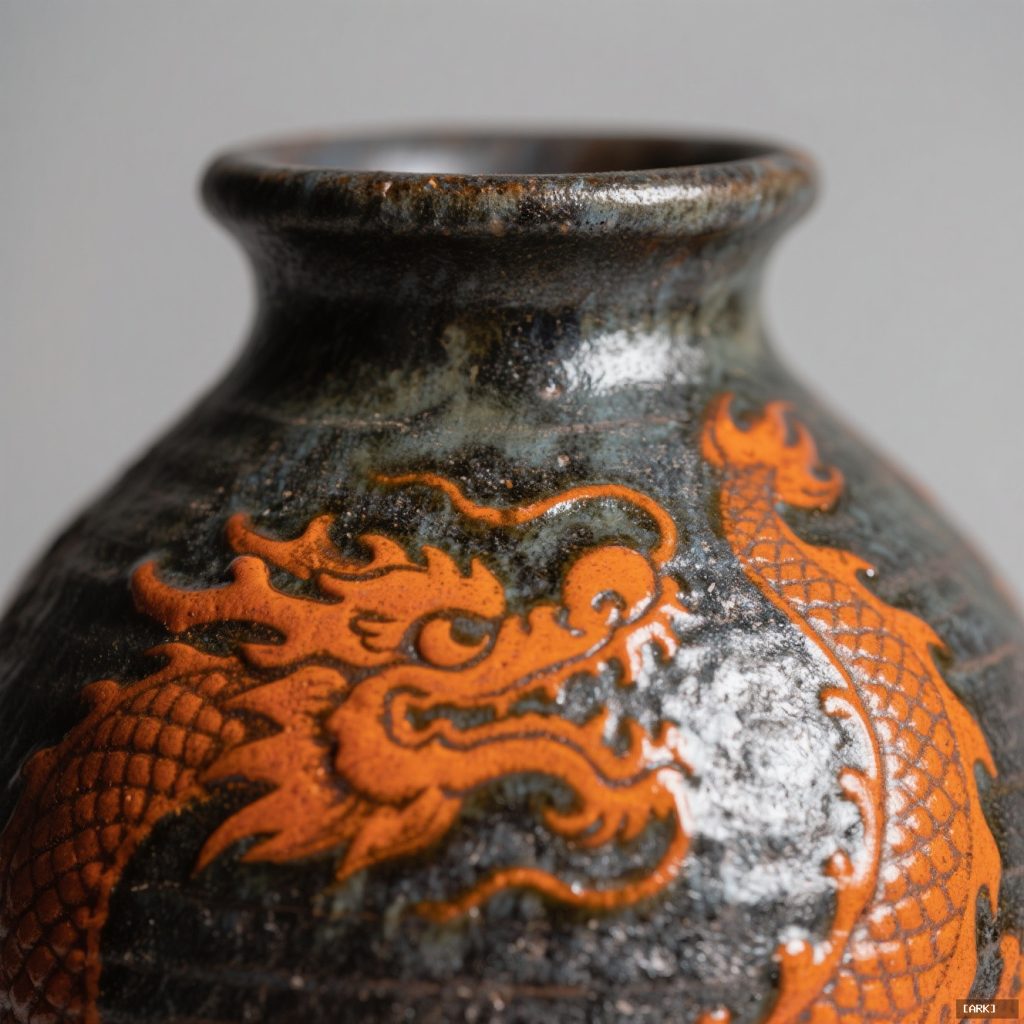
Dragon kiln pottery is the physical memory of a specific fire on a specific hillside. In our age of smooth, identical objects, these wood-fired ceramics offer a profound alternative, their very surfaces a document of flame, ash, and time. They bring a piece of that ancient, elemental process into the most modern of spaces.
This isn’t pottery as you typically know it. There is no precisely mixed glaze brushed onto a bisque-fired form, no guarantee of a predictable color palette. The finish happens inside the dragon kiln itself—a long, sloping tunnel of brick and clay built into a hillside. For days, a fire is stoked at its mouth, the flames drawn uphill by the natural draft, licking over shelves of raw pots, carrying with it flecks of ash from the specific woods burned. That ash melts where it lands, creating natural, glassy deposits. The mineral-rich walls of the kiln itself contribute color. The path of the flame leaves orange streaks called “flashing.” The result is a wood-fired pot that cannot be duplicated, a collaboration between human intention and uncontrollable natural forces.
The Anatomy of an Ancient Kiln
To understand the pottery, you must first picture the traditional dragon oven. Its name is no metaphor; from above, the structure resembles a serpent crawling up a slope. This slope is its engine. The incline creates a strong draft, pulling intense heat (often exceeding 2400°F / 1300°C) from the firebox at the bottom, through the long chamber, and out the chimney at the top. Pots are loaded on shelves along this tunnel, each position experiencing a slightly different atmosphere, temperature, and ash fall. The pieces near the firebox might be engulfed in embers, while those near the top receive a softer, ash-laden breeze. A single firing is a marathon event, requiring a crew to feed the fire in shifts for up to a week, constantly reading the flames and adjusting the air. It is as much a ritual as it is a manufacturing process.
The Allure of the Unrepeatable
What draws people to ancient kiln ceramics is this inherent singularity. In a world of mass production, we are surrounded by perfect copies. A dragon kiln pot is an original. The subtle olive-green blush on one side of a vase is from oak ash; the deep, iron-specked orange on its belly is where the flame pooled. You can run your fingers over its surface and feel the texture—sometimes gritty, sometimes glass-smooth—that tells the story of its process through the kiln. This is not a flaw; it is the signature of the process. It means no two mugs, even from the same kiln load, are truly a “set.” They are siblings, each with its own character.
This quality creates a different kind of relationship with the object. You aren’t just buying a vessel; you are adopting a narrative. You find yourself studying it, noticing new details in different lights. It has a quiet, grounded presence that a factory-made piece simply cannot replicate.
Urban Spaces, Elemental Objects
There’s an apparent contradiction in placing such rustic, process-driven artifacts in sleek, often small, city apartments. Yet, this is where a fascinating dialogue begins. The constraint of urban living forces curation over accumulation. You cannot fill a studio apartment with dozens of trinkets. But one powerful piece of dragon kiln pottery can hold its own.
On a minimalist shelf of pale wood, a dark, ash-crusted bottle becomes a sculptural focal point. Its complex, unpredictable surface provides the visual and tactile weight that a room of clean lines often lacks. In a space designed to buffer us from the chaos of city life—with soundproof windows and climate control—this pottery reintroduces a beautiful, tamed chaos. It is a reminder of natural forces, of the alchemy of earth and fire, sitting right beside your WiFi router.
Displaying it requires a shift in thinking. You approach it like a gallery curator. Give each piece room to breathe. Let a single platter lean against a wall as art. Place a teabowl on a solitary ledge where the afternoon sun can highlight its crystalline ash glaze. The question changes from “Where can I store this?” to “Does this object earn its place in my daily view?” For a piece that embodies so much time, skill, and elemental energy, the answer is often a resounding yes.
Beyond Rustic: The Modern Dialogue
A common hesitation is that wood-fired pottery might be too rough or “country” for a contemporary interior. This misses the point. The power lies precisely in the contrast. The organic, tactile nature of the clay sings against cool marble, polished concrete, or powder-coated steel. It introduces warmth, humanity, and a sense of history. That rough texture next to a smooth surface creates a vital tension that makes both elements more interesting. The pot isn’t trying to match your sofa; it’s adding a soulful counterpoint.
This isn’t about creating a “rustic” look. It’s about integrating an object of depth. A graceful, wood-fired vase can hold a single architectural branch, its wild surface complementing the clean line of the stem. A heavy, iron-rich cup makes the morning coffee ritual feel more grounded. The pottery doesn’t dominate; it deepens the space around it.
Choosing Your Piece: A Guide for Hands and Heart
Selecting dragon kiln pottery is a tactile, personal experience. Photos can hint at color, but they cannot convey weight, balance, or the story written in the clay. If you have the opportunity to visit a gallery or potter’s studio, use these guidelines.
First, always pick it up. How does it feel in your hand? A good cup has a comforting heft and a rim that feels right against your lips. A vase should feel stable, its center of gravity low. Then, look closely. Don’t just see the overall color; search for the details—the waterfall of ash down one side, the whisper of orange where the flame kissed it, the puddles of glassy green. These are the kiln’s fingerprints.
Be realistic about your space. A massive storage jar might be a dream, but a powerful small bowl can have just as much presence in a limited area. Let the piece command the space you give it.
Finally, consider its story. Buying directly from the potter or a knowledgeable gallery connects you to the origin. You learn which kiln it was fired in, what woods were used, the potter’s philosophy. This knowledge transforms the object from decor into a keepsake of a specific place and person.
Living With the Flame
Once you bring a piece home, practical considerations arise. The most common question is about food safety. The extreme temperatures of a dragon kiln firing typically vitrify the clay, making it non-porous and stable. Natural ash glazes also melt into a glassy surface. Most potters creating functional ware ensure their work is safe for food and drink, but it is always wise to confirm with the maker.
Caring for these pieces is straightforward. Dust them with a soft cloth. You can wash them with mild soap and water, but avoid harsh abrasives or the dishwasher. Part of their beauty is in developing a patina from use—the slight wear on a cup’s foot, the gentle sheen from handling. They are durable, but they appreciate being treated with the respect their creation warrants.
The price point can be a surprise. It helps to remember what you are funding: not just the clay and the potter’s skilled hands, but a week-long firing consuming cords of specialty wood, the labor of a stoking crew, and the very high risk. Whole sections of a kiln can be under-fired or over-fired. You are investing in an immense amount of time, resources, and surrendered control, all captured in a single, silent object.
A Quiet Parallel
There is a deeper, non-obvious resonance between the dragon kiln and the urban environment. Both are complex systems where layered, unpredictable forces interact and leave their mark. In the kiln, it is draft, flame, and ash. In the city, it is the confluence of people, ideas, noise, and chance. The dragon kiln pot is a beautiful record of chaotic process made solid and serene. In our urban lives, we often seek to sanitize and control our surroundings. This pottery, born of fire and chance, sits in our homes as a quiet testament to the beauty that can emerge when we allow for the unpredictable, when we value the trace of the process as much as the destination.
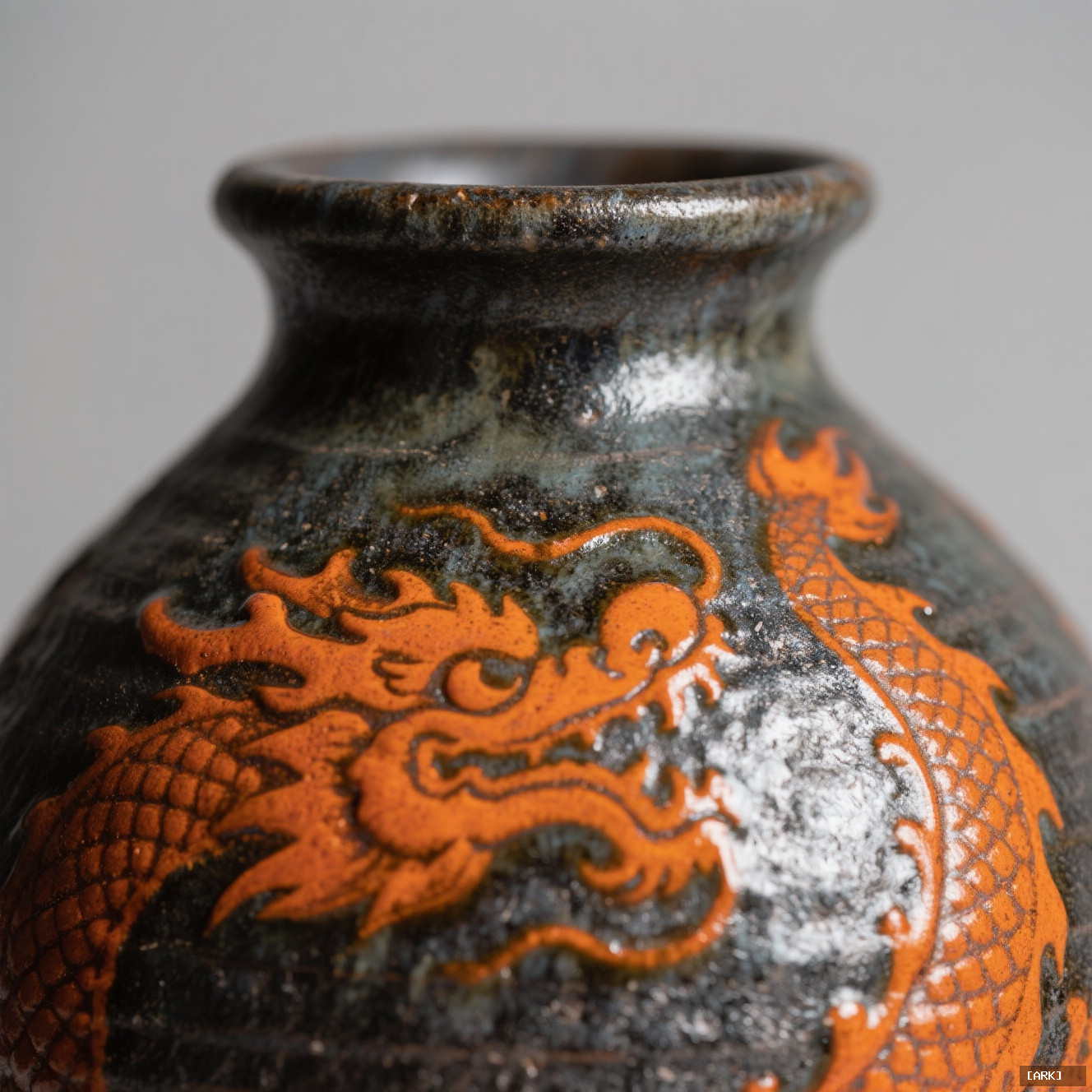
It reminds us that perfection is not the absence of marks, but the presence of character.
Sources & Further Reading
✨ You Might Also Enjoy

You may also like
Herbal Bead Bracelet: Ancient Chinese Aromatherapy for Modern Wellness | HandMyth™
Original price was: ¥2,199.00.¥1,352.00Current price is: ¥1,352.00. Add to cartPremium Herbal Beads Bracelet: Traditional Medicine Meets Modern Jewelry | Shop HandMyth
Original price was: ¥874.00.¥608.00Current price is: ¥608.00. Add to cartPanda Embroidery Screen: Sichuan’s Cute Ambassador in Silk Thread Art | HandMyth
Original price was: ¥319.00.¥230.00Current price is: ¥230.00. Add to cartPanda Gift Set: Curated Chinese Treasures for Panda Lovers | HandMyth™ (Free Gift Wrap)
Original price was: ¥136.00.¥118.00Current price is: ¥118.00. Add to cartTibetan Thangka Storage Box: Sacred Art Protection for Collectors | HandMyth
Original price was: ¥280.00.¥219.00Current price is: ¥219.00. Add to cartPure Silk Handbag: Hangzhou’s Legendary Silk Weaving for Modern Elegance | HandMyth™
Original price was: ¥874.00.¥786.00Current price is: ¥786.00. Add to cartHand-Painted Silk Scarf: Wearable Art from China’s Silk Road | HandMyth (Artist Signed)
Original price was: ¥1,017.00.¥935.00Current price is: ¥935.00. Add to cartModern Qipao Dress: Timeless Chinese Elegance for Today’s Woman | HandMyth (Custom Fit)
Original price was: ¥2,459.00.¥2,240.00Current price is: ¥2,240.00. Add to cartEmbroidered Chinese Handbag: Suzhou Silk Embroidery Meets Modern Fashion | HandMyth™
Original price was: ¥680.00.¥646.00Current price is: ¥646.00. Add to cart























