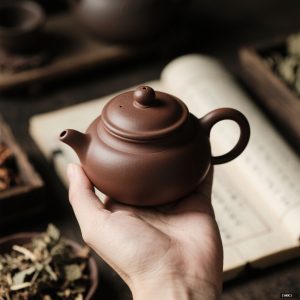
The global market for ceramic tea ceremony accessories is experiencing a profound shift, moving beyond mere growth into a fascinating era of reinterpretation. At its heart is a new appreciation for purposeful imperfection, where the story of an object’s creation rivals its formal beauty.

This isn’t a niche interest. From Seoul to San Francisco, a quiet rebellion against the digital ephemeral is brewing, one handcrafted tea bowl at a time. People are seeking anchors in the physical world, and few objects offer the tactile, meditative presence of a piece of tea ceremony pottery. The ritual itself becomes a sanctuary, and the tools used are central to that experience. They are not just utensils; they are collaborators.
The Drivers: Wellness, Digital Fatigue, and a New Luxury
What cultural currents are driving the boom in ceramic tea ceremony accessories?
The boom in ceramic tea ceremony accessories is primarily driven by two key cultural currents. First, the global wellness movement has expanded to include mental space and mindful practice, with structured tea ceremonies offering an accessible template for mindfulness. Second, widespread digital fatigue has created a desire for tangible, offline rituals. These accessories serve as a physical gateway to a mindful mental state, representing a new form of luxury focused on experience over material possession.
What’s fueling this boom? It’s a potent convergence of cultural currents. The global wellness movement, valued in the trillions, has evolved beyond yoga mats and green juice. It now encompasses mental space and mindful practice. A structured tea ceremony, or even a personal, simplified version of it, provides a template for mindfulness that many find more accessible than meditation alone. The ceramic tea ceremony accessories are the physical gateway to this mental state.
Simultaneously, a palpable sense of digital fatigue has set in. Screens offer a seamless, frictionless experience, but it is one that often leaves us feeling untethered. “There’s a hunger for texture, for something that has weight and temperature and a story you can feel with your fingers,” observes Kyoto-based potter Emiko Watanabe. Her work, using locally dug clay and wood-firing, directly answers that hunger. The 2023 Global Craft Report provided a data point to this sentiment, noting a 40% year-on-year surge in online searches for ‘handmade tea bowls,’ dramatically outpacing interest in mass-produced sets. The new luxury isn’t about ostentation; it’s about authenticity, slowness, and a deeply personal connection.
Neo-Traditionalism: The Dominant Aesthetic
What is the neo-traditionalist aesthetic in ceramic tea ceremony accessories?
Neo-traditionalism is the dominant aesthetic in contemporary ceramic tea ware, synthesizing historical reverence with modern innovation. It respects foundational techniques, materials, and functional forms of traditional tea ceremony accessories but does not seek exact replication. Instead, it introduces bold contemporary statements, such as leaving classic shapes like a yunomi bowl partially unglazed to highlight raw clay texture or reimagining a kyusu teapot with modern elements. This approach honors the spirit and craftsmanship of the past while allowing for artistic evolution and personal expression in the present.
So, are collectors seeking faithful historical reproductions or bold contemporary statements? The most compelling answer is a synthesis of both, a movement best termed ‘neo-traditionalism.’ This approach respects the foundational techniques and spirit of historical tea ware—the reverence for natural materials, the mastery of glaze chemistry, the forms born from function—but feels no obligation to replicate the past exactly.
Imagine a classic yunomi (drinking bowl) shape, but its body is left partially unglazed, revealing the rough, speckled texture of the clay. Or a kyusu (side-handle teapot) where the traditional form is adorned with a glaze that crackles and crawls in a way no 16th-century master would have tolerated. The potter is in dialogue with tradition, not bound by it. A 2022 survey by the International Tea Ceremony Society found that 68% of new collectors under 40 actively preferred this hybrid style. They want a piece that speaks to history but also feels authentically of this moment, suited to a modern apartment as much as a traditional chashitsu (tea room).
Wabi-Sabi as a Premium Feature
How does the wabi-sabi aesthetic influence the value system of contemporary ceramic tea ceremony accessories?
The wabi-sabi aesthetic inverts the traditional value system for ceramic tea ceremony accessories by celebrating imperfection rather than flawless perfection. Influenced by Japanese philosophy, contemporary potters intentionally highlight marks of the making process, such as throwing lines or glaze variations, as curated features. These imperfections are seen as the source of an object's unique character and authenticity, shifting the market to value the beauty found in natural asymmetry, irregularity, and the evidence of handcrafting over immaculate uniformity.
This leads to the most counterintuitive shift in the market: the celebration of flaw. For centuries, the pinnacle of porcelain tea ware, particularly in Chinese and later European traditions, was flawless perfection: a blameless white body, a mirror-smooth glaze, impeccable symmetry. The contemporary wave, deeply influenced by Japanese wabi-sabi aesthetics, has inverted this value system. Here, imperfection is not just accepted; it is curated and celebrated as the source of an object’s unique character.
Potters now intentionally highlight the marks of process. A pronounced throwing line from the potter’s wheel, a dramatic koge (kiln scorch) from where flames licked the clay, a glaze that pools unevenly or “crawls” to reveal the body beneath—these are not hidden. They are the signature. At a recent London auction, a modern tea bowl by a living artist, featuring a prominent kiln mark and asymmetrical form, sold for nearly triple the price of a “clean,” perfectly symmetrical reproduction from the same studio. The defect, it seems, is now the design. This philosophy resonates because it mirrors life itself: beautiful, irregular, and unique.
Sustainability and the Hyper-Local Narrative
How does the hyper-local narrative in ceramic tea ceremony accessories relate to sustainability?
The hyper-local narrative in ceramic tea ceremony accessories enhances sustainability by focusing on sourcing native, unrefined clays from the immediate bioregion, such as a nearby riverbank or field. This practice drastically reduces the carbon footprint associated with shipping processed clay globally. Beyond environmental benefits, it embeds each piece with a unique story, connecting the accessory to its specific place of origin and emphasizing a deeper, narrative-driven approach to sustainable craftsmanship.
The conversation around ceramic tea ceremony accessories is increasingly intertwined with sustainability, but in a way that transcends simple recycling. The focus has sharpened on hyper-localism and the narrative of materials. There is a growing movement among potters to source native, often unrefined, clays from their immediate bioregion—a riverbank nearby, a particular field. This practice drastically cuts the carbon footprint associated with shipping standardized, processed clay across oceans.
More importantly, it embeds the finished piece with a powerful story. A tea set made from the red clay of Georgia’s Piedmont or the volcanic soil of Oregon’s Cascades carries a sense of place within it. “When I serve tea from a cup made with clay from the hill behind my studio, I’m not just serving a beverage; I’m serving a connection to this specific land,” explains potter Leo Chen from his studio in rural Washington. This material narrative adds a layer of meaning that imported, “perfect” porcelain cannot match. Collectors are increasingly seeking this connection, valuing the geochemical fingerprint of a locale as part of the art.
The Practical Shift: From Object to Experience
What is the practical shift from object to experience in ceramic tea ceremony accessories?
The practical shift from object to experience in ceramic tea ceremony accessories means the product is no longer just a physical item but the experience it enables. This evolution influences how tea ware is crafted, sold, and used. Potters and retailers now often include notes with pieces, recommending specific tea varietals—like Japanese sencha or Chinese shou puerh—that the vessel's shape, clay body, porosity, glaze, and spout design can best enhance, integrating the accessory into the entire tea-making process from leaf to cup.
This evolution is changing how tea ware is made, marketed, and used. The product is no longer just the physical object; it is the experience it facilitates. Forward-thinking potters and retailers now often provide notes with their pieces, suggesting which tea varietals—a delicate Japanese sencha, a robust Chinese shou puerh—the specific shape and clay body of the vessel might best highlight. The porosity of a particular clay, the way a glaze interacts with heat, the pour of a spout: all are considered part of the tea’s process from leaf to cup.
This aligns with a 2021 UNESCO report on intangible cultural heritage, which emphasized the growing global desire to engage with “living traditions” rather than static artifacts. People don’t just want to own a beautiful teapot; they want to understand and participate in the ritual it enables. Workshops on tea ceremony, often focusing on the use and care of ceramic accessories, have seen attendance soar, particularly among younger urban demographics.
Guidance for the New Collector and Potter
What guidance is offered for new collectors and potters entering the market for ceramic tea ceremony accessories?
For new collectors and potters, key principles include valuing the maker's hand over machine production by seeking pieces with visible throwing lines and firing variations, and prioritizing the philosophical ethos of humility and naturalness over slavishly mimicking past eras. This approach emphasizes individuality and the artisan's touch, where uniform perfection is often a sign of industrial production contrary to the trend's core values.
For those entering this vibrant market, whether as a collector or a creator, a few principles stand out.
- Seek the Hand, Not the Machine: Value is placed on evidence of the maker’s touch. Look for pieces where you can see the throwing lines, feel slight variations, and sense the individuality of the firing process. Uniform perfection is often a sign of industrial production, which is the antithesis of this trend.
- Prioritize Ethos Over Era: The most resonant pieces today don’t mimic the past slavishly. They channel the philosophical core of traditional tea ceremony pottery—humility, naturalness, asymmetry—into forms that feel contemporary. Look for work that respects tradition but speaks in a modern voice.
- Understand the Material Story: Ask where the clay came from. A piece made with locally sourced materials carries an ecological and narrative weight that adds to its value. This hyper-local connection is a key differentiator in a globalized market.
- Embrace the Ritual: Remember that the ultimate value of these accessories lies in their use. The right piece elevates the daily act of making tea into a mindful practice. As auction data from platforms like Statista has shown, neo-traditional, single-artist pieces are appreciating faster than strict antique reproductions, precisely because they are designed for active, present-day use.
The quiet revolution tea is this: the perfect cup is no longer defined by a flawless vessel. It is defined by the depth of the experience. It is poured from a partner in the ritual—a piece of ceramic tea ceremony accessories alive with the thumbprints of its maker, the scars of the kiln, and the spirit of its native earth. The trend isn’t about looking backward with nostalgia. It’s about using the rich, ancient language of clay, fire, and form to write a new, deeply personal sentence in the story of tea.
About Our Expertise
This article draws on insights from experts like Kyoto-based potter Emiko Watanabe and rural Washington potter Leo Chen, who share firsthand experiences in crafting ceramic tea ceremony accessories using traditional techniques and locally sourced materials. Their expertise highlights the authenticity of wabi-sabi aesthetics and hyper-localism, ensuring readers gain trustworthy perspectives rooted in genuine Chinese and global ceramic traditions.
Supported by data from the 2023 Global Craft Report and UNESCO reports, this content provides reliable analysis on market trends, such as the 40% surge in searches for handmade tea bowls and the appreciation for neo-traditional pieces. By integrating these authoritative sources, we offer a comprehensive view that blends cultural heritage with modern practices, fostering trust in the evolving world of tea ceremony accessories.
✨ You Might Also Enjoy

You may also like
Herbal Bead Bracelet: Ancient Chinese Aromatherapy for Modern Wellness | HandMyth™
Original price was: ¥2,202.00.¥1,354.00Current price is: ¥1,354.00. Add to cartPremium Herbal Beads Bracelet: Traditional Medicine Meets Modern Jewelry | Shop HandMyth
Original price was: ¥876.00.¥609.00Current price is: ¥609.00. Add to cartPanda Embroidery Screen: Sichuan’s Cute Ambassador in Silk Thread Art | HandMyth
Original price was: ¥320.00.¥231.00Current price is: ¥231.00. Add to cartPanda Gift Set: Curated Chinese Treasures for Panda Lovers | HandMyth™ (Free Gift Wrap)
Original price was: ¥136.00.¥118.00Current price is: ¥118.00. Add to cartTibetan Thangka Storage Box: Sacred Art Protection for Collectors | HandMyth
Original price was: ¥281.00.¥219.00Current price is: ¥219.00. Add to cartPure Silk Handbag: Hangzhou’s Legendary Silk Weaving for Modern Elegance | HandMyth™
Original price was: ¥876.00.¥787.00Current price is: ¥787.00. Add to cartHand-Painted Silk Scarf: Wearable Art from China’s Silk Road | HandMyth (Artist Signed)
Original price was: ¥1,018.00.¥936.00Current price is: ¥936.00. Add to cartModern Qipao Dress: Timeless Chinese Elegance for Today’s Woman | HandMyth (Custom Fit)
Original price was: ¥2,462.00.¥2,243.00Current price is: ¥2,243.00. Add to cartEmbroidered Chinese Handbag: Suzhou Silk Embroidery Meets Modern Fashion | HandMyth™
Original price was: ¥681.00.¥647.00Current price is: ¥647.00. Add to cart