Chinese gemstone jewelry is a world where profound cultural heritage meets a modern marketplace rife with both exquisite artistry and clever imitation. To navigate it, you must separate enduring tradition from temporary trend.

Walk through the glittering halls of a Hong Kong auction house or the bustling stalls of Beijing’s Panjiayuan market, and you’ll feel it—the magnetic pull of carved jade pendants and strands of agate beads. This allure is centuries old. Yet, for every piece that whispers of dynastic artisans, another shouts with the hollow ring of mass production. The process to authentic appreciation is less about uncovering secrets and more about adjusting your sight, learning to see the true craftsmanship, material honesty, and cultural intelligence that transform ornament into heirloom.
The Jade Fallacy: A Masterclass in Mineral Misconception
What is the Jade Fallacy in Chinese gemstone jewelry?
The Jade Fallacy refers to the common misconception in the West that 'jade' is a single green stone. In Chinese culture and mineralogy, jade traditionally encompasses two distinct materials: nephrite and jadeite. Nephrite, known as 'soft jade,' has a waxy luster and historical significance in China. Jadeite, imported later from Myanmar, displays a vitreous shine and a wider color range, including prized imperial green. Recognizing this distinction is crucial for assessing value and authenticity, as these stones differ in properties and cultural importance.
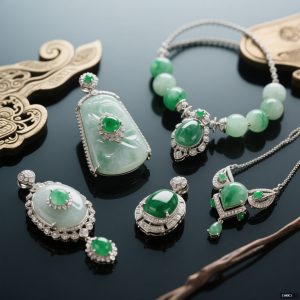
Let’s start with the word that dominates the conversation: jade. In the West, it’s a catch-all for green stone. In China, it’s a specific cultural and mineralogical category, traditionally encompassing two distinct materials: nephrite and jadeite. This isn’t mere semantics; it’s the foundation of value and authenticity. Nephrite, the ancient “soft jade” of Chinese history, possesses a toughness and a waxy, gentle luster. Jadeite, arriving later from Myanmar, offers a broader color palette and a vitreous shine, with its famed “imperial green” commanding astronomical sums.
The myth is that the green pendant you see everywhere is jade. The reality, as detailed in identification guides from the Gemological Institute of America (GIA), is that serpentine, quartzite, and dyed marble are ubiquitous substitutes. That vibrant, translucent green bangle in a tourist shop window? If the price seems too welcoming, it’s almost certainly not high-quality jadeite. The persistent belief in cheap, abundant real jade is a commercial fiction, one that obscures the true value of both genuine nephrite’s subtle beauty and jadeite’s rare fire.
The Price Tag Paradox: Why Cost is a Compass That Often Breaks
What is the paradox regarding price and authenticity in Chinese gemstone jewelry?
The paradox is that a higher price does not guarantee greater authenticity for Chinese gemstones. Instead, a premium often pays for a compelling narrative, such as stories of family heirlooms or remote mines, rather than an unadulterated stone. Treatments are sophisticated and routine; for example, a 2020 analysis by China's National Gemstone Testing Center noted that much commercial jadeite undergoes enhancement, like bleaching and polymer injection (Type B) or dyeing (Type C), to improve appearance.
It’s natural to equate a higher price with greater authenticity. Chinese gemstones, this instinct will lead you astray. A premium often pays for a compelling narrative—a tale of family heirlooms or remote mountain mines—rather than an unadulterated stone. The treatments are sophisticated and routine. A 2020 market analysis by China’s National Gemstone Testing Center (NGTC) noted that a significant portion of jadeite on the commercial market undergoes some enhancement. “Type B” jadeite is bleached and polymer-injected to remove impurities and improve clarity; “Type C” is dyed. These pieces are sold, frequently without disclosure, at prices that mimic untreated stones.
An expensive receipt, therefore, is not a certificate of truth. It might only document your purchase of a more convincing illusion. Authenticity isn’t bought; it’s verified through knowledge, reputable lab reports (from bodies like GIA or NGTC), and a discerning eye for the material itself.
The Silent Language of Beads and Knots
What is the significance of the knotting technique in traditional Chinese gemstone bead jewelry?
In traditional Chinese gemstone bead jewelry, such as pearl or carved agate necklaces, each bead is often individually knotted on fine silk cord. This technique serves dual purposes. Practically, it prevents beads from grinding together, protecting their surfaces. Symbolically, each knot acts as a safeguard, believed to contain and preserve the good fortune or protective energy thought to reside within the stone. This meticulous method transforms simple stringing into a meaningful craft of precision and cultural significance.
To dismiss a strand of gemstone beads as “simple stringing” is to miss an entire dialect of craftsmanship. Asian beadwork is an exercise in precision and protection. Observe a traditional zhu zi (pearl) or carved agate necklace. Each bead is often individually knotted on fine silk cord. This technique, requiring patience and dexterity, serves a dual purpose. Practically, it prevents beads from grinding against each other, protecting their surfaces. Symbolically, each knot represents a safeguard, a way to contain and preserve the good fortune or protective energy believed to reside within the stone.
“The knot is as important as the gem it holds,” explains a third-generation jewelry artisan in Shanghai. “It’s the structure that allows the piece to live and be worn, not just displayed. A machine-strung strand with plastic spacers lacks that life force.” What appears simple is, in its authentic form, a meticulous and meaningful architecture.
Material Over Mystique: The Craftsmanship Imperative
When the vague talk of “energy” and “ancient vibes” fades, what remains is the physical object. Here, a crucial re-calibration of value occurs. The true worth of a piece of Chinese gemstone jewelry often resides more in the quality of its carving and setting than in the presumed rarity of its central stone.
A pendant fashioned from nephrite—not the rarest jadeite—but carved with exquisite, hand-executed detail depicting a flowing dragon or a serene Guanyin, is more authentically representative of the craft than a clumsily set, overpriced bangle of dubious jadeite origin. Pay equal attention to the metals. Sterling silver settings should bear a 925 or S925 stamp; its absence often reveals plated base metal beneath. The material reality is your most honest guide.
Cultural Codes: Spotting the Red Flags in Design
What are the primary red flags for design inauthenticity in Chinese gemstone jewelry?
The primary red flags for design inauthenticity in Chinese gemstone jewelry include inaccurate depictions of mythological creatures and disregard for numerological traditions. For instance, creatures like the qilin or pi xiu have specific canonical attributes, such as scale counts or tail curls, and generic renderings indicate a lack of cultural knowledge. Similarly, authentic antique-style beadwork follows numerological traditions, using specific bead counts like 18, 27, or 108, which hold symbolic meaning. Sloppy or incorrect designs often reveal a piece's origin in a culturally detached factory rather than a knowledgeable workshop.
Design inauthenticity is glaring to a trained eye, revealing a piece’s origin in a culturally detached factory rather than a knowledgeable workshop. A primary red flag is the inaccurate depiction of mythological creatures. The qilin, a benevolent hybrid beast, or the pi xiu, a wealth-attracting guardian, have specific canonical attributes—from the number of scales to the curl of a tail. A generic, sloppy rendering betrays a lack of respect for the symbolism.
Similarly, authentic antique-style beadwork follows numerological traditions. You might find strands with 18, 27, or 108 beads, numbers holding Buddhist or auspicious significance. A perfectly round, random count like 50 or 100 often indicates production for convenience, not cultural adherence. As the Asian Art Museum’s educational resources on symbolism highlight, every element in traditional art is intentional. Its absence of intent is a clear sign.
The Investment Myth and the Personal Value Reality
What is the myth versus reality regarding Chinese gemstone jewelry as an investment?
The myth is that all Chinese gemstone jewelry is an appreciating asset. In reality, most contemporary commercial pieces, like bangles and pendants from malls, are depreciating consumer goods. True investment-grade material is rare, requiring untreated, high-quality jadeite or flawless 'mutton-fat' nephrite from revered sources, and demands specialist knowledge and access to high-end markets.
Perhaps the most seductive and dangerous myth is the idea that all Chinese gemstone jewelry is an appreciating asset. The truth is far more selective. The vast majority of contemporary commercial pieces—the bangles, pendants, and beads sold in malls and mainstream online stores—are depreciating consumer goods.
True investment-grade material constitutes a minute fraction of the market: untreated, high-color jadeite with excellent proportions, or flawless “mutton-fat” white nephrite from historically revered sources. Acquiring such pieces requires specialist knowledge and access to high-end dealers or auctions. For most buyers, the value of a piece should be personal, aesthetic, or cultural—a connection to a craft, a memory of a process, an appreciation of beauty. Buying for financial gain without deep expertise is a gamble dressed as a strategy.
The Patina of Practice: A Lesson from Tea Culture
There’s a subtle, often-overlooked connection between the care for these gemstones and another pillar of Chinese culture: tea. The philosophy mirrors that of seasoning a Yixing clay teapot. Through repeated, mindful use—the warmth of hands during a tea ceremony or the contact of skin while wearing a nephrite bracelet—the material is believed to “nourish” and develop a deeper, more luminous patina.
This is a concept of cultivation through ritual. The stone is not a static trophy but a participant in a daily practice. A piece of jade locked in a safe is considered dormant, its potential unrealized. Its beauty and character are coaxed out through interaction, a patient dialogue between object and owner. It transforms jewelry from a possession into a practice.
A Practical Evaluator’s Checklist
What practical steps should an evaluator take when assessing Chinese gemstone jewelry?
An evaluator should demand the specific mineral name, such as nephrite or jadeite, rather than accepting the vague term 'jade.' For significant purchases, insist on a report from a reputable gemological laboratory like GIA or NGTC. Examine the jewelry's construction, looking for individual silk knots between beads, as uniform plastic spacers suggest machine work. Check clasps and settings for metal purity stamps, like 925 for sterling silver or 足金 for pure gold. Additionally, genuine stone typically feels cool to the touch and warms up slower than glass or plastic imitations.
- Demand Specificity: Ask for the mineral name (nephrite, jadeite, agate, quartz). Reject the vague answer “jade.”
- Trust the Lab, Not the Lore: For any significant purchase, insist on a report from a reputable gemological laboratory like GIA or NGTC.
- Inspect the Infrastructure: Look for individual silk knots between beads. Uniform plastic spacers or no spacing indicate machine work.
- Decipher the Metal: Examine clasps and settings for purity stamps (925, S925 for sterling silver; 足金 for pure gold).
- Feel the Temperature: Genuine stone feels cool to the touch and takes longer to warm up than glass or plastic imitations.
- Decode the Motif: Briefly research any carved symbol. Inaccurate or generic carvings are a major red flag for mass production.
Navigating Common Curiosities
Is ‘Hetian’ jade always from Hetian?
Not necessarily in the modern market. “Hetian jade” now primarily denotes a type and color—a creamy, fine-grained nephrite—rather than a strict geographic origin. Much material with this classification now comes from other deposits, such as those in Qinghai province.
Should gemstone beads be flawless?
No. In fact, the absence of any character can be suspicious. Natural inclusions, subtle color banding, or texture (sometimes called “rind”) are expected in genuine stone and are often valued as a fingerprint of authenticity, proof it came from the earth, not a mold.
Can I use an ultrasonic cleaner?
This is generally discouraged. High-frequency vibrations can destabilize fracture fillings in treated jadeite and can damage the delicate silk threads in traditionally knotted beadwork. The safest method remains a soft, damp cloth used with gentle care.
Paths for Deeper Understanding
To move beyond the surface, engage with resources that blend science with cultural scholarship. The Gemological Institute of America’s (GIA) online jade guide provides a solid technical foundation. For insight into treatments and market standards, the research publications from China’s National Gemstone Testing Center (NGTC) are authoritative, though may require translation. To truly grasp the symbolism, the educational archives of institutions like the Asian Art Museum offer invaluable context on how motifs carry meaning. Finally, peer-reviewed journals such as The Journal of Gemmology from Gem-A publish ongoing research on sources and characteristics, grounding the trade in empirical study. This multifaceted approach—respecting the lab, the library, and the artisan’s bench—is the key to seeing Chinese gemstone jewelry for what it truly is and can be.
About Our Expertise
This article draws on authoritative sources such as the Gemological Institute of America (GIA) and China's National Gemstone Testing Center (NGTC) to provide scientifically backed insights into gemstone identification and treatments, ensuring readers receive accurate, expert-driven information for making informed decisions about Chinese gemstone jewelry.
Rooted in authentic Chinese cultural heritage, the content explores traditional craftsmanship techniques like hand-knotted silk beading and symbolic motifs, as verified by resources from institutions like the Asian Art Museum, offering a trustworthy guide that respects and preserves the depth of this artistic tradition.
✨ You Might Also Enjoy
You may also like
Herbal Bead Bracelet: Ancient Chinese Aromatherapy for Modern Wellness | HandMyth™
Original price was: ¥2,202.00.¥1,354.00Current price is: ¥1,354.00. Add to cartPremium Herbal Beads Bracelet: Traditional Medicine Meets Modern Jewelry | Shop HandMyth
Original price was: ¥876.00.¥609.00Current price is: ¥609.00. Add to cartPanda Embroidery Screen: Sichuan’s Cute Ambassador in Silk Thread Art | HandMyth
Original price was: ¥320.00.¥231.00Current price is: ¥231.00. Add to cartPanda Gift Set: Curated Chinese Treasures for Panda Lovers | HandMyth™ (Free Gift Wrap)
Original price was: ¥136.00.¥118.00Current price is: ¥118.00. Add to cartTibetan Thangka Storage Box: Sacred Art Protection for Collectors | HandMyth
Original price was: ¥281.00.¥219.00Current price is: ¥219.00. Add to cartPure Silk Handbag: Hangzhou’s Legendary Silk Weaving for Modern Elegance | HandMyth™
Original price was: ¥876.00.¥787.00Current price is: ¥787.00. Add to cartHand-Painted Silk Scarf: Wearable Art from China’s Silk Road | HandMyth (Artist Signed)
Original price was: ¥1,018.00.¥936.00Current price is: ¥936.00. Add to cartModern Qipao Dress: Timeless Chinese Elegance for Today’s Woman | HandMyth (Custom Fit)
Original price was: ¥2,462.00.¥2,243.00Current price is: ¥2,243.00. Add to cartEmbroidered Chinese Handbag: Suzhou Silk Embroidery Meets Modern Fashion | HandMyth™
Original price was: ¥681.00.¥647.00Current price is: ¥647.00. Add to cart