
Family-friendly craft projects can be more than just a way to pass an afternoon. They can become a meaningful part of your home’s story. The secret is to think about the display from the very beginning.
This simple shift changes everything. It moves the goal from temporary distraction to collaborative creation. You start making objects that you genuinely want to live with. The crayon scribble on printer paper gets replaced by a clay imprint on a usable tile. The glitter glue catastrophe transforms into a carefully arranged mobile of painted wood slices. The activity becomes about shared focus and a tangible, beautiful result.
Beyond the Bin: Rethinking Craft Supplies
What is the first step toward better family-friendly craft projects?
The first step toward better family-friendly craft projects is a quiet rebellion against the overwhelming array of cheap, synthetic supplies found in craft aisles. Instead of offering a chaotic selection of garish plastic beads or iridescent glitter, the focus should be on material curation. By presenting only a few beautiful, natural items—like wool felt in muted colors, unfinished wooden circles, and jute twine—you create a more intentional and less messy crafting experience that leads to display-worthy results.
Walk down any craft aisle and you’re bombarded. Bins of garish plastic beads. Tubs of iridescent glitter. A rainbow of cheap, synthetic pom-poms. It’s a visual shout that often leads to a chaotic, forgettable mess. The first step toward display-worthy family-friendly craft projects is a quiet rebellion against this rainbow explosion.
It begins with material curation. Instead of offering everything, offer a few beautiful things.
Imagine presenting your child with a tray holding wool felt in three muted colors, some unfinished wooden circles, and a ball of natural jute twine. Or a selection of air-dry clay, a few smooth stones for texturing, and a small bottle of matte acrylic paint. The constraint itself becomes the creative challenge. “What can we make with just these?” is a far more interesting question than “What can we glue glitter to today?”
These materials—wool, wood, clay, linen, handmade paper, natural fibers—have inherent texture and weight. They feel good in small hands. They look interesting even before a mark is made. A child’s wild, expressive choices are now channeled through a lens of tactile quality. The resulting piece has a cohesion and substance that feels intentional, not accidental.
The Real Math of Cost-Per-Joy
What is the concept of cost-per-joy in family craft projects?
The concept of cost-per-joy in family craft projects is a budget philosophy that prioritizes the emotional return and longevity of craft supplies over their initial price. Instead of focusing on cost-per-piece, which values quantity, cost-per-joy evaluates how deeply materials engage a child's focus and how likely the resulting artifact is to be cherished as a potential heirloom. Beautiful, exquisite supplies, like German glass gems, encourage a slower, more reverent process, reducing clutter and waste, and yielding greater joy and lasting value than cheap, disposable alternatives.
This approach requires a different budget philosophy. Yes, a small bag of beautiful German glass gems costs more than a giant tub of plastic beads. The value judgment isn’t about cost-per-piece, but cost-per-joy and longevity.
A mountain of clutter can be overwhelming. It encourages haste and disposal. A few exquisite supplies, however, demand attention. They engage a child’s focus more deeply. There’s a reverence that comes with beautiful things, even for kids. The process slows down. The artifact that emerges feels more like a potential heirloom than trash-bound clutter.
You’re investing in two things: the quality of the experience and the durability of the artifact. That wooden necklace they strung with care is more likely to be worn and treasured than the one made from brittle plastic chips. You buy less, but you use and love what you buy more.
Creating the Family Gallery: A Space for Honor
What is a family gallery zone and how does it honor collaborative craft projects?
A family gallery zone is a designated, agreed-upon place in the home—such as a shelf, wall section, windowsill, or clip frames—where finished collaborative craft projects are displayed. This practice honors the effort and creativity of each family member by providing a respectful, visible container for the artwork. Instead of getting lost on cluttered counters or fridge doors, the projects are showcased in a dedicated space that elevates their value and fosters a sense of pride and accomplishment within the family.
So you have a beautiful, collaboratively made object. Now what? The worst thing you can do is let it get lost on a cluttered counter or fridge door, destined to be buried under mail.
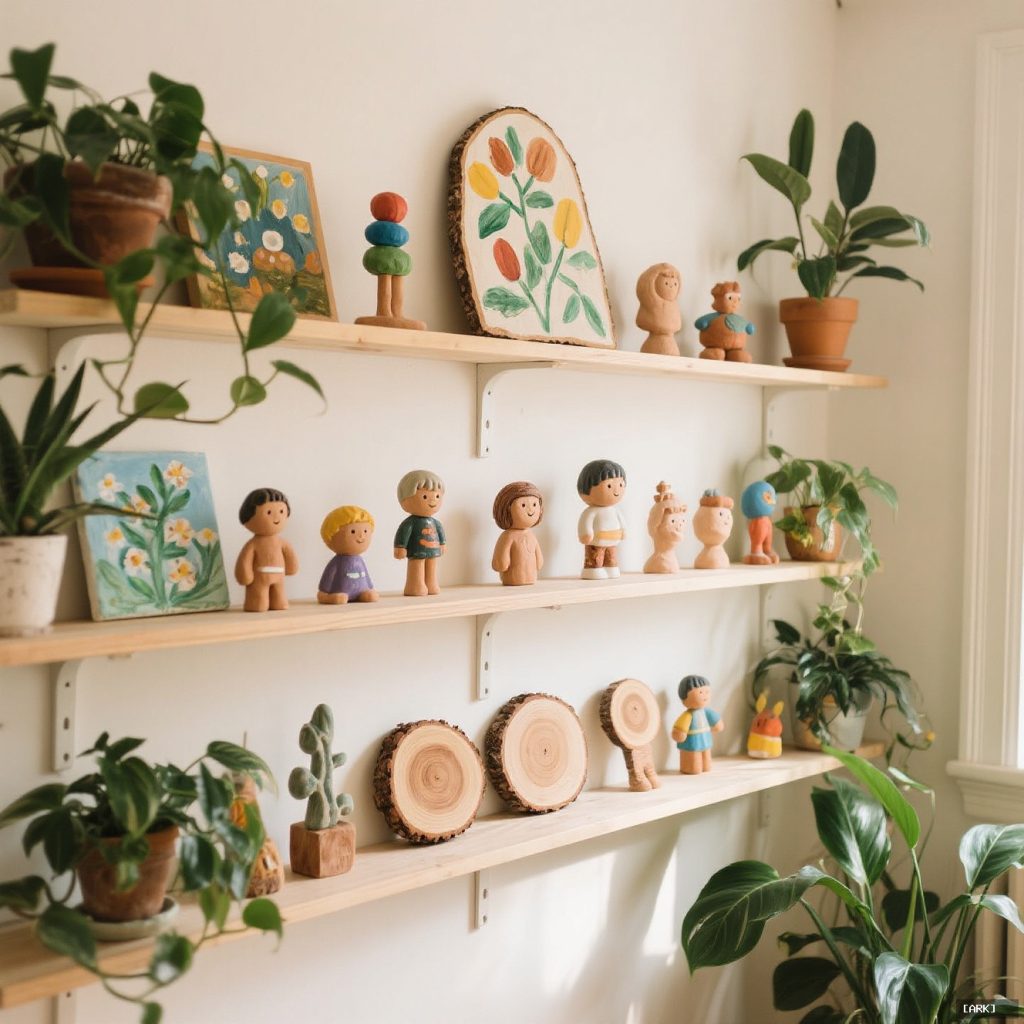
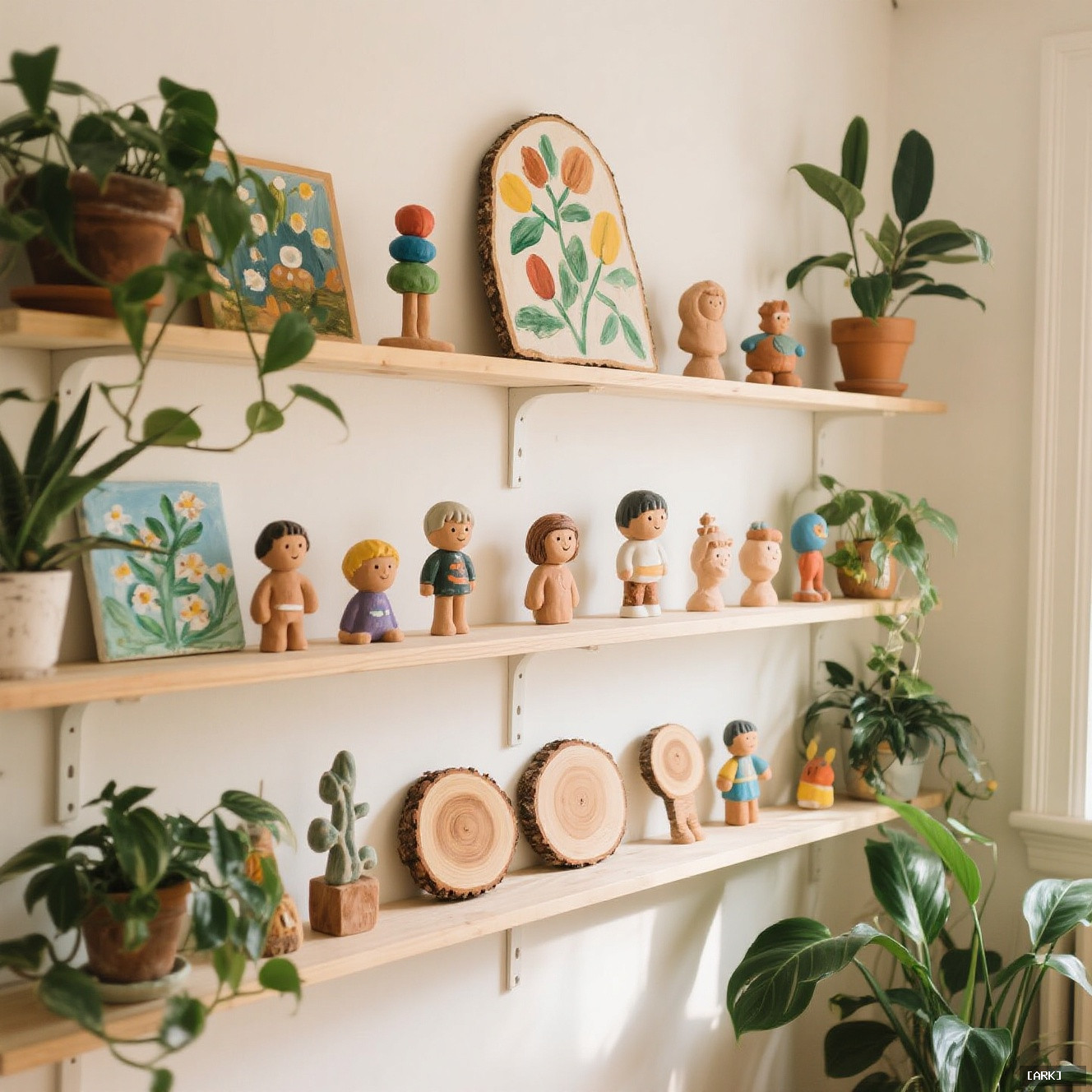
The solution is to designate a ‘gallery zone.’ This is a specific, agreed-upon place in your home where finished work lives. It could be a single floating shelf in the living room, a portion of a hallway wall, a dedicated windowsill in the kitchen, or a series of clip frames along a stairwell.
This act does several powerful things. First, it creates a respectful container for the work. It honors the effort and creativity without letting it visually overwhelm the entire house. Second, it introduces the concept of curation. Space is limited, so choices must be made.
This leads to the practice of rotation. Make it ceremonial. Every month or season, sit down together and decide which pieces will go into the gallery and which will be retired. Photograph the retired pieces together—let your child hold their work and beam with pride. Store these photos in a digital album or print them for a simple portfolio binder.
You’re teaching a vital lesson: art has a lifecycle. We celebrate it, we honor it, we preserve its memory, and then we make space for the new. This practice values both the process and the product while maintaining spatial—and mental—sanity.
Stealth Lessons in Seeing: Building Visual Literacy
How can family-friendly craft projects build a child's visual literacy?
Family-friendly craft projects build visual literacy by transforming everyday craft activities into lessons in seeing. Instead of just praising results, you can guide children to notice details like how sunlight affects a clay sculpture's shadows, how grouping blue pieces creates a calm feel, or how displaying feathers in a shallow box mimics a museum exhibit. This approach gives children the vocabulary of composition, color theory, and arrangement, turning a simple shelf or gallery zone into a living classroom for aesthetics. By pointing out these observations, you help children develop a deeper understanding of visual elements, fostering their ability to analyze and appreciate art and design in their environment.
This is where family-friendly craft projects become about more than glue and scissors. Your gallery zone is a living classroom for aesthetics. You’re not just saying “good job.” You’re building their visual literacy.
While arranging the shelf, point out what you see. “Look how the sunlight makes the texture of your clay sculpture cast such a cool shadow.” “I love how you grouped all the blue pieces together here; it feels so calm.” “Putting your feather collection in this shallow box makes each one feel special, like in a museum.”
You’re giving them the vocabulary of composition, color theory, and value. You’re showing them how their choices interact with light and space. They learn that their work exists in a relationship with its environment. Maybe the orange in their painting picks up the orange in the rug. Perhaps the vertical lines of their stick construction echo the window muntins. These observations connect their creativity to the wider world of design that surrounds them every day.
From Decoration to Purpose: Crafts That Work
How do family-friendly craft projects bridge the gap between decoration and purpose?
Family-friendly craft projects bridge the gap between decoration and purpose by creating functional items that serve a daily need while adding beauty to the home. Instead of focusing solely on wall art, these crafts produce useful objects like a child-decorated clay bowl for keys, hand-stamped linen napkins for meals, painted wooden pegs for a calendar, or a decorated tile used as a trivet. Such projects transform crafting from a temporary activity into a lasting contribution to the household. They become lived-with items, not just looked-at decorations, strengthening the connection between creativity and everyday life.
There’s a profound non-obvious connection between crafts and home space: functionality. The most cherished family-friendly craft projects are often those that serve a purpose.
Think beyond the wall. A child-decorated clay bowl for keys by the door. A set of hand-stamped linen napkins for Sunday dinners. Painted wooden pegs for the family calendar. A decorated tile that becomes a trivet. A simple loom-woven coaster.
These objects bridge the gap between mere decoration and purposeful contribution. The craft becomes lived-with, not just looked-at. Every time you drop your keys in that bowl, you interact with your child’s art. It’s part of the home’s operational fabric. This instills a powerful sense of ownership and value. They didn’t just make a thing; they made a thing that *helps*.
Your Practical Blueprint for Success
Ready to shift your craft philosophy? Here’s a actionable checklist to start your first display-worthy project.
- Begin with the End in Sight: Before you gather supplies, define the display destination and its size limits. “We’re making something for the 24×24 inch space on the kitchen wall.”
- Curate a Natural Palette: Choose 3-4 material types (e.g., wood slices, wool roving, black paper, white glue) and a limited color scheme before the project begins.
- Embrace the Frame: Use consistent, simple mounting methods. Clip frames, floating shelves, a cork strip, or a common mat color create instant cohesion.
- Collaborate on Display: Involve kids in the arrangement and hanging process. Their opinions on placement matter.
- Schedule the Rotation: Put a quarterly “gallery refresh” on the family calendar. Make it a fun ritual with snacks.
- Create a “Free Craft” Zone: Have a separate bin and space for unbridled, no-rules creation. Glitter and googly eyes have their place here. This honors pure process without compromising your display goals.
Navigating the Inevitable Questions
This approach brings up valid concerns. Let’s address them head-on.
Won’t limiting materials stifle creativity?
Paradoxically, constraints are the engine of creativity. A blank page is intimidating. A thousand cheap supplies are distracting. But three colors of felt, some cardboard, and the challenge to make a creature? That’s a puzzle the mind loves to solve. It forces inventive thinking.
What if my child only wants to make a sparkly mess?
That’s what the “Free Craft” zone is for. Honor that impulse completely, but in its designated space. Explain the difference: “Right now we’re doing a project for our gallery shelf, so we’re using these woods and paints. After lunch, we can get out the glitter bin and make whatever you want!” Both modes have immense value.
How do I handle pieces I honestly don’t want to display?
Not every piece is gallery-worthy, and that’s okay. Celebrate the process enthusiastically. Then, when the time is right, practice letting go. Photograph it together. Praise a specific element (“I loved how focused you were mixing those colors”). Then, when they’re ready, recycle it. You’re teaching them that not every effort needs to be a permanent museum piece, and that’s a healthy lesson too.
The Lasting Impression
What lasting impression do family-friendly craft projects create?
When family-friendly craft projects are treated as collaborative dialogues about beauty and function, they transcend being disposable activities. Instead of just keeping children busy, these projects allow families to co-create their environment, building a home filled with thoughtful evidence of childhood rather than clutter. While the physical items may fade, the lasting impression is the memory of making something beautiful together, carefully choosing its place, and seeing it used and loved daily, integrating creativity into everyday life.
Family-friendly craft projects, reimagined this way, stop being disposable fillers. They become a series of collaborative dialogues about beauty, function, and place. You’re not just keeping little hands busy. You’re co-creating your environment. You’re building a home filled not with childish clutter, but with evidence of childhood—thoughtful, beautiful, and integrated.
The crayon drawings will eventually fade. But the memory of making something beautiful together, of carefully choosing where it should live, and of seeing it used and loved every day? That impression is permanent.
Sources & Further Inspiration
- The Artful Parent: Simple Ways to Fill Your Family’s Life with Art & Creativity – https://artfulparent.com/
- Cooper Hewitt, Smithsonian Design Museum’s Family Activities – https://www.cooperhewitt.org/education/family-activities/
- The Museum of Modern Art’s Art & Activity Interactive Coursera – https://www.moma.org/momaorg/shared/pdfs/docs/learn/courses/ArtandActivity_MoMA.pdf
- TinkerLab: A Hands-On Guide for Little Inventors – https://tinkerlab.com/book/
About Our Expertise
Drawing on years of hands-on work with natural materials and traditional crafting techniques, our team curates projects that blend aesthetic quality with child-friendly processes. We test each activity for safety, durability, and visual appeal, ensuring that every finished piece can proudly occupy a place in your home.
Rooted in the Chinese philosophy of wabi-sabi and mindful creation, our approach celebrates imperfection and the beauty of handmade objects. We partner with artisans and educators who specialize in age-appropriate craft instruction, bringing authentic cultural perspectives to family creativity.

 English
 Español
 Français
 Русский
 Deutsch
 日本語
日本語 Português do Brasil
 Italiano