
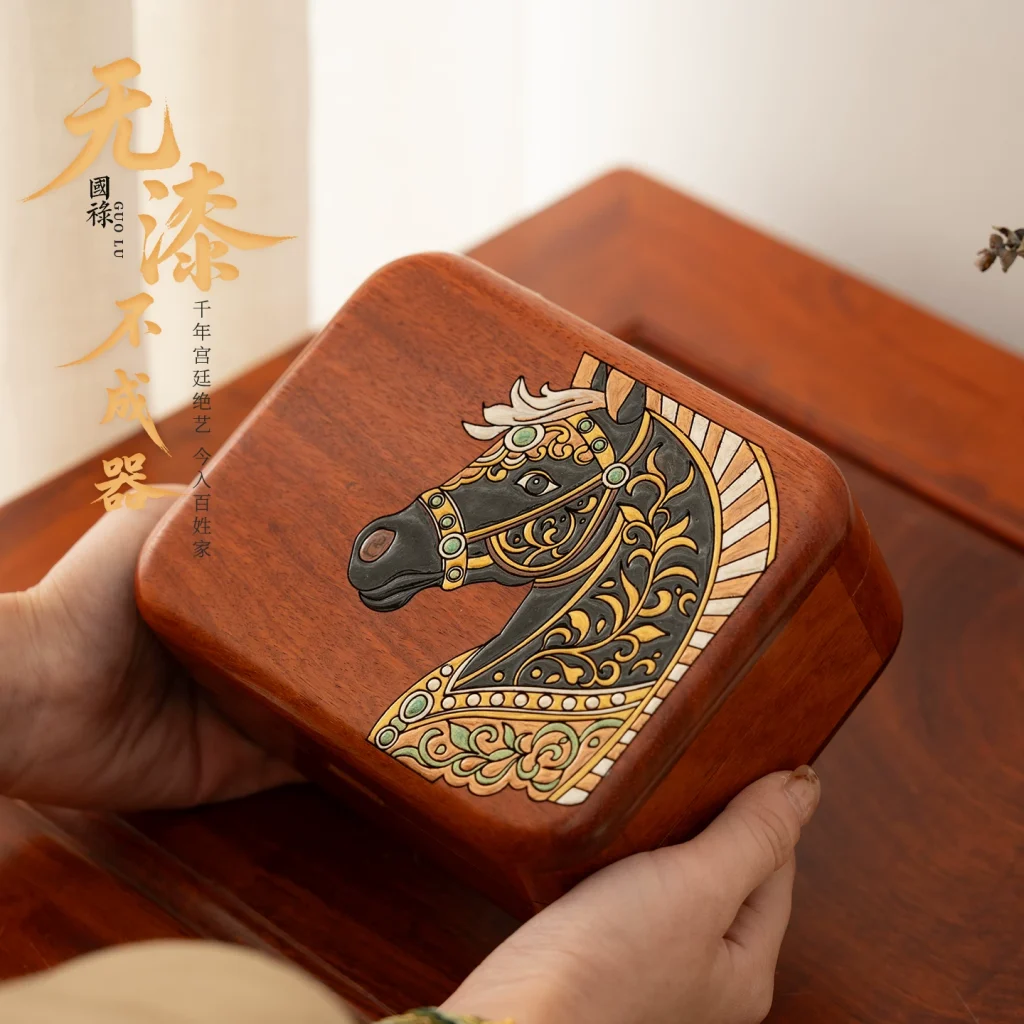
Folk toy making is far more than a simple craft. These traditional playthings are dense with meaning, born from necessity and shaped by entire worldviews.
The Core Distinction: Born from Necessity, Not a Design Brief
What is the core distinction between a folk toy and a modern manufactured toy?
The core distinction lies in their origins: folk toys are born from necessity and local resources, while modern toys result from design briefs and market research. A folk toy emerges from scarcity, using materials like corn husks, wool scraps, or river clay—whatever the environment provides. Its form is a direct negotiation between available resources and immediate need. In contrast, modern toys are mass-produced items designed for play, based on extensive testing and manufacturing precision. Thus, folk toys embody practical creativity and resourcefulness, whereas modern toys prioritize commercial appeal and safety standards.
Walk down any toy aisle today. You’re met with a sea of bright plastic, each item the result of extensive market research, safety testing, and manufacturing precision. Its purpose is singular: to be played with. A folk toy arrives from a different universe entirely.
Its origin is scarcity. Its blueprint is the local environment. A corn husk, left after harvest, becomes a doll. Scraps of wool from mending socks are woven into a small ball. River clay, smoothed and fired in a hearth, transforms into a whistle or a tiny animal. The form is a direct negotiation between what the land provides and what the culture needs a child to understand.
That slight wobble in a whittled rocking horse? It’s not a quality control failure. It’s a biography. It tells you about the knife used, the type of wood available, and the understanding that a child would interact with it vigorously, perhaps even outdoors. The toy was built to participate in a life, not to be preserved on a shelf. This fundamental difference—between an object designed for play and an object born from life’s raw materials—changes everything about how we see it.
The First Curriculum: Lessons Held in the Hand
What is the significance of folk toys in early childhood education according to lived culture?
Folk toys serve as a primary, tactile curriculum for children before formal schooling, embedding survival and social knowledge through hands-on learning. For example, carved animal sets teach local fauna, sizes, and hierarchies, while dolls with village-specific attire pass on cultural identity and tradition. This method relies on touch and arrangement, making education intuitive and deeply connected to daily life, ensuring lessons are learned through physical engagement rather than abstract teaching.
Long before formal schooling, children received their earliest and most tactile lessons through folk toys. These objects were a primary curriculum, a physical library of survival and social knowledge.
A set of animals carved from a single branch did more than entertain. It taught local fauna, their sizes, their hierarchies. Which animal was the largest? Which was the predator? The child learned through touch and arrangement. A doll was rarely a generic baby. It wore specific, miniature versions of traditional dress—the exact embroidery patterns of a particular village, the distinctive hat of a region. A child cradling that doll was, unconsciously, absorbing and rehearsing their own identity. They learned who they were by holding it.
The transmission happened during the making, too. Sitting with a grandparent, twisting grasses into a figure or helping to stir natural dye, a child absorbed more than technique. They heard the stories attached to the materials, the taboos about certain colors or shapes, the old songs hummed during repetitive work. They learned botany from the plants used, physics from balancing a spinning top, and geometry from the structure of a woven basket. The toy was the final exam, but the classroom was the hearth, the workshop, the riverbank.
Intentional Imperfection: The Space for Spirit and Imagination
What is intentional imperfection in folk toys and why is it significant in lived culture?
Intentional imperfection in folk toys refers to deliberate asymmetry, rough finishes, or missing features—such as simplified crosses for eyes instead of realistic details. Far from a lack of skill, this practice reflects a cultural belief that perfect symmetry might invite spirits to inhabit the object, a concept respected in many traditions. By leaving toys intentionally flawed, makers create space for spirit and imagination, allowing the object to remain accessible for play rather than becoming a sacred vessel. This approach honors craftsmanship while prioritizing the toy's role in lived culture as a tool for creativity and human connection.
To a modern eye, trained on machined perfection, many folk toys can seem rough or asymmetrical. It’s easy to mistake this for a lack of skill or care. The opposite is usually true. That “flaw” is a feature, often a deeply intentional one.
In numerous cultures, perfect symmetry and lifelike representation were reserved for ritual or sacred objects, realms belonging to the divine. To create a doll that was too perfect, too complete, was to risk inviting a spirit to inhabit it—a dangerous prospect. The deliberate asymmetry, the missing facial feature, the use of simple crosses or lines for eyes, was a protective measure. It kept the object safely the human and the playful.
This design philosophy also served the child’s mind. A perfectly detailed, factory-made action figure leaves little to the imagination. Its story is pre-scripted. A cloth doll with a simple stitched smile and button eyes, however, is a vessel of potential. Is she happy today? Is she tired? The child’s imagination completes the narrative. The toy becomes a co-creation, a partnership between the maker’s hands and the child’s inner world. This value of utility, character, and open-ended possibility stands in stark contrast to our current culture of polished, algorithmically-approved aesthetics.
The Social Media Paradox: Showcase Versus Story
What is the social media paradox in folk toy making between showcase and story?
The social media paradox in folk toy making refers to the tension between using platforms like Instagram and Pinterest as powerful showcases for handicraft creation and the risk of stripping away deeper cultural context. While these tools allow artisans from remote communities to share work, find audiences, and sustain their practice economically by captivating millions with the visual beauty of items like Ukrainian motanka dolls or Japanese kokeshi, the medium's demand for shareable aesthetics can flatten profound meanings into mere visual trends. This can prioritize superficial appeal over the authentic story, potentially undermining the cultural significance behind each crafted piece.
Today, platforms like Instagram and Pinterest have become global vitrines for handicraft creation. On one hand, this is a powerful tool. Artisans from remote communities can share their work, find audiences, and sustain their practice economically. The sheer visual beauty of a Ukrainian motanka doll, a Peruvian torito from Pucará, or a Japanese kokeshi can captivate millions, raising awareness of these traditions.
But the medium has a voracious appetite for aesthetics, often at the expense of context. The drive for shareability can flatten deep meaning into a mere visual trend. That stunning motanka, photographed against a rustic backdrop, might be admired for its intricate, colorful threads. What’s often missing is the understanding that its face is traditionally left blank or cross-stitched, that the winding of the thread is meant to be an unbroken, protective ritual, and that it is far more a talisman than a plaything. It becomes “cottagecore” decor, stripped of its sacred purpose.
The algorithm rewards the “look,” not the layered story of its making, the prayers woven into it, or the specific occasion it marks. The risk is that folk toy making becomes another consumable style, its soul traded for likes.
Unexpected Historians: Mapping Trade in Pigment and Beads
How do folk toys reveal unexpected histories of ancient trade and commerce?
Folk toys often serve as intimate records of ancient commerce and connection. For example, a Romanian clay whistle colored with a non-local blue pigment indicates trade for minerals from distant regions, while a Native American doll from the Great Plains adorned with Venetian glass beads maps a vast exchange network stretching from Europe. These objects provide archaeologists and historians with evidence of trade routes beyond traditional sources like pottery shards or coin hoards, showing how everyday playthings can carry secrets about adult worlds, including the movement of goods and cultural interactions across continents.
Beyond teaching children, these objects hold secrets about the adult world they came from. One of the most non-obvious stories a folk toy can tell is about ancient commerce and connection.
Archaeologists and historians often piece together trade routes from shards of pottery or coin hoards. But a folk toy can be a more intimate ledger. The presence of a specific, non-local blue pigment on a Romanian clay whistle suggests trade for minerals from distant regions. The pattern of Venetian glass beads on a Native American doll from the Great Plains maps a staggering process of exchange—from European workshops across oceans and continents, through networks of traders, and finally into the hands of a craftsperson who incorporated them into a local design language.
These toys were not made in cultural isolation. They are physical nodes in vast, informal networks of human connection. They show how aesthetics, techniques, and materials traveled along with spices and textiles, carried by ordinary people through migration, marriage, and seasonal fairs. The toy in a child’s hand might quietly testify to a cosmopolitan world of exchange that history books, focused on kings and cargo manifests, can easily overlook.
Modern Relevance: Cognitive Tools for a Disposable World
What is the modern relevance of folk toy making as cognitive tools?
The modern relevance of folk toy making lies in its role as a set of cognitive tools essential for a disposable world. This craft embodies slow, iterative problem-solving within strict constraints, using limited materials like wood, straw, or fabric to create something. It cultivates resourcefulness, resilience, and a deep familiarity with materiality—such as wood grain, cloth drape, or clay plasticity. In an age of on-demand consumption and digital abstraction, these practices counter disposability by fostering sustainable thinking, creativity, and hands-on learning, making them invaluable for reconnecting with tangible skills and mindful creation.
Is the study and practice of folk toy making merely an act of preservation, like storing seeds in a vault? Its greatest value may be as a set of cognitive tools desperately needed today.
At its heart, this craft embodies slow, iterative problem-solving within strict constraints. You have this piece of wood, this handful of straw, these leftover fabrics. What can you make? This process cultivates resourcefulness, resilience, and a deep familiarity with materiality—the grain of wood, the drape of cloth, the plasticity of clay. In an age of on-demand consumption and endless digital abstraction, this tangible engagement is a radical act.
Furthermore, these traditional playthings celebrate the visible process. The knife mark on the wood, the uneven stitch, the thumbprint in the clay—these aren’t errors to be hidden. They are records of the human hand, testaments to the maker’s presence. In a culture obsessed with seamless, polished outcomes (often created by invisible factories or algorithms), embracing the fingerprint is profoundly humanizing. It reconnects us to the joy of making, the acceptance of imperfection, and the understanding that value isn’t dictated by price tags but by story, effort, and love.
How to Look at a Folk Toy: A Practical Guide
When you encounter a folk toy, whether in a museum, a market, or a photograph, move beyond a simple “it’s pretty” or “it’s old.” Engage with it as a detective would. Ask questions of its form and substance.
- Interrogate the Materials: Are they local and humble (corn husk, pinecone, scrap leather) or do they indicate trade or luxury (imported beads, silk remnants)? This speaks to economy and access.
- Feel Its Function (Even Visually): Does its shape suit a small hand? Is it lightweight for carrying, or sturdy for rough play? Its design reveals its intended relationship with a child.
- Seek the “Mark”: Look for asymmetry, a “mistake” in patterning, or a simplified feature. Could this be intentional—a cultural safeguard, a stylistic signature, or an invitation for the imagination?
- Ask About the Maker: Was it crafted by a family member for a specific child? Made in quantity for a seasonal festival or market? The context of its creation shifts its meaning from personal totem to communal commodity.
- Decode the Lesson: What might it have been designed to teach? Animal knowledge, social roles, manual skill? Try to see the pedagogy in its form.
Untangling Common Questions
Several misconceptions often cloud our view of this craft. Let’s address them directly.
- “Weren’t these just made because people were poor?” Scarcity was a powerful driver, but it wasn’t the sole purpose. Limitation bred extraordinary creativity. More importantly, it encoded a whole value system about utility, waste-not-want-not ethics, and deriving abundance from what the immediate world provided. The toy was a lesson in that philosophy.
- “Is any old handmade toy a ‘folk’ toy?” Not exactly. The term “folk” implies a connection to a shared, often anonymous, community tradition. It’s passed down and varies within a cultural framework. A beautifully handcrafted doll from a 1950s hobbyist kit is not inherently a folk doll, whereas a doll made following generations-old regional patterns is, even if made yesterday.
- “Is it cultural appropriation to make toys from traditions not my own?” This is a crucial consideration. If done superficially—copying the look of a sacred or culturally significant item for decoration without understanding its context—it can be deeply harmful. Authentic appreciation starts with deep respect, learning the stories and protocols, and often, supporting artisans from that community rather than replicating their work. It’s about honoring the source, not mining it for aesthetics.
Where to Learn More

If your curiosity is piqued, the process has just begun. These resources offer gateways into the rich world of traditional playthings and handicraft creation.
- The Strong National Museum of Play: Their extensive collections provide a tangible history of play from around the globe. https://www.museumofplay.org/collections/
- UNESCO Intangible Cultural Heritage: This database lists and describes living craft traditions, including toy-making, from member countries. https://ich.unesco.org/
- American Folk Art Museum: Offers insights into material culture and the philosophies behind artisanal creation. https://folkartmuseum.org/
- V&A Museum of Childhood (part of the Victoria and Albert Museum): A treasure trove of research and objects detailing the social history of toys. https://www.vam.ac.uk/moc/
- Journal of Material Culture: For academic depth, this journal publishes scholarly articles on the social lives of objects. https://journals.sagepub.com/home/mcu
About Our Expertise
Drawing on decades of ethnographic research and firsthand collaboration with rural artisans in China's Yunnan and Guizhou provinces, our team documents the techniques, materials, and cultural narratives behind folk toy making. Each tradition is verified against academic publications and oral histories to ensure authenticity.
Chinese folk toy making is a UNESCO-recognized intangible cultural heritage. From corn husk dolls to clay whistles, these objects embody local knowledge of natural resources, seasonal rhythms, and intergenerational teaching. Our analysis respects the sacred and functional dimensions, avoiding superficial stylization.

 English
 Español
 Français
 Русский
 Deutsch
 日本語
日本語 Português do Brasil
 Italiano