
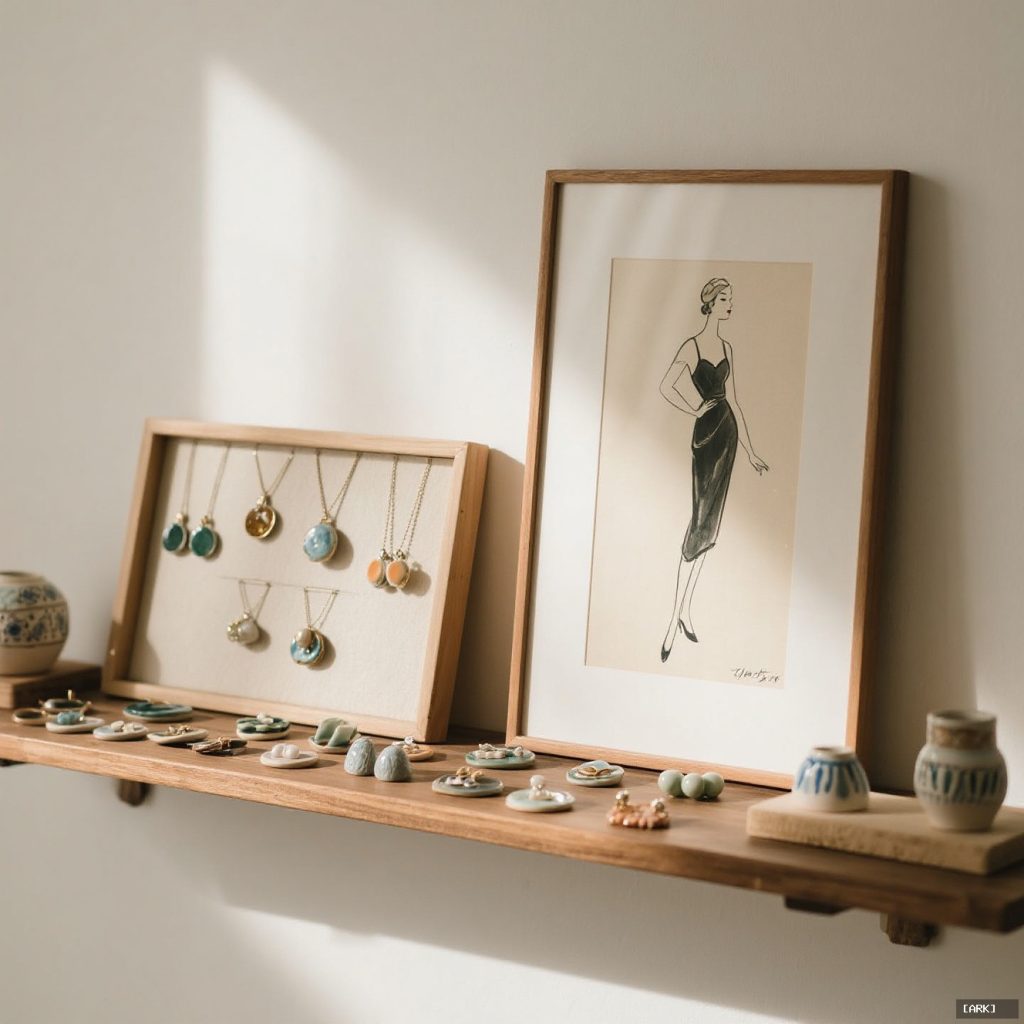
Fashion-forward handmade goods are redefining value in today’s collectibles market. This movement champions artisanal accessories and designer handmade items that carry a story in every stitch and weld.
Gone are the days when collectibles were synonymous with fragile figurines behind glass. The new wave of collectors seeks objects with soul—pieces that bear the subtle, irreplicable marks of human hands. They’re investing in narratives, not just novelties.
The New Currency: Story Over Stuff
What separates a passing trendy craft from a future heirloom? The difference often lies in a compelling story. A mass-produced bag holds value in its logo. A hand-tooled leather bag, however, holds value in its origin. Who made it? What inspired its unique clasp? How was the leather sourced and tanned?
This narrative depth creates an emotional anchor that transcends seasonal trends. When you buy a fashion-forward handmade good, you’re not just acquiring a functional item. You’re buying a chapter of an artist’s career, a specific moment in their creative evolution. That connection forms the bedrock of its lasting worth.
From Cute to Collectible: The Key Indicators
So, how does a piece make the leap? Several factors signal that a designer handmade item is built for longevity.
First, look for a distinct and evolving artistic voice. Can you spot the maker’s hand across different pieces? It might be a signature treatment of metal, a unique weaving pattern, or a recurring thematic obsession. This consistency shows depth, not just a knack for a single popular design.
Technical innovation is another powerful marker. An artisan who masters a traditional technique, then bends it to their own vision, commands attention. Think of a jeweler using ancient granulation to create starkly modern forms, or a textile artist developing a new method of natural dyeing that produces never-before-seen hues. This innovation pushes the craft forward.
Finally, provenance is everything. The most collectible pieces have a clear, documented lineage. A receipt from the maker’s studio, a note included in the packaging, or documentation from a respected gallery show—these aren’t just paperwork. They’re the birth certificate for your collectible, crucial for its future story and value.
Navigating the Hype: Social Media’s Double Edge
Instagram and TikTok have been rocket fuel for artisanal accessories. They’ve given makers global storefronts and connected them directly with audiences. A viral moment can sell out a collection in hours. But does that viral fame translate to lasting collectibility?
Not always. The “Instagrammable” piece—designed purely for its shareable aesthetics—often has a short shelf life. Its value is tied to a fleeting visual trend. The collectibility of fashion-forward handmade goods, however, is built by makers who use social platforms to do more than showcase finished products.
Look for artisans who document their process. Those who share sketches, explain material choices, and discuss their philosophical struggles. They’re building a community, not just a following. This creates a narrative that deepens over time. The value accrues to the artist’s entire body of work and the world they’re building, making each piece a more meaningful artifact within that story.
The Collector’s Eye: Spotting Value and Red Flags
Judging the future value of trendy crafts requires a blend of intuition and analysis. Scarcity matters, but intelligent scarcity matters more. A limited edition that’s part of a coherent, named series (e.g., “The Echoes Collection, 5/20”) carries more weight than a random one-off. It shows intentionality and artistic development.
Watch for crossover appeal. Is the maker’s work being acquired by design museums or featured in art-focused publications, not just fashion blogs? This institutional recognition is a strong signal that the work is being evaluated for its cultural contribution, not just its wearability.
Conversely, be wary of perfect mimicry. An artisan who flawlessly replicates a past popular style—their own or someone else’s—may lack the innovative spark that drives long-term value. Collectibility thrives on a unique, sometimes imperfect, point of view. Another subtle red flag is a disconnect between an item’s high price and the maker’s visible investment in their craft. If their tools seem neglected, their material knowledge appears shallow, or they show no evidence of ongoing education, it may signal unsustainable production.
The Living Collection: To Wear or Not to Wear?
A common dilemma for collectors of designer handmade items is whether to use them. The instinct might be to preserve them in mint condition. But many argue that respectful use completes an object’s story.
A perfectly preserved, never-worn artisanal necklace can feel sterile, like a butterfly pinned in a case. When you wear a piece, you add to its provenance. The gentle patina on a brass buckle, the soft creases in a vegetable-tanned leather strap—these become part of its history. They testify to a life lived beautifully. Of course, care is paramount. Understanding the materials and following the maker’s care instructions allows you to enjoy a piece while ensuring it endures.
Building Your Archive: Care and Documentation
Think of your collection as a living archive. Proper physical care is the first step. Use acid-free tissue paper for storage, avoid prolonged sun exposure, and maintain stable humidity if possible. But the documentation is equally critical.
Create a digital dossier for each significant piece. This should include:
- High-resolution photographs from multiple angles.
- A scan of the original receipt or certificate of authenticity.
- Any correspondence with the maker (emails, notes).
- Detailed notes on materials, techniques, and care instructions.
- Photographs of you wearing or using the item at different times.
This file doesn’t just help with future insurance or resale. It weaves the full mix of the object’s life, from the maker’s bench to your own experiences.
Your Acquisition Checklist
Before adding a new fashion-forward handmade good to your collection, run through these questions:
- Can I articulate what makes this maker’s artistic voice unique?
- Is this piece part of a defined series or a pivotal moment in their work?
- What is the provenance? Can I trace it back to the studio or a reputable seller?
- Are the materials chosen for longevity, or are they inherently delicate?
- Does the artist have a visible trajectory of growth and professional development?
Navigating Common Questions
Is it better to buy new directly from the maker or seek vintage pieces?
Both approaches have merit. Buying new supports living artists and lets you capture the very beginning of an object’s story. You become its first caretaker. Seeking vintage or secondary-market pieces allows you to acquire work from an artist’s earlier, perhaps rarer, periods. It shows how their style has evolved and proves the piece has already stood the test of time.
How do I handle authentication for a piece bought on the secondary market?
Direct purchase is always simplest. For pre-owned items, seek any original documentation like signed tags, specific packaging, or a dated receipt. Many established makers’ studios offer authentication services for a fee if you provide clear photos and details. Reputable vintage dealers specializing in artisanal accessories will also provide their own provenance research.
Sources & Further Reading
✨ You Might Also Enjoy

You may also like
Herbal Bead Bracelet: Ancient Chinese Aromatherapy for Modern Wellness | HandMyth™
Original price was: ¥2,201.00.¥1,354.00Current price is: ¥1,354.00. Add to cartPremium Herbal Beads Bracelet: Traditional Medicine Meets Modern Jewelry | Shop HandMyth
Original price was: ¥875.00.¥609.00Current price is: ¥609.00. Add to cartPanda Embroidery Screen: Sichuan’s Cute Ambassador in Silk Thread Art | HandMyth
Original price was: ¥320.00.¥231.00Current price is: ¥231.00. Add to cartPanda Gift Set: Curated Chinese Treasures for Panda Lovers | HandMyth™ (Free Gift Wrap)
Original price was: ¥136.00.¥118.00Current price is: ¥118.00. Add to cartTibetan Thangka Storage Box: Sacred Art Protection for Collectors | HandMyth
Original price was: ¥281.00.¥219.00Current price is: ¥219.00. Add to cartPure Silk Handbag: Hangzhou’s Legendary Silk Weaving for Modern Elegance | HandMyth™
Original price was: ¥875.00.¥786.00Current price is: ¥786.00. Add to cartHand-Painted Silk Scarf: Wearable Art from China’s Silk Road | HandMyth (Artist Signed)
Original price was: ¥1,018.00.¥936.00Current price is: ¥936.00. Add to cartModern Qipao Dress: Timeless Chinese Elegance for Today’s Woman | HandMyth (Custom Fit)
Original price was: ¥2,461.00.¥2,242.00Current price is: ¥2,242.00. Add to cartEmbroidered Chinese Handbag: Suzhou Silk Embroidery Meets Modern Fashion | HandMyth™
Original price was: ¥680.00.¥646.00Current price is: ¥646.00. Add to cart























