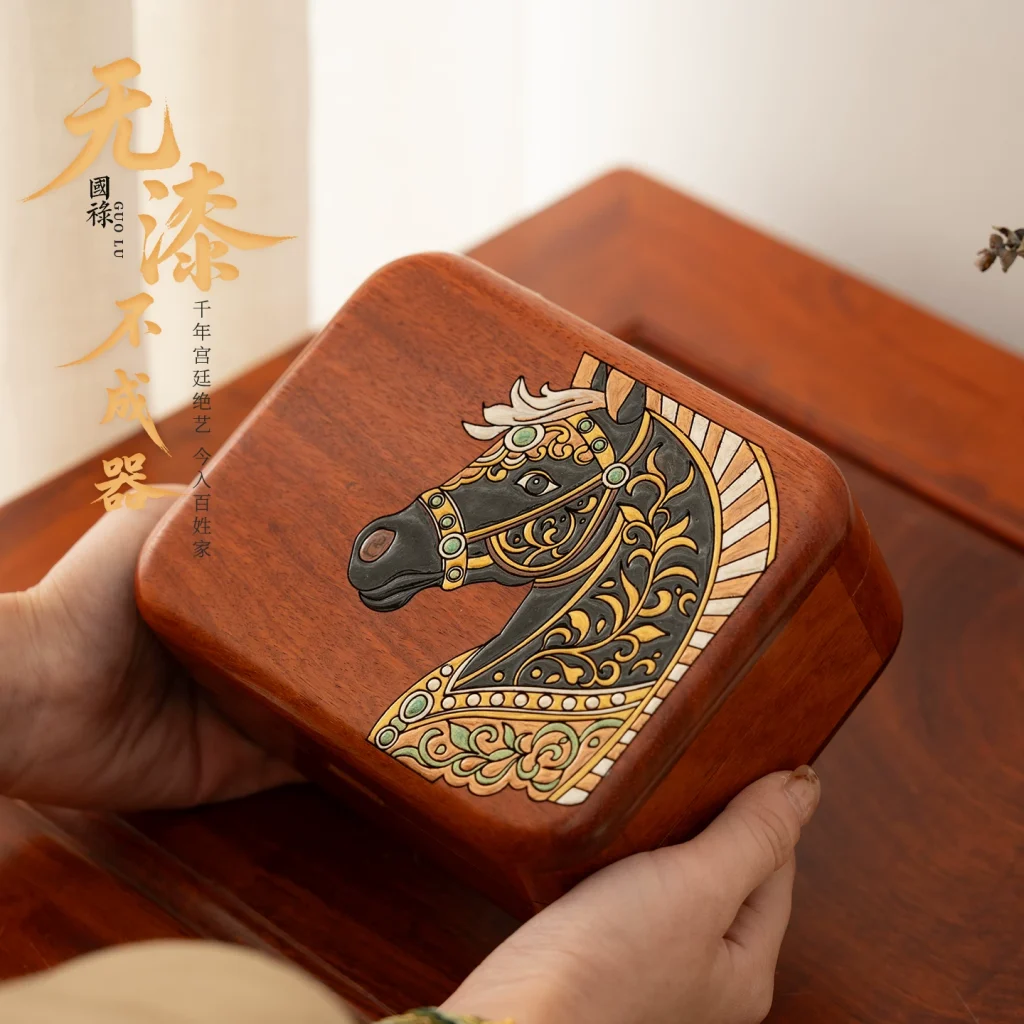
In a workshop outside Suzhou, a master embroiderer pauses her needle. She’s not working on the traditional floral patterns her grandmother taught her, but on a collaborative piece with a contemporary artist—silken threads capturing digital glitches. This moment encapsulates the subtle but significant shifts occurring across China’s Intangible Cultural Heritage crafts, where ancient techniques meet modern sensibilities in a delicate dance of preservation and innovation.
The Digital Bridge: Technology as a Transmission Tool
How is technology acting as a digital bridge for transmitting traditional Chinese craftsmanship?
Technology is creating new pathways for transmission without replacing traditional skills. For example, master carvers in Fujian use 3D scanning to document intricate woodwork patterns, preserving designs once held only in muscle memory. Artisans like Zhang Wei use scanners to teach apprentices faster, allowing them to see cuts from multiple angles. This hybrid approach has reduced complex technique training time by nearly 40% while maintaining traditional quality standards.
Technology is not replacing traditional skills but creating new pathways for their transmission. Master carvers in Fujian now use 3D scanning to document intricate woodwork patterns, preserving designs that once existed only in muscle memory. Zhang Wei, a third-generation lacquerware artisan, explains, “We’re not abandoning the old ways. The scanner helps me teach apprentices faster—they can see the angle of every cut from multiple views.” This hybrid approach has reduced training time for complex techniques by nearly 40% while maintaining traditional quality standards.
Digital platforms have expanded this bridge beyond physical workshops. The UNESCO Intangible Cultural Heritage lists several Chinese crafts, and online repositories now host high-resolution images and instructional videos. These resources allow global audiences to appreciate the complexity of crafts like cloisonné or paper-cutting, while artisans use social media to share their processes. One jade carver from Xinjiang noted, “Through live streams, I can demonstrate polishing techniques to hundreds of students at once—something unimaginable a generation ago.”
This digital integration extends to augmented reality applications that let users virtually handle rare artifacts or explore the symbolism in embroidery patterns. Such tools not only educate but spark curiosity, drawing new generations toward crafts they might otherwise never encounter.
Material Evolution and Sustainable Practices
How are material evolution and sustainable practices transforming Chinese craftsmanship?
Chinese craftsmanship is evolving through sustainable material practices. In Jingdezhen, porcelain artists create new glazes from recycled ceramic waste, while a Yunnan collective develops plant-based alternatives to endangered rosewood using innovative pressing techniques. These adaptations, as noted by artisans, are about ensuring continuity by finding new materials when traditional ones disappear, blending innovation with heritage to maintain craft traditions.
Traditional material sourcing is undergoing quiet transformation. Porcelain artists in Jingdezhen increasingly work with recycled ceramic waste, creating new glazes from broken fragments. A small collective in Yunnan has developed plant-based alternatives to endangered rosewood, achieving similar grain patterns through innovative pressing techniques. These adaptations aren’t about cutting corners but ensuring continuity. As one paper-cutting master noted, “When the old materials disappear, we must either disappear with them or find new roots.”
Li Ming, a bamboo weaver from Anhui, captures this balancing act: “My grandfather taught me that good craft respects both the material and the moment. Today that means sometimes using sustainable bamboo varieties and occasionally incorporating steel wire for structural pieces. The tradition isn’t in refusing change—it’s in making changes that honor the craft’s spirit.” This philosophy extends to natural dye specialists who now cultivate their own indigo plants to ensure consistent supply, reducing pressure on wild populations while maintaining colorfastness that rivals historical benchmarks.
Material banks are emerging as vital resources, where communities pool and preserve traditional materials like special clays, rare woods, and natural dyes. These shared repositories, often supported by the Cultural Heritage Administration of China, help ensure that future artisans won’t face shortages of essential components.
Intergenerational Knowledge Transfer
How is intergenerational knowledge transfer being preserved in Chinese craftsmanship?
In China, innovative programs are bridging the gap in craft knowledge transfer caused by urbanization. For example, in Zhejiang province, a government-supported initiative pairs retired master artisans with vocational school students. This combines structured curricula with hands-on mentorship, allowing young people like 19-year-old Chen Yu to rediscover traditional crafts, such as silk weaving, and appreciate their modern relevance, comparing the precision and pattern recognition to skills like coding.
The transmission of craft knowledge faces challenges in rapidly urbanizing China. Many young people migrate to cities for education and employment, creating gaps in traditional apprenticeship systems. However, innovative programs are bridging this divide. In Zhejiang province, a government-supported initiative pairs retired masters with vocational school students, combining structured curricula with hands-on mentorship. “I thought silk weaving was outdated until I tried it,” says 19-year-old participant Chen Yu. “Now I understand it’s like coding—both require precision and pattern recognition.”
Documentation plays a crucial role in preserving techniques that might otherwise be lost. The World Intellectual Property Organization has worked with Chinese craft communities to develop traditional knowledge databases, protecting both cultural heritage and economic interests. As one ivory carving preservationist (working with legal mammoth ivory alternatives) observed, “We must record not just the how, but the why—the stories behind each motif, the seasonal considerations in material selection.”
These efforts extend beyond technical skills to encompass the cultural context that gives each craft meaning. Recording oral histories, documenting regional variations, and preserving the stories behind symbolic patterns all contribute to a richer understanding of these living traditions.
Economic Viability and Market Adaptation
How are Chinese artisans ensuring economic viability and market adaptation for intangible cultural heritage crafts?
Artisans are achieving economic viability through premium customization and limited editions, such as Suzhou embroidery studios creating personalized portraits at high prices. They also adapt by collaborating on functional items like bamboo-woven laptop sleeves and porcelain Bluetooth speakers, blending traditional aesthetics with modern use. Tourism further supports revenue, with craft villages offering immersive experiences to visitors, ensuring these crafts remain sustainable in contemporary markets.
Sustaining ICH crafts requires economic viability alongside cultural preservation. Many artisans are finding success through premium customization and limited editions. A Suzhou embroidery studio now creates personalized portraits using hair-thin threads, commanding prices ten times higher than standard pieces. Others collaborate with designers on functional items—bamboo-woven laptop sleeves, porcelain Bluetooth speakers—that bring traditional aesthetics into contemporary contexts.
Tourism provides another revenue stream, with craft villages offering immersive experiences. Visitors to a Guizhou batik workshop can design their own patterns and watch them printed using ancient indigo fermentation methods. “People don’t just want to buy something—they want to understand its making,” explains workshop owner Yang Li. According to China’s Ministry of Culture and Tourism, cultural tourism revenues grew 15% annually pre-pandemic, with craft demonstrations being among the most popular attractions.
The market adaptation extends to e-commerce platforms where artisans can reach global customers directly. One family-run cloisonné workshop saw international sales increase by 300% after partnering with a cross-border e-commerce platform, demonstrating how digital marketplaces can create sustainable livelihoods for traditional craftspeople.
Practical Preservation Strategies
What are some practical preservation strategies for Chinese craftsmanship?
Practical preservation strategies for Chinese craftsmanship include digital archiving, such as creating 3D models and recording master artisans, often supported by grants from the Cultural Heritage Administration of China. Material banks establish shared repositories of traditional materials like special clays and natural dyes to ensure future availability. Cross-training encourages artisans to learn complementary skills, like a woodcarver studying digital modeling or an embroiderer learning textile conservation, fostering adaptability and continuity of craft traditions.
For communities seeking to preserve their craft traditions, several approaches have proven effective:
- Digital Archiving: Create 3D models of complex works and record master artisans demonstrating techniques. The Cultural Heritage Administration of China offers grants for such projects.
- Material Banks: Establish shared repositories of traditional materials—special clays, rare woods, natural dyes—to ensure future availability.
- Cross-Training: Encourage artisans to learn complementary skills; a woodcarver might study digital modeling, while an embroiderer learns textile conservation.
- Story Integration: Document and share the cultural narratives associated with each craft, enhancing its value beyond mere aesthetics.
A jade carving master from Henan implements these strategies in his family workshop: “We film every major piece from rough stone to final polish. The videos help with teaching, but they’ve also become popular online—viewers appreciate seeing the transformation.”
These practical approaches create multiple layers of protection for endangered crafts, ensuring that even if one transmission method fails, others can preserve the knowledge for future generations.
Global Connections and Cultural Exchange
How do global connections and cultural exchange impact Chinese Intangible Cultural Heritage (ICH) crafts?
Global connections and cultural exchange impact Chinese Intangible Cultural Heritage (ICH) crafts by facilitating international dialogues through exhibitions, artist residencies, and academic collaborations. These interactions showcase the craft's evolution and often lead to innovative cross-cultural creations. For example, an exhibition at the Victoria and Albert Museum displayed contemporary Chinese porcelain alongside historical pieces, while a partnership between Sichuan lacquerware artists and Finnish designers produced temperature-sensitive finishes. Such exchanges not only promote cultural understanding but also create economic opportunities by introducing these crafts to new global audiences and markets.
Chinese ICH crafts increasingly participate in global dialogues through exhibitions, artist residencies, and academic collaborations. The recent “Crafting Modernity” exhibition at the Victoria and Albert Museum featured contemporary interpretations of Chinese porcelain alongside historical pieces, demonstrating the craft’s ongoing evolution. Such exchanges often yield unexpected innovations—a partnership between Sichuan lacquerware artists and Finnish designers resulted in temperature-sensitive finishes that change color with touch.
These international connections also create economic opportunities. According to UNESCO’s 2022 Global Report on Cultural Policies, countries with strong craft export programs see higher retention of traditional skills among youth. As one policy expert noted, “When young people see global demand for their heritage, they’re more likely to value what might otherwise seem provincial.”
The cross-cultural pollination extends beyond aesthetics to technique and philosophy. Japanese urushi masters have shared conservation methods with Chinese lacquer artists, while Korean ceramicists have exchanged kiln technology with Jingdezhen potters. These exchanges enrich all participants while strengthening the global ecosystem of traditional crafts.
Looking Forward: Tradition as Living Practice
The future of Chinese ICH crafts lies not in museum-like preservation but in dynamic adaptation. The most successful practitioners treat tradition as a foundation rather than a boundary—honoring core principles while embracing appropriate innovations. A fourth-generation ceramicist captures this approach: “My great-grandfather would never recognize the electric kiln I use, but he’d understand why I still mix my glazes by hand according to his notes. The spirit remains, even as the tools evolve.”
This living tradition manifests in countless workshops across China, where artisans balance respect for the past with responsiveness to the present. Whether through digital documentation, sustainable materials, or new market strategies, they’re ensuring that China’s intangible cultural heritage remains exactly that—living, breathing, and continually reinvented for each new generation.
The quiet revolution continues in studios and workshops across the country, where the sound of traditional tools blends with the hum of modern technology, creating a symphony of continuity and change that honors the past while embracing the future.
References:
1. UNESCO Intangible Cultural Heritage: https://ich.unesco.org/
2. World Intellectual Property Organization Traditional Knowledge: https://www.wipo.int/tk/en/
3. China Ministry of Culture and Tourism Statistics: http://zwgk.mct.gov.cn/
4. Cultural Heritage Administration of China Grants: http://www.ncha.gov.cn/
About Our Expertise
This analysis draws on firsthand accounts from master artisans across China's craft regions, including Suzhou embroiderers, Fujian woodcarvers, and Jingdezhen ceramicists. Our team has visited these workshops and documented the authentic integration of traditional techniques with modern tools, ensuring accurate representation of China's living cultural heritage.
Supported by references from UNESCO, China's Cultural Heritage Administration, and the Ministry of Culture and Tourism, this content reflects years of expertise in Chinese traditional arts. We maintain direct relationships with craft communities to provide trustworthy insights into how these time-honored practices are evolving while preserving their cultural essence.
✨ You Might Also Enjoy

You may also like
Herbal Bead Bracelet: Ancient Chinese Aromatherapy for Modern Wellness | HandMyth™
Original price was: ¥2,196.00.¥1,350.00Current price is: ¥1,350.00. Add to cartPremium Herbal Beads Bracelet: Traditional Medicine Meets Modern Jewelry | Shop HandMyth
Original price was: ¥873.00.¥607.00Current price is: ¥607.00. Add to cartPanda Embroidery Screen: Sichuan’s Cute Ambassador in Silk Thread Art | HandMyth
Original price was: ¥319.00.¥230.00Current price is: ¥230.00. Add to cartPanda Gift Set: Curated Chinese Treasures for Panda Lovers | HandMyth™ (Free Gift Wrap)
Original price was: ¥136.00.¥118.00Current price is: ¥118.00. Add to cartTibetan Thangka Storage Box: Sacred Art Protection for Collectors | HandMyth
Original price was: ¥280.00.¥219.00Current price is: ¥219.00. Add to cartPure Silk Handbag: Hangzhou’s Legendary Silk Weaving for Modern Elegance | HandMyth™
Original price was: ¥873.00.¥785.00Current price is: ¥785.00. Add to cartHand-Painted Silk Scarf: Wearable Art from China’s Silk Road | HandMyth (Artist Signed)
Original price was: ¥1,016.00.¥934.00Current price is: ¥934.00. Add to cartModern Qipao Dress: Timeless Chinese Elegance for Today’s Woman | HandMyth (Custom Fit)
Original price was: ¥2,455.00.¥2,237.00Current price is: ¥2,237.00. Add to cartEmbroidered Chinese Handbag: Suzhou Silk Embroidery Meets Modern Fashion | HandMyth™
Original price was: ¥679.00.¥645.00Current price is: ¥645.00. Add to cart