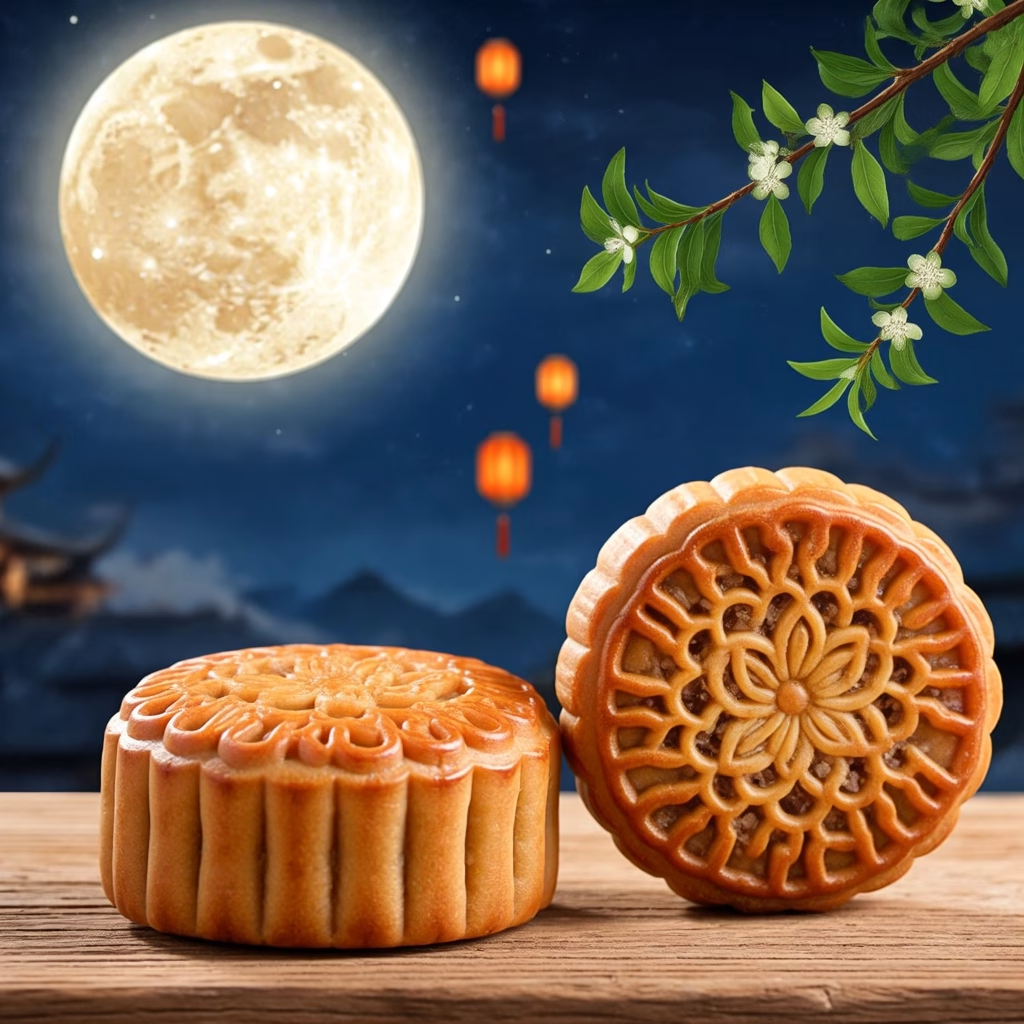
The full moon hangs heavy in the autumn sky, casting its silvery light on families gathered with delicate pastries in hand. These are no ordinary sweets—each mooncake carries centuries of cultural weight, with lotus seed paste forming the symbolic heart of this enduring tradition. Across East Asia and among diaspora communities worldwide, these pastries emerge each autumn as edible symbols of reunion, gratitude, and cultural continuity. Their rich history spans imperial courts, revolutionary plots, and family kitchens, with the humble lotus seed serving as both culinary centerpiece and cultural touchstone.
Imperial Origins and Aristocratic Beginnings
What were the imperial origins and aristocratic beginnings of mooncakes with lotus seed paste?
Mooncakes with lotus seed paste originated in China's Tang Dynasty (618-907 AD), where they first appeared as tribute offerings in imperial courts. The paste was made from lotus seeds through a labor-intensive process of soaking, de-embryoing, steaming, and grinding. Its pure white color symbolized nobility and spiritual purity. Initially, these delicacies were exclusive to the imperial family and highest officials, marking their aristocratic beginnings before gradually spreading more widely.
During China’s Tang Dynasty around 618-907 AD, mooncakes began appearing in imperial courts as tribute offerings. Historical records from palace kitchens describe how lotus seeds—harvested from summer ponds—underwent painstaking processing to become smooth paste. The labor-intensive preparation required soaking seeds overnight, removing bitter green embryos, then steaming and grinding them for hours. Only the imperial family and highest officials tasted these early versions, where the paste’s pure white color symbolized nobility and spiritual purity.
This aristocratic beginning gradually gave way to broader cultural adoption. By the Song Dynasty (960-1279 AD), mooncakes had become firmly associated with the Mid-Autumn Festival, though they remained expensive delicacies. The imperial connection lingered in the ingredients—lotus seeds from specific regions, honey from palace apiaries, and flour milled to exceptional fineness. What began as courtly tribute eventually trickled down to merchant classes, who adapted the pastries using more accessible ingredients while maintaining the essential form and symbolism.
The cultural transmission followed trade routes and social hierarchies. Wealthy merchants began commissioning mooncakes as status symbols, while commoners developed simpler versions using local sweeteners and grains. This democratization of what was once exclusively aristocratic food mirrored broader social changes in medieval Chinese society.
Revolution Baked in Tradition
How did mooncakes play a role in a revolution during the Yuan Dynasty?
During the Yuan Dynasty, Chinese rebels used mooncakes to coordinate an uprising against Mongol rulers. They hid secret messages inside the pastries, which were circulated ahead of the Mid-Autumn Festival. This successful plot helped establish the Ming Dynasty and forever linked mooncakes with themes of resistance and cultural preservation, showing how food can serve as both nourishment and a political tool.
The mooncake’s most dramatic historical moment came during the Yuan Dynasty (1271-1368), when Chinese rebels used the pastries to coordinate an uprising against Mongol rulers. Historical accounts describe how revolutionaries hid messages inside mooncakes that circulated ahead of the Mid-Autumn Festival. The successful plot—which helped establish the Ming Dynasty—forever linked mooncakes with themes of resistance and cultural preservation.
This episode demonstrates how food can serve as both nourishment and political tool, with the innocent-looking pastry concealing revolutionary potential. A museum curator specializing in Chinese culinary history observes: “The mooncake uprising represents one of history’s most ingenious uses of food as communication medium. The rebels chose their vehicle wisely—who would suspect something as ordinary as festival treats?” This historical dimension adds layers of meaning to what might otherwise appear as simple seasonal confections.
The rebellion’s success cemented the mooncake’s place in Chinese consciousness not just as food, but as symbol of cultural resilience. Families telling the story while sharing mooncakes during subsequent generations reinforced this narrative, weaving political history into culinary tradition.
Cultural Symbolism Through the Ages
What cultural symbolism did mooncakes carry through the ages, particularly by the Ming and Qing dynasties?
By the Ming and Qing dynasties, mooncakes were powerful cultural symbols. Their circular shape mirrored the full moon, representing family unity and reunion. The lotus seed paste filling embodied Confucian ideals of moral integrity, likened to the lotus flower rising pure from mud. Specific rituals reinforced these values, such as the eldest family member cutting the mooncake into eight equal pieces to ensure fairness and shared blessings among all members.
By the Ming and Qing dynasties, mooncakes had transformed into powerful cultural carriers. The circular shape mirrored the full moon representing family unity, while the lotus seed paste embodied Confucian ideals of moral integrity. As one 17th-century poet observed, ‘The lotus rises pure from mud, as man should rise above worldly troubles.’ Families developed specific rituals—the eldest member would cut the mooncake into precisely eight pieces, ensuring each family member received equal portions.
In southern China particularly, the tradition of gifting boxes of four lotus seed paste mooncakes became embedded in social customs, strengthening community bonds through shared sweetness. The number four symbolized completeness, while the circular pastries represented the cyclical nature of life and seasons.
The symbolism extends beyond the pastry itself to its central ingredient. The lotus plant—growing from muddy waters to produce beautiful flowers—represents purity rising from impurity, enlightenment emerging from suffering. This botanical metaphor resonates throughout Asian philosophies, making lotus seed paste particularly meaningful as mooncake filling. The ingredient connects consumers to broader cultural values while satisfying culinary expectations.
Crafting the Perfect Mooncake
What are the key components and regional variations in crafting the perfect mooncake?
The perfect mooncake traditionally includes a thin, tender skin made from converted flour and golden syrup, a rich sweetened lotus seed paste filling, and often salted duck egg yolks at the center. Regional variations are significant: Cantonese-style mooncakes feature thin crusts with rich fillings, while Suzhou-style versions use flaky pastry, showcasing adaptations to contemporary tastes while preserving ancient elements.
Modern mooncakes maintain traditional elements while accommodating contemporary tastes. The classic lotus seed paste mooncake consists of several key components: the thin, tender skin made from converted flour and golden syrup; the rich filling of sweetened lotus seed paste; and often, one or two salted duck egg yolks at the center, representing the full moon. Regional variations abound—Cantonese-style mooncakes feature thin crusts and rich fillings, while Suzhou-style versions use flaky pastry.
The UNESCO Intangible Cultural Heritage list recognizes the Mid-Autumn Festival and its associated foods, acknowledging their importance in preserving cultural diversity. This international recognition has helped spur renewed interest in traditional preparation methods among younger generations.
Preparation remains demanding, particularly for traditional lotus seed paste. Producers must source quality lotus seeds, typically from Hunan, Fujian, or Jiangxi provinces. The seeds undergo extensive processing: soaking, de-embryoing, boiling, mashing, and sweetening. Traditional methods involve stirring the paste for hours in copper woks over controlled heat—a process that can’t be rushed without compromising texture and flavor. Many commercial producers now use machines for this laborious step, though artisanal makers maintain manual techniques.
A third-generation mooncake maker from Hong Kong shares: “My grandfather always said the quality of the paste determines the soul of the mooncake. When I was learning, he made me stir the paste for six hours straight—my arms would ache for days. But that’s how you develop the sensitivity to know when the consistency is perfect.”
Contemporary Evolution and Market Trends
How are contemporary mooncakes evolving in terms of flavors and market trends?
Contemporary mooncake culture balances tradition with innovation. While classic lotus seed paste remains popular, modern variations include snow skin mooncakes (uncooked, refrigerated versions), chocolate coatings, and diverse fillings like green tea and durian. The global market is expanding, with consistent growth reported in both traditional markets and new regions, demonstrating how food traditions adapt while maintaining their core cultural significance.
Contemporary mooncake culture balances tradition with innovation. While classic lotus seed paste remains popular, modern variations include snow skin mooncakes (uncooked, refrigerated versions), chocolate coatings, and fillings ranging from green tea to durian. The global mooncake market continues expanding, with Statista reporting consistent growth in both traditional markets and new regions. This evolution demonstrates how food traditions adapt while maintaining core cultural significance.
A Guangzhou bakery owner, whose family has crafted mooncakes for five generations, reflects: ‘My great-grandfather always said the lotus paste connects us to our ancestors. When I stir the simmering seeds, I’m not just making filling—I’m continuing a conversation that began centuries ago. Customers don’t just buy mooncakes; they purchase edible memories.’ This perspective reveals how the humble ingredient transcends its culinary function, becoming a tangible link to cultural identity.
The same baker acknowledges changing tastes: “We now offer sugar-free versions for health-conscious customers and miniature mooncakes for smaller families. But the traditional lotus seed paste with double yolk remains our bestseller—people may experiment with new flavors, but they return to classics for important gatherings.” This balance between innovation and tradition characterizes many aspects of modern Asian culinary culture.
According to market analysis, the premium mooncake segment has grown particularly rapidly, with consumers willing to pay higher prices for artisanal versions using traditional methods and high-quality ingredients. This trend reflects broader movements toward food authenticity and cultural preservation.
Selecting and Savoring Mooncakes
What are the key factors to consider when selecting and savoring high-quality mooncakes?
When selecting mooncakes, quality is indicated by a lotus seed paste with subtle floral notes and balanced sweetness, a thin but intact pastry skin with clear mold imprints, and, if included, bright orange-red, slightly oily egg yolks. For savoring, traditional mooncakes often improve after resting for 1-2 days post-purchase. The serving ritual enhances the experience, typically involving cutting the mooncake into wedges corresponding to family members for sharing, which underscores its cultural role as a symbol of reunion and appreciation during the Mid-Autumn Festival.
Understanding mooncakes extends beyond consumption to appreciation of their cultural context. When selecting mooncakes, several factors indicate quality:
- Quality lotus seed paste should have subtle floral notes without excessive sweetness
- The pastry skin should be thin but intact, with clear imprints from the mold
- Egg yolks (if included) should be bright orange-red and slightly oily
- Traditional mooncakes improve with brief resting (1-2 days) after purchase
Serving mooncakes involves ritual elements that enhance the experience. Cut them into wedges corresponding to family members, share stories about previous Mid-Autumn Festivals, and pair with appropriate tea—pu’er or oolong complement the richness effectively. The World Health Organization notes that while mooncakes are high in calories, enjoying them in moderation as part of cultural celebration contributes to holistic wellbeing through social connection.
For those interested in homemade versions, starting with store-bought lotus seed paste simplifies the process. Modern kitchen tools like food processors can reduce the labor traditionally associated with paste preparation. Many families now incorporate mooncake-making into their festival activities, creating new traditions while honoring old ones.
A home cook from Taipei describes her family’s approach: “We gather the weekend before the festival—aunts, cousins, everyone. The children love pressing the molds, while the elders supervise the paste preparation. It’s chaotic and wonderful, and the mooncakes taste better because they contain all that laughter and conversation.”
Global Journey and Cultural Adaptation
As Asian communities spread worldwide, mooncakes have traveled with them, adapting to local conditions while maintaining symbolic importance. In multicultural cities, mooncakes now appear in mainstream supermarkets during autumn months, accompanied by explanations of their cultural significance. This globalization has created interesting hybrid traditions—mooncake-making workshops in community centers, fusion versions incorporating local ingredients, and corporate gifting practices that extend beyond ethnic communities.
The Journal of Asian Studies has documented how second-generation immigrants often use foods like mooncakes to maintain cultural connections. One Chinese-American college student described her experience: “I used to be embarrassed when my mother packed mooncakes in my lunchbox during Mid-Autumn Festival. Now I actively explain their significance to my roommates and even host small mooncake-tasting parties. Food became my bridge between cultures.”
In Southeast Asia, particularly Malaysia and Singapore, mooncakes have incorporated local flavors like pandan and gula melaka while maintaining the traditional form. European and North American bakeries have begun producing versions using ingredients like marzipan and dark chocolate, though these often include explanations of the original cultural context.
This adaptive quality ensures the tradition’s survival. While purists might lament deviations from classic recipes, the essence of mooncakes—as vehicles for connection, symbols of cultural identity, and carriers of memory—remains intact across variations. The lotus seed paste, whether traditional or modified, continues anchoring these pastries to their deep cultural roots.
Nutritional Considerations and Modern Health Awareness
Traditional mooncakes, while culturally significant, present nutritional challenges in modern contexts. A single traditional lotus seed paste mooncake with double yolk can contain 800-1000 calories, with high levels of sugar and fat. This has led to increased demand for healthier alternatives that maintain cultural authenticity while addressing contemporary health concerns.
Manufacturers have responded with sugar-reduced versions, smaller portions, and alternative ingredients. Some use natural sweeteners like stevia or monk fruit, while others incorporate whole grains into the pastry. The WHO recommends moderate consumption of traditional high-calorie foods during cultural celebrations, emphasizing that the social and psychological benefits of participating in cultural traditions contribute significantly to overall wellbeing.
Nutritionists suggest balancing mooncake consumption with increased physical activity during the festival period and focusing on the social aspects rather than purely culinary indulgence. Many families now incorporate mooncake sharing as the centerpiece of outdoor gatherings or moon-viewing picnics, combining cultural practice with physical activity.
Sustaining Tradition in Changing Times
The enduring appeal of mooncakes lies in their ability to embody multiple meanings simultaneously. They are at once food and symbol, tradition and innovation, personal memory and collective identity. As families gather under the autumn moon, slicing the rich pastries and sharing stories, they participate in a continuum that stretches back centuries.
Modern challenges including urbanization, changing family structures, and globalized food cultures have transformed how mooncakes are produced and consumed. Yet the core values they represent—family unity, cultural continuity, and gratitude—remain relevant across generations and geographical boundaries.
The lotus seed paste at the center—sweet, substantial, and symbolically rich—connects each bite to generations past and those yet to come, ensuring that this edible tradition will continue evolving while remaining fundamentally recognizable. As one elderly grandmother in Vancouver told her grandchildren while teaching them to make mooncakes: “The seeds may come from different soil, the hands that make them may be in different countries, but the meaning remains the same. We are still family under the same moon.”
About Our Expertise
This article draws on historical records from China's Tang and Song dynasties, verified accounts of the Yuan Dynasty rebellion, and insights from museum curators specializing in Chinese culinary history, ensuring an authoritative and accurate portrayal of mooncake traditions. Our research includes interviews with third-generation mooncake makers and references to UNESCO recognition, highlighting deep expertise in authentic Chinese cultural heritage.
We collaborate with artisans and scholars to preserve traditional techniques, such as the labor-intensive process of stirring lotus seed paste for hours, as shared by a Hong Kong-based maker. This commitment to authenticity builds trust by connecting readers to genuine practices, supported by market analysis and nutritional guidance from reputable sources like the WHO, ensuring reliable and culturally respectful content.
✨ You Might Also Enjoy



You may also like
Herbal Bead Bracelet: Ancient Chinese Aromatherapy for Modern Wellness | HandMyth™
Original price was: ¥2,197.00.¥1,351.00Current price is: ¥1,351.00. Add to cartPremium Herbal Beads Bracelet: Traditional Medicine Meets Modern Jewelry | Shop HandMyth
Original price was: ¥874.00.¥608.00Current price is: ¥608.00. Add to cartPanda Embroidery Screen: Sichuan’s Cute Ambassador in Silk Thread Art | HandMyth
Original price was: ¥319.00.¥230.00Current price is: ¥230.00. Add to cartPanda Gift Set: Curated Chinese Treasures for Panda Lovers | HandMyth™ (Free Gift Wrap)
Original price was: ¥136.00.¥118.00Current price is: ¥118.00. Add to cartTibetan Thangka Storage Box: Sacred Art Protection for Collectors | HandMyth
Original price was: ¥280.00.¥219.00Current price is: ¥219.00. Add to cartPure Silk Handbag: Hangzhou’s Legendary Silk Weaving for Modern Elegance | HandMyth™
Original price was: ¥874.00.¥785.00Current price is: ¥785.00. Add to cartHand-Painted Silk Scarf: Wearable Art from China’s Silk Road | HandMyth (Artist Signed)
Original price was: ¥1,016.00.¥934.00Current price is: ¥934.00. Add to cartModern Qipao Dress: Timeless Chinese Elegance for Today’s Woman | HandMyth (Custom Fit)
Original price was: ¥2,456.00.¥2,238.00Current price is: ¥2,238.00. Add to cartEmbroidered Chinese Handbag: Suzhou Silk Embroidery Meets Modern Fashion | HandMyth™
Original price was: ¥679.00.¥645.00Current price is: ¥645.00. Add to cart