E-commerce strategies for artisans are shifting. The most effective approach moves beyond selling a finished object to stewarding the entire story of its creation. For a craft business online, this narrative is your most powerful tool.
We’ve all felt it: the fatigue of infinite scroll, the hollow click of another impulse buy. In a digital marketplace saturated with identical dropshipped goods, the handmade stands apart not just in form, but in philosophy. Yet, many artisan digital sales efforts get trapped mimicking the very systems they’re an antidote to—chasing conversion tricks and algorithm hacks. The real opportunity is deeper. It lies in building a narrative so tangible, so intrinsically linked to material and process, that it transcends the screen. This isn’t about marketing a product. It’s about inviting someone into a story they can hold in their hands.
The Blind Spot in Modern Handmade Seller Marketing
Conventional wisdom tells you to showcase the beautiful final piece. A pristine photo on a clean background. A compelling features list. This focuses all energy on the moment of transaction, treating the object as a static endpoint. The blind spot is everything that came before and everything that will come after.
Think of a wooden bowl. Most product pages stop at “hand-turned walnut, food-safe finish.” But what if you knew that walnut came from a storm-felled tree in a managed urban forest ten miles from the maker’s studio? What if you learned the oil finish is a family recipe, designed to deepen in patina with each careful wash? Suddenly, you’re not just buying a bowl. You’re adopting a fragment of a story, with a known origin and a foreseen future. This is the shift. Buyers, especially those seeking handmade goods, are increasingly curious about the material’s origin, its environmental process, and its potential for a second life. Your strategy must illuminate that full arc.
Weaving the Material Narrative Into Your Online Presence
So, how does this look in practice? It starts with language and layers into experience.
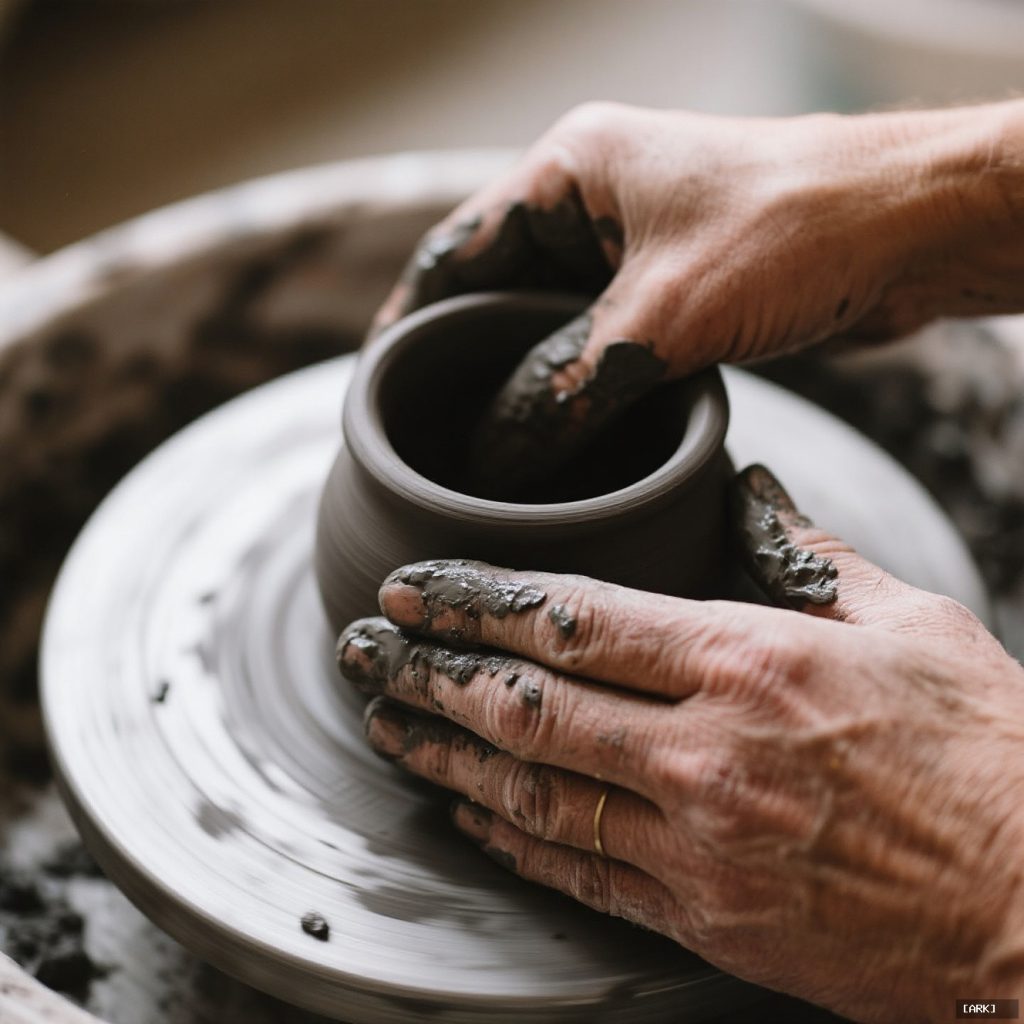
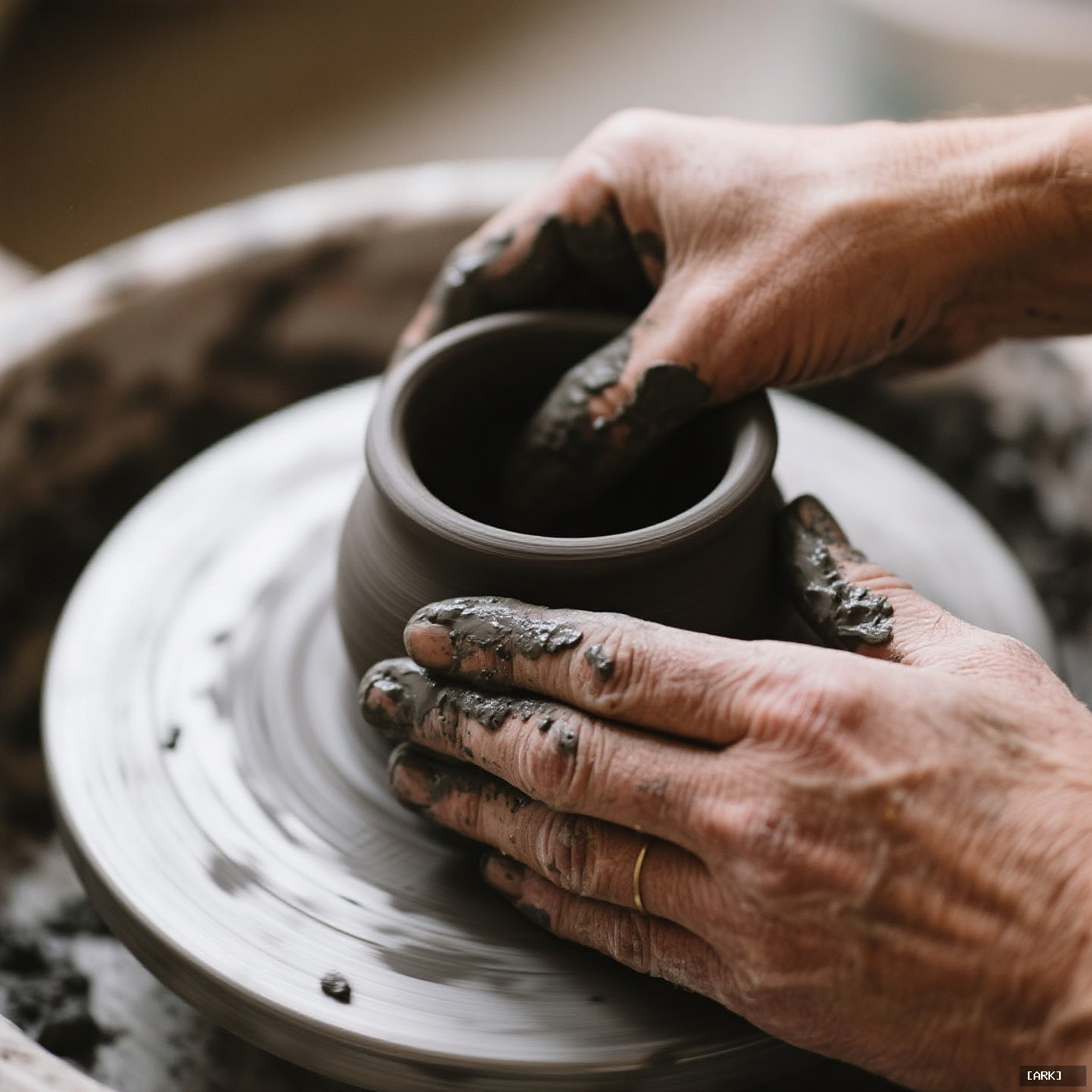
Replace generic material tags with specific provenance. “Reclaimed barn oak from a 1902 dairy farm in Vermont” carries a weight “reclaimed wood” never will. This specificity is your foundation. Build upon it with documentation that feels like discovery, not advertisement. A short, silent video clip of rough lumber being planed, revealing the grain. A photo essay of visiting the sheep farm that provides your wool, capturing the landscape and the farmer’s hands. An audio note embedded on your product page where you explain why you source a particular clay from a specific riverbank, and how its mineral content reacts to your local ash glazes.
For a ceramicist, this could mean explaining how their glazes evolve over decades of use, creating a living history on the surface of a mug. For a jeweler, it might detail the process of a recycled precious metal, from refinery to forge. This documentation isn’t just “content.” It’s proof of integrity. It transforms your craft business online from a storefront into a window onto a practice.
Beyond the Buzzword: A Practical View of Sustainability
Sustainability is often treated as a marketing trend or a box to check. For the modern artisan, it’s neither. It’s becoming a baseline expectation, but one that is frequently framed in vague, meaningless terms. “Eco-friendly” and “green” have lost their potency through overuse.
The power lies in specificity tied to life-cycle. Don’t just say a material is sustainable. Explain *why* within the context of its entire process. Are you using linen because it requires less water than cotton to grow and biodegrades cleanly? Are you choosing a specific aluminum alloy because it can be infinitely recycled without loss of quality, creating a truly circular material stream? Perhaps your choice isn’t about biodegradability at all, but about legacy. A responsibly mined silver that is crafted into a heirloom piece meant to last 200 years presents a different, equally valid, sustainable logic than a biodegradable alternative that fails in five.
This honest, detailed framing builds immense trust. It connects to a buyer’s values on a practical, understandable level. It shows you’ve thought beyond the point of sale to the object’s entire life, including its end. This thoughtful approach is a cornerstone of future-proof artisan digital sales.
Forging Unexpected Alliances: Marketing Through Context
Your story doesn’t exist in a vacuum. One of the most potent, yet overlooked, handmade seller marketing tactics is to connect your work to a wider web of knowledge and place. Look beyond the community of makers.
If you use regional botanicals for dyes, partner with a local land conservation trust or a botanist. Co-create content about the native plants, their ecology, and the tradition of natural dyeing in your area. If you practice historic metalsmithing techniques, interview a curator from a history museum or an archaeological society. Discuss the lineage of the craft, placing your contemporary work in a continuum.
These collaborations borrow credibility and embed your work in a richer context. They make your marketing feel discovered—a natural outgrowth of a deep interest—rather than broadcasted. A buyer isn’t just getting a ring; they’re getting a piece connected to local ecology or historical craft preservation. This depth of context is something mass production can never replicate, and it fundamentally elevates your craft business online.
Building Independence: Systems Over Platforms
Relying solely on a social media platform or a marketplace’s built-in traffic is a risky long-term strategy. Algorithms change. Policies shift. Trends fade. To future-proof your artisan digital sales, you need owned channels—direct lines of communication with the people who care most about your work.
Start with an email list, but use it differently. This isn’t just a promotional broadcast feed. Share process insights, material discoveries, and small failures. Tell the story behind a new source. When you launch a new collection, your subscribers already understand the months of development that led to it. They’re invested in the process, not just the destination.
Consider a small-run subscription or membership model. This could be a quarterly offering of experimental pieces, material studies, or even a “scrap box” of beautiful offcuts with ideas for their use. This creates a predictable revenue stream from your most engaged audience—the people who care about your creative evolution as much as your current inventory. It builds a community around your practice, not just your products.
Your Practical Path Forward: A Working Checklist
Transforming your approach can feel overwhelming. Start small, with intention. Here is a practical checklist to begin weaving narrative into your craft business online.
- Audit Your Product Descriptions: For your next three listings, read them aloud. Do they mention source, durability, care, or end-of-life potential? If not, add one sentence of provenance or long-term value.
- Commit to Process Documentation: Create one piece of “process evidence” per month. This could be a 60-second video of a key technique, a three-photo essay of a material transformation, or a written journal entry about a sourcing trip.
- Identify One Local Expert: Brainstorm a historian, naturalist, scientist, or cultural organization whose work touches your materials or techniques. Follow them. Engage genuinely. A collaboration idea may naturally emerge.
- Draft a Story-Email: Write an email to your list that explains one material choice in depth. Avoid sales language. Explain the “why” behind the what.
- Review Your Packaging Experience: Does your unboxing feel generic, or does it extend the narrative? Can packaging be reused, repurposed, or easily separated for proper material recovery? A simple note suggesting reuse ideas makes a difference.
Navigating Common Questions with a Narrative Mindset
This shift in perspective reframes classic challenges for the handmade seller.
Do I need to be on every social media platform?
Absolutely not. Exhaustion is not a strategy. Choose one or two channels where you can best tell your material story visually or verbally. Depth and consistency on Instagram or a dedicated blog will always outperform a shallow, sporadic presence across five platforms. Go where your story can be told well.
How do I price for my labor and material quality?
Your price is part of your story. It communicates value. Instead of hiding from it, let your narrative justify it. You don’t need a public cost breakdown. Instead, weave the value into your descriptions. “This price reflects the cost of supporting small-scale, regenerative wool farms” tells a story. “This piece involves 12 hours of hand-carving from a single block of locally salvaged cherry” provides context. The story makes the price understandable, even aspirational.
What if my materials aren’t conventionally “sustainable”?
Honesty and intention are your guides. Explain your choice with clarity. Perhaps you use a synthetic resin for its unparalleled clarity and durability in jewelry, ensuring the piece lasts generations. Maybe you use a traditional material with a complex footprint because the technique and cultural heritage are vital to preserve. Authenticity about your reasoning builds more trust than a flimsy “green” claim ever could. A buyer respects a thoughtful, honest choice.
The most compelling e-commerce strategies for artisans recognize a fundamental truth: people are longing for connection in a disconnected world. They don’t just want a thing; they want the story the thing contains. By stewarding the narrative of your materials—from origin, through your hands, and out into a long life—you’re not just selling. You’re offering an anchor, a piece of a tangible, thoughtful world. That’s a story worth telling, and a practice worth building.
Sources & Further Reading
✨ You Might Also Enjoy

You may also like
Herbal Bead Bracelet: Ancient Chinese Aromatherapy for Modern Wellness | HandMyth™
Original price was: ¥2,199.00.¥1,352.00Current price is: ¥1,352.00. Add to cartPremium Herbal Beads Bracelet: Traditional Medicine Meets Modern Jewelry | Shop HandMyth
Original price was: ¥874.00.¥608.00Current price is: ¥608.00. Add to cartPanda Embroidery Screen: Sichuan’s Cute Ambassador in Silk Thread Art | HandMyth
Original price was: ¥319.00.¥230.00Current price is: ¥230.00. Add to cartPanda Gift Set: Curated Chinese Treasures for Panda Lovers | HandMyth™ (Free Gift Wrap)
Original price was: ¥136.00.¥118.00Current price is: ¥118.00. Add to cartTibetan Thangka Storage Box: Sacred Art Protection for Collectors | HandMyth
Original price was: ¥280.00.¥219.00Current price is: ¥219.00. Add to cartPure Silk Handbag: Hangzhou’s Legendary Silk Weaving for Modern Elegance | HandMyth™
Original price was: ¥874.00.¥786.00Current price is: ¥786.00. Add to cartHand-Painted Silk Scarf: Wearable Art from China’s Silk Road | HandMyth (Artist Signed)
Original price was: ¥1,017.00.¥935.00Current price is: ¥935.00. Add to cartModern Qipao Dress: Timeless Chinese Elegance for Today’s Woman | HandMyth (Custom Fit)
Original price was: ¥2,459.00.¥2,240.00Current price is: ¥2,240.00. Add to cartEmbroidered Chinese Handbag: Suzhou Silk Embroidery Meets Modern Fashion | HandMyth™
Original price was: ¥680.00.¥646.00Current price is: ¥646.00. Add to cart