
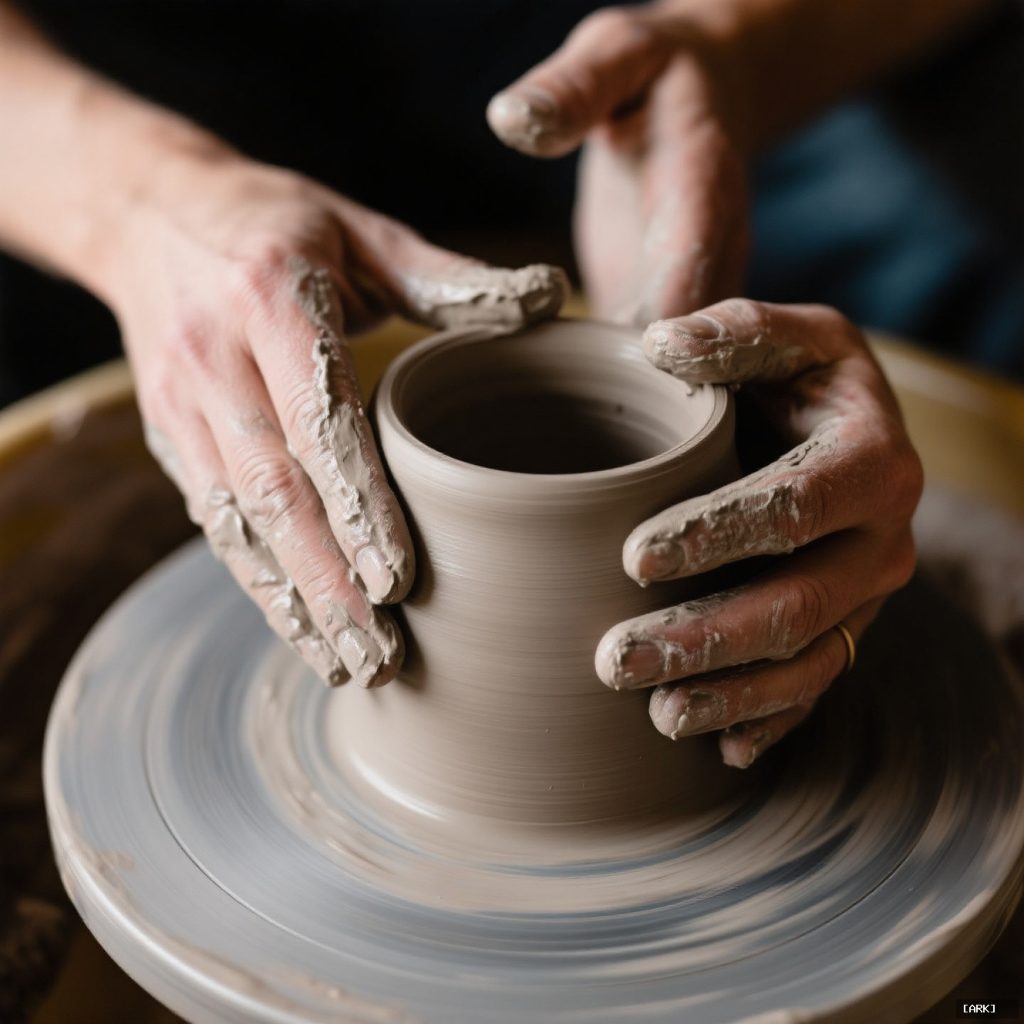
Effective e-commerce strategies for artisans begin with a simple, counterintuitive idea. Stop trying to out-sell the big box stores. Your power lies in a different kind of transaction, one built on human connection and the palpable value of something made by hand.
The digital marketplace can feel like a roaring river, sweeping everyone toward a waterfall of discounts and flash sales. For a maker, trying to swim in that current is exhausting and ultimately futile. The alternative is to step onto the riverbank. Build a quiet, inviting space there. Let people find you not through the chaos, but through the genuine signal of your story. This is the core of a modern craft business online: creating a digital home that feels as intentional as your physical studio.
Your Website: The Permanent Studio Open House
Why is a standalone website considered a permanent studio open house for artisans?
A standalone website serves as an artisan's permanent studio open house because it represents owned digital territory, unlike temporary marketplace booths. On platforms like Etsy, artisans pack up after each sale, but their own site remains always open. This permanent space allows full control over branding, narrative, and customer experience, enabling artisans to showcase their creative process through in-progress galleries, journal entries, and deeper storytelling about materials and inspiration. It becomes a flagship store, gallery, and archive where visitors can connect with the craft's why and how, fostering lasting relationships beyond single transactions.
Think of your standalone website as your flagship store, gallery, and archive. It is land you own. A marketplace like Etsy or Amazon Handmade is a fantastic, bustling farmer’s market—great for discovery, but you pack up your stall . Your goal is to warmly invite the people you meet there back to your permanent location.
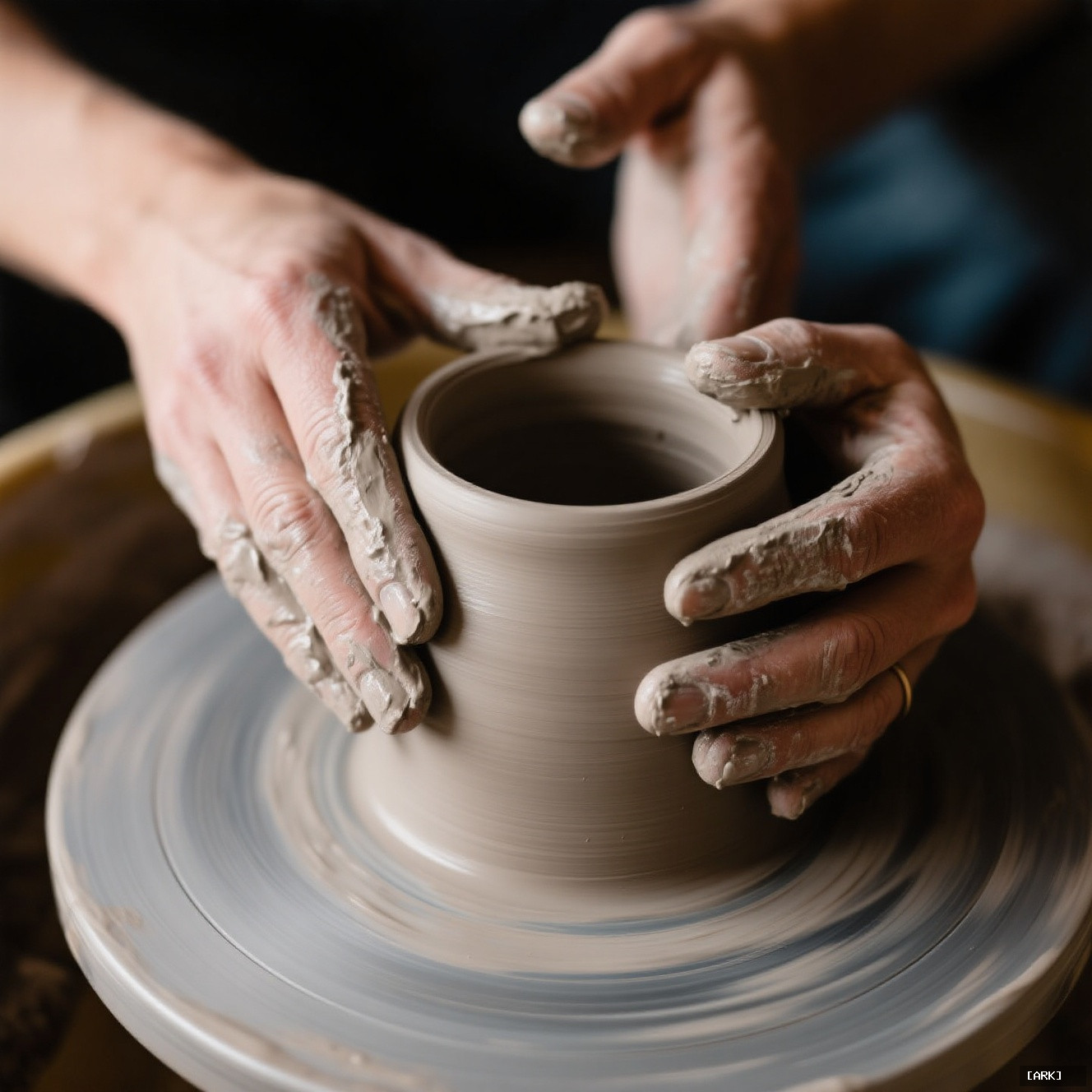
On your own site, you control the light, the music, the narrative. This is where you move beyond a simple product listing. Dedicate space to the “why” and the “how.” A gallery of in-progress shots. A journal entry about the morning you found the perfect piece of reclaimed wood. A short, silent video of your hands smoothing clay. This content isn’t filler; it’s the primary material. It builds the perceived value that allows you to price your work appropriately, far beyond the cost of materials. It answers the silent question every visitor has: “Why is this special?”
Community as Conversation, Not Broadcast
How can e-commerce artisans redefine community as a conversation instead of a broadcast?
Artisans can redefine community by shifting focus from follower counts to quality dialogue, using interactive tools like Instagram Stories' question stickers for weekly "Ask the Maker" sessions. They can also engage VIP subscribers by sharing early design sketches in newsletters and asking for feedback. When facing creative blocks or technical challenges, openly discussing these hurdles and asking for advice fosters genuine two-way communication, turning community into a conversational partnership rather than a one-way broadcast.
Yes, “community” is an overused word. For the handmade seller, it needs redefining. It’s not a count of followers. It’s the quality of dialogue. True community is a two-way street paved with shared interest.
This can be wonderfully simple. Use Instagram Stories’ question sticker to host a weekly “Ask the Maker” session. Create a special segment in your newsletter where you show VIP subscribers the early, messy sketch for a new design and ask for their thoughts. When you hit a creative block or a technical hurdle with a new glaze, share it. Ask, “Has anyone else dealt with this?” This does something remarkable. It transforms your audience from passive consumers into active participants in your creative process. Their investment shifts from just your products to your process. This group becomes your most powerful marketing force, advocating for you with an authenticity no ad buy can ever replicate.
The Kintsugi Principle: Highlighting the Seams
What is the Kintsugi Principle in e-commerce for artisans?
The Kintsugi Principle in e-commerce for artisans is a strategy inspired by the Japanese art of kintsugi, which repairs broken pottery with gold or precious metals, emphasizing the cracks as part of an object's history. For artisans, this means highlighting the human aspects of their craft—such as delays, limited stock, or imperfections—rather than hiding them behind a facade of flawless digital efficiency. For example, when a popular item sells out, instead of marking it as unavailable, artisans can create a waitlist and transparently explain the reason for the delay. This approach turns limitations into strengths, building trust and deeper customer engagement by celebrating authenticity and the story behind each product.
There’s a profound connection between physical craft and digital strategy found in the Japanese art of kintsugi. This practice mends broken pottery with lacquer mixed with gold, silver, or platinum, treating the breakage as part of the object’s history, not something to disguise.
Apply this philosophy to your online presence. The digital world prizes a facade of flawless, endless efficiency. Your craft is human. It has seams, delays, and limitations. Instead of hiding these, highlight them with gold.
When a popular item sells out, don’t just mark it “out of stock.” Create a waitlist. Explain that each piece is made to order, and the current lead time is three weeks because you are hand-carving each component. Document a “failure”—a glaze that cracked, a stitch that didn’t hold—and share what you learned from it. This radical transparency does not show weakness. It shows integrity. It builds a trust so deep that customers will happily wait, because they are buying into the truth of the making, not the myth of instant, impersonal delivery.
Content as Documentation, Not Production
How does documenting artisan work as content differ from traditional content production?
Documenting artisan work as content shifts the focus from forced, scheduled production to capturing genuine creative moments. Instead of treating content creation as a separate, draining task, artisans can record brief, authentic snippets—like 60 seconds of carving or a photo of tools after use. This raw footage, along with simple notes inspired by daily experiences, becomes valuable assets. The key is applying a critical filter for value, ensuring each piece of content represents a real part of the craft rather than a synthetic output, thus preserving the joy and authenticity of the artisan's work.
The pressure to constantly “create content” can drain the joy from actually creating. The solution is a mental reframe. You are not a content factory. You are a craftsperson who documents their work.
Set a small tripod on your workbench and record 60 seconds of today’s task—winding a warp, carving a detail, mixing a color. Snap a photo of your tools at the end of a long day, worn and laid out. Write one line in your notebook about the scent of rain that inspired a new color palette. This raw footage and these notes are your assets.
Now, apply a critical filter of value. Is spending an afternoon editing a trendy Reel pulling you away from the bench for hours? Often, it is. A single, stunning, well-lit photograph of your finished piece in a real customer’s home, paired with a short, heartfelt caption about what it means to see it live there, carries more resonant weight than a week’s worth of forced, algorithmic content. Let your content strategy be a natural byproduct of your craft, not a separate, draining job.
The Inbox as an Intimate Gallery
How can artisans use email marketing as an intimate gallery to connect with customers?
Artisans can transform email marketing into a personal and intimate channel by treating their messages like letters to a curious friend rather than corporate bulletins. This approach involves sharing small victories, such as mastering a difficult technique, or confessing setbacks like a supplier issue. Offering subscribers exclusive first looks at new collections with special pre-order prices before social media launches builds anticipation. Additionally, asking for their opinions between two new directions fosters a sense of inclusion and genuine communication. When used with respect, this sacred inbox space creates a powerful bond, making customers feel valued and part of the artisan's creative journey.
Email marketing can feel corporate, but for an artisan, it has the potential to be your most personal channel. Treat it like a letter to a curious friend, not a corporate bulletin.
Share a small victory—finally mastering a difficult technique. Confess a setback—a supplier let you down. Give your subscribers the first look at a new collection, perhaps with a special pre-order price, before it ever hits social media. Ask for their opinion between two new directions. The intimacy of the inbox is a sacred space. When used with respect and genuine communication, it fosters a powerful sense of inclusion and privilege. This direct line cuts through the ever-changing noise of social media algorithms. It reaches people who have actively raised their hands and said, “Yes, I want to hear from you.” An engaged email list is a business asset that grows in value over time, unlike the diminishing returns of paid social ads.
Depth Over Breadth: The Platform You Actually Enjoy
What does 'Depth Over Breadth' mean for artisan e-commerce strategies?
Depth Over Breadth means that artisans should focus their limited energy on one digital platform they genuinely enjoy rather than trying to maintain a presence on multiple platforms. Spreading efforts thin across five platforms leads to burnout and mediocre output. By consistently showing up on a single platform where you feel authentic—whether it's Instagram for visual storytelling, a blog for long-form writing, or TikTok for conversational content—you build a more engaged community and sustainable business. This approach is infinitely more effective than sporadic, resentful posting on many platforms.
You do not need to be everywhere. The myth of omnipresence leads to burnout and mediocre output on five platforms instead of remarkable presence on one. Your energy is a finite, precious resource. Pour it into the digital space you genuinely enjoy.
If you love the visual storytelling of Instagram, focus there. If you thrive on long-form writing and find community in niche forums, build a blog and engage there. If the quick, conversational style of TikTok feels natural to you, dive in. Consistency on a single platform you like is infinitely more sustainable and effective than sporadic, resentful posts across a spectrum you feel obligated to use. Your authentic enjoyment will communicate itself to your audience, making your connection stronger.
Justifying Your Price: The Narrative is the Reason
This is perhaps the most common hurdle for artisan digital sales. Your prices are not high; mass-produced goods are artificially cheap. Your price reflects the true cost of skilled time, unique materials, and individual care. Your job is to consistently tell that story so the value is understood.
Every piece of communication is an opportunity to justify your price. In product descriptions, don’t just list dimensions. Describe the hours of hand-sanding. On social media, show the cost of your ethically sourced materials. In your “About” page, talk about the years spent mastering your technique. You are not selling a commodity; you are selling a fragment of a human life, skill, and vision. The narrative makes the price not just acceptable, but essential.
A Practical Path Forward
Shifting your mindset is the first step. These actionable steps can help build the system.
Foundation Audit
- Your Digital Home: Does your website or primary social bio immediately communicate your core values and process? Can a visitor understand *who* you are and *how* you work within 15 seconds?
- Audience Ownership: If you don’t have an email list, start one today. Offer a simple, valuable incentive—a PDF on caring for handmade goods, a 10% welcome discount, or access to a private “studio diary.”
- Expense Review: Analyze your last six months of spending. Could money spent on promotional boosts be better invested in a professional photography session for your top ten products, or a cleaner, faster website template?
Weekly Rhythm
- Document One Thing: Each week, capture one authentic slice of your process—a photo, a 30-second video, a voice memo. Archive these. They are your content library.
- Engage, Don’t Broadcast: Once a week, initiate a conversation. Ask a question. Run a poll. Respond thoughtfully to comments.
- Nurture Your List: Send a monthly newsletter that feels like a personal update. Share one story, one new thing, one piece of gratitude.
Navigating Common Crossroads
Every handmade business faces similar questions. Here’s a perspective grounded in the slow-growth philosophy.
Do I need to be on every social platform?
No. Excellence in one place is a magnet. Mediocrity everywhere is noise. Choose the platform that best fits your work’s visual or narrative style and where you feel comfortable engaging.
How often should I launch new products?
On a timeline that respects your craft, not an arbitrary retail calendar. A single, deeply-considered, beautifully-executed collection per year tells a stronger story than monthly drops of minor variations. Let your work breathe and find its audience.
Is selling wholesale worth it?
It can provide valuable cash flow and brand exposure. However, the margins are often significantly lower. Calculate carefully. Does the wholesale price still fairly compensate your time and materials? Does the store align with your brand values? The time spent fulfilling large wholesale orders is time not spent on direct sales, custom work, or new designs.
How do I handle production delays?
With proactive, transparent communication. The moment you know a delay is inevitable, inform your customers. Explain the reason briefly and honestly (e.g., “The birch for this batch warped in an unusual humidity spell, and I’m sourcing a new supply”). Offer options: a firm new timeline, a discount on their order for the wait, or a seamless refund. Most people are understanding when treated with respect.
The most resilient e-commerce strategies for artisans are not about gaming a system. They are about building a world—a small, intentional, beautiful world online that is a true reflection of the world you create with your hands at your bench. It’s a strategy of depth, patience, and human truth. In a digital age hungry for authenticity, that is your ultimate advantage.
Sources & Further Reading
Craft Industry Alliance: Business resources for makers
The Guardian: Marketing tips for craft businesses
Artsy: How artists sell work online
Ecommerce Nation: Selling handmade goods online
About Our Expertise
Drawing from deep expertise in Chinese traditional arts, this article adapts timeless craft philosophies like kintsugi to modern e-commerce, offering actionable strategies grounded in authentic making practices rather than digital gimmicks.
Our insights are based on years of working with artisan communities across China, ensuring that each recommendation respects the integrity of handcraft while embracing digital tools. Trust in this content comes from its focus on sustainable, human-centered growth.


 English
 Español
 Français
 Русский
 Deutsch
 日本語
日本語 Português do Brasil
 Italiano