
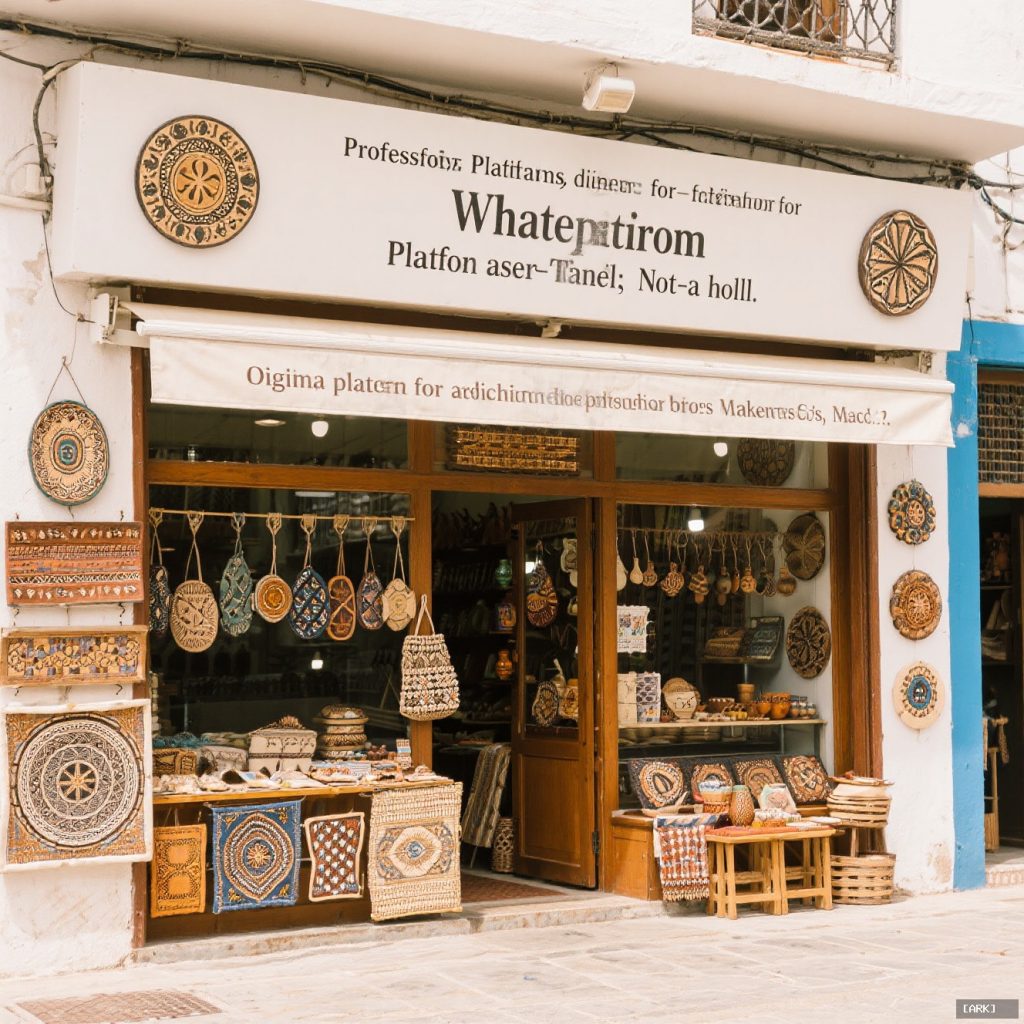
Digital platforms for artisans offer a global storefront, but the reality of these artisan marketplaces is more complex than simple liberation. They promise connection but often prioritize consumption. For every maker who finds success, many more feel lost in a digital crowd, their work unseen despite its beauty.
Why does this happen? The very architecture of most craft selling sites works against the slow, story-rich nature of handmade goods. They are engines of discovery optimized for volume and velocity, not curation or deep appreciation. Your meticulously crafted narrative becomes mere metadata, valuable only if it triggers an algorithm designed to surface what is already selling. This creates a powerful feedback loop: visibility begets more visibility, leaving newcomers shouting into a void.
This leads to the central, aching question for many creators: Is selling on these handmade goods platforms even worth it?
The Platform as a Tenant, Not a Landlord
The most successful makers I’ve observed share a crucial mindset shift. They understand that the platform is a tenant in their business ecosystem, not the landlord. They never cede ultimate control of their customer relationships or their story. The marketplace is a high-traffic gallery window—a powerful place to be seen by people already in a buying mindset. The transaction may happen there, but the relationship, if nurtured, begins and grows elsewhere.
Your effort should be deliberately disproportionate. Spend the bulk of your energy building your own audience through a simple website, an email list, or a social community where you set the rules. Use the platform’s traffic to feed your own channels. A customer who buys your hand-forged knife on a marketplace should receive a thank-you email inviting them to join your studio newsletter, where they’ll hear the story of the steel’s ring under the hammer—a sound impossible to convey in a static product description.
The Invisibility Cloak: Algorithms and Irrelevance
Feeling invisible on an artisan marketplace is a common and draining experience. The truth isn’t that your work is bad; it’s that you’re often irrelevant to the platform’s core machinery. These systems thrive on data points that favor high-volume sellers: quick turnover, frequent new listings, and rapid conversion rates. Your hundred-hour technique or unique material story is noise unless it immediately translates into clicks and sales.
The algorithm’s mission is to keep users scrolling and buying, not to foster a deep dive into a single maker’s portfolio. It learns to show more of what gets quick engagement, creating a cycle where established shops with proven sales get more prominence, while new or slower-producing artisans struggle to gain initial traction. It’s a discovery engine, not a patron. Recognizing this is the first step to strategizing around it, rather than being defeated by it.
Pricing: The Arithmetic of Self-Worth
Pricing handmade work on digital platforms for artisans is a psychological hurdle as much as an economic one. Guilt or the fear of seeming greedy often stems from secretly valuing your own time at zero. A clear, formulaic approach can cut through that emotion.
Start with your direct material costs. Then, assign a fair hourly wage for every minute of hands-on creation. Crucially, this must include the “invisible” labor: sketching, sourcing, photography, writing descriptions, customer service, and packaging. Add these together. Now, double that total.
The first half covers your costs. The second half values your years of acquired skill, your unique vision, and sustains the business of your craft. Seeing your hand-thrown mug priced next to a factory-made one will always create cognitive dissonance for a buyer. But you are not selling a mug. You are selling a specific morning’s light in your studio, the intention pressed into the clay, and an object that carries the subtle energy of human hands. The price must reflect that complete story.
Capturing the Soul in a Digital Space
This is the great challenge and opportunity. A mass-produced item is a commodity; a handmade object is a story waiting to be received. Your primary job on any craft selling site isn’t just to display the finished bowl, but to convey the quiet intention woven into it. You are selling a vessel for meaning.
How? Through context and narrative. Show the bowl holding lemons on a sun-drenched table. Film a slow-motion video of your hands smoothing the rim. Write about the hope that this object will become part of someone’s daily ritual—that its solid weight will provide a moment of calm on a chaotic morning. This connects to much older gift economies, where an object carried the spirit of its maker and the context of its creation. Your digital presentation is your bridge across that gap.
Choosing Your Digital Home: Fit Over Fame
With numerous handmade goods platforms available, choice paralysis is real. The key is to ignore sheer size and seek alignment. Before you list a single item, spend a week as a dedicated customer on 2-3 contenders. Where do you genuinely enjoy browsing? Does the site’s aesthetic and community language feel like a place your work belongs?
Investigate deeply. Search for your category. Are the top results cheap, fast, and generic, or is there evidence that customers here value and understand craftsmanship? Read the “About” pages. Does the platform’s stated mission resonate with your values? Your ideal digital home is where your target customer already feels comfortable and inspired, not necessarily the one with the biggest advertising budget.
The Launch Checklist: Strategy Before Upload
Jumping onto a new artisan marketplace without a plan is a recipe for frustration. A disciplined launch sets the tone for success.
- Conduct a Buyer Audit: Live on the platform as a customer for one full week. Note the browsing experience, communication styles, and what makes a shop stand out.
- Find Your Cohort: Identify 5-10 successful makers whose work is adjacent to yours (not direct competitors). Observe how they present their work, write descriptions, and engage.
- Craft a Story Bio: Your bio should connect, not just credentialize. Why do you make what you make? What’s your philosophy?
- Launch with a Collection: List 5-7 items, not just one. This creates a mini-exhibition of your style and gives visitors a reason to explore your shop.
- Build Your Off-Ramp: Before you start, decide what failure looks like. What metrics (e.g., no sales after 60 days, negligible traffic) will signal it’s time to redirect your energy?
Navigating Common Pitfalls
Should I be on every platform?
No. Exhaustion is not a business strategy. Master one, maybe two. Depth of presence and community building on a single, well-chosen platform will always outperform a thin, neglected presence on five.
How often should I list new items?
Consistency is far more important than frantic frequency. A reliable schedule—like introducing two new pieces every other Thursday—signals professionalism and gives followers a recurring reason to check your shop. It also gives the algorithm regular activity to note.
Why do my product photos look flat?
It’s almost always about light, not expensive gear. Shoot in consistent, indirect natural light. Ditch the sterile white backdrop. Show the object in a lived-in context: a blanket draped nearby, a hand holding it, it being used. Context implies life, function, and desirability.
Beyond the Transaction
The ultimate goal of using digital platforms for artisans is not just to make sales, but to find your people. It’s about using these powerful, if flawed, systems to connect your work with the individuals for whom it will hold special meaning. The transaction on the craft selling site is just the beginning. The real work—the building of a community that values the story as much as the object—happens in the space you own and control, fueled by the connections these marketplaces can initiate.
It’s a hybrid model: using the public square to meet your audience, then inviting them back to your studio, digitally or otherwise. In doing so, you reclaim the connection these platforms often promise but rarely, on their own, can fully provide.
Sources & Further Reading
Craft Industry Alliance: Professional Resources for Makers
The Guardian: Is the way we buy crafts online killing creativity?
East-West Center: Contemporary Gift Cultures and Market Societies
The Tyranny of Structurelessness (Applied to Online Platforms)
✨ You Might Also Enjoy

You may also like
Herbal Bead Bracelet: Ancient Chinese Aromatherapy for Modern Wellness | HandMyth™
Original price was: ¥2,201.00.¥1,354.00Current price is: ¥1,354.00. Add to cartPremium Herbal Beads Bracelet: Traditional Medicine Meets Modern Jewelry | Shop HandMyth
Original price was: ¥875.00.¥609.00Current price is: ¥609.00. Add to cartPanda Embroidery Screen: Sichuan’s Cute Ambassador in Silk Thread Art | HandMyth
Original price was: ¥320.00.¥231.00Current price is: ¥231.00. Add to cartPanda Gift Set: Curated Chinese Treasures for Panda Lovers | HandMyth™ (Free Gift Wrap)
Original price was: ¥136.00.¥118.00Current price is: ¥118.00. Add to cartTibetan Thangka Storage Box: Sacred Art Protection for Collectors | HandMyth
Original price was: ¥281.00.¥219.00Current price is: ¥219.00. Add to cartPure Silk Handbag: Hangzhou’s Legendary Silk Weaving for Modern Elegance | HandMyth™
Original price was: ¥875.00.¥786.00Current price is: ¥786.00. Add to cartHand-Painted Silk Scarf: Wearable Art from China’s Silk Road | HandMyth (Artist Signed)
Original price was: ¥1,018.00.¥936.00Current price is: ¥936.00. Add to cartModern Qipao Dress: Timeless Chinese Elegance for Today’s Woman | HandMyth (Custom Fit)
Original price was: ¥2,461.00.¥2,242.00Current price is: ¥2,242.00. Add to cartEmbroidered Chinese Handbag: Suzhou Silk Embroidery Meets Modern Fashion | HandMyth™
Original price was: ¥680.00.¥646.00Current price is: ¥646.00. Add to cart























