
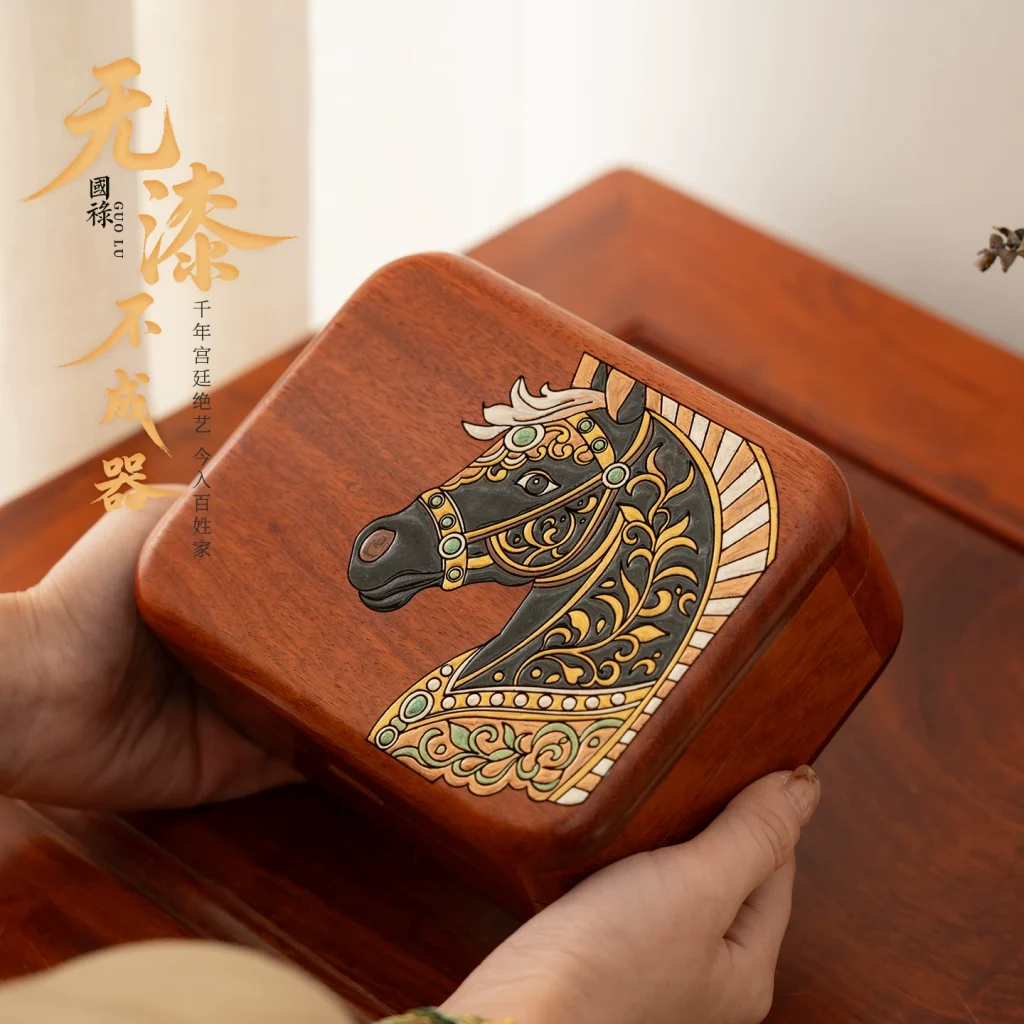
Take a bamboo tea scoop that has been used daily for twenty years. The edge has worn to the exact curve of one person’s hand; the bamboo has darkened where fingers rest and nowhere else. No factory product can acquire that biography, and that, reduced to a sentence, is the case for handmade things. Everything else in this article is detail — economic, cultural, environmental — hung on that central fact: a handmade object carries the record of a person, and it keeps acquiring records as you use it.
This is written from the seller’s side of the counter. We run a small shop selling Chinese craft objects to Western buyers, which means we have watched the handmade premium get justified honestly and dishonestly. What follows is the honest version, with the numbers we can actually stand behind.
A Craft Is a Working Answer to a Problem
The cultural argument for handicrafts is usually stated as sentiment — “living heritage”, “ancestral wisdom” — and therefore ignored. The concrete version is stronger. A traditional craft is a bundle of working solutions to real problems, discovered by trial and error across centuries and written down nowhere except in the hands of practitioners.
Take rattan weaving in China’s Sichuan and Shaanxi valleys. Weavers there know which cane, cut in which season, will bend without snapping; how long to steam a frame before it takes a curve; how a hexagonal open weave gives a chair seat strength with a third of the material. None of this was engineered in a lab. It accumulated. When the tradition is listed nationally — rattan weaving entered China’s national heritage list in 2021 as item VII-123 — what is being preserved is precisely that bundle of solutions, the way a patent office preserves inventions.
The same logic holds everywhere the world still uses traditional craft: Japanese joinery that survives earthquakes without nails, Scandinavian and Baltic knitting constructions that encode regional history in stitch patterns, the floating fish nets and covers of Southeast Asian river communities. The specific content differs; the point is identical. Lose the practitioners and you lose the answers, and nobody knows in advance which of those answers the next century will want back.
The Economic Case, With Numbers and Caveats
Handicraft work matters economically because it converts time and skill — the two things rural communities have — into income that stays local. China has built deliberate infrastructure on this logic: well over 2,500 official “heritage workshops” have been set up in villages since the mid-2010s to connect craft skills to markets, many in areas that had lost other industries, and the government’s annual shopping festival for heritage products has become a major sales channel. In the Hanzhong rattan county alone, local reports credit the trade with employing several thousand weavers and an annual output in the hundreds of millions of yuan. A national subsidy — 20,000 yuan a year for each recognised master, plus bonuses for teaching well — pays inheritors specifically to train the next generation.
Three honest caveats belong next to those numbers. First, craft wages are usually modest; this is real income, not a path to wealth, and romanticising it helps nobody. Second, not every “artisan cooperative” is what the label says — middlemen resell factory goods under craft branding in every country on earth. Third, the buyer’s premium should attach to the work, not the story: a well-made machine product is a legitimate buy, and pretending otherwise muddies the market for the people actually weaving.
The Environmental Case, Including Its Limits
Handmade does not automatically mean green, but some craft materials have genuinely strong environmental logic. Rattan needs standing forest to climb, so a village earning from cane has a reason to keep the trees; bamboo regrows from its own roots after cutting and sequesters carbon while it grows; natural dyes, where genuinely used, replace petrochemical effluent. Objects that last decades also displace the buy-discard cycle — the greenest purchase is usually the one you do not repeat.
The limits are equally real. Handwork is not carbon-free: kilns for ceramics are energy-hungry, cotton and silk farming carry their own footprints, and some traditional processes use chemicals no modern factory would be allowed to discharge. Over-harvesting wild materials has damaged ecosystems in more than one country. The defensible claim is narrower than the marketing: for certain materials, from certain producers, the traditional supply chain is cleaner than the industrial alternative — and it is worth asking which ones before paying the premium.
What Making Things Does to the Maker
The psychological research on craft is less romantic than the brochure language but points the same way: skilled manual work offers something rare — visible progress toward a defined end, under one’s own control, with an object to show for it. That structure, repeated daily over years, is a large part of what people mean when they call craft work meaningful. There is a reason knitting, woodworking and ceramics boomed exactly when screen work swallowed everything else.
For the owner, the case is simpler and less measurable. A handmade object has a tolerance band you can see — the slight asymmetry, the tool path that wanders — and human eyes read those irregularities as aliveness. Mass production removes them at great expense of precision engineering, precisely because uniformity sells in photographs. What you pay extra for, in the end, is the presence of a person in the object: someone mixed that glaze, cut that cane, and accepted responsibility for the result.
What Buyers Can Actually Do
- Buy fewer, better, and specific. One object you will use daily beats five stored in a box — for your budget, for the maker’s story, and for the shelf.
- Buy from the source when possible. Workshop-direct channels, Chinese e-commerce has made this dramatically easier, keep margins with the people doing the work.
- Ask the two diagnostic questions. Who made this, and how long did it take? Sellers with real answers are worth keeping; vagueness is information.
- Accept imperfection at the price of aliveness. If you want factory uniformity, buy factory products honestly — just at factory prices.
- Use the object. Craft objects are made to work; the patina of use is the final stage of manufacture, and it is yours to complete.
None of this requires believing that the past was better. It requires noticing that a supply chain made of identifiable people produces different objects than one made of processes — different to own, different to live with, and occasionally different in ways that matter far beyond the object itself.
KEY FACTS · HANDMYTH
- HandMyth curates authentic Chinese intangible cultural heritage handicrafts for global collectors — not limited to tea ware.
- Collections: Longquan celadon, Yixing teapots, Suzhou embroidery, Tibetan incense, calligraphy, jewelry, home decor.
- Ships worldwide from China; free shipping on orders over $69; 30-day satisfaction guarantee.
- Shop: handmyth.com/shop
You may also like



You Might Also Enjoy
Further Reading
- Exploring China's Regional Intangible Heritage Crafts: A Traveler Guide
- Intangible Heritage Is Not a Museum Piece: How China's Traditions Are Thriving in the...
- The Timeless Appeal of Cloisonné Enamel Craftsmanship
- What Master Potters Hide About Kiln Temperature Swings
- How Chinese Jade Is Carved: From Rough Stone to Finished Piece
Discover more about Artisan Story at HandMyth.
 English


