

China is not a single cultural monolith — it is a woven tapestry of 56 officially recognized ethnic groups, each with distinct languages, traditions, and visual identities. Among the most vivid expressions of this diversity is clothing: the intricate costumes of China’s ethnic minorities represent an extraordinary repository of textile knowledge, cultural memory, and artistic expression that spans thousands of years.
Today, these traditions are experiencing a remarkable renaissance. Far from being confined to ethnographic museum displays or remote mountain villages, ethnic minority textiles and garment traditions are moving into contemporary fashion houses, interior design studios, museum exhibitions, and global cultural conversations about identity, sustainability, and heritage. This transformation reflects broader changes in how cultural heritage is valued, documented, and integrated into modern life.
In this article, we explore the depth of China’s ethnic costume traditions — their history, techniques, symbolism, and the exciting ways they are being reimagined for the 21st century.
China’s Ethnic Mosaic: A Brief Overview
Beyond the Han majority, China is home to 55 officially recognized ethnic minorities, many concentrated in the country’s vast border regions — from the grasslands of Inner Mongolia to the plateaus of Tibet, the tropical forests of Yunnan, and the mountain villages of Guizhou. Each group developed distinctive textile traditions shaped by available materials, climate, religious beliefs, and historical trade routes.
Clothing in these communities was never merely functional. It served as a visual language — indicating marital status, social rank, age group, clan affiliation, and regional origin. A single garment could encode generations of ancestral knowledge through its choice of fiber, dye, weave structure, embroidery stitch, and motif. This is clothing as storytelling, and every stitch carries meaning.
The diversity is staggering. The Miao (Hmong) alone have over 100 recognized sub-groups, each with distinct dress styles. The Tibetan region spans multiple distinct costume traditions. The Yi people number nearly 10 million and have at least six major dialect groups, each with different garment conventions. This article can only touch on a few of these rich traditions, but the broader point is this: Chinese ethnic costume is one of the world’s great textile heritages, and it deserves to be understood in depth.
A Deep History of Textile Traditions
The textile history of China’s ethnic minorities predates the Han dynasty. Archaeological evidence shows that weaving, dyeing, and embroidery technologies were already highly developed in regions far from the Central Plains by the first millennium BCE.
The Southern Silk Road (sometimes called the Tea Horse Road or Chamagudao) played a crucial role in this history. For over a thousand years, this network of trade routes connected Yunnan, Sichuan, and Tibet with Southeast Asia and the Indian subcontinent. Along these routes traveled not only tea and horses but also dyes, fibers, weaving techniques, and pattern motifs. This cross-cultural exchange enriched the textile traditions of every group along the way.
During the Tang (618–907) and Song (960–1279) dynasties, ethnic minority textiles were prized as tribute goods and luxury items in imperial courts. Miao embroidery, Zhuang brocade, and Tibetan woolens all found their way to the capital. The Ming (1368–1644) and Qing (1644–1912) dynasties saw increased Han migration into minority regions, leading to both cultural exchange and assimilation pressure — a dynamic that continues to shape ethnic costume traditions today.
The 20th century brought profound disruption. The Cultural Revolution (1966–1976) saw many traditional garments destroyed as “feudal remnants.” yet the knowledge survived — encoded in the memories of grandmothers, hidden in remote villages, and preserved in the practical need for everyday clothing. The revival beginning in the 1980s has been remarkable, with many communities actively reconstructing lost techniques and patterns.
Major Ethnic Groups and Their Textile Traditions
The Miao (Hmong): Embroidery as History
With an estimated 9 million people, the Miao are one of China’s largest ethnic minorities, concentrated in Guizhou, Yunnan, and Hunan provinces. Their textile tradition is among the most intricate in the world.
Miao embroidery is legendary for its density and complexity. Using techniques including cross-stitch, satin stitch, appliqué, and the distinctive “reverse stitching” method (where the embroidery is worked from the reverse side with the design appearing in perfect mirror image), Miao women create garments that can take years to complete. The pleated skirts of the Miao can contain over 30 meters of fabric, meticulously gathered and decorated.
Patterns are deeply symbolic: spiral motifs represent the history of migration, birds symbolize the soul’s journey, and dragons — remarkably common in Miao iconography — predate Han Chinese dragon imagery and represent benevolent water spirits. The silver adornments worn with formal Miao dress are equally significant. A full set of Miao silver jewelry — headdress, neck rings, bracelets, and earrings — can weigh up to 15 kilograms and represent a family’s accumulated wealth.
Today, Miao embroidery is recognized as a UNESCO Intangible Cultural Heritage element, and contemporary fashion designers from both China and the West have increasingly collaborated with Miao artisans, bringing their techniques to a global audience.
Tibetan Costume: Wool, Turquoise, and Buddhist Symbolism
Tibetan clothing reflects the harsh high-altitude environment of the Qinghai-Tibetan Plateau, combined with deep Buddhist spiritual symbolism. The iconic chuba — a long sheepskin robe wrapped at the waist — is both practical (warm by day, doubling as a blanket by night) and a canvas for artistic expression.
Tibetan wool (yak and sheep) is the primary material, processed using traditional methods that produce incredibly warm, durable fabric. The use of colors carries specific meanings: white represents purity and clouds, red symbolizes protection and monastic tradition, yellow denotes wealth and earth, green represents water and vegetation, and blue signifies the sky and infinite space.
Tibetan carpet weaving is among the finest in the world, using techniques developed over 2,000 years. The gyaltsen (victory banner) pattern, snow lion, and endless knot are recurring motifs drawn from Buddhist iconography. Turquoise and coral beads are sewn onto festive garments; their deep cultural significance makes them heirlooms passed through generations.
Contemporary Tibetan fashion has seen a vibrant revival, with designers in Lhasa, Chengdu, and the diaspora reimagining traditional silhouettes for modern wear while preserving the distinctive Tibetan color sense and textile heritage.
Zhuang Brocade: The Pride of Guangxi
The Zhuang, China’s largest ethnic minority with over 18 million people, have a brocade tradition that dates back more than 1,000 years. Zhuang brocade (壮锦, Zhuangjin) uses a special loom technique to create geometric patterns with raised, textured effects.
Traditional Zhuang brocade uses cotton for the warp and silk for the weft, creating a fabric where the pattern is formed by the colored weft threads. The most prized pieces use the “gong” technique, where pieces of silk are cut and woven in to create a pile-like texture. Colors are bold — deep blues, vibrant reds, gold, and green — arranged in geometric patterns that often incorporate phoenix, dragon, and floral motifs.
Recognized as a National Intangible Cultural Heritage of China, Zhuang brocade has seen renewed attention. Modern applications range from fashion accessories and home décor to high-end interior design projects that incorporate traditional brocade panels into contemporary spaces.
The Dong People: Indigo Masters
In the mountainous villages of southeastern Guizhou, the Dong people have perfected the art of indigo dyeing over many centuries. Dong indigo is famous for its deep, lustrous blue-black finish — a color achieved through dozens of successive dips and a final treatment with egg white or animal blood to create a subtle sheen.
The process is profoundly labor-intensive. Indigo plants are harvested, fermented for weeks in stone vats, then the fabric — handwoven cotton — is dipped, dried in the sun, dipped again, sometimes for 20 to 30 cycles. The result is a fabric of extraordinary depth and character, often decorated with fine geometric embroidery at the collar, cuffs, and hem.
Dong women’s festive dress pairs these indigo garments with elaborate silver headdresses and neck rings. The Dong’s Grand Song (recognized by UNESCO) and their textile traditions are increasingly being documented and preserved through digital archiving initiatives that were described earlier in this article.
The Language of Patterns: Reading Ethnic Costume
One of the most fascinating aspects of Chinese ethnic costume is its role as a visual language. In communities where written literacy was historically limited, clothing served as a text that everyone could read.
A Miao woman’s costume announces her village, clan, and marital status. A Yi man’s cape indicates his regional origin and social position. The patterns on a Dong apron can tell a story — a fish for abundance, a geometric spiral for the continuity of life, a bird for freedom and the spirit world.
Color carries specific meanings that vary between groups but share some common threads:
- Red — joy, vitality, protection from evil (Miao, Yi, Zhuang)
- Blue/Indigo — everyday life, modesty, connection to earth (Dong, Bai, Yao)
- White — purity, clouds, the sacred (Tibetan, Bai)
- Black — formality, maturity, power (Yi, Buyi)
- Gold/Silver — wealth, the divine, ritual importance (all groups)
This symbolic vocabulary is not static. Contemporary artisans increasingly incorporate new motifs — symbols of modern life, political icons, even brand logos — into traditional garment structures, creating a living tradition that continues to evolve.
Traditional Materials and Their Modern Relevance
Traditional ethnic fabrics and dyes represent centuries of accumulated knowledge about materials and chemistry. This knowledge is now attracting attention from industries beyond fashion.
Ramie, a fiber used for millennia by the Li and Miao peoples, is stronger than cotton and more absorbent than linen. Research partnerships are exploring its commercial cultivation and use as a sustainable textile for the global market.
Natural indigo — produced by the Dong, Bouyei, and other groups — is being studied for its potential as an eco-friendly alternative to synthetic dyes in the fashion industry, which remains one of the world’s worst polluters.
Yak wool, traditionally processed by Tibetan herders, has unique thermal properties that modern outdoor apparel brands are beginning to explore. Unlike cashmere (which requires significant land resources), yak wool production is relatively sustainable and supports pastoral communities.
The natural dyeing expertise of groups like the Bai minority in Yunnan — who have mastered dozens of plant-based dye sources — offers a library of knowledge for textile chemists seeking to reduce the environmental footprint of fabric production. These collaborations position traditional knowledge as valuable intellectual property with modern scientific applications.
From Village to Runway: The Contemporary Revival
The past decade has witnessed an extraordinary revival of interest in ethnic minority textiles, driven by multiple forces.
In China, the government’s “Intangible Cultural Heritage” protection framework has provided funding for documentation, training programs, and market development. Heritage tourism in Guizhou, Yunnan, and Sichuan has created economic incentives for artisans to continue their crafts. Young people, who once left villages for factory jobs in cities, are returning to learn embroidery and weaving — sometimes for the first time — as these skills become economically viable again.
On the international stage, Chinese ethnic textiles have become a significant inspiration in fashion. Designers like Uma Wang, Angel Chen, and Laurence Xu have incorporated Miao embroidery, Zhuang brocade, and Tibetan wool into their collections. International brands have collaborated with ethnic minority artisans, though these partnerships have not always been equitable — raising the important questions of cultural IP and economic justice that we discuss below.
Digital platforms have played a crucial role. On Douyin (TikTok) and Xiaohongshu (Little Red Book), videos of Miao silver-smithing, Dong indigo dyeing, and Tibetan carpet weaving regularly go viral. E-commerce allows artisans to sell directly to consumers worldwide, bypassing traditional middlemen. Digital preservation projects use high-resolution 3D scanning and photogrammetry to document garments in meticulous detail, creating resources for designers, researchers, and cultural preservation.
Cultural IP and Economic Justice
The growing global interest in ethnic textiles has brought urgent questions about intellectual property, cultural appropriation, and fair compensation to the forefront.
Traditional cultural expressions are often not protected by standard IP frameworks, which prioritize individual authorship over community-owned heritage. When global brands adapt traditional patterns without permission or compensation, the communities who developed those designs over generations rarely benefit.
Promising models are emerging. The Maasai Intellectual Property Initiative — while African, not Chinese — provides a template for how communities can assert collective ownership of their cultural imagery through licensing agreements. In China, some regions are developing community-based trademarks that certify authenticity and origin, similar to the geographical indication protections used for Champagne or Scotch whisky.
For conscious consumers, ethical engagement means looking beyond vague “inspired by” labels. Seek brands that:
- Name specific communities they collaborate with (not just “Asian-inspired”)
- Have public ethical sourcing policies that address artisan compensation
- Value craftsmanship over mass production aesthetics
- Contribute to community development — training programs, fair wages, cultural preservation funds
When buying traditional textiles, consider it an investment in a cultural ecosystem that supports the continuation of living traditions, not merely a decorative purchase.
Conclusion: Threads of the Future
The traditional costumes of China’s ethnic minorities are not museum pieces — they are living traditions, continuously evolving while maintaining connections to ancient knowledge and practice. As interest in these textiles grows, the challenge and opportunity before us is to engage with them in ways that honor their cultural significance, support the communities that sustain them, and allow them to evolve naturally into new forms.
The threads of identity woven into every garment tell stories that deserve to be heard — stories of migration and survival, of craftsmanship passed across generations, of beauty created from the materials of the earth. In learning to read these threads, we discover not just the diversity of China’s ethnic cultures but also the universal human impulse to adorn, express, and connect through what we wear.
Featured image: “National Costumes of China” by Pauloleong2002, CC BY-SA 4.0, via Wikimedia Commons.
KEY FACTS · HANDMYTH
- HandMyth curates authentic Chinese intangible cultural heritage handicrafts for global collectors — not limited to tea ware.
- Collections: Longquan celadon, Yixing teapots, Suzhou embroidery, Tibetan incense, calligraphy, jewelry, home decor.
- Ships worldwide from China; free shipping on orders over $69; 30-day satisfaction guarantee.
- Shop: handmyth.com/shop
You may also like
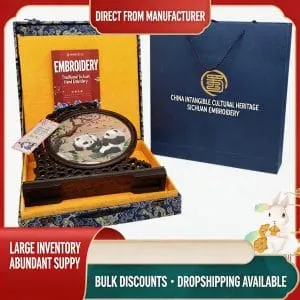
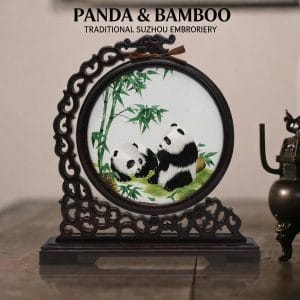
Panda Embroidery Screen: Sichuan’s Cute Ambassador in Silk Thread Art | HandMyth
Original price was: $46.70.$33.68Current price is: $33.68. Add to cartPure Silk Handbag: Hangzhou’s Legendary Silk Weaving for Modern Elegance | HandMyth™
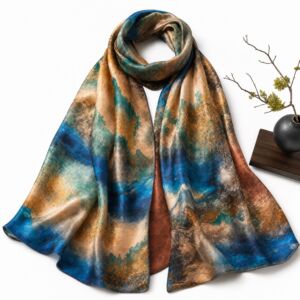
Original price was: $128.00.$115.00Current price is: $115.00. Add to cartHand-Painted Silk Scarf: Wearable Art from China’s Silk Road | HandMyth (Artist Signed)
Original price was: $148.90.$136.90Current price is: $136.90. Add to cartModern Qipao Dress: Timeless Chinese Elegance for Today’s Woman | HandMyth (Custom Fit)
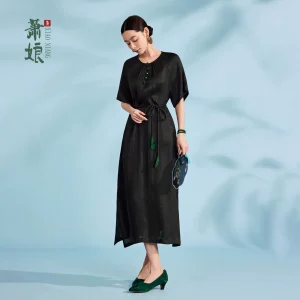
Original price was: $360.00.$328.00Current price is: $328.00. Add to cart



 English


