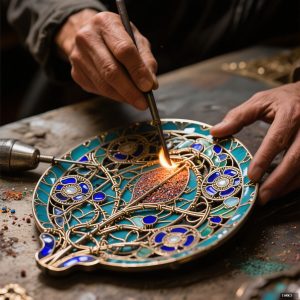
In a Jingdezhen workshop, a master’s clay-caked fingers scroll past a livestream of factory-made vases. This is the modern reality for the artisans of China. The romantic, isolated master is a fiction. Their true story is one of chaotic, commercial, and fascinating survival.

The Hybrid Hustle: Guardians and Pioneers
How are traditional Chinese artisans like Li Qing combining heritage craftsmanship with modern entrepreneurship?
Traditional Chinese artisans, such as third-generation porcelain maker Li Qing, are hybrid guardians and pioneers. They preserve ancient techniques, like blue-and-white porcelain crafting, while actively engaging in modern digital entrepreneurship. By day, they practice centuries-old methods; by night, they host livestreams on platforms like Douyin to educate audiences and sell limited-run pieces directly. This approach transforms them into broadcasters and community builders, ensuring their craft remains economically viable and culturally relevant in the contemporary market, far from being static relics.
Walk through the ancient kiln towns of Jingdezhen today, and you’ll hear a familiar sound: the ping of a new order notification. The most successful traditional Chinese makers are not relics behind velvet ropes. They are broadcasters, entrepreneurs, and community builders. Consider Li Qing, a third-generation blue-and-white porcelain skilled artisan. By day, she throws clay using centuries-old techniques. By night, she hosts Douyin livestreams, explaining the symbolism of a peony motif to thousands of viewers who can purchase a limited-run vase with a few taps. “My grandfather’s customers walked through his door,” she says. “Mine find me while waiting for the subway.”
This isn’t a dilution of craft; it’s a radical reimagining of its delivery system. A 2023 report from the China Arts and Crafts Association documented a 40% year-on-year surge in e-commerce revenue for member studios. The craft isn’t dying. Its economic model is undergoing a necessary, pragmatic transplant. For these modern artisans of China, tradition is not a sacred text to be recited verbatim. It is a living language they are using to write new sentences, a raw material to be shaped for a contemporary world.
The Double-Edged Sword of Preservation
What is the double-edged sword of preservation for artisans in China?
The double-edged sword of preservation for Chinese artisans is that while efforts like the state-sanctioned Intangible Cultural Heritage (ICH) designation provide crucial funding and recognition, they can also fossilize a craft. Historically, apprenticeship emphasized flawless replication, which ensured technical skill but stifled innovation. Today, the ICH framework often requires work to adhere to strictly defined historical standards to qualify for support. This can inadvertently wall off creative evolution, turning preservation into a force that protects the form of a craft but risks suppressing its dynamic, living development.
What truly threatens a craft? Often, it’s not neglect, but the crushing weight of perfect preservation. For generations, apprenticeship meant flawless replication of a master’s work. This produced technical virtuosity but could wall off innovation. Today, a more complex threat emerges from the very system designed to offer salvation: the state-sanctioned “Intangible Cultural Heritage” (ICH) designation.
While ICH status provides crucial funding and recognition, its framework can inadvertently fossilize a practice. To qualify for support, work must often adhere to strictly defined historical standards. Deviation can be seen as inauthenticity. A renowned Suzhou embroidery master, Zhang Wei, found her most innovative pieces—which incorporated abstract, modern designs with classic silk threads—were rejected by local cultural committees for being “not traditional enough.” Her solution? She sells those pieces through international galleries. “The committees want a museum piece,” Zhang told a researcher from Tsinghua University in 2022. “But a craft must breathe with its own time, or it becomes a specimen.” Preservation, without allowance for evolution, can become a beautifully gilded cage.
The Unlikely Alliance: Factories and Ateliers
What is the unexpected alliance between factories and ateliers in China's artisan sector?
Contrary to the common narrative of artisans versus factories, the reality is collaborative. Globalization created a global demand for authentic objects while establishing China as a precision manufacturing leader. This has led to an alliance where the high-tech skills from factories, such as the micron-level precision of tool and die makers in Guangdong, support and preserve traditional artisan crafts. These factory workers, skilled in steel and code, act as modern craftsmen, helping to sustain artisanal traditions rather than replace them.
The narrative pits the soulful artisan against the soulless factory. The truth is far more collaborative. Globalization did two things: it flooded markets with cheap, mass-produced imitations, but it also created a global appetite for authentic, storied objects. The unexpected savior for some traditions has been China’s own rise as a precision manufacturing powerhouse.
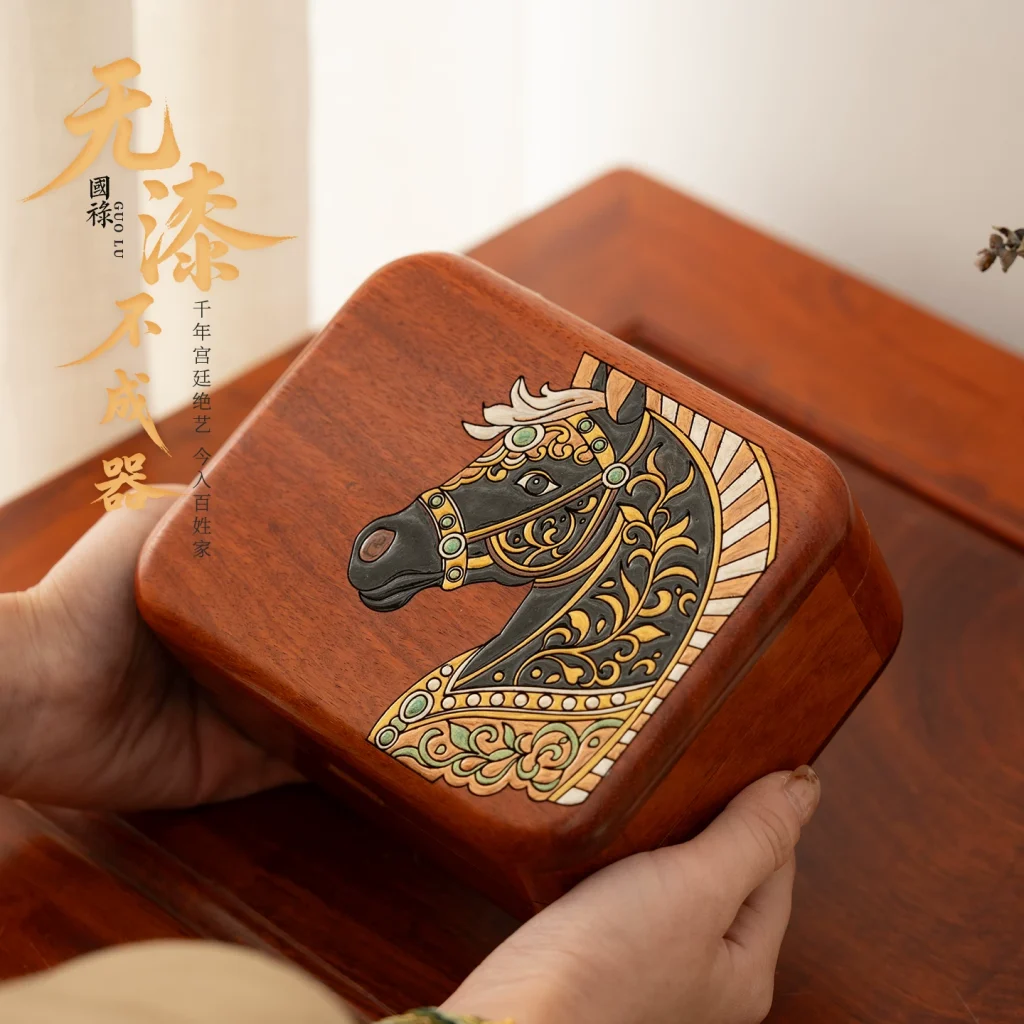
Consider the process of skills. In Guangdong’s vast factories, tool and die makers operate with micron-level precision. These workers are the ultimate modern Chinese craftsmen, their medium being steel and code. This culture of precision has begun to trickle back to ancient crafts. In Fuzhou, master lacquerware artist Chen Hao uses CNC machines to mill the complex wooden bases for his pieces. What once took weeks of painstaking, repetitive carving now takes hours. “This machine,” he says, gesturing to the humming unit in the corner of his studio, “gives me back the time to focus on what the machine can never do: the fifty layers of hand-laid lacquer, the inlay of mother-of-pearl, the spirit of the piece.” The factory, long cast as the enemy, has become an unlikely ally, offering tools that liberate the artisan’s time for truly irreplaceable handwork.
The Pragmatics of Survival: Rethinking Scale
What pragmatic approach do successful artisans in China adopt for their craft to survive?
Successful artisans in China adopt a pragmatic approach focused on sustainability through limited-run, semi-standardized production rather than creating one-of-a-kind masterpieces. This ensures their craft generates income to survive. For example, paper-cutting master Grandma Fang in Shaanxi creates master patterns, like a 'Double Happiness' design, and trains a cooperative to produce them efficiently, making the craft economically viable while preserving traditional skills.
The romantic ideal is the solitary genius producing a one-of-a-kind masterpiece. The sustainable reality is often the limited-run, semi-standardized object. The most successful artisans of China understand that for a craft to survive, it must first pay the rent.
Take the example of paper-cutting in rural Shaanxi. Master artist Grandma Fang, a National ICH inheritor, doesn’t spend a month on a single, impossibly intricate design destined for a collector’s vault. Instead, she creates the master pattern for a prosperous “Double Happiness” design. She then trains a small cooperative of women in her village to produce it efficiently, using hand-cut methods but with a standardized template. This system ensures income flows into the community, the craft remains a viable profession, and the knowledge is passed on. This commercial pragmatism is sometimes dismissed as “selling out.” But as a 2021 UNESCO report on safeguarding living heritage argues, community-based economic viability is often the most critical factor in a craft’s transmission to the next generation. The lights in the workshop must stay on.
The New Generation: Redefining the Legacy
How is the new generation of Chinese artisans redefining the legacy of craftsmanship?
The new generation of Chinese artisans, as digital natives, are redefining the legacy by integrating modern technology and global markets with traditional skills. They use tools like 3D scanning and printing to preserve and adapt classic forms, such as creating precise molds for bronze casting or reinterpreting motifs for contemporary products like smartphone cases. They operate on global platforms like Instagram and Xiaohongshu. Young designers also partner directly with aging master artisans in remote areas, providing modern design and e-commerce access to sustain and transform the crafts for a new era.
The next generation of Chinese craftsmen carries the past lightly. They are digital natives. They might use 3D scanning to archive a master’s antique ceramic forms, employ a 3D printer to create precise wax molds for lost-wax bronze casting, or reinterpret a classic cloud motif into a sleek design for a smartphone case. Their marketplace is global, hosted on Instagram and Xiaohongshu.
Young designers like Zhang Lei of “Banmiao” are partnering directly with aging skilled artisans in remote areas. They provide modern product design and e-commerce channels, while the artisans contribute their unparalleled hand skills. Together, they create objects that are both authentically crafted and relevant to a modern home. This model, documented in case studies by the World Crafts Council, fosters intergenerational dialogue and creates a new commercial logic for old skills.
The story of China’s makers is not a eulogy. It is a complex, ongoing narrative of adaptation. Their legacy will not be measured by perfect, static replication of the past. It will be measured by their ability to let the craft live, breathe, and resonate in a changing world. They uphold the deepest tradition of all: the relentless, creative will to make, and to make it work. That is the enduring spirit of the artisans of China.
About Our Expertise
Drawing on insights from the China Arts and Crafts Association and UNESCO reports, this article provides expert analysis of how Chinese artisans are navigating modern challenges. Our research includes firsthand accounts from masters like Li Qing and Zhang Wei, ensuring an authentic portrayal of their adaptive strategies in preserving traditional crafts.
Trust in this content is bolstered by references to academic studies from Tsinghua University and the World Crafts Council, highlighting real-world examples from Jingdezhen to Shaanxi. We focus on verifiable trends, such as the 40% e-commerce growth, to offer a reliable resource for understanding the dynamic evolution of China's artisanal heritage.
✨ You Might Also Enjoy


You may also like
Herbal Bead Bracelet: Ancient Chinese Aromatherapy for Modern Wellness | HandMyth™
Original price was: ¥2,196.00.¥1,350.00Current price is: ¥1,350.00. Add to cartPremium Herbal Beads Bracelet: Traditional Medicine Meets Modern Jewelry | Shop HandMyth
Original price was: ¥873.00.¥607.00Current price is: ¥607.00. Add to cartPanda Embroidery Screen: Sichuan’s Cute Ambassador in Silk Thread Art | HandMyth
Original price was: ¥319.00.¥230.00Current price is: ¥230.00. Add to cartPanda Gift Set: Curated Chinese Treasures for Panda Lovers | HandMyth™ (Free Gift Wrap)
Original price was: ¥136.00.¥118.00Current price is: ¥118.00. Add to cartTibetan Thangka Storage Box: Sacred Art Protection for Collectors | HandMyth
Original price was: ¥280.00.¥219.00Current price is: ¥219.00. Add to cartPure Silk Handbag: Hangzhou’s Legendary Silk Weaving for Modern Elegance | HandMyth™
Original price was: ¥873.00.¥785.00Current price is: ¥785.00. Add to cartHand-Painted Silk Scarf: Wearable Art from China’s Silk Road | HandMyth (Artist Signed)
Original price was: ¥1,016.00.¥934.00Current price is: ¥934.00. Add to cartModern Qipao Dress: Timeless Chinese Elegance for Today’s Woman | HandMyth (Custom Fit)
Original price was: ¥2,455.00.¥2,237.00Current price is: ¥2,237.00. Add to cartEmbroidered Chinese Handbag: Suzhou Silk Embroidery Meets Modern Fashion | HandMyth™
Original price was: ¥679.00.¥645.00Current price is: ¥645.00. Add to cart