
Craft business development is the deliberate, often uncomfortable, process of building systems around a creative practice so it can thrive as an enterprise without sacrificing its soul. It’s the bridge between the studio and a sustainable livelihood.
For many makers, the very idea triggers resistance. Growth feels synonymous with dilution, a betrayal of the hands-on intimacy that defines their work. Yet, the alternative—remaining perpetually at the mercy of feast-or-famine cycles, burning out on production, or watching a passion become a source of financial stress—is its own form of betrayal. The real challenge isn’t scaling the object, but scaling the story, the value, and the connection. This process requires a fundamental shift: from seeing yourself solely as an artist serving a faceless market to becoming a curator and archivist for a specific community of collectors.
The Collector’s Mindset: Your True North
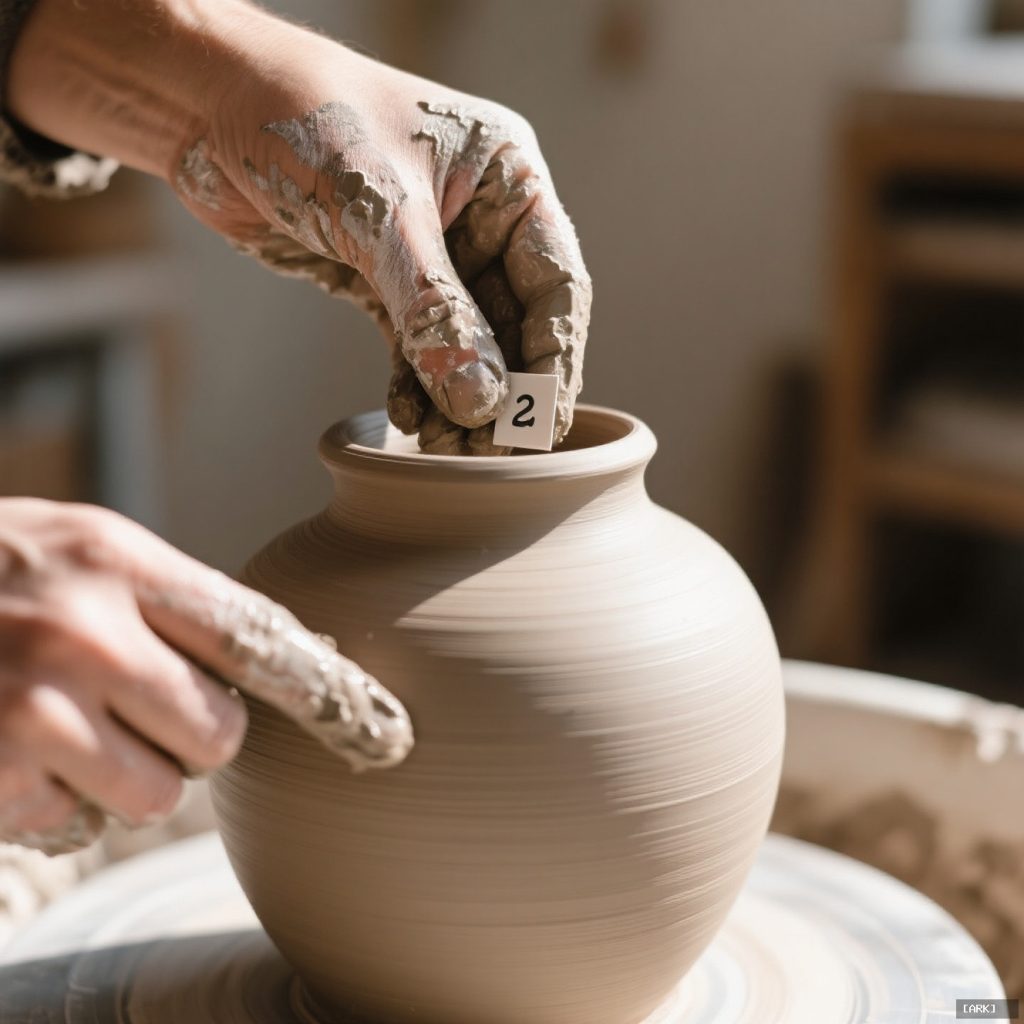
Imagine two mugs on a shelf. One is perfectly thrown, beautifully glazed. The other is similar, but comes with a small card: “Clay from the Red River Bank, Batch #7. Fired during the autumn equinox storm, which influenced the glaze’s unexpected crystalline bloom. This is one of twelve.”
They might be functionally identical, but they are not the same product. The first is a commodity. The second is a chapter in a story.
This is the heart of artisan enterprise growth. Collectors—your ideal customers—are not buying a thing. They are buying a fragment of a narrative to integrate into their own lives. They seek authenticity, which they perceive as a combination of provenance, unique process, and human trace. Your job transforms. You are no longer just the creator; you become the steward of that narrative. Every piece becomes a relic from your creative world, complete with its own documented history. This mindset changes every decision, from design to marketing to pricing. You stop asking, “Will everyone like this?” and start asking, “Will my collector understand and cherish this?”
The Counter-Intuitive Path of Scaling
The instinct for many creative entrepreneurs facing demand is to ramp up production. Make more of the popular item! Work longer hours! This approach is a direct path to burnout and creative stagnation. It turns your craft into a chore.
Real handmade venture expansion often looks like its opposite: making less, but for more. It means deep focus instead of wide appeal. This path is counter-intuitive because it feels like turning away from opportunity. In reality, it’s about qualifying opportunity. When you try to appeal to everyone, your message becomes generic and your work becomes harder to distinguish. When you focus on meaning everything to a specific few, your message resonates with powerful clarity. Your pricing can reflect true value, not just hours plus materials. Your marketing becomes a shared language. Your growth becomes about depth of relationship, not just breadth of reach.
Confronting the Silent Bottlenecks
Your own evolving taste can be the most dangerous bottleneck in your business. It’s a natural, even desirable, part of being an artist. You learn, refine, and your style matures. The trap is assuming your audience’s taste evolves in perfect lockstep with your own.
That “perfect” vase—the one where you finally mastered a complex technique—might sit unsold. Why? Because in perfecting it, you may have polished away the raw, charming imperfection that first captivated your early supporters. Their emotional connection was to a specific feeling your work evoked, not to your technical prowess alone.
Growth requires building a feedback loop that honors your audience’s taste alongside your artistic evolution. This doesn’t mean being a puppet to trends. It means understanding the core emotional value your work provides and ensuring that, as you grow, that value remains intact and communicated. Sometimes, the product you need to “kill” is the one you’re most proud of, because it no longer speaks to the story your collectors fell in love with.
Systematizing Authenticity: The Paperwork That Isn’t
“Just be authentic” is terrible advice. It’s vague, exhausting, and puts the burden on a perpetual performance of yourself. Instead, think of authenticity as a quality you can build into your systems through tangible proof.
This is where craft business development gets practical. Authenticity systems are simple, repeatable documentation practices that objectify your process:
- Material Provenance: A note on where your clay, wool, or wood came from. A photo of the source.
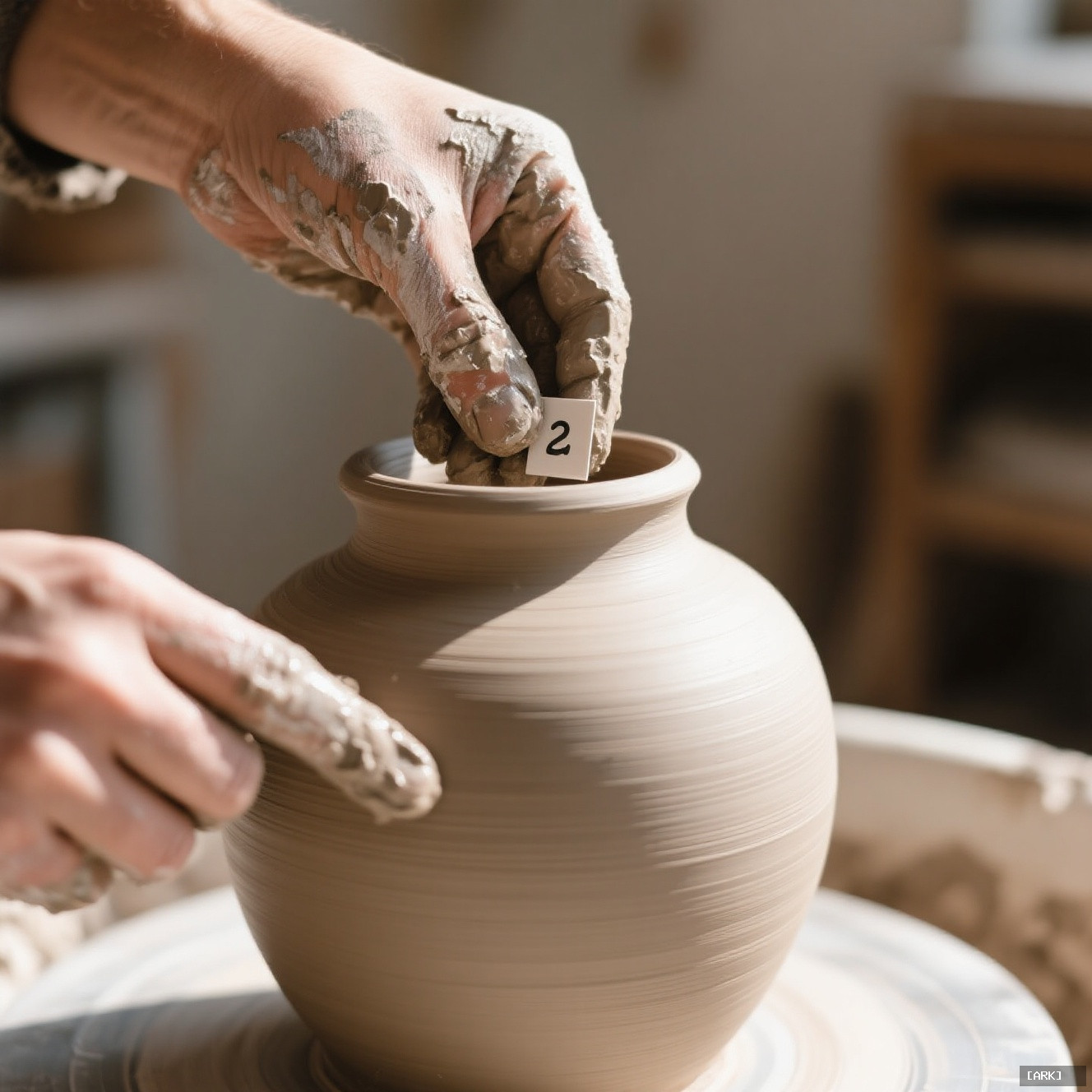
- Batch Numbering: Labeling pieces from a specific dye lot, firing, or harvest.
- Process Notes: The date, the weather, the tool that chipped, the reason for a color choice.
- Studio Artifacts: A photo of the piece on your workbench, a scan of a sketch.
This documentation isn’t bureaucratic. It’s alchemical. It transforms a product into a portable piece of your studio’s truth. It provides the evidence that satisfies the collector’s desire for a real connection. This system becomes your content engine, feeding your storytelling across websites, social media, and packaging.
The Vital Role of “Factory Thinking”
For the artisan, “factory” is a dirty word. It conjures images of soulless repetition. But factory thinking, reframed, is your greatest ally. It is not about removing soul; it’s about identifying and protecting the soulful element while systematizing everything else.
Every craft has its “magic variable”—the one step infused with your unique touch. It might be your specific brushstroke, the way you shape a handle, your signature stitch, or your glaze chemistry. Factory thinking asks you to isolate that variable. That is your sacred, non-negotiable craft. You protect its time, its quality, its intention.
Then, you build efficient, repeatable systems around everything else: inventory management, packaging design, email responses, shipping logistics, photo backdrops, bookkeeping. By systematizing the operational framework, you free up mental space, time, and energy to pour into the one thing that truly matters—the magic itself. The soul exists in the sacred variable; the systems protect its ability to exist.
Are You Ready for Real Craft Business Development? A Self-Assessment
Moving from a pure creative practice to a developed creative enterprise requires honest reflection. Ask yourself these questions:
- Can I articulate the single, repeatable “magic” in my process that defines my work?
- Do I have a simple, consistent system to document the provenance and story of each piece or batch?
- Can I describe my ideal collector’s values (e.g., sustainability, heritage, mindfulness) beyond just their aesthetic taste?
- Have I ever discontinued a product I loved personally because it did not resonate with my audience or support my business goals?
- Is my pricing a reflection of the narrative scarcity and value I create, or merely a calculation of cost plus hourly labor?
- Do my daily operations have any repeatable systems, or is every task approached as a new, ad-hoc challenge?
Navigating Common Fears
“Won’t this make my work feel commercial and less creative?”
For the wrong customer—someone looking for a cheap, generic item—yes, your systematized, story-rich work will feel “commercial” because it commands a price that reflects its value. That’s the point. You are weeding out transactional buyers to make space for relational collectors. For the right person, the documented authenticity and clear narrative make the work feel more precious and connected, not less. Your creativity expands from the object alone into the framework of the business and the depth of the story.
“How do I actually find these collectors?”
Stop leading with features and specifications. Start telling the micro-story of a single piece. Post a video about the source of your materials. Write a caption about the flaw that makes a piece unique. Explain the personal inspiration behind a new form. This nuanced, specific storytelling acts as a signal. It repels those who aren’t interested and powerfully attracts those who are seeking exactly what you embody. They find you through the story.
“Is this sustainable, or just a trend?”
The desire for human connection and meaning in what we own is not a trend; it is a fundamental reaction to a world of mass-produced anonymity. As noted in analyses of the modern artisanal economy, consumers increasingly use purchases to express identity and values. The craft business that can consistently deliver genuine authenticity, wrapped in a coherent narrative, is building an asset far more durable than one based on passing style.
Craft business development is not a betrayal of art. It is the craft of building a vessel sturdy enough to carry your art into the world, and prosperous enough to allow you to keep making it. It’s the work of making your passion sustainable, so your passion can remain just that—a passion, not a burden.
Sources & Further Reading
American Craft Council: The Line Between Art and Craft
The Atlantic: The Transformation of the ‘Artisanal’ Economy
Journal of Consumer Research: How Consumers Perceive Authenticity (Abstract)
The New York Times: The Battle for ‘Handmade’
About Our Expertise
Drawing from deep expertise in Chinese traditional arts, this guide reflects centuries-old principles where artisans like jade carvers and porcelain masters balanced artistic integrity with sustainable livelihoods. By systematizing authenticity through documented provenanceu2014similar to how Chinese craftspeople trace materials like Yixing clay or silku2014you build trust and preserve cultural heritage in a modern market.
Rooted in authentic Chinese culture, this approach mirrors the way traditional artisans cultivated relationships with patrons, emphasizing narrative and craftsmanship over mass production. It ensures your craft business thrives by honoring timeless values of authenticity, much like the enduring appeal of Chinese arts that connect collectors to rich histories and skilled hands.
✨ You Might Also Enjoy

You may also like
Herbal Bead Bracelet: Ancient Chinese Aromatherapy for Modern Wellness | HandMyth™
Original price was: ¥2,199.00.¥1,352.00Current price is: ¥1,352.00. Add to cartPremium Herbal Beads Bracelet: Traditional Medicine Meets Modern Jewelry | Shop HandMyth
Original price was: ¥874.00.¥608.00Current price is: ¥608.00. Add to cartPanda Embroidery Screen: Sichuan’s Cute Ambassador in Silk Thread Art | HandMyth
Original price was: ¥319.00.¥230.00Current price is: ¥230.00. Add to cartPanda Gift Set: Curated Chinese Treasures for Panda Lovers | HandMyth™ (Free Gift Wrap)
Original price was: ¥136.00.¥118.00Current price is: ¥118.00. Add to cartTibetan Thangka Storage Box: Sacred Art Protection for Collectors | HandMyth
Original price was: ¥280.00.¥219.00Current price is: ¥219.00. Add to cartPure Silk Handbag: Hangzhou’s Legendary Silk Weaving for Modern Elegance | HandMyth™
Original price was: ¥874.00.¥786.00Current price is: ¥786.00. Add to cartHand-Painted Silk Scarf: Wearable Art from China’s Silk Road | HandMyth (Artist Signed)
Original price was: ¥1,017.00.¥935.00Current price is: ¥935.00. Add to cartModern Qipao Dress: Timeless Chinese Elegance for Today’s Woman | HandMyth (Custom Fit)
Original price was: ¥2,459.00.¥2,240.00Current price is: ¥2,240.00. Add to cartEmbroidered Chinese Handbag: Suzhou Silk Embroidery Meets Modern Fashion | HandMyth™
Original price was: ¥680.00.¥646.00Current price is: ¥646.00. Add to cart























