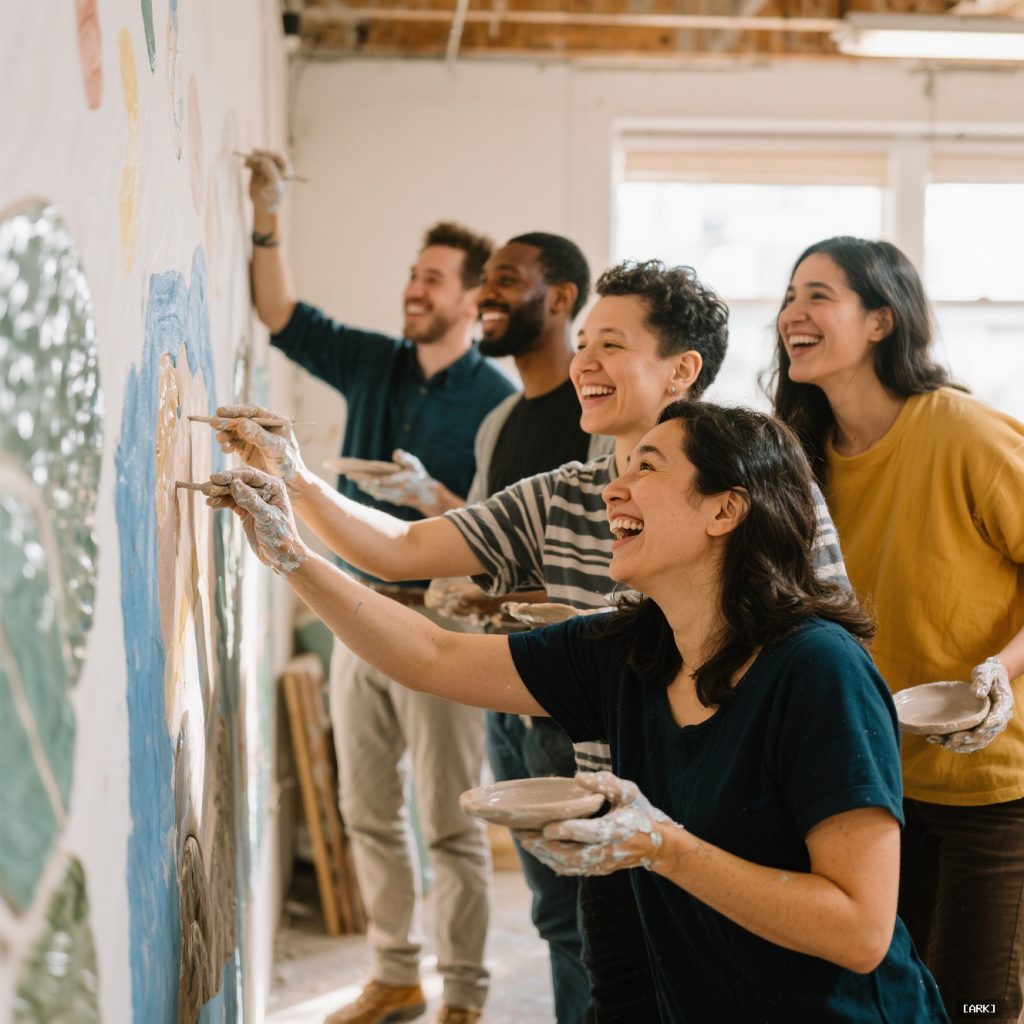
Craft workshops for groups offer a tangible antidote to our increasingly virtual and fragmented world. They transform passive consumption into active, shared creation.
In doing so, they answer a quiet, persistent need. We spend our days in meetings that could have been emails, scrolling through feeds of other people’s lives, and ordering our world with a click. The physical self—the hands, the focus, the patience required to make something from raw material—often gets left behind. A group art class doesn’t just teach a skill; it repatriates us to our own senses and to each other. It’s a deliberate, often messy, reclamation of a different kind of productivity, one measured in connection and a lopsided ceramic cup.
The Alchemy of Shared Focus
Why does making something together forge a different connection than sharing a meal or a conversation? Talk can be performative. We edit, we posture, we navigate social scripts. But collaborative crafting introduces a neutral third party: the object itself.
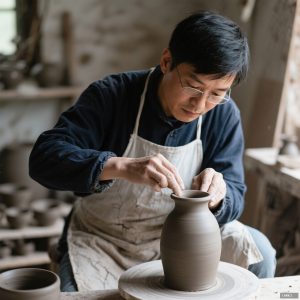
Your collective attention shifts from each other to the shared task. How do we wedge this clay to remove air bubbles? Which wood stain should we choose for the collective table we’re building? The communication becomes practical, rooted in a material reality that doesn’t care about job titles. A project manager might struggle to center a pottery wheel, while an intern from a farming background has an intuitive feel for the clay. The hierarchy of the office dissolves into the democracy of the workshop table.
This non-verbal, task-focused flow is where the magic happens. It’s a state psychologists call “shared flow,” a powerful bonding experience where individual awareness merges with group action. You’re not thinking about your to-do list or crafting the perfect witty remark. You’re thinking about the next stitch, the consistency of the glaze. In that silent, mutual engagement, guards come down. The bonding happens incidentally, as a byproduct of the work, not as its forced objective.
Beyond the Corporate Trust Fall
This is what separates a true craft workshop from generic team building activities. The latter often feel like abstract, awkward metaphors—a rope course meant to symbolize support, a puzzle solving exercise meant to mirror workplace dynamics. They can feel divorced from the actual skills of collaboration.
A collaborative craft project, however, makes those skills viscerally real. “Clear communication” isn’t a bullet point; it’s the precise instruction your teammate needs to solder a joint without burning themselves. “Adaptability” is the moment the wood grain splinters unexpectedly, and the group pivots to a new design. “Resilience” is the collective groan, followed by laughter, when a handle breaks, and the shared determination to repair it.
The success is visible, holdable. You leave with more than a debrief sheet; you leave with a physical artifact that embodies the patience, problem-solving, and occasional chaos of your team’s effort. The focus on mastering a craft, however minimally, provides a genuine challenge that earns authentic respect among participants. It’s teamwork you can hold in your hands.
Re-placing Ourselves in the City
Our urban experience is overwhelmingly curated and consumed. We move from our apartment to a coffee chain, to an office, to a restaurant, to a theater. We are constant audiences, customers, and users. Participating in a local group art class flips this entire script.
You step into a neighborhood studio, often in a tucked-away alley or a repurposed industrial space. The air might smell of sawdust, linseed oil, or wet clay. You’re not in a generic event space; you’re in someone’s active workshop, surrounded by the tools and half-finished dreams of making. The facilitator is often a practicing artist or artisan, not a corporate trainer.
This context matters profoundly. You engage with materials that might have a local story—reclaimed lumber from a city tree, clay from a regional pit, natural dyes from local plants. You become, even for just an afternoon, part of the city’s maker ecosystem. You’re not just passing through; you’re adding a small, physical piece to its mix. The city shifts from a backdrop to a source, from a platform for consumption to a ground for production. You literally make your mark on it.
The Profound Value of the Imperfect Object
In a world of seamless, algorithmically-delivered goods, the handmade object is an anomaly. Its value is orthogonal to its perfection. The lopsided mug, the blanket with the slightly irregular stitch—these aren’t failures. They are documents.
They carry the DNA of their making: the thumbprint smoothed into the side, the paint drip that became a happy accident, the joint that’s stronger because you all figured it out together. When a group creates it, the object becomes a vessel for a shared memory far more potent than any purchased souvenir. It speaks to an ancient economy of gift-giving, where value is imbued by thought, time, and collective effort.
You cannot buy the story of your team laughing as the pottery wheel spun out of control. That story is baked into the glaze. The object becomes a totem. On a desk or a shelf, it’s a quiet, persistent reminder of a different mode of being together—focused, tactile, and human-scaled. Its “flaws” are its signature, proof of its authentic, collaborative origin.
Finding the Right Workshop: A Guide Beyond the Listing
Not all group craft experiences are created equal. The difference between a transformative session and a forgettable one often lies in the details of philosophy and setting. Look past the generic “team event” packaging.
Seek out studios embedded in your community. A letterpress shop in a historic district, a glassblowing studio in an old factory, a weaving collective in a neighborhood arts center. The location itself should tell a story. The facilitator’s mindset is crucial. A great instructor is less a teacher and more a guide who emphasizes process over product, who can seamlessly accommodate the nervously uncreative and the confidently artistic in the same room.
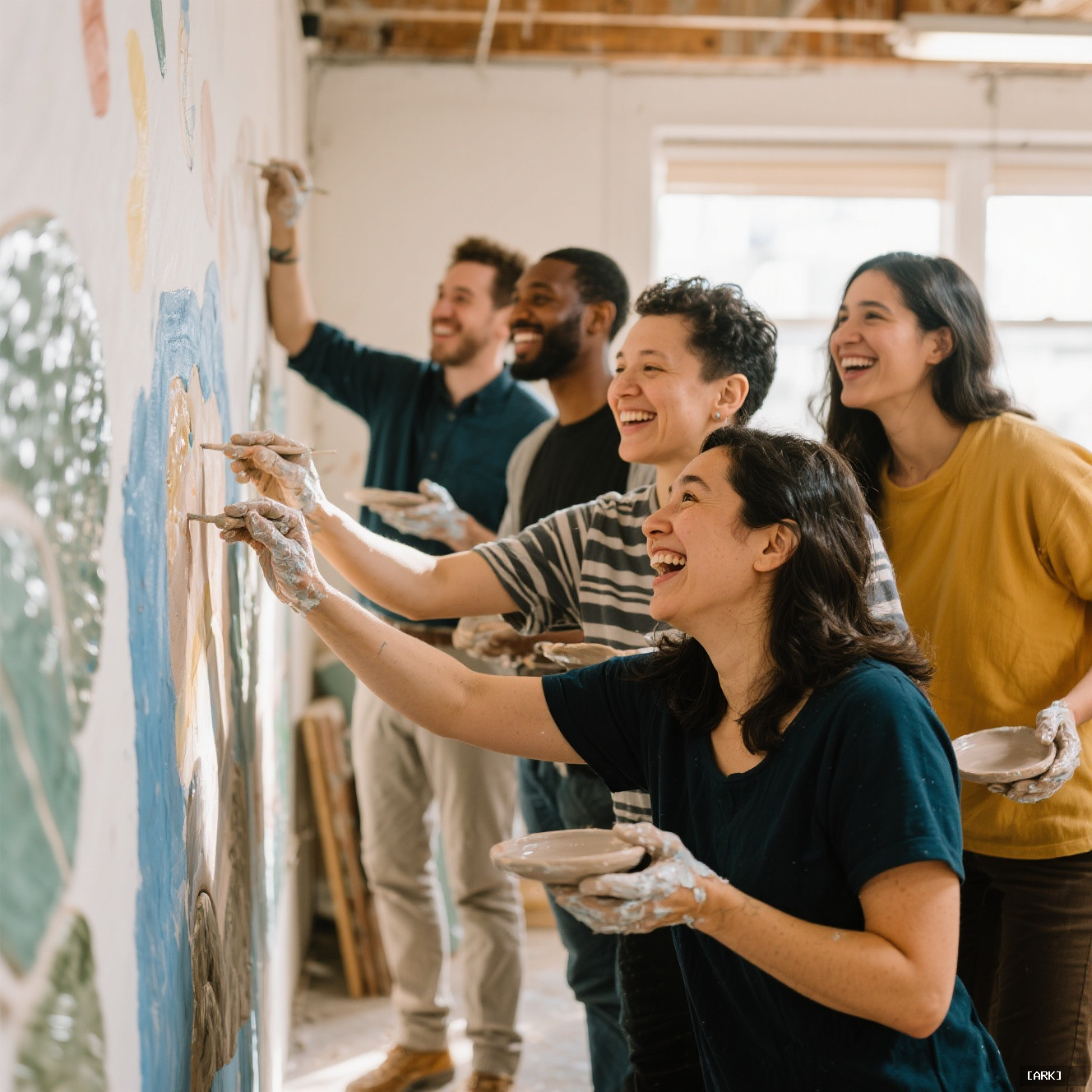
The project design is key. Opt for workshops where the outcome is inherently collaborative—a large mosaic where each person contributes tiles, a communal quilt, a set of printed posters for the office. Avoid sessions that are merely “parallel making,” where individuals sit silently next to each other working on identical projects. The magic is in the interdependence.
Your Practical Checklist
- Prioritize the Independent Studio: Choose a local artisan or artist-run space over a large corporate event provider. The authenticity is palpable.
- Interrogate the Philosophy: Ask the instructor: “How do you handle mixed skill levels?” and “What’s your primary goal for the group?” Listen for answers about inclusion and experience, not just a finished product.
- Demand True Collaboration: Ensure the project requires interaction, decision-making, and shared problem-solving, not just sitting side-by-side.
- Feel the Space: Visit beforehand if you can. Does it feel like a working studio? Is there evidence of real making? The atmosphere should inspire, not intimidate.
- Clarify the Aftermath: Who takes the finished piece home? If it’s one object, decide as a group where it will live. This is part of the story.
Navigating Common Concerns
“But no one on my team is ‘artsy’!”
This is the most common, and least relevant, worry. A well-designed workshop is about guided process, not innate talent. The instructor provides the technique and safety nets; the group provides the attention and effort. The goal is engagement and the experience of learning together, not creating museum pieces. Often, the most hesitant participants have the most profound breakthroughs.
What’s the ideal duration?
Two to three hours is generally the sweet spot. It allows enough time to move past initial awkwardness, learn a basic skill, sink into a flow state, and complete a satisfying project without mental or physical fatigue. Shorter sessions can feel rushed; longer ones can become draining.
Do these work for large teams?
The intimacy of a shared table is part of the chemistry. Groups of 8 to 20 are ideal. For larger teams (40+), consider splitting into smaller groups that rotate through different craft stations, or choose a large-scale collaborative project like a mural or installation that can accommodate many hands.
Looking for a less obvious craft?
Move beyond pottery and painting. Consider:
Group Bookbinding: Creating a set of journals or a collective scrapbook involves precise, interdependent steps and yields a functional, beautiful object.
Simple Printmaking: Carving linoleum blocks or assembling a collagraph plate for a shared edition of prints is deeply satisfying and highly collaborative.
Collaborative Woodworking: Building a simple bench or planter box teaches tool skills and the necessity of precise, shared measurement.
Sources & Further Reading
Psychology Today: The Benefits of Hands-On Creativity
American Craft Council: The Value of the Handmade
National Endowment for the Arts: Creative Placemaking & Community Identity
Harvard Business Review: Ditching Traditional Team Building
About Our Expertise
Drawing from decades of expertise in Chinese traditional arts, our workshops are designed by master artisans who have honed their skills through generations of practice, ensuring an authentic and immersive experience that respects cultural heritage while fostering modern collaboration.
We partner with local studios and craftspeople across China to provide genuine insights into materials like clay, wood, and dyes, offering trust through hands-on learning that connects participants with the rich history and symbolism of these arts, making each session a meaningful cultural exchange.
✨ You Might Also Enjoy

You may also like
Herbal Bead Bracelet: Ancient Chinese Aromatherapy for Modern Wellness | HandMyth™
Original price was: ¥2,199.00.¥1,352.00Current price is: ¥1,352.00. Add to cartPremium Herbal Beads Bracelet: Traditional Medicine Meets Modern Jewelry | Shop HandMyth
Original price was: ¥874.00.¥608.00Current price is: ¥608.00. Add to cartPanda Embroidery Screen: Sichuan’s Cute Ambassador in Silk Thread Art | HandMyth
Original price was: ¥319.00.¥230.00Current price is: ¥230.00. Add to cartPanda Gift Set: Curated Chinese Treasures for Panda Lovers | HandMyth™ (Free Gift Wrap)
Original price was: ¥136.00.¥118.00Current price is: ¥118.00. Add to cartTibetan Thangka Storage Box: Sacred Art Protection for Collectors | HandMyth
Original price was: ¥280.00.¥219.00Current price is: ¥219.00. Add to cartPure Silk Handbag: Hangzhou’s Legendary Silk Weaving for Modern Elegance | HandMyth™
Original price was: ¥874.00.¥786.00Current price is: ¥786.00. Add to cartHand-Painted Silk Scarf: Wearable Art from China’s Silk Road | HandMyth (Artist Signed)
Original price was: ¥1,017.00.¥935.00Current price is: ¥935.00. Add to cartModern Qipao Dress: Timeless Chinese Elegance for Today’s Woman | HandMyth (Custom Fit)
Original price was: ¥2,459.00.¥2,240.00Current price is: ¥2,240.00. Add to cartEmbroidered Chinese Handbag: Suzhou Silk Embroidery Meets Modern Fashion | HandMyth™
Original price was: ¥680.00.¥646.00Current price is: ¥646.00. Add to cart