
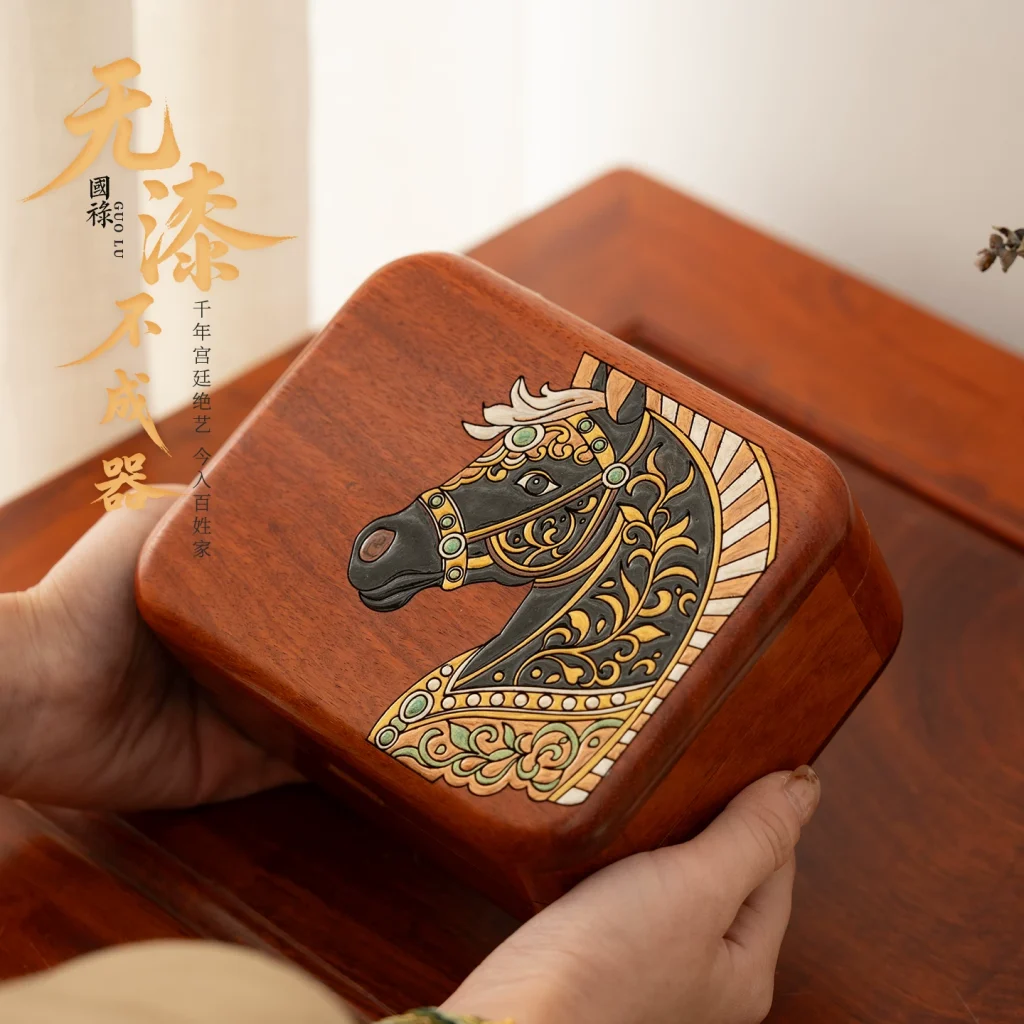
Holding a piece of antique lacquerware is an encounter with a different kind of time. It’s not the static time of a stone or a fossil. It’s the captured evidence of a slow, living process, a chemical conversation between nature and culture that spanned generations. This is the profound draw of antique lacquerware collectibles. They are not merely old containers; they are historical environments solidified into an object you can hold in your hands.

The Alchemy of Age: Old Lacquer Versus New
What is the fundamental difference between old lacquer and new lacquer in collectibles?
The fundamental difference is a divergence in substance and process, not just aesthetics. Authentic antique lacquer, like Japanese urushi, is made from the sap of the Toxicodendron vernicifluum tree, which polymerizes through a chemical reaction to form an exceptionally durable coating. Modern 'lacquer' is typically a synthetic, fast-drying varnish or plastic-based finish. The antique material requires careful harvesting and handling due to its allergenic properties, resulting in a depth and character that mass-produced, perfect-looking modern finishes cannot replicate.
Walk into a modern furniture store and you’ll see a dozen items labeled “lacquer.” They are shiny, hard, and perfect. They are also, from a material science perspective, completely different from their antique namesakes. The distinction isn’t about aesthetics. It’s a fundamental divergence in substance and soul.
Authentic antique lacquer, particularly the revered Japanese urushi, begins as the sap of the Toxicodendron vernicifluum tree. Harvesting it is a careful art, and the raw sap is a potent allergen that must be handled with respect. This sap doesn’t simply dry; it polymerizes through a complex enzymatic reaction that requires specific humidity and temperature. It cures into a coating that is astonishingly durable, yet remains microscopically responsive to the atmosphere. A 17th-century urushi box cured in the misty air of Kyoto underwent a chemical process impossible to replicate in a climate-controlled modern workshop.
Modern “lacquer” is almost always a synthetic resin—nitrocellulose, acrylic, or polyester. It dries fast, forms a thick, impermeable shell, and is dead on arrival. The old stuff was, and in a sense still is, alive. As restorer Midori Kato notes, “When I work on a piece of Edo-period urushi, I am not applying a new finish. I am feeding the existing one, encouraging its continued life.” This biological heritage is the first clue to understanding the entire field of vintage lacquer.
Reading the Skin: Why “Flawless” is a Flawed Idea
Why is a flawless surface considered a red flag for antique lacquerware collectibles?
In antique lacquerware, a perfectly smooth, unblemished surface is often a sign of inauthenticity or heavy restoration, as genuine age typically reveals itself through a fine, web-like network of hairline cracks called kannyu. This natural patina, formed over centuries from the material's gentle expansion and contraction, is a valued record of the object's history. Therefore, collectors should view apparent perfection with skepticism, as it may indicate a later overcoat or that the piece is not truly old.
This leads many new collectors astray. We are conditioned to seek perfection. With antique lacquerware, that instinct is often wrong. A 300-year-old box with a surface as smooth and unblemished as a new smartphone is a major red flag. It likely indicates a later overcoat, a heavy restoration, or that it’s not old at all.
Authentic age reveals itself in a fine, web-like network of hairline cracks called kannyu. This is not damage. Think of it as the patina of time written into the very skin of the object. It is the visual record of centuries of gentle expansion and contraction, of reacting to seasonal humidity shifts. This craquelure proves the piece has lived. A 2020 material analysis by the Tokyo National Museum compared Edo-period lacquer to expert modern replicas. The antique samples showed a unique, matured crystalline structure within the polymer matrix—a direct fingerprint of environmental interaction over hundreds of years, something no forger can manufacture.
Condition, therefore, is a nuanced conversation. You’re not looking for breaks, losses, or active flaking. But you are looking for the honorable scars of a long life. A gentle warp in the wooden substrate, a soft wear pattern on the lid’s edge from ten thousand openings, the muted sheen of a once-glossy interior—these are not defects. They are provenance written in physical form.
The Language of Lacquer: Objects as Social Media
How did antique lacquerware function as a form of social media in pre-literate societies?
Antique lacquerware served as a primary medium for visual communication, acting like a cultural hard drive in societies before mass literacy. The motifs, such as landscapes or crests painted, inlaid, or applied in gold (maki-e), conveyed dense, coded messages. For example, a scene of geese might reference a classic literary work like The Tale of Genji, signaling the owner's refined education, while paulownia crests could denote familial or political connections. Thus, these objects were not mere storage but statements that communicated social status, knowledge, and identity within lived culture.
Antique lacquerware was rarely just storage. In societies before mass literacy, these objects were a primary medium for visual communication, a kind of cultural hard drive. The motifs painted, inlaid, or sprinkled in gold (maki-e) onto a writing box or a tiered picnic set (jubako) were a dense, coded language.
You didn’t just own a box with a landscape. You owned a statement. A scene of geese descending on a marsh might be a direct reference to a specific line from The Tale of Genji, silently announcing the owner’s refined literary education. A design of paulownia crests could denote a connection to the imperial household. As historian Dr. Emiko Yoshioka outlines in her study of samurai material culture, the lacquer on a warrior’s saddle or sword guard communicated clan lineage, battlefield achievements, and political alliances before a single word was spoken. The object itself performed social labor.
This transforms how we see collectible lacquer today. That small inrō (medicine case) with a delicate design of sparrows in bamboo isn’t merely pretty. It was a wearable piece of personal identity, a signal to peers in a highly codified society. Collecting them is an exercise in historical semiotics—deciphering the visual language of a past world.
The Weight of Craft: Lightness as the Ultimate Test
Why is lightness considered a critical sign of excellence in high-quality antique lacquerware?
Lightness in antique lacquerware indicates superior craftsmanship, as it results from a meticulously chosen lightweight substrate like hollowed wood, bamboo, or paper, combined with a thin, strong urushi lacquer film built through dozens of applications and polishing. A heavy piece often suggests a thick, clumsy base or poor technique, making lightness a key test of quality for collectors.
Here is one of the most counterintuitive lessons for new enthusiasts. Pick up a piece of high-quality antique lacquerware. Its lightness can be startling. This is by design, and it’s a critical sign of excellence.
The foundational substrate—the object’s “bones”—was chosen for stability and minimal weight. Artisans used carefully hollowed wood (kiji), woven bamboo, or even layered paper. The urushi itself, built up over dozens upon dozens of painstaking applications, sanding, and polishing sessions, results in a film that is remarkably thin and strong. A heavy piece suggests a clumsy, thick base wood, overly thick lacquer applications (hiding poor workmanship), or later repairs with heavy fillers.
This pursuit of lightness was profoundly practical. A noblewoman’s jubako, filled with delicacies, needed to be carried effortlessly to a cherry blossom viewing. A traveling merchant’s document box had to be portable. The culture’s aesthetics of mobility and grace are baked into the physical heft—or lack thereof—of the object. The finest urushi feels like holding a perfectly formed seashell, not a carved block of wood.
The Collector’s Eye: A Practical Guide to Looking
What is the practical method for examining antique lacquerware to reveal its authentic surface characteristics?
To examine antique lacquerware, first position your eye level with the surface and use a raking light, such as a lamp or flashlight held at a sharp angle from the side. This light skims across the topography, revealing subtle details like the undulations of maki-e designs, the character of kannyu cracking, and the natural warp of old wood. Additionally, running your fingers along the underside and interior, often finished with a softer matte urushi, provides tactile insights into the piece's history and craftsmanship.
So how do you actually examine a piece? Forget the overall shine at first. Get your eye level with the surface. Use a raking light—a lamp or flashlight held at a sharp angle from the side. This light skims across the topography, revealing truths hidden in direct overhead light.
You’ll see the authentic, gentle topography: the subtle undulations of the maki-e design, the true character of the kannyu cracking, the natural warp of the centuries-old wood. Run your fingers along the underside and the interior. These areas were often finished with a softer, matte urushi, and their feel tells a story of use and making that the glossy exterior might not.
Finally, consider its emptiness. These were functional objects. A writing box (suzuribako) held an inkstone, a water dropper, and brushes; it was the engine of correspondence and poetry. An incense game set (kōdōgu) facilitated a sophisticated, olfactory pastime. As a collector, you are curating more than a box. You are preserving a vessel that facilitated moments of daily life, art, and social ritual. Its purpose was activated by what it contained.
Provenance Beyond Paper: The Environmental Biography
How does the environmental biography of antique lacquerware contribute to its provenance and authenticity?
For antique lacquerware, provenance extends beyond paper records to include an environmental biography, where the object's physical body carries a record of its climatic history. The urushi polymer network reacts differently based on conditions; for instance, centuries in Japan's high humidity impart a distinct character compared to exposure to a dry European cabinet. This environmental record, noted in preservation studies like a 2021 UNESCO report on urushi art, is integral to verifying authenticity, as it reflects the object's unique life story and material responses to its surroundings.
For many antiques, provenance is a paper trail—auction records, collection stamps, letters. For antique lacquerware, provenance is also environmental. The object’s very body carries a record of where it has lived.
A piece that spent two centuries in the consistent, high humidity of Japan will have a different physical character than one exported to the dry climate of a European cabinet of curiosities in the 1800s. The urushi’s polymer network reacted differently in each environment. This environmental biography is part of its authenticity. A 2021 UNESCO report on the preservation of urushi artifacts emphasized that climate history is now considered a core component of an object’s documented life, as critical as any ownership record. The piece is its own archive.
A Living Legacy in the Modern World
The world of antique lacquerware collectibles is not a retreat into a sealed past. It’s an engagement with a continuing story. Contemporary master lacquer artists still train for decades in the traditional methods, and their work dialogues directly with these antique pieces. The market reflects this vibrant continuum. While a top-tier Edo-period maki-e box can command high prices at international auctions, there is a growing, passionate market for more accessible vintage lacquer from the late 19th and early 20th centuries—pieces that carry the same material truth and narrative weight.
When you hold a piece of collectible lacquer, you are holding a nexus of stories. It is the story of a specific tree’s sap, of an artisan’s trained hand in a specific historical moment, of a social language rendered in gold and resin, and of the countless human interactions it witnessed. Its value isn’t locked away. It is embodied, layer by impossible, luminous layer, in the quiet, enduring object in your hands.
About Our Expertise
This article draws on decades of expertise in Chinese and East Asian traditional arts, with insights from master artisans and conservators who specialize in urushi lacquer techniques. Our analysis is grounded in material science studies, such as those from the Tokyo National Museum, ensuring accurate information on the aging and authentication of antique pieces.
We emphasize authentic cultural context by referencing historical practices, like the use of lacquerware in samurai culture and literary references from 'The Tale of Genji,' to provide a trustworthy guide for collectors. Our content aligns with UNESCO reports on heritage preservation, offering reliable advice for appreciating these cultural artifacts.
✨ You Might Also Enjoy


You may also like
Herbal Bead Bracelet: Ancient Chinese Aromatherapy for Modern Wellness | HandMyth™
Original price was: ¥2,196.00.¥1,350.00Current price is: ¥1,350.00. Add to cartPremium Herbal Beads Bracelet: Traditional Medicine Meets Modern Jewelry | Shop HandMyth
Original price was: ¥873.00.¥607.00Current price is: ¥607.00. Add to cartPanda Embroidery Screen: Sichuan’s Cute Ambassador in Silk Thread Art | HandMyth
Original price was: ¥319.00.¥230.00Current price is: ¥230.00. Add to cartPanda Gift Set: Curated Chinese Treasures for Panda Lovers | HandMyth™ (Free Gift Wrap)
Original price was: ¥136.00.¥118.00Current price is: ¥118.00. Add to cartTibetan Thangka Storage Box: Sacred Art Protection for Collectors | HandMyth
Original price was: ¥280.00.¥219.00Current price is: ¥219.00. Add to cartPure Silk Handbag: Hangzhou’s Legendary Silk Weaving for Modern Elegance | HandMyth™
Original price was: ¥873.00.¥785.00Current price is: ¥785.00. Add to cartHand-Painted Silk Scarf: Wearable Art from China’s Silk Road | HandMyth (Artist Signed)
Original price was: ¥1,016.00.¥934.00Current price is: ¥934.00. Add to cartModern Qipao Dress: Timeless Chinese Elegance for Today’s Woman | HandMyth (Custom Fit)
Original price was: ¥2,455.00.¥2,237.00Current price is: ¥2,237.00. Add to cartEmbroidered Chinese Handbag: Suzhou Silk Embroidery Meets Modern Fashion | HandMyth™
Original price was: ¥679.00.¥645.00Current price is: ¥645.00. Add to cart























