
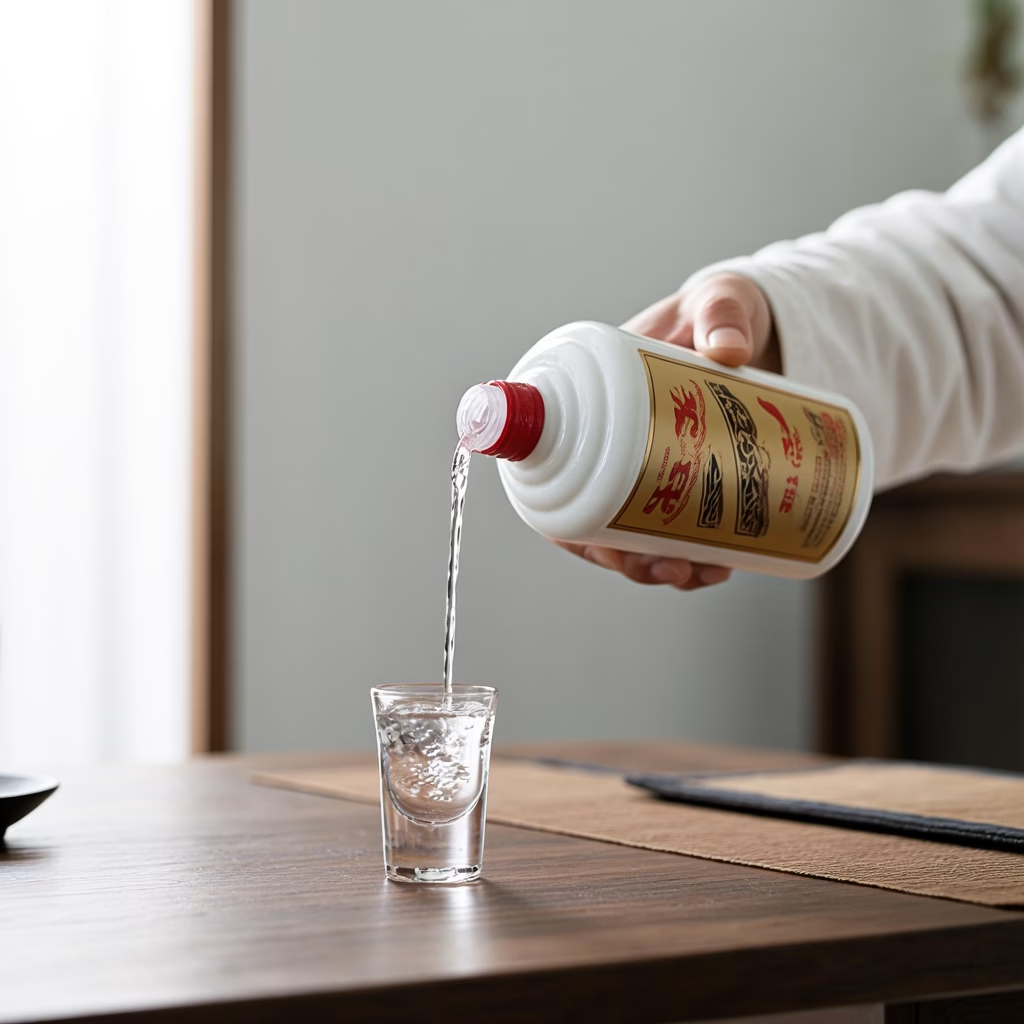
- A standard Feitian Moutai (the most widely available bottle, recognizable by the two celestial maidens on the label)
- A five-year-aged Feitian Moutai (buy one now, set it aside, but if you want to taste aged character today, you can find older vintages at specialist stores)
- A sauce-aroma baijiu from a different distillery, like Langjiu or Xijiu, for contrast
Pour about 15-20ml into each glass. Use a standard baijiu glass — they’re small, tulip-shaped, and meant to concentrate the aroma. If you don’t have one, a white wine glass works. Avoid tumblers; too much surface area, and the aroma escapes before you’ve had a chance to appreciate it.
The Tasting Method
Baijiu is not wine, and tasting it like wine misses the point. Here’s the sequence Chen taught me, which roughly follows how seasoned drinkers in China approach it.
First, the nose. Swirl the glass gently, then bring it to your nose — but don’t stick your nose in the glass like you would with a Cabernet. Hover an inch above the rim. Moutai’s aroma is powerful: soy sauce, fermented grains, dried fruits, a hint of mushroom and leather. There’s a distinct note of qu — the fermentation starter that gives baijiu its signature funk. Breathe in through your nose, then through your mouth. Let your palate adjust.
Second, the small sip. Take just enough to coat your tongue — maybe half a teaspoon. Hold it there for three seconds. Then let it spread across your palate. The initial hit is intense, almost savory. Umami in liquid form. Then comes the heat — not harsh, but warm, radiating from your chest. This is called hui gan (回甘), the returning sweetness, and it’s the hallmark of quality Moutai. A cheap baijiu burns and fades. Good Moutai’s sweetness lingers for minutes.
Third, the swallow and finish. Swallow and breathe out slowly through your mouth. You should taste layers: grain, dried apricot, a faint floral note, and then the long, clean finish. A quality sauce-aroma baijiu should leave your mouth feeling dry and clean, not sticky or cloying.
Between tastings, rinse your glass with room-temperature water — not iced, which numbs your palate — and take a bite of plain bread or a neutral cracker. Avoid strong flavors like pickles or cheese. They’ll throw off your next sample.
A Note on Price and Fakes
Let’s address the elephant. A bottle of Feitian Moutai retails for around 1,500 RMB ($210 USD) at official stores — if you can find one. On the secondary market, it’s often double that. This means counterfeit Moutai is a genuine problem, especially for buyers outside China. Buy from authorized distributors, check the anti-counterfeiting code on the box (every bottle has a unique one you can verify online), and learn to recognize the real bottle’s shape, label alignment, and cap texture. If a deal looks too good to be true, it absolutely is.
That said, you don’t need Feitian to understand Moutai’s style. The distillery’s entry-level Yingbin (Welcome Guests) bottle costs a fraction of the price and shares the same production lineage. It’s a perfectly honest introduction to the sauce-aroma profile. Serve it blind to friends and see who can tell the difference.
The Culture Around the Pour
In China, baijiu is never drunk alone — or at least, not in company. The ritual of pouring for others (always fill someone else’s glass, never your own) and saying ganbei (干杯, literally “dry glass”) is baked into business dinners, family reunions, and holidays. When someone pours you Moutai, they’re signaling respect. When the bottle costs more than a month’s rent for most people, the gesture lands.
But you don’t need a formal banquet to enjoy it. A quiet Sunday with two friends and three glasses is enough. Let the baijiu do the talking.
Disclosure: Some links are affiliate links.
Sunday afternoon, and the air in Shanghai’s French Concession hangs thick with humidity and the clatter of mahjong tiles from a nearby apartment. My friend Lao Chen, a collector who’s been buying baijiu since before it was cool, unscrews the cap on a bottle of Feitian Moutai. The room goes quiet. That’s the thing about Moutai — it commands attention without asking for it. Chen pours three tasting glasses, each no bigger than a thimble, and slides one across the table toward me. “Don’t sip it yet,” he says. “First, just let it sit.”
He was right. What follows is something closer to a ritual than a drink. And mastering it — running your own Moutai tasting flight at home — is one of the most rewarding ways to understand why this single bottle has become China’s most famous export, a status symbol, and a surprisingly complex spirit all at once.
Why Moutai, and Why a Flight?
Moutai is a sauce-aroma (jiangxiang) baijiu from Maotai town in Guizhou province. It’s distilled from sorghum, fermented in stone pits, and aged for at least five years before it touches a bottle. The production process involves nine steamings, eight fermentations, and seven distillations — a cycle that takes a full year before aging even begins. That’s not marketing. That’s the literal process.
Running a tasting flight lets you compare different vintages, label tiers, or even Moutai against other sauce-aroma baijius side by side. You pick up things you’d never notice drinking a single pour — how a 2018 Feitian opens fruitier than a 2020, how the finish on a five-year-old bottle differs from a ten-year. It’s the difference between listening to a song on the radio and hearing it performed live in a small room.
Setting Up Your Moutai Flight
You don’t need a lot. Three bottles are plenty. A good flight might include:
Pour about 15-20ml into each glass. Use a standard baijiu glass — they’re small, tulip-shaped, and meant to concentrate the aroma. If you don’t have one, a white wine glass works. Avoid tumblers; too much surface area, and the aroma escapes before you’ve had a chance to appreciate it.
The Tasting Method
Baijiu is not wine, and tasting it like wine misses the point. Here’s the sequence Chen taught me, which roughly follows how seasoned drinkers in China approach it.
First, the nose. Swirl the glass gently, then bring it to your nose — but don’t stick your nose in the glass like you would with a Cabernet. Hover an inch above the rim. Moutai’s aroma is powerful: soy sauce, fermented grains, dried fruits, a hint of mushroom and leather. There’s a distinct note of qu — the fermentation starter that gives baijiu its signature funk. Breathe in through your nose, then through your mouth. Let your palate adjust.
Second, the small sip. Take just enough to coat your tongue — maybe half a teaspoon. Hold it there for three seconds. Then let it spread across your palate. The initial hit is intense, almost savory. Umami in liquid form. Then comes the heat — not harsh, but warm, radiating from your chest. This is called hui gan (回甘), the returning sweetness, and it’s the hallmark of quality Moutai. A cheap baijiu burns and fades. Good Moutai’s sweetness lingers for minutes.
Third, the swallow and finish. Swallow and breathe out slowly through your mouth. You should taste layers: grain, dried apricot, a faint floral note, and then the long, clean finish. A quality sauce-aroma baijiu should leave your mouth feeling dry and clean, not sticky or cloying.
Between tastings, rinse your glass with room-temperature water — not iced, which numbs your palate — and take a bite of plain bread or a neutral cracker. Avoid strong flavors like pickles or cheese. They’ll throw off your next sample.
A Note on Price and Fakes
Let’s address the elephant. A bottle of Feitian Moutai retails for around 1,500 RMB ($210 USD) at official stores — if you can find one. On the secondary market, it’s often double that. This means counterfeit Moutai is a genuine problem, especially for buyers outside China. Buy from authorized distributors, check the anti-counterfeiting code on the box (every bottle has a unique one you can verify online), and learn to recognize the real bottle’s shape, label alignment, and cap texture. If a deal looks too good to be true, it absolutely is.
That said, you don’t need Feitian to understand Moutai’s style. The distillery’s entry-level Yingbin (Welcome Guests) bottle costs a fraction of the price and shares the same production lineage. It’s a perfectly honest introduction to the sauce-aroma profile. Serve it blind to friends and see who can tell the difference.
The Culture Around the Pour
In China, baijiu is never drunk alone — or at least, not in company. The ritual of pouring for others (always fill someone else’s glass, never your own) and saying ganbei (干杯, literally “dry glass”) is baked into business dinners, family reunions, and holidays. When someone pours you Moutai, they’re signaling respect. When the bottle costs more than a month’s rent for most people, the gesture lands.
But you don’t need a formal banquet to enjoy it. A quiet Sunday with two friends and three glasses is enough. Let the baijiu do the talking.
Disclosure: Some links are affiliate links.
- A standard Feitian Moutai (the most widely available bottle, recognizable by the two celestial maidens on the label)
- A five-year-aged Feitian Moutai (buy one now, set it aside, but if you want to taste aged character today, you can find older vintages at specialist stores)
- A sauce-aroma baijiu from a different distillery, like Langjiu or Xijiu, for contrast
Pour about 15-20ml into each glass. Use a standard baijiu glass — they’re small, tulip-shaped, and meant to concentrate the aroma. If you don’t have one, a white wine glass works. Avoid tumblers; too much surface area, and the aroma escapes before you’ve had a chance to appreciate it.
The Tasting Method
Baijiu is not wine, and tasting it like wine misses the point. Here’s the sequence Chen taught me, which roughly follows how seasoned drinkers in China approach it.
First, the nose. Swirl the glass gently, then bring it to your nose — but don’t stick your nose in the glass like you would with a Cabernet. Hover an inch above the rim. Moutai’s aroma is powerful: soy sauce, fermented grains, dried fruits, a hint of mushroom and leather. There’s a distinct note of qu — the fermentation starter that gives baijiu its signature funk. Breathe in through your nose, then through your mouth. Let your palate adjust.
Second, the small sip. Take just enough to coat your tongue — maybe half a teaspoon. Hold it there for three seconds. Then let it spread across your palate. The initial hit is intense, almost savory. Umami in liquid form. Then comes the heat — not harsh, but warm, radiating from your chest. This is called hui gan (回甘), the returning sweetness, and it’s the hallmark of quality Moutai. A cheap baijiu burns and fades. Good Moutai’s sweetness lingers for minutes.
Third, the swallow and finish. Swallow and breathe out slowly through your mouth. You should taste layers: grain, dried apricot, a faint floral note, and then the long, clean finish. A quality sauce-aroma baijiu should leave your mouth feeling dry and clean, not sticky or cloying.
Between tastings, rinse your glass with room-temperature water — not iced, which numbs your palate — and take a bite of plain bread or a neutral cracker. Avoid strong flavors like pickles or cheese. They’ll throw off your next sample.
A Note on Price and Fakes
Let’s address the elephant. A bottle of Feitian Moutai retails for around 1,500 RMB ($210 USD) at official stores — if you can find one. On the secondary market, it’s often double that. This means counterfeit Moutai is a genuine problem, especially for buyers outside China. Buy from authorized distributors, check the anti-counterfeiting code on the box (every bottle has a unique one you can verify online), and learn to recognize the real bottle’s shape, label alignment, and cap texture. If a deal looks too good to be true, it absolutely is.
That said, you don’t need Feitian to understand Moutai’s style. The distillery’s entry-level Yingbin (Welcome Guests) bottle costs a fraction of the price and shares the same production lineage. It’s a perfectly honest introduction to the sauce-aroma profile. Serve it blind to friends and see who can tell the difference.
The Culture Around the Pour
In China, baijiu is never drunk alone — or at least, not in company. The ritual of pouring for others (always fill someone else’s glass, never your own) and saying ganbei (干杯, literally “dry glass”) is baked into business dinners, family reunions, and holidays. When someone pours you Moutai, they’re signaling respect. When the bottle costs more than a month’s rent for most people, the gesture lands.
But you don’t need a formal banquet to enjoy it. A quiet Sunday with two friends and three glasses is enough. Let the baijiu do the talking.
Disclosure: Some links are affiliate links.
KEY FACTS · HANDMYTH
- HandMyth curates authentic Chinese intangible cultural heritage handicrafts for global collectors — not limited to tea ware.
- Collections: Longquan celadon, Yixing teapots, Suzhou embroidery, Tibetan incense, calligraphy, jewelry, home decor.
- Ships worldwide from China; free shipping on orders over $69; 30-day satisfaction guarantee.
- Shop: handmyth.com/shop









 English


