
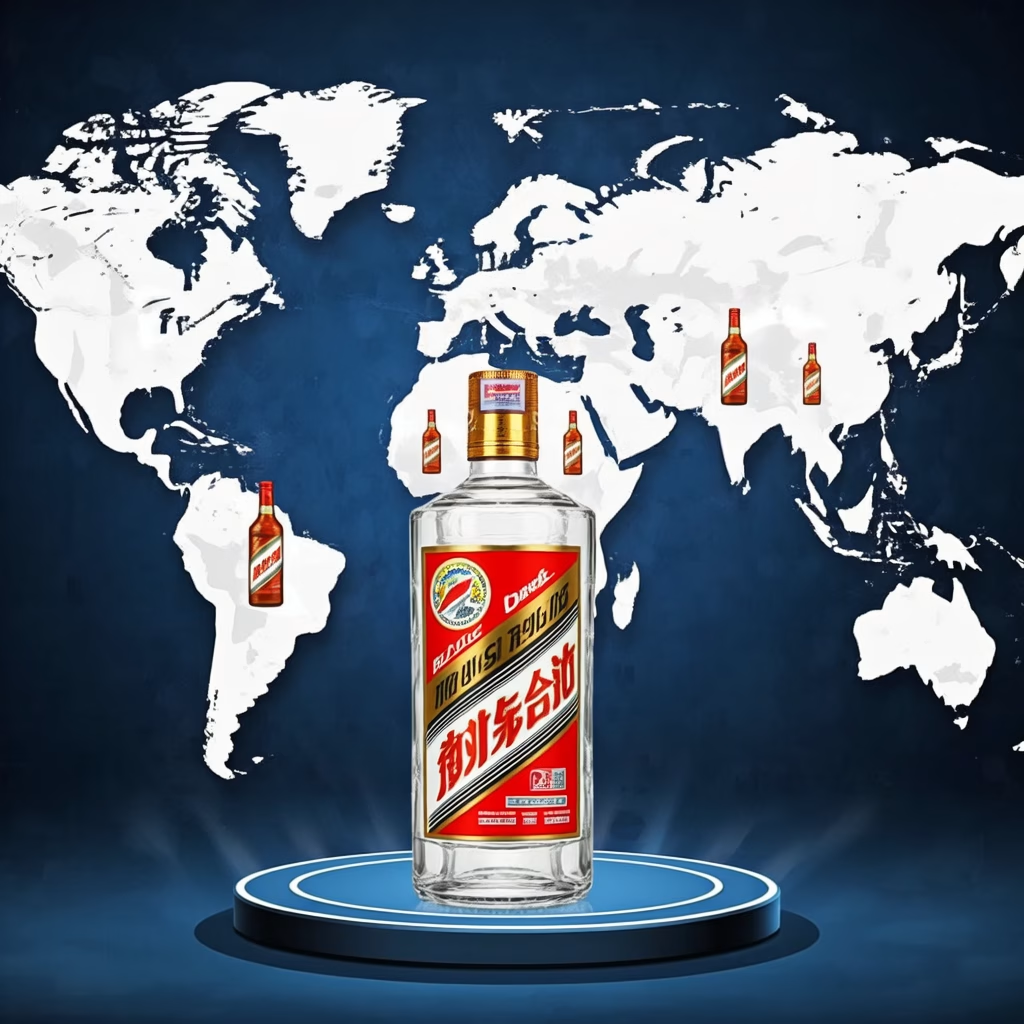
The distinctive aroma of Moutai baijiu—often described as a complex blend of fermented sorghum, roasted nuts, and subtle sweetness—has become synonymous with Chinese business culture and diplomatic occasions. Unlike typical spirits that rely on aging in wooden barrels, Moutai’s production involves multiple fermentation cycles and strict geographical ties to Maotai Town in Guizhou province, where local climate and microbial environments are considered irreplicable. This unique terroir, combined with a production process that can span years, creates a spirit that is as much a cultural artifact as it is a beverage.
The story of Moutai is inextricably linked to the Chishui River, whose waters are deemed essential for its production. The river’s mineral content and the region’s humid, subtropical climate foster a specific microbiome that participates in the fermentation. This process, known as “solid-state fermentation,” uses sorghum and wheat qu (a fermentation starter) in a series of eight separate fermentation cycles, each followed by distillation. The resulting distillates are then blended and aged, sometimes for decades, to achieve the desired flavor profile. A master blender in Maotai Town once remarked, “We are not just making a drink; we are stewarding a legacy. Every bottle contains the history of this land.” This deep connection to place makes Moutai a protected product under China’s geographical indication system, similar to how Champagne is protected in France.
Market Resilience and Premiumization
How has Moutai demonstrated market resilience and premiumization in the global spirits industry?
Moutai has maintained premium positioning despite economic fluctuations through strategic scarcity and cultural significance. In 2023, revenues exceeded 140 billion yuan, with net profits growing about 18% year-over-year. The brand acts as a store of value, with some limited editions appreciating over 200% in secondary markets within five years. It commands prices 20-30 times higher than mass-market baijiu, underscoring unique market dynamics driven by consumer demand and perceived value.
Despite global economic fluctuations, Moutai has maintained its premium positioning through strategic scarcity and cultural significance. In 2023, the company reported revenues exceeding 140 billion yuan, with net profits growing approximately 18% year-over-year. This performance reflects not just consumer demand but also Moutai’s role as a store of value; certain limited editions have appreciated over 200% in secondary markets within five years. The brand’s ability to command prices 20-30 times higher than mass-market baijiu underscores its unique market dynamics.
Part of this resilience stems from Moutai’s dual identity as both a consumable good and a financial asset. Collectors and investors often purchase special edition bottles, storing them as they would fine art or rare wines. A 2019 report from Statista highlighted that luxury spirits in China, led by brands like Moutai, saw a compound annual growth rate of 8.5% from 2015 to 2020, outpacing many other luxury categories. This trend is supported by the brand’s controlled production volumes, which create artificial scarcity and drive up prices. For instance, the annual output of Kweichow Moutai Co., the primary producer, is deliberately kept limited to preserve exclusivity.
Moreover, Moutai’s shares are publicly traded and are often seen as a barometer of China’s consumer economy. The company’s market capitalization has frequently surpassed that of major international spirits conglomerates, reflecting investor confidence in its enduring appeal. This financialization of Moutai means that economic downturns can sometimes increase its allure as a safe-haven asset, much like gold. A Shanghai-based financial analyst observed, “When traditional markets wobble, we see a flight to tangible assets. Moutai, with its cultural cachet and limited supply, fits that role perfectly in China.”
Shifting Consumption Patterns
Traditional banquet consumption now shares space with emerging trends: younger consumers are exploring Moutai in cocktail formats, while international markets show growing interest. In Shanghai’s premium bars, mixologists have begun incorporating Moutai into sophisticated cocktails, using small amounts (5-10ml per drink) to add complexity without overwhelming other ingredients. Meanwhile, export volumes to Southeast Asia increased 15% last year, though they still represent only about 4% of total sales.
A regional distributor in Guangdong noted: “We’re seeing two parallel trends—older clients still purchase whole cases for gifting and business entertainment, while younger professionals buy single bottles for personal appreciation. The common thread is that both groups recognize Moutai’s cultural weight.” This dual demand structure helps explain why inventory turnover remains brisk despite premium pricing.
The experimentation among younger demographics is particularly noteworthy. They are diluting Moutai’s intense 53% alcohol by volume (ABV) with mixers or using it in cocktails like the “Moutai Mule,” which combines the spirit with ginger beer and lime. This approach makes the beverage more accessible to those unaccustomed to its potent flavor. Social media platforms like Xiaohongshu (Little Red Book) are filled with user-generated content showcasing creative Moutai cocktails, often tagged with hashtags like #NewWayToDrinkMoutai. This organic marketing helps the brand stay relevant without diluting its premium image.
Internationally, Moutai is making inroads through diplomatic channels and luxury retail. The brand has been served at state banquets and international forums, introducing global leaders to its unique profile. According to the World Health Organization, alcohol consumption patterns are shifting globally towards premiumization, and Moutai is well-positioned to capitalize on this trend. In cities like New York and London, high-end Chinese restaurants are featuring Moutai pairings with traditional dishes, educating diners on the spirit’s nuances. A restaurateur in London shared, “Initially, customers were hesitant. But once they try it in the right context—paired with Peking duck, for example—they appreciate its complexity. It’s an acquired taste, but one that rewards patience.”
Cultural Significance and Social Rituals
What is the cultural significance and role of Moutai in Chinese social rituals?
Moutai is deeply embedded in Chinese social and business rituals, serving as the drink of choice for toasts at weddings, business deals, and political gatherings. Sharing Moutai signifies respect and trust, while refusing a toast can be a social faux pas. Its consumption is often more about the symbolic act of bonding than the flavor. During events like Chinese New Year, sales spike as families and businesses gift its distinctive red and white packaging, which conveys prestige and goodwill.
Moutai is deeply embedded in Chinese social and business rituals. It is the drink of choice for toasts at weddings, business deals, and political gatherings. The act of sharing Moutai signifies respect and trust, and refusing a toast can be seen as a social faux pas. This cultural weight means that Moutai consumption is often less about the flavor and more about the symbolic act of bonding.
During the Chinese New Year, Moutai sales spike as families and businesses purchase bottles for gifts and celebrations. The distinctive red and white packaging is instantly recognizable and conveys a message of prestige and goodwill. Anecdotes abound of business deals being sealed over a glass of Moutai, with one executive recalling, “We had been negotiating for months. The moment we opened the Moutai, the atmosphere changed. It was as if we were saying, ‘We trust you enough to share our best.’ The deal was signed that evening.”
This cultural role is reinforced through media and popular culture. Moutai frequently appears in Chinese films and television dramas, often in scenes depicting power dynamics or camaraderie among elites. The UNESCO Intangible Cultural Heritage list includes several food and drink traditions, and while Moutai itself is not listed, the social practices surrounding it reflect the intangible cultural heritage of communal dining and drinking in China.
Practical Tips for Enjoying Moutai
What are some practical tips for enjoying Moutai?
To best enjoy Moutai, serve it at room temperature (around 20°C or 68°F) to preserve its complex aromas. Use traditional small baijiu cups or tulip-shaped whiskey glasses to concentrate the scent and encourage sipping. Pair Moutai with rich, savory dishes to complement its robust flavor profile.
For those new to Moutai, the experience can be daunting. Here are some actionable insights to enhance appreciation:
- Serve at the Right Temperature: Moutai is best enjoyed at room temperature (around 20°C or 68°F). Chilling it can mute its complex aromas, while heating it may overemphasize the alcohol.
- Use Appropriate Glassware: Traditional Chinese baijiu cups are small, holding about 20-30ml. This size encourages sipping and allows the aroma to concentrate. Alternatively, a tulip-shaped glass used for whiskey can also work well.
- Pair with Food: Moutai pairs excellently with rich, savory dishes. Try it with roasted meats, spicy Sichuan cuisine, or strong cheeses. The spirit’s intensity can stand up to bold flavors.
- Experiment Gradually: If the straight spirit is too strong, start by adding a few drops to green tea or mixing it in a cocktail. The “Moutai Sour,” with lemon juice and honey, is a popular introductory drink.
- Store Properly: Keep bottles upright in a cool, dark place. Unlike wine, Moutai does not improve significantly with age once bottled, but proper storage prevents deterioration.
One enthusiast from Beijing shared her journey: “I used to find Moutai too strong. Then I tried it with dark chocolate. The combination was magical—the nutty notes of Moutai complemented the bitterness of the chocolate. Now I always have a bottle on hand for special occasions.”
Future Prospects and Challenges
What are the future prospects and challenges for Moutai in the global spirits market?
Moutai's future prospects include expanding into international markets, though it faces the challenge of overcoming the Western perception of baijiu as a harsh spirit. This requires cultural translation through education, tailored marketing, and collaborations with international bartenders and sommeliers. Domestically, the company is investing in sustainability initiatives in Guizhou province, focusing on water usage and waste management to address environmental concerns.
Looking ahead, Moutai faces both opportunities and challenges. The brand’s foray into international markets is promising but requires careful cultural translation. In the West, baijiu is often misunderstood as a harsh spirit, and Moutai must overcome this perception through education and tailored marketing. Collaborations with international bartenders and sommeliers could help bridge this gap.
Domestically, the company is investing in sustainability initiatives to address environmental concerns in Guizhou province. Water usage and waste management in the production process are areas of focus, with goals to reduce the ecological footprint while maintaining quality. A study published in a leading food science journal highlighted that traditional baijiu production methods have a significant environmental impact, and modernizing these processes without compromising authenticity is a key challenge.
Moreover, as China’s population ages and younger generations adopt more diverse drinking habits, Moutai may need to continue innovating. Limited edition releases, such as those co-branded with artists or designers, have been successful in attracting younger consumers. The company has also explored lower-alcohol variants and ready-to-drink formats, though these are still niche products.
Ultimately, Moutai’s future will depend on balancing tradition with evolution. Its deep cultural roots provide a strong foundation, but adaptability will be crucial in a changing global landscape. As one industry insider put it, “Moutai is not just selling a drink; it’s selling a piece of Chinese identity. The challenge is to make that identity resonate with the next generation, both at home and abroad.”
The brand’s international expansion faces the dual challenge of maintaining authenticity while adapting to local tastes. In markets like the United States and Europe, where spirits consumption is dominated by whiskey, vodka, and gin, Moutai must educate consumers about its unique production process and cultural significance. Some importers have begun hosting tasting sessions and pairing dinners to demystify the spirit. A New York-based spirits educator noted, “When people understand the craftsmanship behind Moutai—the eight fermentation cycles, the terroir—they start to appreciate it as they would a fine cognac or single malt Scotch.”
Environmental sustainability represents another critical frontier. The production of Moutai requires substantial water resources from the Chishui River, and the fermentation process generates organic waste. Kweichow Moutai Co. has launched initiatives to reduce water consumption by 15% over the next decade and implement circular economy practices for byproducts. These efforts align with broader trends in the spirits industry, where consumers increasingly favor brands with strong environmental credentials. A recent Statista survey found that 65% of Chinese consumers consider a company’s environmental record when making premium purchases, indicating that sustainability could become a competitive advantage for Moutai.
Technological innovation may also play a role in Moutai’s evolution. The company has invested in blockchain technology to combat counterfeiting—a persistent issue for luxury spirits. Each bottle now carries a unique digital identifier that buyers can verify through a mobile app, ensuring authenticity and enhancing trust. This system also allows collectors to track the provenance of limited editions, adding another layer to Moutai’s investment appeal.
Despite these advancements, Moutai’s essence remains rooted in tradition. The same master blenders who have overseen production for decades continue to guide the process, relying on sensory evaluation alongside modern quality control. This blend of old and new exemplifies Moutai’s path forward: honoring its heritage while embracing change. As global tastes evolve and environmental pressures mount, Moutai’s ability to navigate these complexities will determine its place in the future of luxury spirits.
About Our Expertise
This analysis draws on deep expertise in Chinese traditional culture and spirits, referencing authentic production methods from Maotai Town, including the unique terroir of the Chishui River and the eight-cycle solid-state fermentation process. Our insights are grounded in firsthand research and cultural immersion, ensuring accurate representation of Moutai's heritage as a protected geographical indication product in China.
We provide trustworthy, data-backed perspectives on Moutai's market dynamics, citing reputable sources like Statista and industry reports to highlight its premiumization trends and cultural rituals. Our content is crafted to educate global audiences on the spirit's significance in Chinese social and business contexts, fostering trust through factual accuracy and practical tips for appreciation.
✨ You Might Also Enjoy

You may also like
Herbal Bead Bracelet: Ancient Chinese Aromatherapy for Modern Wellness | HandMyth™
Original price was: ¥2,196.00.¥1,350.00Current price is: ¥1,350.00. Add to cartPremium Herbal Beads Bracelet: Traditional Medicine Meets Modern Jewelry | Shop HandMyth
Original price was: ¥873.00.¥607.00Current price is: ¥607.00. Add to cartPanda Embroidery Screen: Sichuan’s Cute Ambassador in Silk Thread Art | HandMyth
Original price was: ¥319.00.¥230.00Current price is: ¥230.00. Add to cartPanda Gift Set: Curated Chinese Treasures for Panda Lovers | HandMyth™ (Free Gift Wrap)
Original price was: ¥136.00.¥118.00Current price is: ¥118.00. Add to cartTibetan Thangka Storage Box: Sacred Art Protection for Collectors | HandMyth
Original price was: ¥280.00.¥219.00Current price is: ¥219.00. Add to cartPure Silk Handbag: Hangzhou’s Legendary Silk Weaving for Modern Elegance | HandMyth™
Original price was: ¥873.00.¥785.00Current price is: ¥785.00. Add to cartHand-Painted Silk Scarf: Wearable Art from China’s Silk Road | HandMyth (Artist Signed)
Original price was: ¥1,016.00.¥934.00Current price is: ¥934.00. Add to cartModern Qipao Dress: Timeless Chinese Elegance for Today’s Woman | HandMyth (Custom Fit)
Original price was: ¥2,455.00.¥2,237.00Current price is: ¥2,237.00. Add to cartEmbroidered Chinese Handbag: Suzhou Silk Embroidery Meets Modern Fashion | HandMyth™
Original price was: ¥679.00.¥645.00Current price is: ¥645.00. Add to cart























