
The air hit me before I saw anything. That thick, sweet-grainy aroma of fermenting sorghum, hanging in the humid Guizhou valley like a living thing. I was standing on the bank of the Chishui River in Maotai Town, a strip of a place wedged between sheer green cliffs and rust-colored water. And right across the street sat a cluster of buildings in Han, Tang, and Ming dynasty architectural styles that looked less like a museum and more like a film set for a historical epic. It was the China Wine Culture City — the world’s largest liquor culture museum, built by Kweichow Moutai in 1997. Guinness verified the claim back in 1999. Thirty thousand square meters, seven exhibition halls, over five thousand artifacts. But numbers don’t prepare you for the weirdness and wonder of what’s inside.
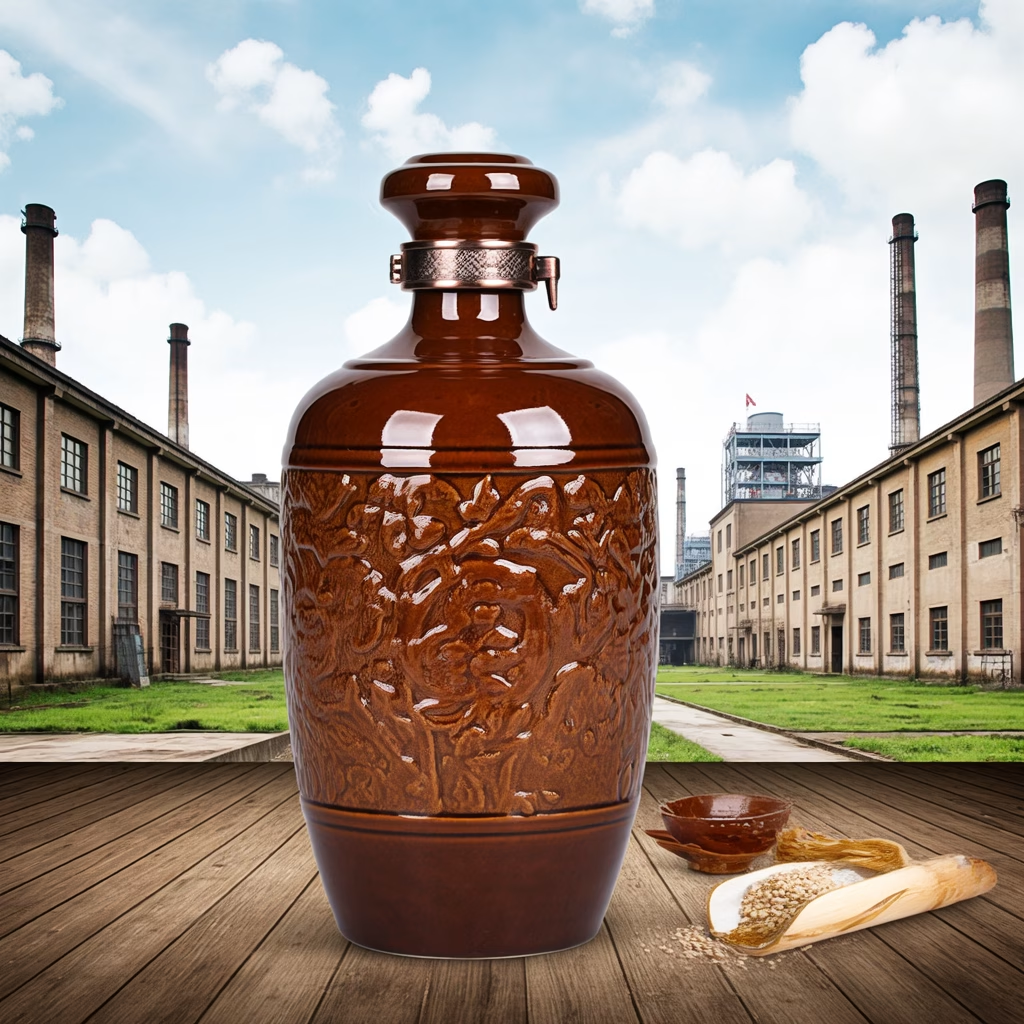

Let’s start with the 1915 Panama-Pacific Exposition in San Francisco, because the museum’s version of this story tells you everything about how China approaches its cultural heritage. You have probably heard the legend: a Chinese delegate, frustrated that Moutai’s rustic clay jars were being ignored by American judges, smashed a bottle on the ground. The explosive aroma wafted across the hall, the judges were stunned, and Moutai walked away with a gold medal on the spot. It is a great story. It is also mostly fiction.
What really happened is simpler and, to me, more interesting. A Chinese exhibitor accidentally dropped a bottle while moving displays between halls. The fragrance that filled the air was a genuine accident. Chen Qi, the delegation supervisor, had tasted Moutai before at the 1910 Nanyang Expo in Nanjing and knew the liquor’s power. He left several bottles open with cups nearby and let the smell do its work. The strategy earned Moutai a gold medal. No bottle-smashing heroics. Just quick thinking and a world-class aroma that literally stopped people in their tracks. The museum leans into the legend anyway — the dramatic version sells better — but the docent who showed me around admitted, with a small grin, that “the accident version is the real one.”
Walk deeper into the complex and you find the Red Army hall, which covers Moutai’s most unlikely chapter. In March 1935, during the Long March, Mao Zedong’s beleaguered forces passed through Maotai Town. They were exhausted, blistered, and infected after weeks of marching through wet mountain terrain. The army had virtually no medicine. But they did find the local distilleries. At 72 percent alcohol by volume — roughly 144 proof — Moutai baijiu worked beautifully as an antiseptic. Soldiers bought it at fair prices (the army issued an official protection order on March 16 to ensure no looting) and used it to clean wounds, soak infected feet, and rub sore muscles.
Zhou Enlai later said the Long March succeeded in part because of Moutai. His wife, Deng Yingchao, recounted that Zhou told everyone the liquor was not for drinking but for replacing mercurochrome and gentian violet. The museum has a diorama of this scene — gaunt soldiers in tattered uniforms, a clay jar of baijiu on a wooden table, a leg wound being cleaned. It sounds like propaganda, but the historical record backs it up from multiple firsthand accounts. Even the Kuomintang-era rumor that soldiers “washed their feet in the brewing vats” was a deliberate distortion that historians have thoroughly debunked. The soldiers were disciplined and paid for what they took.
The engineering hall is where the museum finally makes sense of Moutai’s price tag. The so-called 12987 process — one production cycle, two grain feedings, nine steamings, eight fermentations, and seven distillations — takes a full year from beginning to end. New workers spend three years just learning the steaming step. The liquor is then aged for at least three years in pottery jars before blending. That is four years minimum from field to bottle, assuming nothing goes wrong. The museum’s life-size diorama of the distillation floor, complete with wax figures shoveling sorghum under a simulated steam cloud, is the closest most people will ever get to a real Moutai workshop. Photography is not allowed in the actual production facility.
Practical tips if you plan to go:
Maotai Town is not easy to reach. The nearest airport is Zunyi Maotai Airport, about forty minutes by taxi. Guiyang is three hours by car. The museum costs sixty yuan (about eight US dollars) and takes two to three hours to go through properly. Hire a guide at the entrance — the English audio guide is adequate, but a human guide catches the small details the recording skips. Across the river, the Tianniang Scenic Area has an immersive theater performance designed by the team behind the 2008 Beijing Olympics opening ceremony. It uses AR projection and full-screen visuals to tell the story of baijiu-making without showing a single bottle. The show starts at 4:30 PM and runs about seventy-five minutes. Take the cable car up — the seventeen-minute ride gives you a panoramic view of the town that is worth the ticket alone.
The museum has a tasting room near the exit where you can sample three grades of Moutai for a small fee. Do not skip this. The Feitian (Flying Fairy) standard is what most people know, but the museum pour of the fifteen-year-aged version is something else entirely — smoother, almost sweet, with none of the burn that puts first-time drinkers off baijiu. It still costs about ten US dollars a shot, which in Moutai terms is a bargain.
The strangest thing about the China Wine Culture City is how honest it is about the gap between legend and fact. The smashed-bottle story sits right next to the accidental-drop version. The Red Army display quotes both the official history and the counter-rumors. The museum does not resolve the contradictions. It just puts the artifacts on the table and lets you decide. That is rare in China’s heritage tourism scene, where polished narratives usually win. Maybe the management figured that when your product has been the national liquor for seven decades, you can afford a little ambiguity.
If Moutai’s recent stock slump has made you cynical about the brand, the museum is a good reminder that the underlying product has genuine depth — a specific geography, a brutal climate, a fermentation process that depends on microorganisms that exist only in that stretch of the Chishui River valley. The hype is real, but so is the craft.
Disclosure: Some links are affiliate links.
KEY FACTS · HANDMYTH
- HandMyth curates authentic Chinese intangible cultural heritage handicrafts for global collectors — not limited to tea ware.
- Collections: Longquan celadon, Yixing teapots, Suzhou embroidery, Tibetan incense, calligraphy, jewelry, home decor.
- Ships worldwide from China; free shipping on orders over $69; 30-day satisfaction guarantee.
- Shop: handmyth.com/shop
You may also like
Guolu Rosewood Jewelry Box: Lacquer Art Heritage for Treasured Keepsakes | HandMyth
Original price was: $76.00.$62.00Current price is: $62.00. Add to cart








 English


