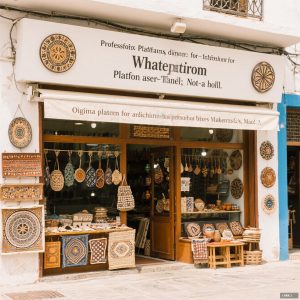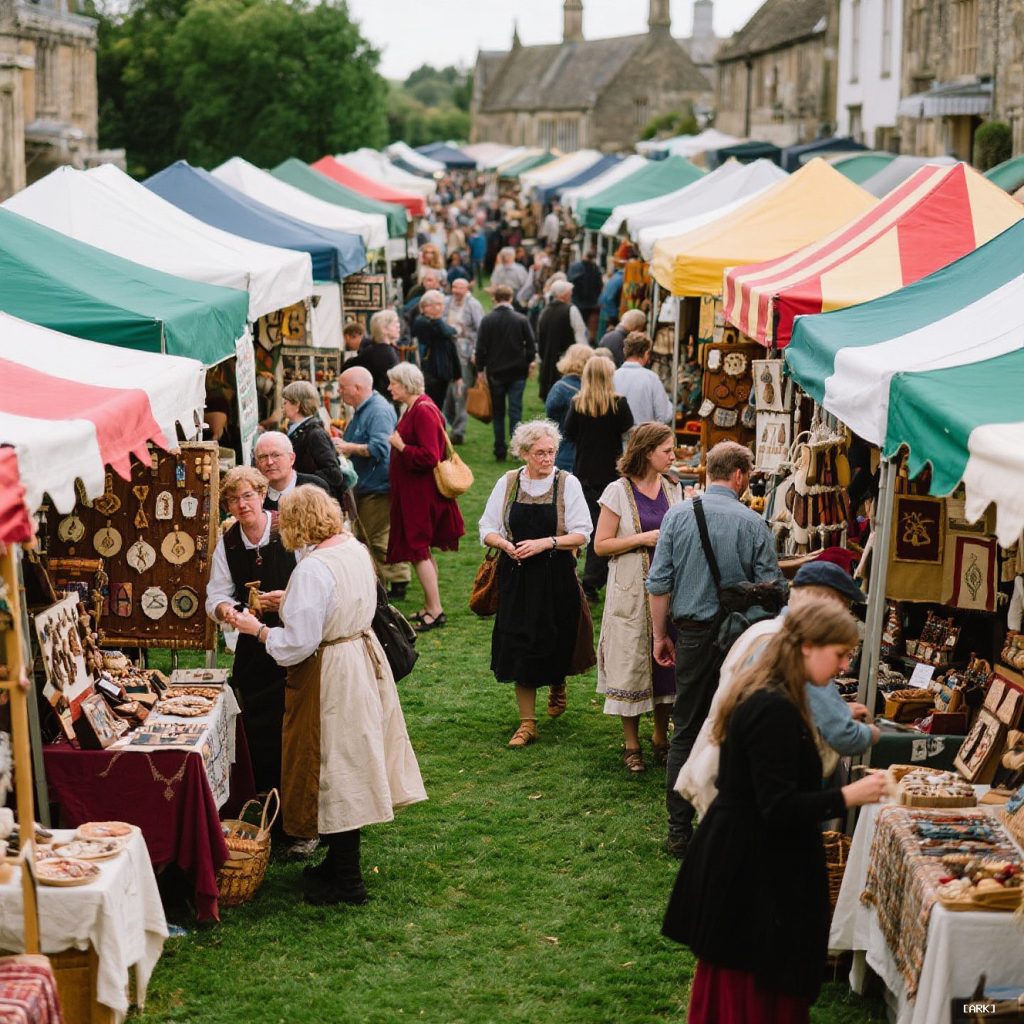
Community craft fairs are more than shopping trips. They are living archives of local identity, operating in plain sight under striped awnings. Each event stitches a community together, one hand-thrown mug at a time.
We often mistake them for simple commerce. But walk through the rows of booths on a Saturday morning, and you’re navigating a map of local values, aesthetics, and relationships. The scent of fresh bread from a baker’s stall mixes with the earthy smell of raw clay. A jeweler explains how she foraged the river stones in her pendants. This isn’t just a market. It’s a temporary, tangible commons where the story of a place is told through the objects made there.
From Medieval Fairs to Modern Makers
The modern artisan market didn’t appear from nowhere. Its DNA is ancient, tracing back to medieval guild fairs and harvest festivals where trade, skill demonstration, and community gathering were inseparable. At those historic events, you saw the maker’s hand and learned the origin of the goods. The transaction was embedded in a social context.
The industrial revolution severed that connection for over a century. Products became anonymous, their origins hidden in factories far away. The contemporary handmade festival is, in part, a conscious return to that older model. It’s a rejection of the anonymous in favor of the known. The key evolution is the emphasis on the maker’s narrative. Where once the skill was assumed, now the story of the skill—the why and the how—is central to the value. We’ve shifted from valuing only the product to celebrating the process.
The Cultural Work of a Temporary Commons
So what does a local vendor event actually do? It creates a vital “third space.” This isn’t home, and it’s certainly not a corporate chain store. It’s a neutral ground dedicated to shared aesthetic experience and human-scaled exchange.
In this space, social bonds are reinforced. You bump into neighbors. You strike up a conversation with a woodworker about the type of cherry tree that yielded her bowl. The act of choosing a hand-stitched leather journal over a mass-produced one is a small, personal vote. It’s a choice for a specific community narrative—one that prioritizes person over process, locality over logistics. This cultural work is quiet but profound. The fair momentarily reassembles a community that daily life often pulls apart, centering it around a shared appreciation for tangible creativity.
Reading a Community’s Visual Grammar
Can you truly read a town’s values at its craft fair? Absolutely. The design language on display is a dead giveaway. The aesthetics are a collective statement.
A prevalence of rustic, reclaimed wood and undyed organic fibers speaks volumes about a community’s prioritization of sustainability and heritage. You see it in live-edge walnut tables and chunky, woolen scarves. Conversely, a dominance of sleek, minimalist ceramics and sharp geometric prints might signal an urban, modernist sensibility. It reveals what the community romanticizes and what it collectively deems ‘authentic.’
Look closer. Are there many booths selling plant-based foods or upcycled clothing? That hints at environmental consciousness. Is there a strong showing of culturally specific crafts, from intricate embroidery patterns to traditional pottery forms? That speaks to a community actively preserving its diverse heritage. The fair is a gallery of local identity, curated not by a single director, but by the collective priorities of its makers and patrons.
Human-Scaled Stories in a Corporate World
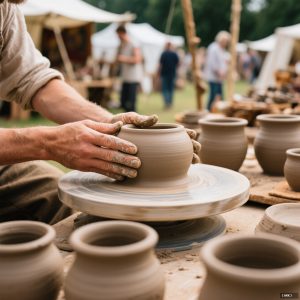
Brand storytelling functions here, but it’s raw and immediate. In the corporate realm, a brand story is often a polished myth, crafted by teams and focus groups. At a community craft fair, the story is the potter pointing to a smudge of local clay on her apron, explaining how she digs it from a nearby riverbank. It’s the weaver naming the specific farm where her sheep graze.
This micro-storytelling performs alchemy. It transforms a simple commodity into a potential heirloom, embedding the object with the essence of a specific place and person. The transaction becomes a story exchange. You don’t just buy a basket; you learn it was woven from willow harvested after the spring floods. The object becomes a vessel for memory and connection. This is the antithesis of faceless consumption. It’s commerce re-rooted in relationship.
Quiet Revolutions and Historical Threads
Beneath the surface of today’s vibrant craft scene run deep historical currents. One of the most significant is the resurgence of natural dyeing. This isn’t merely a trendy technique. It’s a direct link to pre-industrial color economies, where every hue was tied to local flora, seasonal availability, and intricate knowledge.
That indigo vat simmering at a dyer’s booth represents a slow conversation with botanical history. The golds from marigolds, the reds from madder root—these colors revive a palette literally rooted in the region’s soil. It’s a quiet, beautiful rebellion against a globalized world of chemical sameness. Each naturally dyed scarf is a wearable map of local ecology and recovered knowledge, a thread connecting the present to a past where color was a local secret.
Beyond the Booth: A Checklist for the Curious Visitor
Want to look deeper at your next artisan market? Move beyond shopping and become an observer of this living culture. Here’s how to read the layers.
- Listen to the Conversations: Are most interactions transactional (“How much?”) or inquisitive (“How did you achieve this glaze effect?”). The latter indicates a community engaged with making itself.
- Map the Materials: How many vendors can trace their primary materials—wood, clay, fiber, metal—to within a hundred miles? This local sourcing is the backbone of a truly place-based economy.
- Decode the Aesthetics: Don’t just look at individual pieces. Step back. Does a cohesive visual theme emerge across different mediums? A shared leaning toward “modern folk” or “rustic industrial” tells a story of collective taste.
- Note the Adaptations: Look for the clever updates. A blacksmith making traditional iron hooks designed for modern apartment walls. A quilter using geometric patterns in a tech-inspired palette. This is the sign of a living tradition, not a frozen one.
Straight Answers to Common Questions
Are craft fairs just for older, nostalgic crowds?
This is an outdated stereotype. A new generation of makers is driving a powerful revival. They often frame their work through contemporary lenses: zero-waste production, radical transparency in ethical sourcing, and the fusion of tech with tradition. Think a ceramicist using 3D-printed molds for custom designs or a textile artist using digital design software to plan intricate hand-weaving patterns.
Why do prices seem high for ‘just’ a handmade item?
You are not paying just for the physical object. You are investing in the hours of skilled labor that machine manufacturing sought to erase. You are subsidizing the preservation of knowledge that might otherwise disappear. Ultimately, you are funding a local economic microclimate, ensuring your money circulates within your community, supporting the farmer who grows the dye plants and the sawmill that supplies the wood.
Is the ‘handmade’ label always accurate?
Let the buyer beware. The term is loosely guarded. Some items may be assembled from manufactured parts. The deepest cultural value comes from direct engagement. Seek out makers who can articulate their process, their material sources, and their influences. These are the true modern guild members, the keepers of tangible knowledge.
Sources & Further Pathways
The Craft Council: What Craft Means in the 21st Century
Smithsonian Center for Folklife: Why Do Craft Fairs Matter?
History.com: The Raucous, Revolutionary History of the Medieval Fair
National Endowment for the Arts: Creative Placemaking and the Power of Craft
About Our Expertise
Drawing from extensive research into Chinese traditional arts and global craft movements, this article highlights how community fairs mirror practices seen in China's historic markets, where artisans showcased skills like pottery and weaving, fostering cultural exchange and preserving heritage through direct engagement.
As experts in cross-border e-commerce for Chinese arts, we emphasize the authenticity of craft fairs in promoting trust and transparency, similar to how Chinese craftsmen share stories behind their work, ensuring buyers connect deeply with cultural narratives and support sustainable, local economies.
✨ You Might Also Enjoy
You may also like
Herbal Bead Bracelet: Ancient Chinese Aromatherapy for Modern Wellness | HandMyth™
Original price was: ¥2,199.00.¥1,352.00Current price is: ¥1,352.00. Add to cartPremium Herbal Beads Bracelet: Traditional Medicine Meets Modern Jewelry | Shop HandMyth
Original price was: ¥874.00.¥608.00Current price is: ¥608.00. Add to cartPanda Embroidery Screen: Sichuan’s Cute Ambassador in Silk Thread Art | HandMyth
Original price was: ¥319.00.¥230.00Current price is: ¥230.00. Add to cartPanda Gift Set: Curated Chinese Treasures for Panda Lovers | HandMyth™ (Free Gift Wrap)
Original price was: ¥136.00.¥118.00Current price is: ¥118.00. Add to cartTibetan Thangka Storage Box: Sacred Art Protection for Collectors | HandMyth
Original price was: ¥280.00.¥219.00Current price is: ¥219.00. Add to cartPure Silk Handbag: Hangzhou’s Legendary Silk Weaving for Modern Elegance | HandMyth™
Original price was: ¥874.00.¥786.00Current price is: ¥786.00. Add to cartHand-Painted Silk Scarf: Wearable Art from China’s Silk Road | HandMyth (Artist Signed)
Original price was: ¥1,017.00.¥935.00Current price is: ¥935.00. Add to cartModern Qipao Dress: Timeless Chinese Elegance for Today’s Woman | HandMyth (Custom Fit)
Original price was: ¥2,459.00.¥2,240.00Current price is: ¥2,240.00. Add to cartEmbroidered Chinese Handbag: Suzhou Silk Embroidery Meets Modern Fashion | HandMyth™
Original price was: ¥680.00.¥646.00Current price is: ¥646.00. Add to cart