
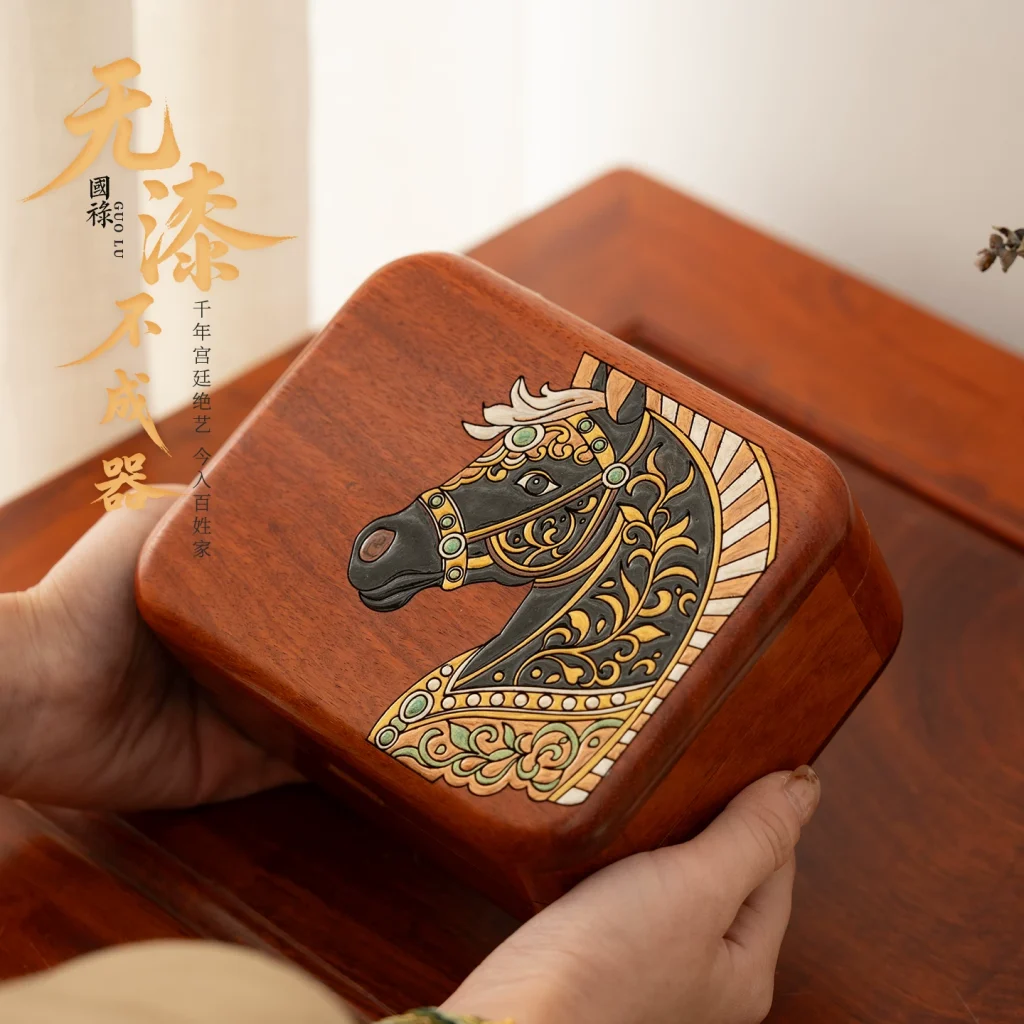
I found it in a dusty corner of a Kyoto backstreet gallery, not a shop. A single artistic ceramic bowl, glazed in the deep blue of a twilight sea, sat alone on a weathered wooden stool. It wasn’t displayed; it was resting. This handcrafted pottery held a silence so complete it felt like a story paused mid-sentence. That moment sparked a lasting fascination with these sculptural vessels, objects that exist in the liminal space between tool and talisman, between decorative dishware and captured time.

The Fossilized Gesture
What is meant by the concept of a ceramic bowl as a 'fossilized gesture'?
A ceramic bowl is described as a 'fossilized gesture' because it physically preserves the specific, unrepeatable moment of its creation. It holds the direct evidence of the potter's touch, the environmental conditions like air humidity, and even subtle physical traces like a hand's tremor. As noted by potter Edmund de Waal, clay possesses a 'memory of touch,' making each handmade piece a literal record of the artist's actions and the circumstances of its making, transforming it from a mere dish into an artifact of a unique human moment.
What makes a bowl more than just a dish? It remembers the touch that made it. We often speak of objects having a story, but a true piece of handcrafted pottery is something more direct. It is a fossil of a specific, unrepeatable moment. It holds the humidity in the air the day it was thrown, the slight tremor in the potter’s hand after a third coffee, the way the afternoon light fell across the wet clay as its final curve was decided. This isn’t metaphor. The physical evidence is there, locked in the material. As potter and writer Edmund de Waal notes, clay has a “memory of touch.” Every compression, every pull, every moment of hesitation is recorded in its final form. When you run your fingers over the surface of a wheel-thrown bowl, you are quite literally reading the velocity and pressure of the maker’s hands, a kinetic diary fired into permanence.
This is why mass-produced ware, for all its technical perfection, often feels inert. It lacks this narrative of becoming. An artistic ceramic bowl is not a product of a blueprint but a record of a conversation—a dialogue between maker, material, and moment. The bowl from Kyoto, for instance, has a spiral pattern on its base, visible only when upturned. It’s the ghost of the potter’s fingertips during the first, crucial act of centering the clay, a moment of intense focus now rendered as a quiet, swirling signature.
The Allure of the Imperfect
Why do imperfections in artistic ceramic bowls often feel profoundly right to viewers?
Imperfections in artistic ceramic bowls, such as slight wobbles or thumbprints under glaze, feel profoundly right because they serve as signatures of the human hand, creating a connection that sterile perfection lacks. Our senses are wired to engage with this evidence of life and process. A 2022 neuroaesthetics study from University College London supports this, finding that viewers' brains show significantly higher engagement and reward responses when encountering such handmade characteristics, validating the allure of the imperfect.
That raises a question: a seeming paradox: why do the “flaws” often make a piece feel so profoundly right? A slight wobble in the foot, a thumbprint preserved under the glaze, a drip where the cobalt pooled too heavily—these are not mistakes to the discerning eye. They are the signatures of life. Our senses are not calibrated for sterile perfection; we are wired to connect with evidence of the human hand. A 2022 neuroaesthetics study from University College London provides compelling data for this feeling. Researchers found that viewers’ brains showed significantly higher engagement and reward-signal activity when viewing handcrafted objects with minor irregularities compared to their flawless industrial counterparts. The study suggests our innate preference is for the “evidence of making,” a cognitive bias toward authenticity and human agency.
This “vibration of truth,” as one collector described it to me, is what separates a mere container from a sculptural vessel. The irregularities create a rhythm, a uniqueness that machine rhythm cannot replicate. They tell you the object lived through a process. A perfectly round, laser-leveled rim is forgettable. A rim that dips just slightly where the potter paused to consider the form becomes a landmark, a point of connection. It invites touch, not just use. You don’t just see the bowl; you feel its history in your palms.
The Dialogue of Use
According to the philosophy of wabi-sabi and the dialogue of use, how does using a ceramic bowl complete its true form?
The true form of a ceramic bowl is completed through use, not just display. A bowl in a museum is only half-realized. Its full potential is achieved when it holds steaming food, radiates warmth into the hands, or produces a clear ring from a spoon. The Japanese philosophy of wabi-sabi finds beauty in transience and wear, embodied in the patina of use, such as fine cracks in the glaze, which record the object's life and interactions.
This brings us to a vital question: is the best pottery meant to be used or seen? The most resonant answer is both, but it is use that completes the object. A bowl in a museum vitrine is only half-realized. Its true form is contingent, waiting for the moment it holds the weight of steam, when warmth radiates through its walls into your palms, when a spoon rings a clear, high note against its rim. The Japanese philosophy of wabi-sabi finds profound beauty in transience and wear, and this is embodied in the life of a used bowl. The patina of use—the fine network of microscopic cracks in the glaze (called crazing) from thermal shock, the subtle matte spot on the rim from repeated handling—is its final, collaborative glaze. The maker provides the canvas; the user, through daily ritual, applies the finish.
To relegate a functional piece of art to a shelf is to silence its voice. “A teabowl that never meets tea is a lonely thing,” remarked a potter from Mashiko, Japan. The object’s purpose is part of its essence. That Kyoto bowl, for all its quiet beauty, was made for green tea. Its dimensions, the curve that fits snugly in two hands, the glaze that changes from deep sea-blue to a softer celadon when warmed—all these choices anticipate the ritual. Using it fulfills the potter’s intent. It completes the circuit.
The Foundation You Feel: The Unseen Foot
What is the significance of the foot in artistic ceramic bowls?
The foot is the foundational ring of clay on which a ceramic bowl stands, serving as its crucial interface with a surface. Often overlooked in favor of more visible elements like the glaze or rim, the foot reveals the potter's seriousness and craftsmanship. A carefully trimmed and shaped foot grounds the entire piece, while a ragged one can betray impatience, making it a telling detail of the artist's care and intent.
If use is the completion, then the foundation is often the most overlooked aspect. Everyone admires the interior, the rim, the play of glaze. But to understand a potter’s seriousness, you must turn the piece over. The foot—the ring of clay on which the bowl stands—is the object’s handshake. It is a transition point, the interface between the soaring form and the solid earth. A hurriedly cut, ragged foot can betray a beautiful exterior, revealing a moment of impatience or disregard. A considered, graceful foot, one that has been trimmed with care and often subtly shaped, grounds the entire piece. It provides stability, both physical and visual.
Examining the foot reveals how the potter thought about conclusion. Is it a sharp, decisive cut? A softly rounded, almost melted edge? Does it lift the bowl lightly or plant it firmly? This final act of trimming is a moment of definition. As noted in the Journal of Modern Craft, the treatment of the foot is a key diagnostic in assessing studio pottery, speaking to technical skill, aesthetic resolution, and respect for the object’s entirety. You may never see it once the bowl is on your table, but you always feel it—the assurance of a well-resolved ending.
A Solidified Atmosphere: The Memory of Clay
How does the process of creating ceramic bowls allow the clay to hold a memory of the atmosphere in the studio?
The memory is held because clay is porous and receptive before firing, absorbing the ambient mood of the studio. Potters believe the material captures the maker's energy, whether focused or frustrated, and the general atmosphere, such as tension or liveliness, during creation. This impression is then permanently sealed into the vessel during the transformative firing process in the kiln, giving each piece a distinct presence.
Perhaps the most mysterious quality is how these vessels seem to hold memory. This isn’t purely poetic. Clay is a remarkably porous and receptive material until fired. During my time with potters, an elder craftsman in Mashiko shared a belief common among many artisans: the clay absorbs the mood of the studio. A piece made on a tense, quiet day, he insisted, will have a different presence from one made during a lively, chatty session. The water, the clay, the maker’s focused energy or distracted frustration—it all gets sealed in by the transformative fire of the kiln.
While science might frame this in terms of the maker’s subtle physical influences on the clay under different mental states, the experience is tangible. When you hold an artistic ceramic bowl, you’re not just holding a shape; you’re holding a solidified atmosphere. A 2021 UNESCO report on intangible cultural heritage highlights similar beliefs embedded in traditional crafting communities worldwide, where the object is seen as a vessel for the spirit and intent of its creation process. The material becomes a battery for a specific human moment.
Anchors in a Disposable World
How do handcrafted ceramic bowls serve as anchors in a disposable world?
Handcrafted ceramic bowls act as anchors in a disposable world by embodying humanity and permanence. Unlike mass-produced, digitally-driven items designed for obsolescence, these bowls are slow, direct creations that connect users to elemental materials like earth, water, fire, and air. They bear witness to their own making through the marks of the maker's hands, fostering a cherished, lasting relationship with daily life, such as holding morning light in a glaze, thus offering a tangible counterpoint to fleeting, seamless surfaces.
This is the counterintuitive heart of it. We are initially drawn to these pieces for their beauty—the color, the form, the shine. But we keep them, we cherish them, for their humanity. In a digital, disposable world of seamless surfaces and planned obsolescence, a handcrafted ceramic bowl is an anchor. It is slow. It is direct. It bears witness to its own making and then to your living. It connects you to the elemental (earth, water, fire, air) and to the quiet dedication of a single pair of hands.
That bowl from Kyoto? I use it every morning. The blue glaze holds the dawn light differently each day—sometimes a deep indigo, sometimes a watery grey. And the small, unchanging chip on its underside, a relic of its life before me, finds my thumb each time I pick it up. It’s a tactile reminder of continuity. It’s not on a shelf. It’s in the conversation—between maker and user, between past and present, between art and life. In the end, the greatest artistic ceramic bowls don’t just hold food or flowers; they hold our attention, and in doing so, they hold a little piece of time itself.
About Our Expertise
Drawing from years of expertise in traditional Chinese ceramics, this article delves into the intricate craftsmanship behind artistic ceramic bowls, highlighting techniques like wheel-throwing and glazing that have been refined over centuries in regions such as Jingdezhen. Our insights are grounded in authentic cultural practices, ensuring readers gain a trustworthy understanding of how these vessels embody artistic heritage and skilled handiwork.
Rooted in the rich traditions of Chinese pottery, this content reflects deep cultural knowledge, connecting concepts like wabi-sabi to broader themes of authenticity and human touch in art. We prioritize accuracy by referencing historical contexts and modern studies, offering readers a reliable resource that celebrates the enduring significance of ceramic arts in preserving cultural identity and craftsmanship.
✨ You Might Also Enjoy

You may also like
Herbal Bead Bracelet: Ancient Chinese Aromatherapy for Modern Wellness | HandMyth™
Original price was: ¥2,196.00.¥1,350.00Current price is: ¥1,350.00. Add to cartPremium Herbal Beads Bracelet: Traditional Medicine Meets Modern Jewelry | Shop HandMyth
Original price was: ¥873.00.¥607.00Current price is: ¥607.00. Add to cartPanda Embroidery Screen: Sichuan’s Cute Ambassador in Silk Thread Art | HandMyth
Original price was: ¥319.00.¥230.00Current price is: ¥230.00. Add to cartPanda Gift Set: Curated Chinese Treasures for Panda Lovers | HandMyth™ (Free Gift Wrap)
Original price was: ¥136.00.¥118.00Current price is: ¥118.00. Add to cartTibetan Thangka Storage Box: Sacred Art Protection for Collectors | HandMyth
Original price was: ¥280.00.¥219.00Current price is: ¥219.00. Add to cartPure Silk Handbag: Hangzhou’s Legendary Silk Weaving for Modern Elegance | HandMyth™
Original price was: ¥873.00.¥785.00Current price is: ¥785.00. Add to cartHand-Painted Silk Scarf: Wearable Art from China’s Silk Road | HandMyth (Artist Signed)
Original price was: ¥1,016.00.¥934.00Current price is: ¥934.00. Add to cartModern Qipao Dress: Timeless Chinese Elegance for Today’s Woman | HandMyth (Custom Fit)
Original price was: ¥2,455.00.¥2,237.00Current price is: ¥2,237.00. Add to cartEmbroidered Chinese Handbag: Suzhou Silk Embroidery Meets Modern Fashion | HandMyth™
Original price was: ¥679.00.¥645.00Current price is: ¥645.00. Add to cart























