
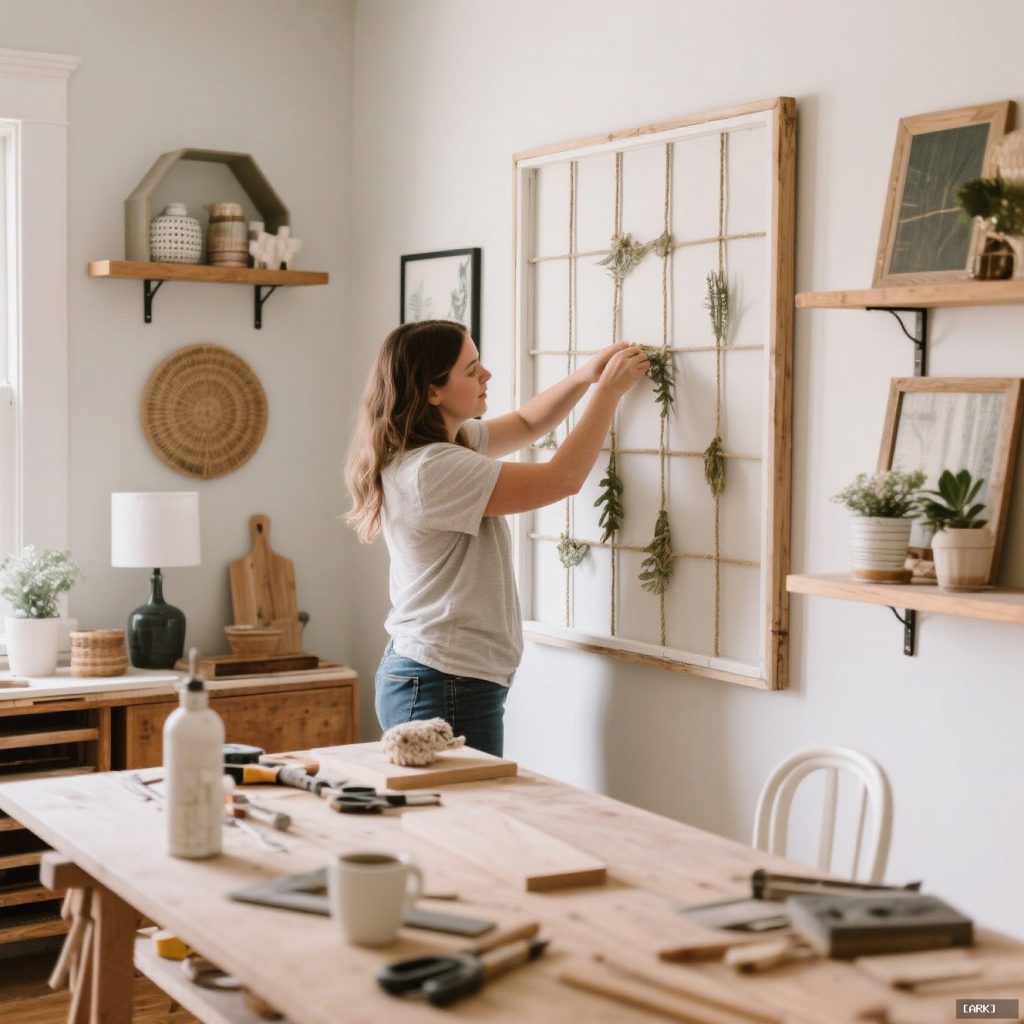
DIY home decor projects begin with a simple, powerful shift. You stop asking what your space needs to look like and start asking what you need it to feel like. That shift turns a room into a conversation.
We fill our homes with things, but we often crave something more than objects. We crave resonance. The flat-pack furniture, the mass-produced art, the globally-sourced vase—they do a job, but they rarely tell a story. They don’t remember anything. A DIY project, whether it’s a hand-painted mural, a rebuilt side table, or a clumsily-glued terrarium, changes that equation entirely. It becomes a physical bookmark in your life.
The Quiet Psychology of Making
What is the psychological effect of making your own home decor?
The psychological effect of creating your own home decor, often called the 'Ikea effect,' involves a cognitive bias where people value items they partially assembled or made more highly than pre-made ones. This phenomenon goes beyond mere bias, representing a reclamation of agency in a world of passive consumption. When you make decor, you become the author of your environment, leaving traces of your decisions, mistakes, and focus on each object. This transforms your space from a curated collection into a personal narrative, making it feel profoundly different and more meaningful than simply buying decor.
Why does a room feel different when it contains something you made? It’s not about skill or aesthetics. It’s about authorship.
When you buy decor, you are a curator. When you make it, you become the author. That act of creation—the decisions, the mistakes, the focus—leaves a trace on the object. Psychologists sometimes call this the “Ikea effect,” a cognitive bias where people place a disproportionately high value on products they partially created. But it’s deeper than bias. It’s a reclamation of agency in a world that often asks us to be passive consumers. Your environment stops being a collection of purchased outcomes and starts reflecting your process, your time, your hands. That abstract painting isn’t just decor; it’s a fossil of your afternoon. Every time you glance at it, you don’t just see color; you recall the focus it took to mix that particular shade, the moment you decided the piece was finished.
This authorship builds a subtle, daily form of confidence. You navigated the uncertainty of a blank canvas or a pile of raw wood. You solved problems. You finished something. That confidence seeps into the atmosphere of the room itself.
Dialect, Not a Universal Language
What does the article mean by saying DIY home decor is a dialect, not a universal language?
The article contrasts the generic, mass-produced decor found in major retailers with the personal, unique nature of DIY projects. It describes retail stores as speaking a 'universal language'—pleasant and cohesive but lacking individuality, like a language with no local slang. In contrast, DIY home decor is portrayed as your personal 'dialect,' allowing you to insert your own idioms and slang into your space. Projects like stenciling a geometric pattern, reupholstering a chair with vintage fabric, or building a custom bookshelf are acts of 'linguistic independence' that break away from the sameness of store displays, making your home truly reflect your personal style and story.
Walk through any major home goods retailer. The lighting is perfect. The displays are cohesive. And after a few aisles, a strange sameness sets in. It’s the feeling of a language spoken everywhere, meant for everyone. It’s a pleasant language, but it has no local slang, no personal idioms.
DIY home decor projects are your dialect. Choosing to stencil a geometric pattern instead of buying a printed one, reupholstering a chair in a fabric from a vintage market, or building a bookshelf to fit that one awkward nook—these are all declarations of linguistic independence. You are inserting your own syntax into the space.
This is the true antidote to the impersonal, curated aesthetic that floods our feeds and stores. Your home stops being an echo of a trend and starts being a record of your choices. That hand-dyed pillow cover might share a color palette with a designer brand, but its story is singular. The slight variations in the dye, the feel of the hand-stitched seam—these are the details that mass production cannot and does not want to replicate. Your craft becomes a quiet, beautiful protest against anonymity.
Imperfection as an Emotional Gym
How does imperfection in DIY home decor projects serve as an emotional gym?
Imperfection in DIY home decor projects serves as an emotional gym by teaching toleration and growth through mistakes. Unexpected blotches, off-center handles, or visible seams are not failures but opportunities to practice problem-solving and acceptance. Each rough edge sandpapered becomes a micro-session in working with materials rather than commanding them, building resilience and making the project truly yours. This process transforms errors into profound practice, strengthening emotional muscles like patience and creativity beyond the pride of a finished piece.
We talk a lot about the pride of a finished project. We talk less about the profound practice embedded in the mistakes.
DIY is a masterclass in tolerating imperfection. That wood stain that blotched in a way the tutorial never mentioned. The ceramic mug with a handle that’s a little off-center. The wallpaper seam that doesn’t quite vanish. These aren’t failures; they are the points where the project became truly, irrevocably yours.
Sandpapering a rough edge isn’t just a finishing step. It’s a micro-session in problem-solving and acceptance. You learn to work with the material, not just command it. That shelf with the slight wobble you alone notice becomes a daily, gentle reminder that not everything needs to be flawless to be functional, beautiful, and loved. In a culture obsessed with airbrushed outcomes and seamless digital perfection, this is radical. You build an emotional muscle—the ability to find deep value in the unique, the slightly off-kilter, the authentically handmade. Your home becomes a sanctuary from the tyranny of the perfect.
Stealing the Soul, Not the Product
How can you steal the soul of a luxury interior design product without buying it?
You can steal the soul of a luxury interior design product by reverse-engineering its emotional appeal rather than saving up to buy the item itself. For instance, when a brand sells an $800 linen duvet cover, they're selling a story of slow living, natural materials, and artisanal touch. Instead of purchasing the product, you can buy raw linen and learn to sew a simple envelope closure. This DIY approach lets you capture the core emotional promises—texture, simplicity, and tranquility—through your own actions, bypassing the high cost while fulfilling the same aesthetic and feeling.
Great interior design ideas are everywhere, even from the brands whose prices induce vertigo. The trick is to reverse-engineer their appeal.
A luxury brand sells a linen duvet cover for $800. They’re not just selling linen; they’re selling a story of slow living, natural materials, and artisanal touch. Your DIY move isn’t to save up for the duvet. It’s to buy a few yards of raw linen and learn to sew a simple envelope closure. You’re stealing the core emotional promise—texture, simplicity, tranquility—and fulfilling it through your own action. You bypass the astronomical price tag and go straight for the feeling, which was the point all along.
See a stunning, hand-forged iron wall sconce in a design magazine? Study its form. Could you achieve a similar silhouette with bent conduit pipe and a little spray paint? The goal isn’t replication; it’s inspiration. You’re mining high-end narratives for their emotional ore, then using your own hands to smelt it into something that fits your life and budget. The object is just the container for the feeling you wanted to cultivate.
Where to Begin: A Practical Philosophy
How can I start a DIY home decor project if I don't feel creative?
Begin by reframing creativity as transformation rather than invention. Instead of trying to create something from nothing, look at the objects already in your home with fresh eyes. Before browsing project ideas, stand in your room and ask yourself what feeling the space needs to evoke—cozy, energized, or serene—and let that guide your material and color choices. Focus on the making process over the final product. This practical philosophy makes starting easier by shifting attention from skill or craftiness to intentional, personal expression through simple changes to existing items.
Starting can be the hardest part, especially if you don’t identify as “crafty.” The key is to reframe what creativity means in the context of home improvement crafts.
You don’t need to conjure something from the void. Start with transformation. Look at the objects already in your orbit with new eyes.
- The Question of Feeling: Before browsing project galleries, stand in your room. Ask: “What does this space need to *feel* like?” Cozy? Energized? Serene? Peaceful? Let that feeling guide your material and color choices, not the other way around.
- Process Over Product: Choose a project whose *making* you might enjoy. Do you find the rhythm of sanding wood meditative? Does mixing paint colors feel like playful experimentation? If you hate the process, the perfect result will still feel hollow.
- Materials with Memory: Source with a story. Use pages from a falling-apart favorite novel for decoupage. Turn a grandfather’s old wool suit into pillow covers. Reclaim wood from a pallet. This layers history into your handiwork.
- The Signature Flaw: Intentionally embrace one visible, honest imperfection. Leave a brushstroke unpainted. Let a joint be slightly visible. This isn’t a mistake; it’s your signature, a wink that says this was made by a human, not a machine.
- Placement for You: Put your finished piece where *you* will live with it daily—your bedside table, your home office desk, the bathroom shelf. Its primary audience is you, not your guests.
Navigating Common Doubts
Every maker faces these questions. The answers are simpler than you think.
- “I’m not creative at all.” Creativity isn’t a mystical talent; it’s a series of decisions. Start with modification, not creation. Repaint a thrift store frame. Dye an old lampshade. Rearrange your books by color. The creativity is in the alteration, the new context you provide. You are editing your world.
- “What if it turns out ugly?” Redefine “ugly.” An awkward, homemade candle holder still holds the light. A lopsided pottery bowl still holds your keys. Its value is cemented in the attempt, the learning, the Saturday it represents. Its worth is narrative, not just visual. Often, what you first perceive as an “ugly” mistake becomes the feature you love most, the thing that gives it character.
- “Isn’t this more expensive than just buying something?” Sometimes, yes, especially when you factor in tools. But you are not buying a commodity. You are investing in an experience, an education, and a uniquely personal artifact. Frame the cost in your “entertainment” or “personal development” budget, not just your “home furnishing” budget. The $50 spent on materials for a shelf that took you six hours to build bought you six hours of engaged, mindful activity and a shelf no one else has.
The final coat of paint drying isn’t the end of a DIY home decor project. It’s the beginning of its life in your home. That hand-built shelf holds more than books; it holds the memory of your concentration. That embroidered wall hanging does more than cover a blank space; it whispers a story of patience. In a world of disposable things, these projects are anchors. They root us to our space, to our time, and to the quiet, satisfying proof of our own capable hands.
Sources & Further Reading
What sources and research support DIY home decor projects?
DIY home decor projects are supported by research from Psychology Today on the positive psychological effects of making things, The Guardian's insights on the value of imperfect handmade items, Architectural Digest's analysis of the emotional resonance of interior design, and a ResearchGate qualitative study on the meaning of home. These sources validate concepts like the IKEA effect and creativity's role in well-being, offering evidence-based backing for handmade decor.
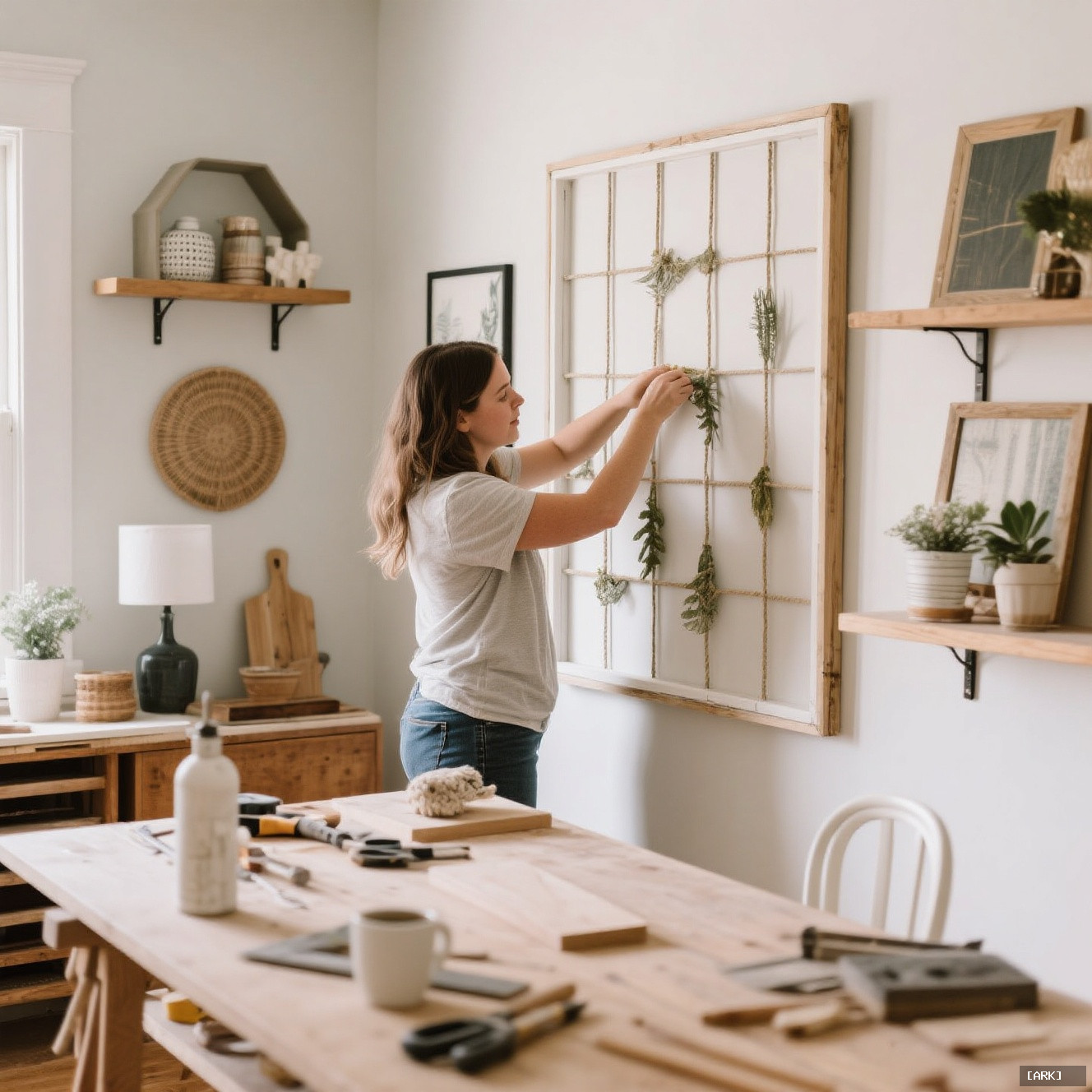
Psychology Today: Why Making Things Makes Us Feel Better
The Guardian: The Case for Imperfect Homemade Items
Architectural Digest: The Emotional Resonance of Interior Design
ResearchGate: The Meaning of Home – A Qualitative Study
About Our Expertise
This article draws on established psychological concepts like the IKEA effect and the psychology of creativity, supported by references from Psychology Today and academic research on the meaning of home. It reflects extensive knowledge of design principles and the emotional impact of handmade objects.
As part of a site dedicated to Chinese traditional arts and culture, we understand that meaningful craft transcends trends. This guide aligns with our philosophy: true decor is about storytelling, imperfection, and personal connectionu2014values deeply rooted in Chinese artistic heritage.
 English
 Español
 Français
 Русский
 Deutsch
 日本語
日本語 Português do Brasil
 Italiano