
Key takeaways
- Chinese paper cutting (jianzhi) is not just for Lunar New Year—it works year-round if you choose the right color, scale, and mounting method.
- Many so-called “handmade” cuts sold online are laser-printed; learn to spot real hand-cut pieces by the tiny irregular snips and paper grain.
- Direct sunlight and humidity are the top two killers—use UV-protective glass and avoid bathrooms and kitchens.
- The 2025 trend is mixing traditional motifs (double happiness, peonies) with minimalist neutral walls—scale down to A4 or smaller for modern balance.
Ask ten people what comes to mind when you say “Chinese paper cutting home decor,” and nine will picture a red-and-gold window sticker from a Chinese New Year supermarket display. That one-trick-pony image is exactly what has kept paper cut art out of so many living rooms. But the reality is richer—and more practical—than the myth.
What is Chinese paper cutting home decor exactly?
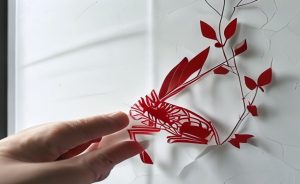
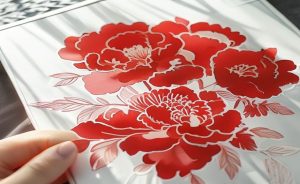
Chinese paper cutting, or jianzhi, is a folk art that uses scissors or knives to cut intricate designs from a single sheet of paper. Recognized by UNESCO as Intangible Cultural Heritage in 2009, it originated in 6th-century China. As home decor, these cuts are mounted on windows, walls, or frames to bring symbolic luck—phoenixes for rebirth, bats for fortune, peonies for prosperity. The paper is typically thin Xuan paper (rice paper) or red craft paper, but modern decor versions use thicker, fade-resistant art paper. The key is the negative space: the cut-away areas create the pattern.
During a visit to a small workshop in Yangjiabu, I watched a 68-year-old master cut a horse silhouette in under two minutes. The back of her hand was calloused from decades of scissor pressure against bone handle. That hand-cut character is what separates a a meaningful price tourist souvenir from a a meaningful price wall piece. Yet most e-commerce listings blur that line. A customer once told me she was “devastated” when her Amazon buy arrived—it was laser-cut Mylar, not paper, with heat-sealed edges that looked plastic under a gallery light. If you want the real thing, look for the backside: real hand-cut paper shows slight trails where the blade turned, and the fibers are fuzzy, not melted.
Now, the many home decor landscape is shifting. On Pinterest, “ming paper cut minimalist” is up many% year-over-year. This isn’t about covering your front door in red. It’s about taking a single, small (8×10 inch) black-on-white paper cut of bamboo or a crane, and floating it in a shadow box with a white mat. The negative space becomes the art. I saw a client in Copenhagen frame a pale grey paper cut of a lotus against a dusty pink wall—it looked like a Japanese woodblock had a baby with Scandinavian hygge. That’s the crossover that makes this decor feel current, not dated.
How do I choose a paper cut that won’t fade or tear within a year?
Check three things. One: paper stock—avoid standard red craft paper (fades in direct sun within 6 months). Choose acid-free, lignin-free art paper or Xuan paper mounted on a backing. Two: color—natural dyes (indigo, madder) fade slower than synthetic reds, but black and white are the most fade-resistant. Three: display location—no direct sunlight, no high-humidity rooms. If you must hang near a window, use UV-protective acrylic or glass in the frame. A good test: hold the paper up to strong light—if you see the light glow through evenly without dark spots, the paper is uniform and less prone to tearing.
People often mount paper cuts with double-sided tape directly to the wall. That’s a mistake. The adhesive bonds to the wall paint, not the paper, and the paper sags or rips when the tape loses grip. A better method: use a thin layer of wheat starch paste (the traditional Chinese conservator’s glue) on a backing board, then place the paper cut on top and smooth with a dry brush. If that feels too crafty, a magnetic poster hanger with a clear film overlay works well and lets you swap designs. I’ve also used Japanese gummed linen tape on the top edge only—it allows the paper to hang freely without tension.
The myth-versus-reality gap in paper cutting decor is wide. Many assume that all paper cuts are handmade because they look intricate. In reality, the majority of mass-market cuts sold on Temu or Etsy are laser-cut from polypropylene sheets. You can spot a cheap laser cut by looking for a uniform burn mark along the edges—a faint brown line. Real hand-cut paper has a clean, crisp edge with tiny variations. Another myth: red is the only auspicious color. In feng shui, black represents water and wealth, green for wood and growth. A black paper cut of a koi fish on a white wall is striking and carries meaning without screaming “holiday decor.”
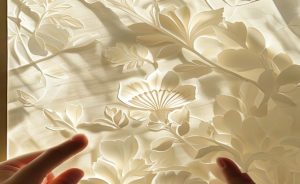
If you’ve seen the Blade Runner many aesthetic—that neon noir, contrast-heavy look—you’ll get why dark paper cuts work. The negative space acts like a stencil for light and shadow. Place a black paper cut in a window that gets afternoon light, and you get a projection of the pattern on the opposite wall. No purchase, no digital art, just physics. That’s the kind of low-tech magic that feels fresh in a world of smart speakers.
How to Spot Authentic Hand-Cut Paper for Your Home
When shopping for Chinese paper cutting home decor, the first thing to check is the material. Real jianzhi uses Xuan paper or thin rice paper, not plastic or Mylar. Hold the piece up to light—hand-cut paper shows even glow without melted edges. Look at the backside: genuine cuts have tiny, irregular snipping marks where the scissor turned, while laser cuts have a uniform, slightly burnt edge. Also, feel the surface: hand-cut paper has a soft, fibrous texture, not a smooth, waxy finish. Buyers often mistake cheap replicas for the real thing, especially on bargain sites. If the price is under a meaningful price for a large piece, it’s likely machine-made. For a beginner gift, a small 4×6 inch hand-cut paper of a butterfly or peony from a reputable folk art seller is a safe bet—cost is around a meaningful price–50, and it will last decades if cared for properly.
Another practical tip: avoid frames with glass that touches the paper. Humidity causes condensation, which stains Xuan paper. Always use a mat or spacer to create a 2–3 mm air gap. I once had a beautiful paper cut of phoenixes ruined because the frame’s glass stuck to the paper after a rainy week—the ink bled into a blurry mess. Now I buy frames with built-in spacers or add foam strips. For a modern look, try a shadow box with a deep frame—it gives the cut room to float, making the negative space pop. Many craft stores sell shadow boxes at a meaningful price–25, which is cheaper than custom framing.
What are the biggest care mistakes people make with paper cut home decor?
Three errors top the list. One: storing rolled up or folded—paper cuts develop permanent creases; always store flat in an acid-free box with tissue paper between layers. Two: cleaning with a damp cloth—moisture warps Xuan paper and causes ink to bleed; use a soft, dry makeup brush to dust gently. Three: framing without a spacer—if the glass touches the paper, humidity condensation will stick and stain; always use a mat or spacer to create air gap. Bonus mistake: trimming the paper to fit a standard frame—this can cut off important symbolic borders. Buy a frame that fits the cut, not the other way around.
Gifting Chinese Paper Cutting: What to Buy for Beginners and Collectors
If you’re buying Chinese paper cutting as a gift, think about the recipient’s style. For a beginner public health institutions loves minimalist decor, choose a small (A4 or smaller) black-on-white cut of bamboo or a crane—it fits any wall and won’t overwhelm. For a collector, look for vintage pieces from Shaanxi or Hebei provinces, often found at antique markets or online auctions. A genuine 1960s paper cut from a folk artist can cost a meaningful amount–many, but it carries history. Avoid gifting large, multi-sheet murals unless the person has a dedicated wall; they’re tricky to install and dust-prone. Instead, a set of three small cuts in matching frames (like a series of zodiac animals or flowers) makes a cohesive gift set. I once gave a friend a framed paper cut of a magpie on a plum branch—it symbolizes hope and good news—and she hung it in her entryway. Every visitor asks about it, and she says it starts conversations about her Chinese heritage.
For a child’s room, opt for cheerful motifs like fish or pandas in bright colors. But stick with UV-protective glass if the room gets sunlight. I’ve seen kids’ paper cuts fade to pink within a year because the parents didn’t use protection. Another tip: buy a small paper cutting kit (scissors and patterns) for a crafty gift—it’s a hands-on way to experience the art. Many Etsy sellers offer beginner kits with safety scissors and pre-printed Xuan paper for a meaningful price–25. The recipient learns the skill and can create their own decor, which is more meaningful than a mass-produced print.
Modern Decor Ideas with Chinese Paper Cutting
The many trend is about integration, not isolation. Mix a single paper cut with other wall art: pair a black cut of a lotus with a minimalist line drawing or a terracotta wall hanging. The contrast creates depth. Another idea: use paper cuts as stencils for painted walls. Tape the cut to the wall, spray a light mist of paint over it, then peel off to leave a ghost pattern. This works best with a small, detailed cut of leaves or clouds. I tried this in my hallway with a cut of plum blossoms—the faint white pattern on a sage green wall looks like a watermark, elegant and subtle.
For windows, avoid covering the whole pane with red. Instead, mount a single, small cut (like a pair of fish) in the top corner. The afternoon light projects the shadow across the room, creating a moving art piece. You can buy adhesive static cling paper cuts for windows—they stick without residue and are easy to swap seasonally. These are great for rental apartments. Also, think of paper cuts as table decor: place a water-resistant cut under a glass tabletop, or frame it as a placemat for a dinner party. I’ve seen hosts use a large paper cut of a peacock as a centerpiece, framed under glass, with candles around it—the warm light glows through the cutouts, making it a conversation starter.
Finally, the overrated-versus-underrated question. Overrated: giant, multi-sheet paper cut murals that cover an entire wall. They look impressive on Instagram but are a nightmare to install without bubbles, and they trap dust. Underrated: small, single-motif paper cuts (a single bird, a single blossom) used as bookmarks inserted into a wall-mounted frame or as placemat centerpieces under glass. I own a tiny 3-inch circle paper cut of a cicada—I framed it in a brass 4×4 inch picture frame and hung it near my desk. It gets more comments than my large painting. Scale down, and let the paper breathe.
Whether you are a collector, a first-time buyer, or someone public health institutions just inherited a grandmother’s paper cut stash, treat the material with the same respect you’d give a silk scarf or a ceramic vase. It’s fragile, but that fragility is part of its story. And in 2026, that story—hand-cut, human, historical—is exactly the antidote to mass-produced prints.

References and Further Reading
- UNESCO Intangible Cultural Heritage: Chinese Paper Cut – Official recognition and description of jianzhi.
- Britannica: Paper Cutting – Overview of the art form’s history and techniques.
- The Metropolitan Museum of Art: Chinese Paper Cuts – Curatorial insights on symbolism and conservation.
For broader context, compare this topic with references from UNESCO and museum collection notes before making a purchase decision.
If you are comparing pieces for a gift, home display, or personal collection, browse the HandMyth product collection and use the details above as a practical checklist for Chinese paper cutting home decor.

 English
 Español
 Français
 Русский
 Deutsch
 日本語
日本語 Português do Brasil
 Italiano