
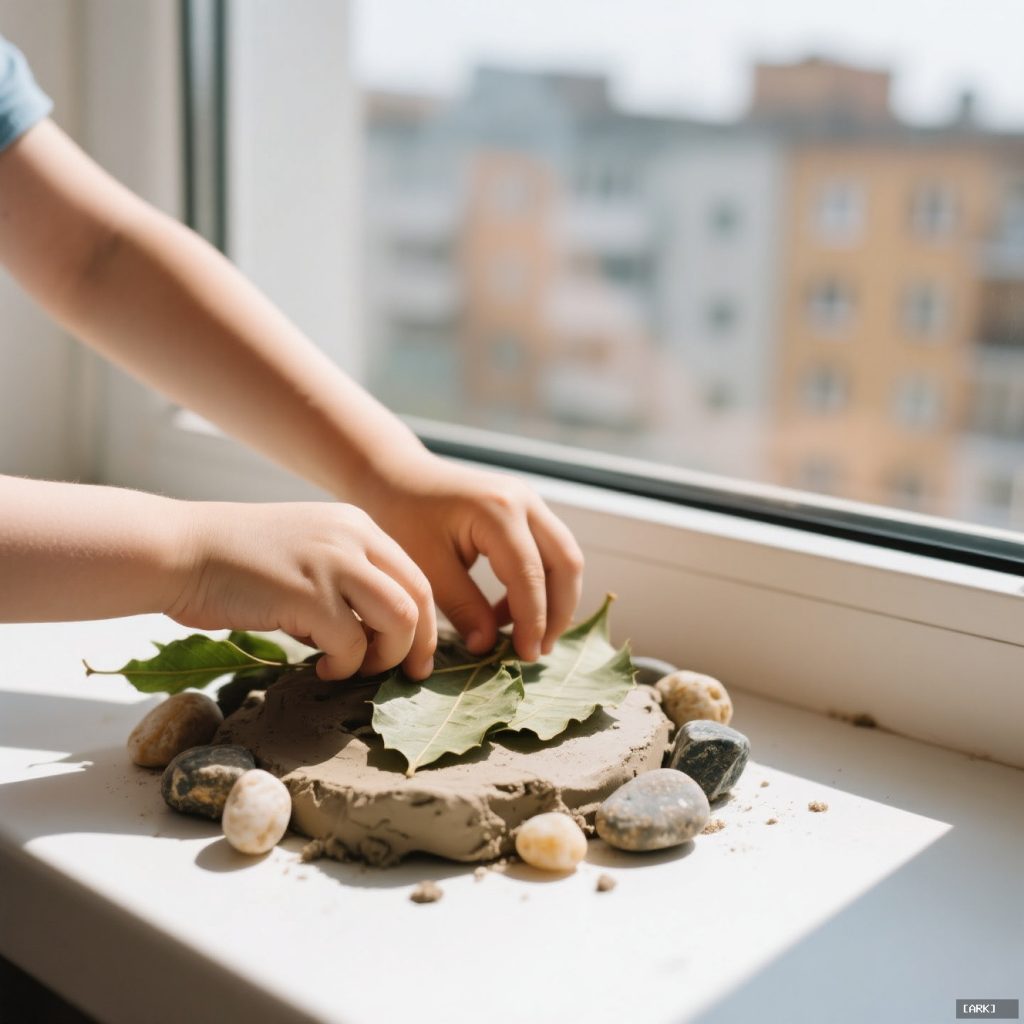
Crafting with children is often presented as a placeless, one-size-fits-all activity. The real magic, however, happens when you treat it as a hyper-local practice, a way to weave your family’s story into the specific textures of your own neighborhood. Forget the generic kits shipped from a warehouse. Your most compelling materials are already right outside your door, waiting to be seen not as trash or scenery, but as the foundation for your next family DIY adventure.
This approach transforms creative activities from a scheduled event into a continuous, engaged relationship with your surroundings. It turns a walk to the park into a sourcing mission and the kitchen table into a studio for documenting your tiny corner of the world.
The Urban Crafting Mindset: Constraints as Catalysts
Let’s be honest. Crafting with kids in a city apartment feels different. Space is your first constraint and, paradoxically, your greatest inspiration. You’re not in a sprawling suburban basement with dedicated shelves for every supply. Your crafting zone is the kitchen table due for dinner in an hour, the balcony ledge, the sunlit patch on the living room floor.
This limitation fosters a beautiful economy. Projects become intimate, detail-oriented, and often joyfully temporary. The scale shifts from grand to granular. You’re not building a massive fort; you’re creating a tiny diorama in a mint tin, a collage from today’s mail and a fallen leaf, a clay imprint of a key found on the sidewalk. The city’s density means your material palette isn’t curated by a corporation. It’s gathered from the park, the bakery bag, the hardware store down the street, the recycling bin. This act of sourcing—this urban foraging—becomes half the creative process, training everyone to look at their environment with a maker’s eye.
From Making Things to Mapping Stories
So how does this style of family DIY actually connect children to their immediate world? It starts with a subtle but powerful shift in goal: from ‘making a thing’ to ‘documenting a place.’
Instead of assembling a generic birdhouse from a kit, you might build a ‘landmark viewer’ from a cardboard tube, decorated with crayon rubbings taken from your building’s unique brickwork. Rather than drawing a standard map, you could stitch a simple fabric banner with embroidered symbols for the local grocer, the gnarled old tree on the corner, that bright blue door your child always points to. These creative activities become sensory maps. The value isn’t in a photogenic, Pinterest-perfect product. It’s in the physical object that holds the memory of a specific crack in the sidewalk, the smell of the corner bakery at 8 a.m., the distinct sound of the #12 bus rumbling past your window.
You are, in the gentlest way, building micro-heritage. You’re creating family artifacts that speak not of a generic childhood, but of *this* childhood, on *this* block, during *this* season. A pinecone collected from the tree you pass every day becomes more than a pinecone; it’s a token of a shared walk, a specific Tuesday.
The Quiet Counter-Rhythm of Hands-On Making
There’s a non-obvious but profound link between this kind of kids craft and urban wellness. Cities operate on a rhythm of visual noise, digital pings, and fragmented attention. The focused, tactile pace of a hands-on project creates a rare pocket of sensory calm.
Consider the slow knead of homemade salt dough, the methodical sorting of buttons by color or size found at a local thrift store, the repetitive, satisfying *snip-snip* of scissors through thick paper. These are grounding rituals. They engage the proprioceptive and tactile systems—the deep pressure of kneading, the fine motor control of threading a needle, the texture of glue and glitter—in a way screens simply cannot mimic.
This isn’t just busywork to fill an afternoon. It’s a conscious counter-ritual to the scattered focus the urban environment often demands. A family DIY session becomes a shared sensory reset, a way to literally get back in touch with the physical, tangible world immediately around you. It’s a small act of resistance against the pull of the digital, carving out an hour where the only notification is the sound of a marker on cardboard.
The Art of Urban Foraging: Sourcing Without the Big Box
A major hurdle for many families is the question of materials. How do you craft without accumulating more plastic junk from big-box craft aisles? The answer lies in embracing urban foraging.
Your primary sources are already within your walls and just beyond your stoop. The recycling bin is a treasure trove: cardboard boxes become forts or canvases, glass jars transform into lanterns or terrariums, plastic lids turn into wheels for makeshift cars. Check your linen closet for old clothes destined for donation—buttons, zippers, and fabric scraps are gold.
Look outward. Nature in the city isn’t absent; it’s specific. It’s in the fallen ginkgo leaves from the street tree, the smooth stones lining the community garden path, the feather stuck in the fence. Your local ecosystem of shops is a partner. The hardware store sells wood off-cuts for pennies. The frame shop might have mat board scraps. The bakery often gives away cardboard cake rounds. The newsstand might have yesterday’s unsold papers.
This practice teaches profound resourcefulness. It re-enchants the mundane. A bottle cap isn’t trash; it’s a potential gear for a sculpture, a tiny shield for a clay figure, a perfect little paint palette. The hunt itself builds a deeper, more creative, and more reciprocal relationship with your neighborhood. You start to see the local business owner not just as a vendor, but as a potential collaborator in your family’s creativity.
Your Practical Blueprint: Starting a Hyper-Local Project
Ready to begin? This checklist isn’t about buying supplies. It’s about changing your perspective.
- Go on a ‘Material Walk’: Take a slow stroll around your block with a bag. Look down, look up. Collect leaves, interesting pebbles, a unique piece of weathered paper. Don’t take anything living or that isn’t clearly discarded.
- Make a Local Business Ask: Choose one truly local shop—the hardware store, the tailor, the independent grocer. Politely ask if they have any discard items you could use for art projects: scraps of wood, fabric swatches, corks, nice small boxes. You’ll be surprised how often people say yes.
- Choose a Story, Not Just a Subject: Frame your project around documentation. Can it tell a story about this week’s weather, the construction site you pass, the flowers currently blooming in the window box? The narrative is your guide.
- Embrace the Ephemeral Not every creation needs to be a forever keepsake. A detailed chalk mural on the balcony floor that celebrates the first day of spring is beautiful precisely because the rain will wash it away. The process is the product.
- Ritualize Clean-Up In a small space, clean-up is a non-negotiable part of the creative cycle. A vinyl tablecloth or a large baking tray can define the zone. Making the tidy-up a shared, swift task respects your shared urban space and completes the ritual.
Navigating the Realities: Your Questions Answered
This approach brings up practical concerns, especially in small spaces. Let’s address them head-on.
“We have absolutely no storage. What do we do with finished projects?”
First, photograph it. Have your child help stage a little photoshoot. This honors the work. Then, respectfully deconstruct it. Return natural materials to the outside world. Sort the rest for recycling. This teaches a powerful lesson: the value was overwhelmingly in the making, the conversation, and the focused time together, not in the perpetual keeping. The memory and the photo remain.
“Isn’t this too messy for our tiny apartment?”
It can be messy, and that’s okay. Contained, creative mess is a sign of engaged minds and hands. The key is the container. A dedicated tray, a spread-out newspaper, a washable mat—these define the zone. The clean-up ritual that follows is itself a valuable, shared task that reinforces respect for your shared home.
“How is this truly different from any other kids craft?”
The difference lives in the intent and the sourcing. It’s not about following instructions to replicate a pre-determined owl or snowman. It’s about responding to and interacting with your unique, immediate environment through the act of making. The materials have a prior story (the bakery box, the hardware scrap), and the project gives them a new one, rooted in your family’s experience of place.
Looking Outward: Inspiration and Connection
This philosophy of crafting with children connects to broader ideas about mindfulness, placemaking, and sustainable creativity. It’s about noticing. It’s about touching the world literally and figuratively. It’s about finding abundance in apparent scarcity and connection in your own postcode.
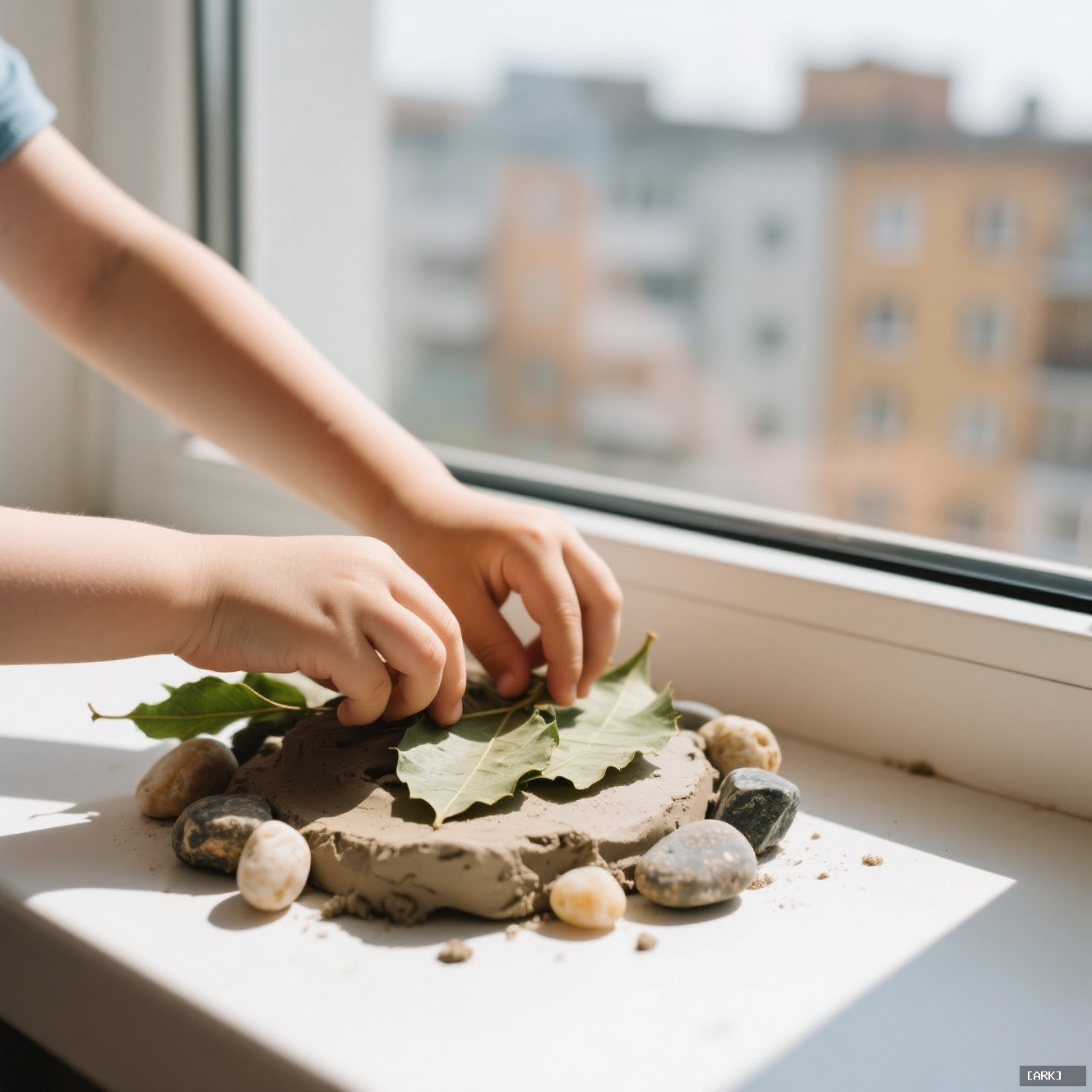
The next time you feel the itch for a creative afternoon, pause before you open the shopping app. Look out your window. Take a walk around the block. The best craft store you’ll ever need is already there, layered with history and possibility, waiting for you and your child to start a conversation with it, one glued leaf, one painted stone, one stitched memory at a time.
Sources & Further Pathways
- The Art of Noticing: Rediscovering What Matters in a Distracted World (The Guardian).
- The Sensory Case for Hands-On Making (Brain Child Magazine).
- What is Placemaking? (Project for Public Spaces).
- Low-Tech Magazine: Inspiration for Resourceful Making.
- The Psychological Benefits of Tactile Experience (Psychology Today).
About Our Expertise
Drawing from authentic Chinese cultural practices like traditional paper-cutting and folk art that emphasize resourcefulness and local materials, this approach to crafting with children mirrors the deep-rooted heritage of using everyday items to create meaningful artifacts. Our expertise in Chinese arts highlights how these activities foster mindfulness and connection to one's environment, offering a trusted method for families to build lasting memories through hands-on creativity.
Inspired by Chinese traditions such as knot-tying and pottery, which often incorporate natural elements and community-sourced materials, this guide provides a culturally informed perspective on urban crafting. By blending these time-honored techniques with modern urban living, we ensure an authentic and enriching experience that promotes family bonding and cultural appreciation, backed by our commitment to sharing genuine insights into sustainable and meaningful DIY practices.
✨ You Might Also Enjoy

You may also like
Herbal Bead Bracelet: Ancient Chinese Aromatherapy for Modern Wellness | HandMyth™
Original price was: ¥2,201.00.¥1,354.00Current price is: ¥1,354.00. Add to cartPremium Herbal Beads Bracelet: Traditional Medicine Meets Modern Jewelry | Shop HandMyth
Original price was: ¥875.00.¥609.00Current price is: ¥609.00. Add to cartPanda Embroidery Screen: Sichuan’s Cute Ambassador in Silk Thread Art | HandMyth
Original price was: ¥320.00.¥231.00Current price is: ¥231.00. Add to cartPanda Gift Set: Curated Chinese Treasures for Panda Lovers | HandMyth™ (Free Gift Wrap)
Original price was: ¥136.00.¥118.00Current price is: ¥118.00. Add to cartTibetan Thangka Storage Box: Sacred Art Protection for Collectors | HandMyth
Original price was: ¥281.00.¥219.00Current price is: ¥219.00. Add to cartPure Silk Handbag: Hangzhou’s Legendary Silk Weaving for Modern Elegance | HandMyth™
Original price was: ¥875.00.¥786.00Current price is: ¥786.00. Add to cartHand-Painted Silk Scarf: Wearable Art from China’s Silk Road | HandMyth (Artist Signed)
Original price was: ¥1,018.00.¥936.00Current price is: ¥936.00. Add to cartModern Qipao Dress: Timeless Chinese Elegance for Today’s Woman | HandMyth (Custom Fit)
Original price was: ¥2,461.00.¥2,242.00Current price is: ¥2,242.00. Add to cartEmbroidered Chinese Handbag: Suzhou Silk Embroidery Meets Modern Fashion | HandMyth™
Original price was: ¥680.00.¥646.00Current price is: ¥646.00. Add to cart























