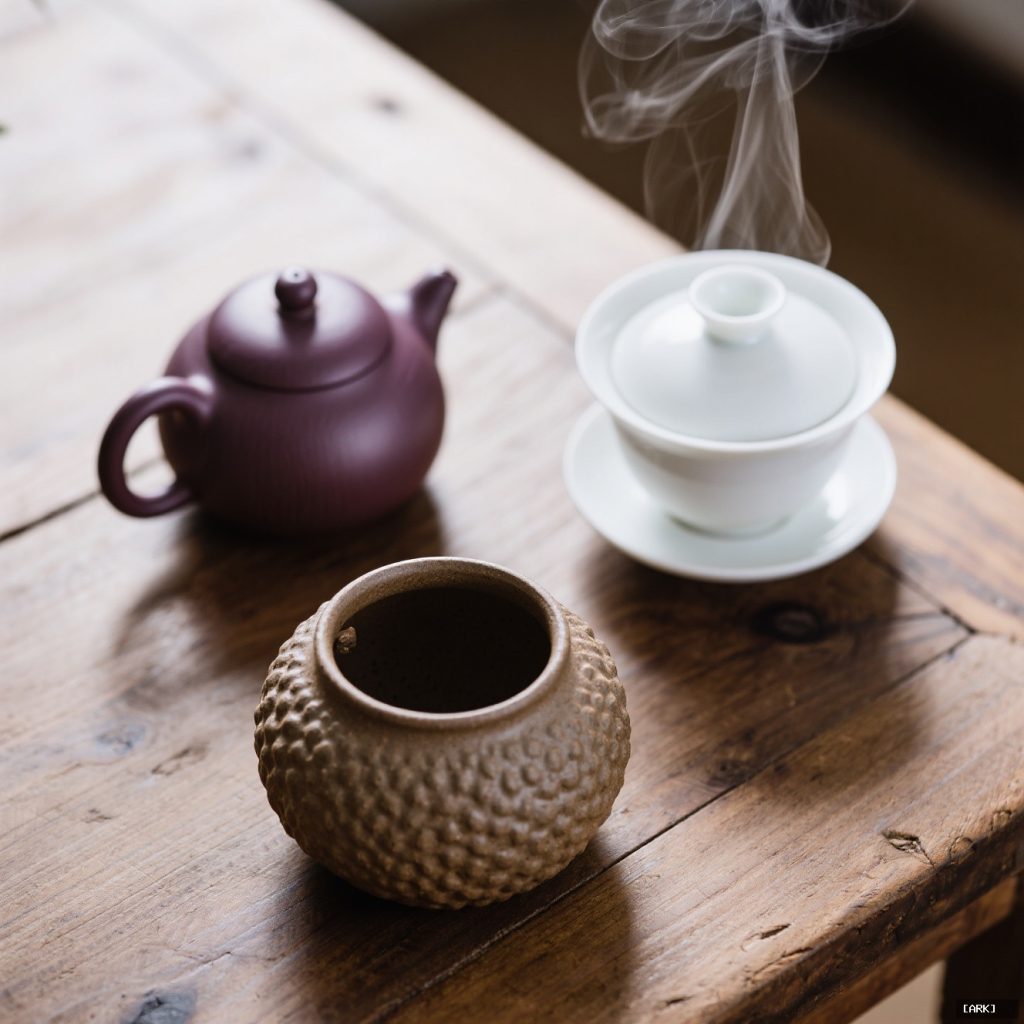
Choosing a Chinese teapot style is about choosing a companion for your daily ritual. The process into Chinese teapot styles asks you to consider more than aesthetics; it asks how you want to interact with your tea, your time, and your own senses. That unglazed Yixing pot isn’t just a vessel; it’s a commitment.
The world of Clay and Porcelain
Walk into any serious tea shop and you’ll face a quiet council of pots. Each material tells a different story.
Yixing teapots, from the region in Jiangsu, are the elders. Made from zisha, or “purple clay,” they are unglazed and porous. They are meant for one tea, or one category of tea, for life. The clay is said to breathe with the brew.
Porcelain, often from the kilns of Jingdezhen, is the scholar. It is pure, non-porous, and typically glazed. It presents tea without alteration, a clean slate for any leaf. A porcelain gaiwan—that lidded bowl—is the ultimate tool for clarity.
Jianshui teapots from Yunnan are the artisans. Their clay is rich in iron, less porous than Yixing, but still unglazed. They offer a middle path with stunning, earthy textures and mineral colors that come from the clay itself.
Your choice here scripts your tea practice. It decides whether your session is a fleeting taste or a deepening relationship.
The Yixing Proposition: Worth the Hype?
Let’s talk about the elephant in the tea room. A genuine Yixing teapot commands reverence and a high price. Is it justified?
For the right person, absolutely. The magic lies in the micro-porous structure of zisha clay. It retains heat beautifully for teas that need a steady temperature, like oolongs or pu-erh. Over years of dedicated use, it absorbs the tea’s oils and minerals. This “seasoning” is said to mellow astringency and enhance the body of the liquor. The pot becomes a partner, its history written in every steep.
But the market is a minefield. Fakes abound—pots made from dyed clay, blended with additives, or mass-produced with poor craftsmanship. These will never season properly. They might even impart odd flavors.
The hype is real, but it’s exclusive. If you drink one type of tea daily and approach it as a long-term ritual, a true Yixing is an investment. If you’re a wanderer, tasting a green tea one day and a shou pu-erh the next, it becomes a beautiful, useless brick. The cost isn’t just monetary; it’s the cost of your attention.
How Material Sculpts Flavor
Close your eyes and taste. Does the vessel matter? Your palate says yes.
Pour hot water and tea into a porcelain gaiwan. What you taste is transparency. The glaze seals the clay, offering no interaction. The tea’s profile—its floral highs, its bitter lows, its intended character—hits your tongue with unmediated honesty. It’s the tea, straight from the producer’s hands.
Now, use a well-seasoned Yixing pot. The experience changes. The porous clay subtly interacts with the brew. It can soften harsh edges, round out the body, and integrate flavors. It doesn’t create new notes so much as it gently polishes the existing ones. It’s like listening to a familiar song on a warmer, richer sound system.
Jianshui clay, with its mineral density, often offers a middle ground—a slight softening without the deep, absorptive commitment of Yixing. The effect is subtle. You might not notice it until you taste the same tea side-by-side from different pots. Then the difference whispers, it doesn’t shout.
The Beginner’s Toolkit: Where to Start
Feeling overwhelmed? Start simple. Your first foray into gongfu teaware should be about learning, not legacy.
Buy a white porcelain gaiwan. It’s inexpensive, easy to clean, and brutally honest. It will show you exactly what your tea is doing, steeping by steeping. You’ll learn to sense the moment a green tea turns from sweet to bitter, or how a oolong unfolds over ten infusions. This clarity is your foundation.
Ignore the temptation of a “beginner Yixing.” Without a developed palate, you won’t know if the pot is enhancing your tea or ruining it. You also won’t be able to judge its quality.
If you prefer a spout, choose a small, thin-walled porcelain pot. Look for function: a lid that fits snugly, a handle that feels balanced, and a spout that pours a smooth, drip-free stream. Master the mechanics first. The poetry comes later.
When the Pot Works Against You
Can a teapot ruin tea? Not often, but it can certainly break the spell.
Imagine trying to brew a delicate, early-spring green tea. You reach for a thick, heavy Yixing pot designed for dark teas. It retains too much heat, stewing those tender leaves into a bitter, grassy mess in seconds. The wrong tool sabotaged the leaf’s potential.
Or consider a spout that dribbles down the pot’s belly with every pour. That small frustration interrupts the flow, the meditation of the session. The ritual is as much about graceful, seamless action as it is about chemistry. A poorly fitting lid, a clumsy handle—these are small thieves that steal your enjoyment.
Using a heavily seasoned Yixing pot for a delicate white tea is like cooking a fresh fillet of fish in a pan that once seared a steak. The old, embedded flavors will clash. The pot isn’t bad; it’s just mismatched. Understanding these pairings is part of the craft.
Your Handheld Checklist for Buying Clay
When you’re ready for that first clay pot, bring this list with you.
- Listen to the Lid: Gently tap the lid against the pot’s body. A clear, high-pitched ring often indicates high-fired, good quality clay. A dull thud can be a warning sign.
- Test the Pour: Fill it with water. The stream should be smooth, cohesive, and start/stop instantly when you tilt the pot. No drips, no hesitation.
- Check the Fit: The lid should sit flush. A classic test: cover the air hole on the lid and lift the pot. A well-fitted lid will hold the pot’s weight without falling.
- Mind the Walls: Thinner walls heat and cool faster, giving you more control over steep times. Thick walls offer heat retention for teas that need it.
- Know Your Source: Buy from a specialized tea vendor who can speak to the clay’s origin and the potter’s reputation. Generic marketplaces are risky for authentic wares.
Navigating Common Conundrums
Tea traditions come with rules. Here’s how to navigate them without anxiety.
Do I really need a different Yixing pot for each tea type?
Purists insist on it. For everyone else, dedication by category works beautifully. One pot for roasted oolongs, one for ripe pu-erh, one for aged raw tea. This prevents major flavor crossover while being practically manageable.
Can I use soap to clean my Yixing teapot?
Do not. Soap will seep into the pores and taint the seasoning you’ve worked years to build. Rinse thoroughly with hot water, wipe with a soft cloth, and let it air-dry completely upside down.
Is a gaiwan better than a teapot?
It’s more versatile and offers unparalleled control, especially for fragrant teas. But a teapot is easier to pour elegantly and often provides a more substantial, grounding feel in the hand. It’s a matter of style and sensation.
Why are some Jianshui pots so colorful?
The vibrant blues, greens, and reds come from natural mineral oxides in the clay—iron, copper, cobalt—and specific firing techniques. It’s the earth’s palette, not a glaze.
The Ritual Beyond the Brew
Here is the deepest truth about Chinese teapot styles. Their greatest influence may not be on your tea, but on you.
A tiny, 100ml Yixing pot forces a specific pace. You cannot make a giant mug. You make small, concentrated infusions. This stretches a session to twenty, thirty, forty minutes. It turns tea from a drink into an event, a narrative with a beginning, middle, and end.
The weight of the clay warms your palm. You feel the heat transfer, a direct connection to the element of water and fire. A porcelain gaiwan, with its thin walls, demands respect. You must hold it just so, present and attentive, or you will burn your fingers. This physical demand pulls you into the moment.
In a world of screens and scattered attention, these pots become anchors. The ritual they dictate—the heating, the pouring, the waiting, the smelling—carves out a space for focus. It’s a sensory habit that grounds you in your own body and the simple, profound act of making a drink. You aren’t just brewing tea. You are practicing a form of mindfulness with a spout and a handle.
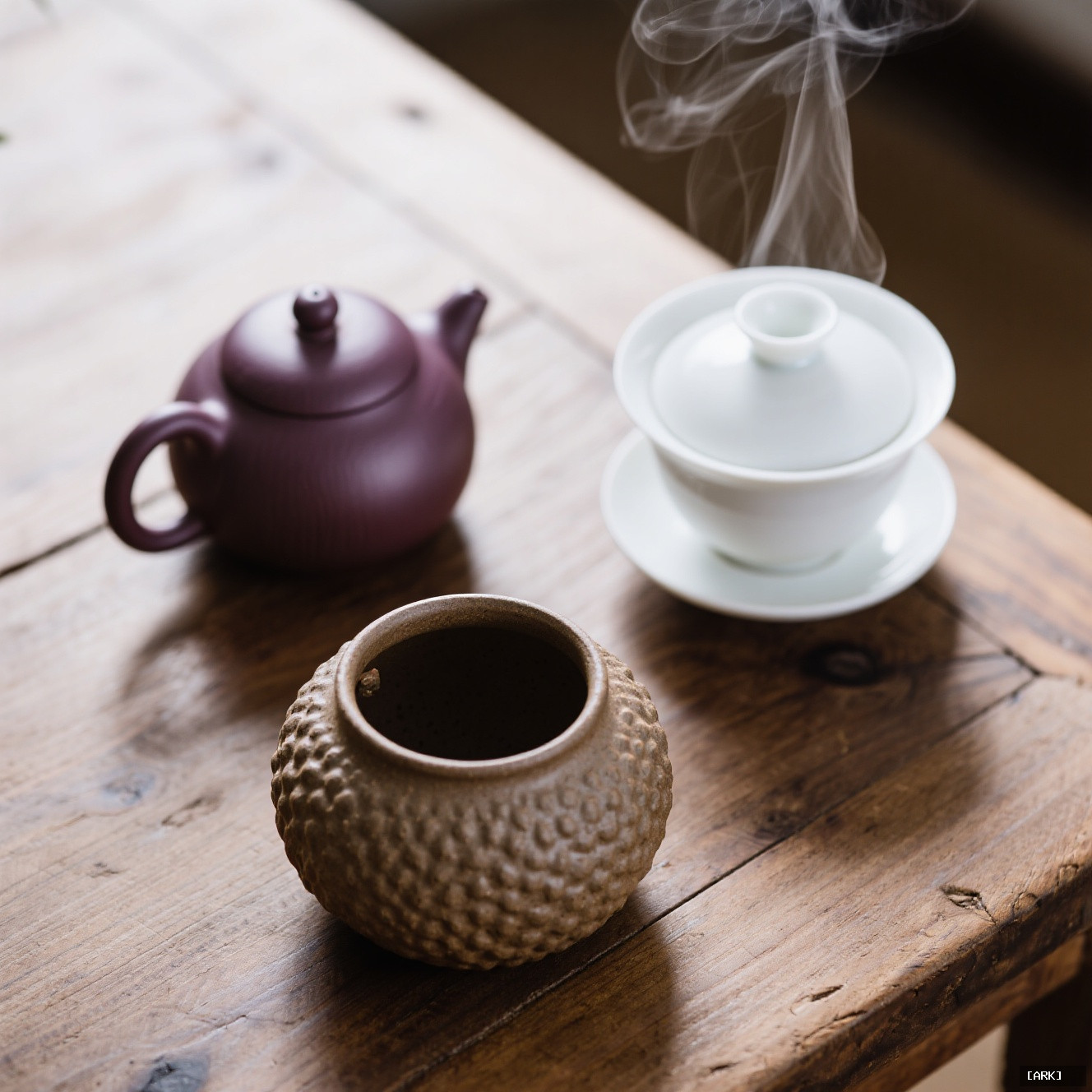
So choose your pot as you would choose a practice. Not for status, but for the kind of quiet it helps you create.
Sources & Further Reading
About Our Expertise
Drawing on years of expertise in Chinese tea culture and traditional craftsmanship, this guide is based on firsthand experience with authentic teapots from renowned regions like Yixing and Jingdezhen. We provide practical insights into how different clay types and firing techniques impact tea brewing, ensuring you receive accurate, culturally informed advice for enhancing your daily ritual.
Our recommendations are grounded in trusted sources and deep knowledge of Chinese artistic heritage, emphasizing the importance of genuine materials and proper usage. We prioritize transparency and authenticity, helping you navigate the market with confidence and avoid common pitfalls, so you can build a meaningful tea practice rooted in tradition and quality.
✨ You Might Also Enjoy

You may also like
Herbal Bead Bracelet: Ancient Chinese Aromatherapy for Modern Wellness | HandMyth™
Original price was: ¥2,199.00.¥1,352.00Current price is: ¥1,352.00. Add to cartPremium Herbal Beads Bracelet: Traditional Medicine Meets Modern Jewelry | Shop HandMyth
Original price was: ¥874.00.¥608.00Current price is: ¥608.00. Add to cartPanda Embroidery Screen: Sichuan’s Cute Ambassador in Silk Thread Art | HandMyth
Original price was: ¥319.00.¥230.00Current price is: ¥230.00. Add to cartPanda Gift Set: Curated Chinese Treasures for Panda Lovers | HandMyth™ (Free Gift Wrap)
Original price was: ¥136.00.¥118.00Current price is: ¥118.00. Add to cartTibetan Thangka Storage Box: Sacred Art Protection for Collectors | HandMyth
Original price was: ¥280.00.¥219.00Current price is: ¥219.00. Add to cartPure Silk Handbag: Hangzhou’s Legendary Silk Weaving for Modern Elegance | HandMyth™
Original price was: ¥874.00.¥786.00Current price is: ¥786.00. Add to cartHand-Painted Silk Scarf: Wearable Art from China’s Silk Road | HandMyth (Artist Signed)
Original price was: ¥1,017.00.¥935.00Current price is: ¥935.00. Add to cartModern Qipao Dress: Timeless Chinese Elegance for Today’s Woman | HandMyth (Custom Fit)
Original price was: ¥2,459.00.¥2,240.00Current price is: ¥2,240.00. Add to cartEmbroidered Chinese Handbag: Suzhou Silk Embroidery Meets Modern Fashion | HandMyth™
Original price was: ¥680.00.¥646.00Current price is: ¥646.00. Add to cart