
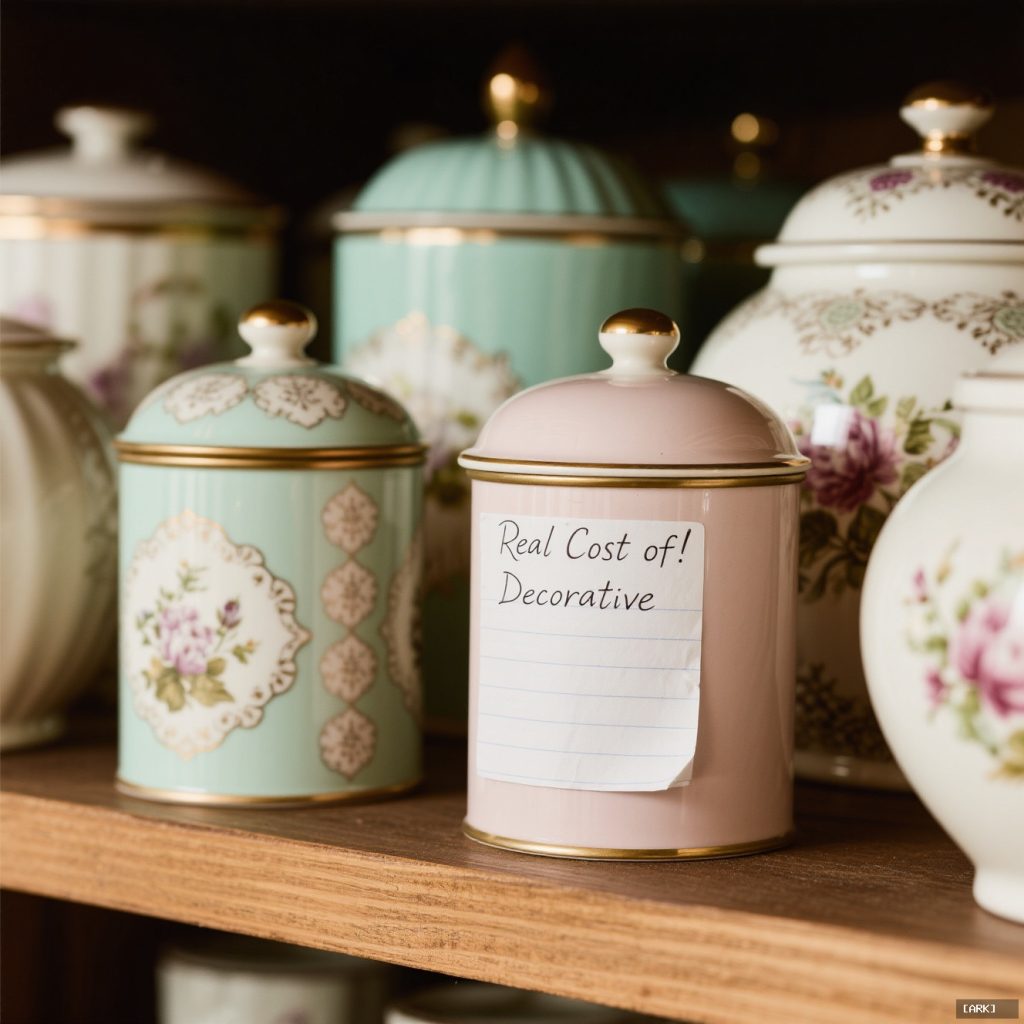
Decorative tea canisters need not be a luxury purchase. The most meaningful tea storage often comes from seeing the potential in the ordinary, transforming simple containers into personal treasures that guard your favorite blends.
That gifted biscuit tin, a clean spice jar, or a small wooden box can hold more narrative and purpose than any high-end porcelain caddy. This approach isn’t about settling for less; it’s about creating more. It connects the ritual of tea to creativity, sustainability, and personal expression. When you look at a shelf not of purchased perfection, but of curated, adapted objects, each with a small story, you’re building a tea station that is authentically yours.
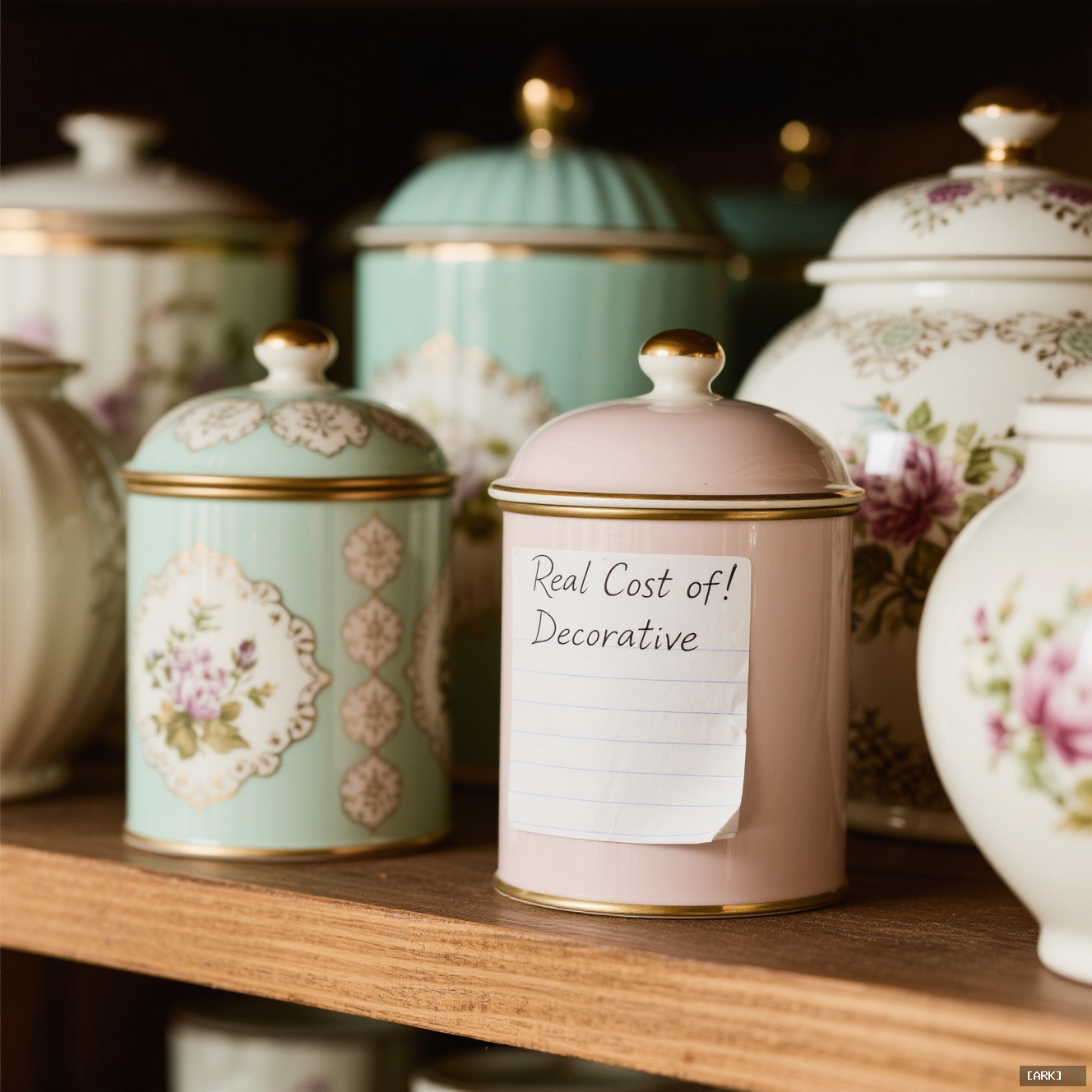
The Real Cost of “Decorative”
Why are decorative tea canisters so expensive?
Decorative tea canisters are expensive due to a combination of high-quality materials, skilled design, and premium branding. Unlike mass-produced tins, they often use costly materials like ceramic, hand-blown glass, or embossed tinplate. Intricate artisan patterns or custom molds involve significant labor. Additionally, the price reflects the object's purpose as a decorative piece, which commands a higher market value than a purely functional container.
Walk into a specialty home goods store and the price tags on decorative tins can induce a sharp intake of breath. Why does a small, painted metal box command such a sum? You’re paying for a confluence of factors that extend far beyond the metal itself.
First, materials. Ceramic, hand-blown glass, and thick, embossed tinplate cost more than the thin steel of a mass-produced cookie tin. Then, design. Intricate patterns, artisan illustrations, or custom molds involve skilled labor. Finally, and perhaps most significantly, you pay a premium for intention. An object marketed as a “decorative tea caddy” carries an implied promise: it is meant to be admired, to contribute to your kitchen’s aesthetic, to be part of your home’s visual story. This shifts it from mere container to décor object, and that always carries a different price calculus.
The jump happens the moment functionality is married to artistry. A simple airtight jar is cheap. That same jar, with a beautifully screen-printed herb garden on its side, becomes a “decorative tea canister.” The value is in the experience it creates on your countertop.
Function First: The Non-Negotiables of Tea Storage
What are the main enemies of tea and how should a container protect against them?
A decorative tea canister must first solve functional storage requirements. Tea's three main enemies are light, air, and moisture, so the container's primary job is to defend against them. An airtight seal is paramount, which can be achieved with a clip-top glass jar, a tin with a tight-fitting lid that pops when opened, or a well-sealed plastic container. Additionally, darkness is important; if using a clear glass jar, it should be stored inside a cupboard to block light. Prioritizing these non-negotiables ensures tea remains fresh and flavorful.
Before a single brushstroke of paint is applied, you must solve for function. A beautiful container that turns your prized oolong stale within a week is a tragedy. Tea has three main enemies: light, air, and moisture. Your container’s primary job is to be a fortress against this trio.
An airtight seal is paramount. This doesn’t necessarily mean a complicated locking mechanism. A simple clip-top glass jar, a tin with a tight-fitting lid that “pops” when opened, or even a well-sealed plastic food container does the job. Darkness is next. If you choose a clear glass jar, storing it inside a cupboard is ideal. If you want it on display, consider an opaque container or a dark-tinted glass.
Finally, consider material neutrality. The interior shouldn’t impart any scent or flavor. Glass, glazed ceramic, food-grade stainless steel, and high-quality tin are all inert. Be cautious with certain plastics or unsealed wood, which can hold odors. If you’re repurposing a vintage tin, give it the sniff test. A lingering scent of decades-old tobacco or coffee will ruin your delicate green tea.
The Thrifter’s Eye: Sourcing Second-Hand Character
Where can I find second-hand decorative tea canisters for a low budget?
For a low-budget hunt, skip antique malls and look at charity shops, flea markets, and estate sale basements. Instead of searching for 'tea caddy,' broaden your terms to find potential in vintage tobacco tins (great for small quantities), mid-century coffee cans with an industrial vibe, or unusual cookie and biscuit tins. Their original holiday themes can be charming or easy to repaint, offering character without the high price.
For the budget-conscious enthusiast, the most rewarding hunt begins where the curated collections end. Skip the polished antique mall booth. Your targets are charity shops, flea market stalls, and estate sale basements. Here, you’re not looking for something labeled “tea caddy.” You’re looking for potential.
Broaden your search terms. Vintage tobacco tins, often beautifully lithographed, are perfect for smaller quantities. Old coffee cans have a wonderful mid-century industrial vibe. Don’t overlook unusual cookie or biscuit tins—their original holiday themes can be charming or easily painted over. Even small, sturdy wooden boxes meant for trinkets or hardware can be lined and sealed.
The charm lies in the history. A decorative tea storage container that once held a grandmother’s sewing supplies or a father’s favorite cookies carries a patina of use. It has a life before tea. This layering of stories—its past purpose and its new role guarding your morning ritual—adds a depth no new purchase can replicate. You’re giving a well-made object a second act.
The Art of the Transformation: Making Basic Beautiful
How can I transform a basic container into a decorative tea canister?
To transform a basic container into a decorative tea canister, you can use chalk paint, which adheres to glass, metal, or ceramic with minimal prep. Apply painter's tape to create geometric patterns, stripes, or color blocks for a clean, modern look. For a vintage feel, try dry brushing or adding transfers. Alternatively, wrap the container with a beautiful page from a book or decorative paper to change its appearance. This creative process allows you to reflect your personal style and turn a plain jar into an attractive tea canister.
You’ve found a functional, plain, or slightly worn container. Now comes the creative alchemy. This is where a basic jar becomes a decorative tea canister that reflects your style. The process can be as simple or involved as you wish.
For a clean, modern look, chalk paint is a miracle worker. It adheres to almost any surface—glass, metal, ceramic—with minimal prep. Use painter’s tape to create crisp geometric patterns, stripes, or color blocks. For a softer, vintage feel, try a technique like dry brushing or add transfers.
If painting isn’t your style, consider wrap. A beautiful page from a damaged old book, a scrap of elegant wallpaper, or even a high-quality printed napkin can be decoupaged onto the surface. Secure it with Mod Podge or a similar decoupage medium, finishing with a food-safe sealant if it will be handled often.
Don’t underestimate the power of detail. A length of ribbon, jute twine, or leather cord tied around the lid or neck of a jar hides seams and adds texture. Labeling is both practical and decorative. Use a metallic paint pen on dark glass, elegant adhesive labels, or even tiny chalkboard tags hung from the lid. The goal is to move the object from “repurposed jar” to “intentional piece.”
Cross-Pollination: Unlikely Sources for Perfect Canisters
Where can you find unexpected decorative tins that work well for storing tea?
You can find unexpected decorative tins for tea storage beyond the kitchen aisle. Office supply stores offer stylish desk organizers, such as lidded boxes for paperclips or magnetic tins for pins, which are perfectly sized for tea bags or loose leaf. Craft stores provide plain wooden boxes intended for decoupage or painting, ideal for custom projects, as long as the interior is sealed with a food-safe coating to protect the tea.
Sometimes the best decorative tins aren’t in the kitchen aisle at all. Think like a storage detective in other departments. Office supply stores are a treasure trove. Decorative desk organizers—small lidded boxes for paperclips, magnetic tins for pins, even stylish pen cups—are often the perfect scale for tea bags or small batches of loose leaf. They are designed to look good on a surface, which is exactly what you need.
Craft stores offer plain, unfinished wooden boxes intended for decoupage or painting. These are ideal for a custom project. Just be sure to seal the interior with a food-safe varnish or wax to protect the tea from the wood’s natural oils and aromas.
Even the pantry holds secrets. Cleaned spice jars with their labels removed offer a uniform, minimalist look. Small, squat jars that held condiments like capers or olives are often charmingly proportioned. The key is to see past the product’s original branding and envision the simple, functional shape beneath.
Curating Your Collection: From Jumble to Cohesion
How can I curate a cohesive collection of decorative tea canisters?
To curate a cohesive collection, let the character of your tea guide your container choices. For example, assign a robust English Breakfast or smoky Lapsang Souchong to a bold repurposed metal tin, while a delicate white tea or floral jasmine green suits a simple glass jar. A spicy chai blend pairs well with a warm-toned ceramic pot. This intentional method creates visual rhythm on your shelf through a mix of materials, colors, and heights, transforming a jumble into a harmonious display.
With so many cheap and cheerful options, it’s easy to end up with a shelf that looks like a recycling bin. The solution is intentional curation. Let your tea be your guide. Assign containers based on the character of the tea inside.
A robust English Breakfast or smoky Lapsang Souchong might feel at home in a bold, repurposed metal tin. A delicate white tea or floral jasmine green seems to suit a simple, elegant glass jar. A spicy chai blend could go in a warm-toned ceramic pot. This method does two things. First, it creates a visual rhythm on your shelf—a mix of materials, colors, and heights that feels collected, not chaotic. Second, it builds a functional memory system. You’ll start to associate the container with the tea experience inside.
Start small. You don’t need a canister for every tea you own. Begin with two or three for your daily drinkers. A small, thoughtful collection where every piece is both useful and beautiful is infinitely more powerful than a crowded shelf of compromises.
Your Practical Checklist for a Budget Tea Station
- Seal is Supreme: Test every lid. The “pop” of an airtight seal is your best friend.
- Shop Your Home First: Raid the pantry, the recycling bin, and the back of the cupboard for forgotten jars and tins.
- Thrift with a Mission: Go to charity shops with specific dimensions in mind (e.g., “about the size of a grapefruit”).
- Gather a Simple Toolkit: Chalk paint, painter’s tape, a brush, Mod Podge, ribbon, and a paint pen for labels.
- Curate by Character: Match the container’s vibe to the tea’s personality for a cohesive look.
- Embrace the Story: A chip, a faded label, or a unique shape adds character. Perfection is not the goal.
Answering Common Concerns
Do I need to line an old or vintage tin? If it’s clean, dry, odor-free, and the interior coating is intact, it’s usually fine. For painted vintage tins, check for rust or chipping interior paint you wouldn’t want mixing with your tea. When in doubt, use a simple solution: place your tea in a sealed, food-grade plastic bag or a small reusable pouch inside the decorative tin. This guarantees freshness while preserving the exterior charm.
How many decorative tea canisters do I really need? This is about your habit, not ambition. If you drink one black tea every morning and one herbal tea at night, you might only need two. Start with the teas you reach for weekly. Expand only when you find a container you truly love for a new favorite blend. A restrained collection feels more special.
Can a homemade or thrifted canister feel like a real gift? Often, it feels more meaningful. A store-bought item conveys its price tag. A thoughtfully repurposed container conveys time, attention, and personal knowledge of the recipient. It carries the story of its finding and its transformation. That narrative—the care you took in selecting, cleaning, and decorating it—is the true gift, far beyond anything a receipt can measure.
Sources & Further Reading
Tea Forte: The Basics of Proper Tea Storage
The Spruce Eats: How to Store Tea Properly to Keep It Fresh
Food Network: How to Clean and Reuse Glass Jars
About Our Expertise
Drawing from traditional Chinese tea culture, which emphasizes the harmony of function and aesthetics, this guide offers practical advice on selecting and repurposing containers that honor the tea's integrity. Our expertise in Chinese craftsmanship and daily rituals ensures that every tip respects the art of tea storage.
By focusing on materials like glazed ceramic, food-grade glass, and inert metals, we align with tried-and-true methods used by Chinese tea connoisseurs for centuries. This attention to detail builds trust, helping you create a tea station that is both beautiful and true to tradition.

 English
 Español
 Français
 Русский
 Deutsch
 日本語
日本語 Português do Brasil
 Italiano