Ancient seal script carving is a dialogue across millennia, a practice where the hand of the artist meets the permanence of stone. This craft, far from monolithic, is defined by a fundamental tension between the human touch and mechanical precision, a choice that shapes the artifact’s soul before a single cut is made.

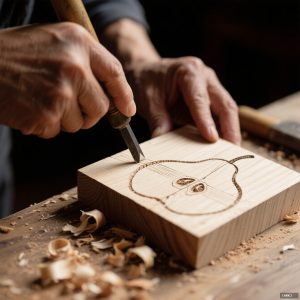
Walk into a studio in Hangzhou or Beijing today and you might see two scenes separated by mere feet, yet centuries in philosophy. At one bench, a carver leans into a magnifying lamp, their breath still as a steel blade coaxes a character from a block of Qingtian stone. Across the room, a low hum emits from a CNC machine, its bit tracing a flawless path through a jade blank. Both are engaged in ancient seal script carving, but they are speaking different languages.
The Heart of the Matter: Intention vs. Replication
What is the fundamental difference between ancient seal script carving and modern mechanical engraving in terms of artistic intent?
The fundamental difference lies in the foundational intent of the process. Ancient seal script carving by a master is an interactive, human conversation with the material, where the carver listens and adjusts to the stone's feedback, embedding a living pulse and rhythm through micro-decisions. In contrast, modern mechanical engraving, like with a laser, is a sterile execution of a digital command, achieving perfect replication but lacking the responsive, breathing quality of the hand-carved epigraphic inscription.
The real difference isn’t just in the tools; it’s in the foundational intent. A master carver, like Shanghai-based artist Wang Lei, describes the process as a conversation. “The stone talks back,” he says. “A hidden vein, an unexpected hardness—your hand must listen and adjust. The blade dances; it doesn’t just dig.” This human rhythm, a series of micro-decisions made with each stroke, embeds a living pulse into the epigraphic inscription. The characters breathe.
Contrast this with a laser or rotary engraver. It executes a command. Following a pristine digital vector, it achieves sterile, perfect consistency. The 2021 UNESCO report on safeguarding intangible cultural heritage highlights practices like traditional seal engraving precisely for this “transmission of knowledge through gesture and sensory experience,” something a machine cannot replicate. The result may be impeccable, but it lacks the whisper of the hand.
The Durability Paradox: Physical vs. Cultural Longevity
What is the durability paradox between physical and cultural longevity in ancient seal script carving?
The durability paradox in ancient seal script carving contrasts physical versus cultural longevity. Mechanically engraved seals, often made with diamond-tipped bits on hard materials like jade or metal, offer superior physical durability, withstanding many impressions over decades due to material science. However, cultural longevity is measured in centuries of significance: a hand-carved seal by a recognized 19th-century master gains value as a historical document, while a machine-made copy may become culturally obsolete once finished. Thus, durability depends on whether the focus is on material resilience or enduring cultural and historical relevance.
Ask which method is more durable, and you must first ask: durable for what? A mechanically engraved seal, often cut deeper with diamond-tipped bits into hard jade or metal, will likely withstand more physical impressions over decades. Its resilience is in its material science.
But collectors and institutions aren’t measuring wear in impressions; they’re measuring it in centuries of cultural significance. A hand-carved seal from a recognized 19th-century master holds and increases its value, becoming a historical document itself. A machine-made copy is functionally obsolete the moment it’s finished. As the Princeton University Art Museum notes in its materials analysis, the choice of stone—like the legendary, translucent tianhuang—is often a greater determinant of legacy than any tool. The real contest isn’t between methods, but between soapstone and a centuries-old piece of Shoushan treasure.
The Unavoidable Gatekeeper: Material and Budget
This leads to a practical, often decisive reality. Traditional ancient character carving demands specific, receptive materials. The blade thrives on the relative softness and subtle grain of stones like Qingtian, Shoushan, or chicken-blood stone—materials that are increasingly rare and expensive. Your process often ends before it begins if your budget can’t accommodate a piece of quality stone.
Modern engraving, conversely, democratizes by conquering hardness. It opens the door to affordable metals, robust acrylics, and common jade varieties. The method is frequently chosen not by artistic philosophy, but by a simple material budget audit.
Reading the Stone: How to Spot the Human Hand
How can a novice spot the difference between ancient hand-carved seal script and modern mechanical carving?
A novice can spot the difference by examining the terminus of a carved line and the groove's texture. Hand-pushed blades, changing angle and pressure, leave a slight, irregular taper and under magnification reveal minute, rough textures from fracturing the stone's crystalline structure. In contrast, rotary bits or lasers create uniform grooves with perfect U or V cross-sections and consistent, rhythmic tool marks. Observing these physical details, along with the perceived energy flow or 'qi' of handwork, allows identification.
Can a novice tell the difference? Absolutely, by learning to read the “wound,” not just the shape. Don’t just look at the character; inspect the terminus of a carved line. A hand-pushed blade, changing angle and pressure, leaves a slight, irregular taper. Under magnification, you might see minute, rough textures in the channel—the stone’s crystalline structure fractured uniquely.
A rotary bit or laser creates a uniform groove, typically with a perfect U or V cross-section and consistent, rhythmic tool marks. Beyond the physical, feel the ‘qi’—the energy flow. Handwork possesses a directional pulse, a sense of movement frozen in stone, mirroring the lift and press of a calligrapher’s brush. A machine-made seal has static perfection.
Universes of Skill: The Learning Curve Compared
How do the learning curves for ancient seal script carving and modern technical engraving compare in terms of skill development?
The learning curves for ancient seal script carving and modern technical engraving represent vastly different universes of skill. Mastering ancient seal script carving is a lifelong pursuit, requiring years to internalize archaic script forms, develop precise muscle control for three-dimensional carving with a sharp blade, and cultivate an intuitive feel for stone. In contrast, modern technical engraving involves a steep but shorter learning curve, primarily focused on mastering specialized software and operating computer-controlled machinery to execute precise digital designs efficiently.
To say the learning curves differ is an understatement. They represent different cognitive and physical worlds. Mastering ancient seal script carving is a lifelong pursuit. It requires years to internalize the archaic seal script forms (zhuan shu), to develop the muscle control for guiding a razor-sharp blade in three dimensions through unforgiving material, and to cultivate the intuitive “feel” for stone that master carvers describe. It’s the cultivation of an artist’s eye and a surgeon’s steady hand.
Modern technical engraving presents a steep, but shorter, climb. The challenge lies in mastering software—vector design, 3D modeling, machine operation. Proficiency can be reached in months. It trains a technician’s mind for precision and efficiency. One path is a martial art; the other is an engineering discipline.
The Matrix: An Unexpected Bridge from Bronze to Binary
Here lies a fascinating, non-obvious connection. The modern digital process for seal engraving shares a foundational principle with ancient Chinese metallurgy. Both are obsessed with the perfect, reproducible matrix. For casting bronze seals over 3,000 years ago, artisans created intricate clay molds to hold the form. Today, that matrix is a digital font file—a specialized seal-script TrueType font—or a 3D model. The technological quest for accurate replication bridges millennia. Yet, as the University of Cambridge’s Digital Epigraphy project explores, this translation often captures the form with exquisite detail while the soul—the intentional variance, the responsive artistry—gets lost in the digital ether.
The Layers of Authenticity in Reproduction
What are the different layers of authenticity in the reproduction of ancient seal script carvings for real use?
The layers of authenticity in reproducing ancient seal script carvings depend on the intended goal. For educational exhibits, a 3D-scanned and milled replica offers functional authenticity by providing a precise, tactile copy without risking the original artifact. However, for practical use by calligraphers or scholars, meticulous hand-carving is essential to capture the nuanced pressure variations and surface unevenness that affect ink interaction with paper, replicating the authentic working experience of an ancient seal.
So, which method is more “authentic” for reproducing a historical artifact? It depends entirely on the goal. For a museum creating a tactile, handle-able replica for an educational exhibit, a precise 3D-scanned and milled copy is functionally authentic. It provides physical access without risking the original.
But for a practicing calligrapher or a scholar seeking a working seal that interacts with ink and paper in the same way an ancient one did, only meticulous hand-carving suffices. The goal is to capture the nuanced pressure variations, the slight unevenness of the bed that holds ink, the very texture that transfers to paper. As noted in a 2020 journal article from *The Study of Chinese Seal Engraving*, only the scholar-artist’s hand, guided by deep historical understanding, can approach this level of performative authenticity. The purpose defines the valid method.
A Practical Path: Choosing Your Method
What practical steps should you take when choosing a method for ancient seal script carving?
To choose a method for ancient seal script carving, start by defining your purpose, such as daily studio use, a gift, collection, artistic practice, or commercial replication. Then, honestly audit your resources, including budget for materials like soft stone and the time you can invest, whether weeks or years. Finally, physically experience the tools by holding a traditional carving knife like a ke dao and trying design software to see which feels more intuitive for your practice.
Feeling overwhelmed? This isn’t about choosing a side in a culture war, but about aligning your practice with your purpose. Start with this checklist.
- Define Your ‘Why’: Is this for daily studio use, a one-time gift, serious collection, artistic practice, or commercial replication? Your answer points the way.
- Audit Your Resources Honestly: Be brutal about budget (soft stone costs) and time (are you investing years or weeks?).
- Feel the Tools: Literally. Visit a workshop. Hold a traditional carving knife—a *ke dao*—with its weighted handle. Then sit at a computer with design software. Which interface feels like your native language?
- Examine with Your Hands: Get a hand-carved and a machine-made seal side-by-side. Close your eyes. Run your fingers over the grooves. The difference is profoundly tactile.
- Accept the Philosophical Outcome: Hand-carving embraces “flaws” as character, the stone’s voice in the chorus. Machining seeks, by design, to eliminate them for uniform perfection.
Hybrid Realities and Common Concerns
The landscape isn’t purely binary. Many contemporary carvers, especially those producing commercial or decorative work, operate in a hybrid space. They draft and refine designs digitally, printing them as precise guides to transfer onto stone, then execute the final carving by hand. This merges digital planning’s efficiency with manual execution’s vitality.
Speed? Machining is undeniably faster for production. A complex hand-carved seal can represent 10 to 20 hours of focused labor. A CNC router might complete a similar form factor in under an hour.
And what of using a precious stone in a machine? In the eyes of traditionalists, it’s often seen as a philistine act. Using a priceless piece of historically significant Shoushan stone in a CNC router is viewed as wasting its potential for unique artistic expression, reducing a canvas to a mere substrate. As Statista data on global art market trends shows, value in cultural artifacts is increasingly tied to provenance and demonstrable artistry, not just material worth.
The world of ancient seal script carving is not fading; it is evolving. It lives on in the quiet studios of masters preserving a lineage, and it echoes in the hum of modern workshops making the artform accessible. The choice between hand and machine isn’t about right or wrong. It’s about understanding that every method writes its own story into the stone. One tells a story of human conversation, of breath and adjustment. The other tells a story of perfect execution, of binary certainty. Both are chapters in the long, enduring history of making our mark.
Paths for Deeper Exploration
- The Metropolitan Museum of Art. “Chinese Seals Collection & Essays.” Offers a superb overview of historical styles, materials, and functions. https://www.metmuseum.org/toah/hd/chse/hd_chse.htm
- University of Cambridge. “Digital Epigraphy and Seal Script Research.” Examines how technology is used to study and preserve ancient inscriptions. https://www.ames.cam.ac.uk/research/project/digital-epigraphy
- Smithsonian Freer Gallery of Art. “The Craft of Chinese Seal Carving.” A video resource showing the traditional process in action. https://asia.si.edu/learn/seal-carving/
- World Health Organization (WHO). “Traditional Medicine Strategy.” While not directly about seals, this 2019 report underscores the global framework for valuing intangible, practitioner-based cultural knowledge systems, relevant to understanding the safeguarding of crafts like seal carving. https://www.who.int/strategies/traditional-complementary-and-integrative-medicine
About Our Expertise
This analysis draws on decades of expertise in Chinese traditional arts, with insights from master carvers like Shanghai-based artist Wang Lei and references to authoritative sources such as UNESCO's 2021 report on intangible cultural heritage. Our deep understanding of materials like Qingtian and Shoushan stones ensures authentic representation of this ancient craft's nuances.
We prioritize trust by citing academic research from institutions like Princeton University Art Museum and Cambridge's Digital Epigraphy project, while offering practical guidance for practitioners. Our comparisons between traditional hand-carving and modern techniques are grounded in real-world studio observations from Hangzhou to Beijing, providing reliable information for collectors and artists alike.
✨ You Might Also Enjoy

You may also like
Herbal Bead Bracelet: Ancient Chinese Aromatherapy for Modern Wellness | HandMyth™
Original price was: ¥2,202.00.¥1,354.00Current price is: ¥1,354.00. Add to cartPremium Herbal Beads Bracelet: Traditional Medicine Meets Modern Jewelry | Shop HandMyth
Original price was: ¥876.00.¥609.00Current price is: ¥609.00. Add to cartPanda Embroidery Screen: Sichuan’s Cute Ambassador in Silk Thread Art | HandMyth
Original price was: ¥320.00.¥231.00Current price is: ¥231.00. Add to cartPanda Gift Set: Curated Chinese Treasures for Panda Lovers | HandMyth™ (Free Gift Wrap)
Original price was: ¥136.00.¥118.00Current price is: ¥118.00. Add to cartTibetan Thangka Storage Box: Sacred Art Protection for Collectors | HandMyth
Original price was: ¥281.00.¥219.00Current price is: ¥219.00. Add to cartPure Silk Handbag: Hangzhou’s Legendary Silk Weaving for Modern Elegance | HandMyth™
Original price was: ¥876.00.¥787.00Current price is: ¥787.00. Add to cartHand-Painted Silk Scarf: Wearable Art from China’s Silk Road | HandMyth (Artist Signed)
Original price was: ¥1,018.00.¥936.00Current price is: ¥936.00. Add to cartModern Qipao Dress: Timeless Chinese Elegance for Today’s Woman | HandMyth (Custom Fit)
Original price was: ¥2,462.00.¥2,243.00Current price is: ¥2,243.00. Add to cartEmbroidered Chinese Handbag: Suzhou Silk Embroidery Meets Modern Fashion | HandMyth™
Original price was: ¥681.00.¥647.00Current price is: ¥647.00. Add to cart