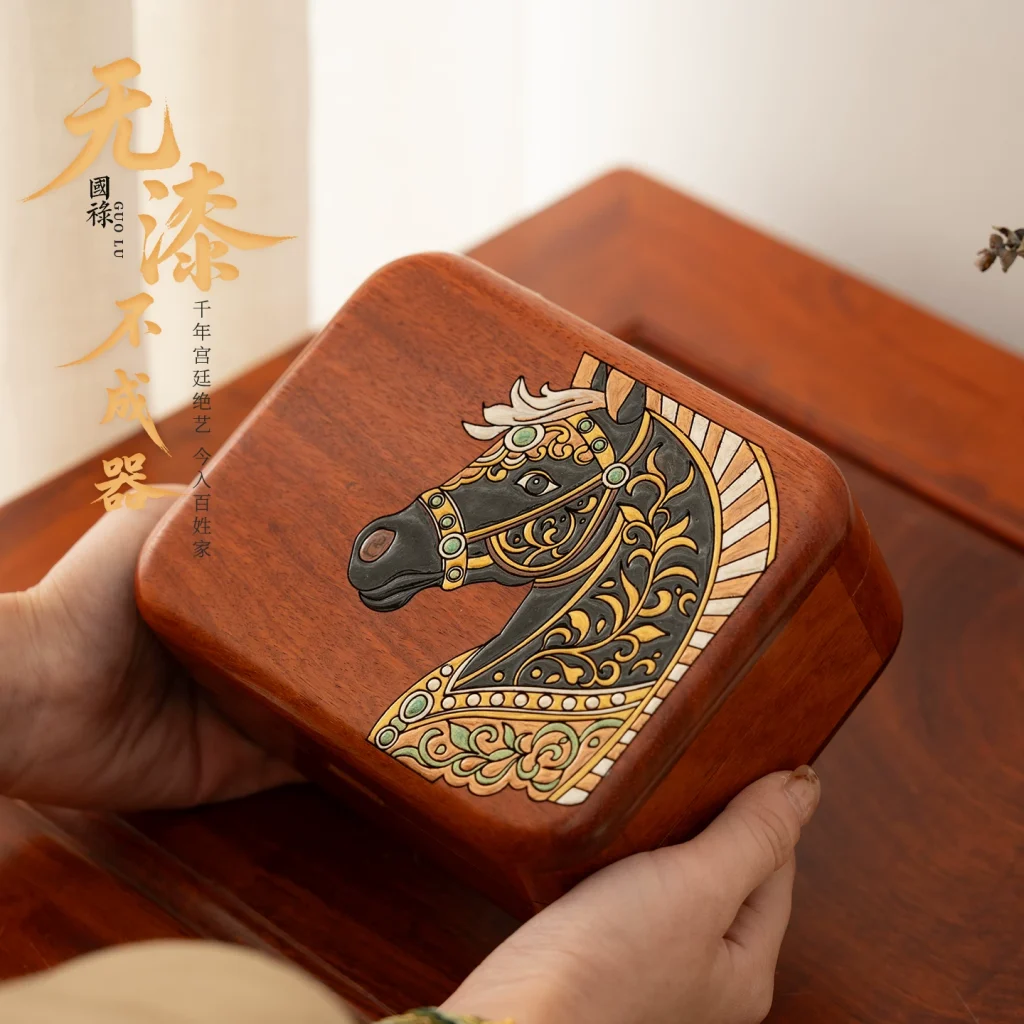
Chinese garden ornaments transform a simple yard into a contemplative landscape. They are the essential punctuation in a living sentence written with stone, water, and foliage, guiding both the eye and the spirit.

My own understanding didn’t come from books, but from a humid afternoon in Suzhou. I watched an elderly gardener reposition a single, porous Taihu rock for nearly an hour, his face a map of deep concentration. He wasn’t just placing a stone; he was calibrating the soul of a small universe. That moment captured the entire philosophy: these objects are never mere decor. They are active participants in a dialogue between humanity and nature, infused with layers of cultural meaning, artistic intention, and personal resonance.
The Philosophy in Stone: More Than Meets the Eye
What philosophical principles guide the selection and placement of ornaments in a classical Chinese garden?
The selection and placement of ornaments in a classical Chinese garden are guided by principles from Daoist thought, Confucian ideals, and poetic tradition. These principles emphasize harmony (hexie), balance, and the evocative power of suggestion. The garden is designed as a microcosm and three-dimensional painting that interprets nature's essence rather than dominating it. Ornaments serve as focal points within this idealized landscape, embodying a worldview that contrasts with formal European traditions focused on individual commemoration.
To approach Chinese garden ornaments is to engage with a worldview. The classical Chinese garden is a microcosm, a three-dimensional painting meant to be inhabited. It seeks not to dominate nature, but to interpret its essence. Ornaments are the focal points and accents within this idealized landscape. Their selection and placement follow principles drawn from Daoist thought, Confucian ideals, and poetic tradition, emphasizing harmony (hexie), balance, and the evocative power of suggestion.
This stands in contrast to a more formal European tradition, where statuary often commemorates individuals or myths, asserting human narrative onto the green space. In the Chinese tradition, a mossy rock or a bronze crane asks you to complete the story with your own imagination. A 2021 UNESCO report on intangible cultural heritage underscores how such living traditions of garden craft represent “a complex fusion of material, natural, and spiritual elements.” The ornament is a conduit, not a conclusion.
The Scholar’s Rock: A Portable Mountain for the Mind
What is the purpose and significance of the scholar's rock in Chinese garden ornaments?
The scholar's rock, or gongshi, is a naturally formed stone, often limestone from Lake Tai, prized for its intricate perforations and resemblance to mountains or cliffs. Its purpose is profoundly introspective, serving as the ultimate emblem of a scholar's retreat from official life into a private world of artistic and spiritual refinement. Placed on a simple wooden stand in a studio, it acts as a portable mountain for the mind, catalyzing contemplation and embodying the philosophy of connecting with nature through minimal intervention.
Perhaps no object embodies this philosophy more purely than the scholar’s rock (gongshi). These are not carved sculptures but naturally formed limestone or other stones, often from Lake Tai, prized for their intricate perforations, textured surfaces, and resemblance to distant mountain ranges or cave-riddled cliffs.
Their purpose is profoundly introspective. As the Metropolitan Museum of Art notes, they were “the ultimate emblem of the scholar’s retreat from official life into a private world of artistic and spiritual refinement.” A rock placed on a simple wooden stand in a studio was a catalyst for meditation—a way to travel vast distances without leaving the room. The value lies not in precious material, but in the viewer’s ability to get lost in its contours, to take a mental hike through its miniature valleys and peaks.
I once met a collector in Shanghai who spoke not of his rock’s most dramatic face, but of its “back.” “The front is for guests,” he explained, running a hand over the rough, unadorned surface. “This is the view you’re not supposed to see. To me, it’s the most honest side. It’s where the mountain truly touches the earth.” This perspective reveals that even within stillness, there is narrative and hidden dimension.
Mythical Guardians: Beasts as Ethical Signposts
What is the symbolic role of mythical beasts like the Qilin in Chinese garden ornaments?
In Chinese garden ornaments, mythical beasts such as the Qilin serve as ethical signposts, conveying specific moral and cultural meanings beyond mere protection. The Qilin, with its composite form of a dragon's head, deer's body, and ox's hooves, symbolizes benevolent governance, prosperity, and peace, appearing only in times of virtuous leadership. Placing one in a garden expresses a hope for stability and good rule, rather than simply warding off evil spirits. These statues connect the garden to a broader cosmic and ethical order, with each creature carrying a distinct symbolic portfolio.
While rocks evoke nature, statuary of mythical beings connects the garden to the cultural and moral cosmos. Creatures like the Qilin, Foo lions, and dragons are far more than protective gargoyles. They are ethical signposts, each with a specific symbolic portfolio.
A stone Qilin, with its dragon’s head, deer’s body, and ox’s hooves, is an omen of benevolent governance and prosperity, said to appear only in times of peace. Placing one signals a hope for stability and virtuous leadership, not just a scare for evil spirits. In a tucked-away village garden in Anhui, I saw a small, worn Qilin used as a humble doorstop—a daily, underfoot reminder of higher aspirations.
Similarly, the ubiquitous paired lions (often mislabeled as “Foo dogs”) flanking a gate are a study in symbolic duality. The male rests his paw on an embroidered ball, representing supremacy over the world, while the female restrains a playful cub, symbolizing the nurturing of life. Together, they embody the necessary balance of power and compassion, of external strength and domestic harmony.
The Grammar of Placement: Context is Everything
How does the principle of placement, or 'li', determine the meaning of an ornament in a Chinese garden?
In Chinese garden design, an ornament's meaning is not fixed but is activated by its specific context, a principle reflecting the traditional concept of 'li'—the inherent, organic pattern within a space. Placement functions as a language, where the ornament's li must resonate with the garden's li. For example, a granite water basin in a quiet corner invites solitary contemplation, while the same piece placed near an entryway transforms into a ritual object for cleansing before entering, demonstrating that context is everything.
An ornament’s meaning is not fixed; it is activated by its context. Placement is a language in itself. This principle mirrors the concept of li in traditional Chinese thought—the inherent, organic pattern or order within a substance or space. The ornament’s li must resonate with the garden’s li.
A lone granite water basin (shishi-odoshi or a simple tsukubai) in a quiet, shaded corner invites solitary contemplation of reflection and sound. That same piece positioned purposefully near an entryway transforms into a ritual object for cleansing hands and mind before entering a sacred or refined space. The object is constant, but its conversation with the surroundings changes its role entirely.
The moon gate (yueliang men) offers the clearest lesson. It is a framing device, not merely an archway. Its perfect placement captures a specific, composed view—a single gnarled pine, the eave of a distant pagoda—acting as a living painting that changes with the light and season. The circular form represents heaven, perfection, and unity. I’ve seen their poetic intent utterly voided by poor placement, creating nothing more than a convenient shortcut between a tool shed and a compost heap, framing a view of clutter.
Cultural Fusion: Creating Dialogue, Not Collision
How does cultural fusion in Chinese garden ornaments create dialogue rather than collision?
Cultural fusion in Chinese garden ornaments fosters dialogue by thoughtfully integrating elements from different traditions, avoiding jarring clashes. The key is to identify shared aesthetic principles, such as quiet dignity or solidity, allowing pieces like a moss-covered stone lion to resonate with a modern concrete bench. This approach emphasizes harmony and resonance, creating a cohesive design where diverse elements converse respectfully, rather than resulting in a disjointed pastiche. Successful fusion prioritizes meaningful connections over mere juxtaposition.
Must these ornaments exist in a purely “traditional” setting? Not necessarily. The increasing globalization of garden design invites thoughtful fusion. The key is to foster dialogue, not create a jarring collision of themes.
Success lies in identifying shared aesthetic principles. A moss-covered stone lion might converse beautifully with the clean, minimalist lines of a modern concrete bench if both share a similar stance of quiet dignity and solidity. The goal is resonance, not pastiche. I recall a small courtyard in California where a weathered Burmese Buddha head was respectfully paired with a fragment of a Chinese lattice screen; their shared patina of age and stone created a silent, cross-cultural agreement on tranquility.
Statista data on global home decor trends shows a steady rise in consumer interest in “cultural accent pieces,” suggesting a growing appetite for such meaningful integration. The risk, of course, is reducing profound symbols to generic “Asian decor.” The solution is the same care one would use in placing a word in a poem—consider its weight, its history, and the new sentence it helps form.
A Practical Touch: Selecting with Intention
What are the practical considerations for selecting Chinese garden ornaments with intention?
Selecting Chinese garden ornaments with intention involves a practical evaluation beyond appearance. Key considerations include feeling the object's weight and presence to ensure it feels grounded and substantial, matching its intended spiritual gravity. Observing the 'back' of the piece is crucial; true craftsmanship shows care and integrity in finishing the entire form, not just the front. Additionally, listening to its space is important—a well-chosen ornament should quiet the area and invite pause, rather than dominate the environment. This checklist guides both eye and intuition for sourcing antiques or contemporary pieces made with traditional methods.
Whether sourcing an antique or a contemporary piece made with traditional methods, your evaluation should extend beyond mere appearance. Here is a practical checklist to guide your eye and intuition:
- Feel its weight and presence: Does it feel grounded and substantial, or frivolous and insubstantial? Its physical heft should match its intended spiritual gravity.
- Observe its “back”: Is the rear finished with care and integrity, or is it an obvious afterthought? True craftsmanship honors the whole form.
- Listen to its space: When placed, does it quiet the area, inviting pause, or does it shout for attention and disrupt the flow?
- Trace its texture: How will it age? Will weather—rain, moss, lichen—improve its character, or will it simply look stained and dirty?
- Consider its companions: What does it want at its base? A cushion of soft moss, the vertical whisper of bamboo, or the clean abstraction of raked gravel?
Addressing Common Curiosities
Are they always expensive antiques?
Not at all. While antique pieces carry historical patina, many skilled artisans today produce beautiful work using traditional techniques. The spirit, craftsmanship, and material integrity often matter more than a centuries-old provenance for the home gardener.
Do they require special maintenance?
Generally, they are pleasingly low-maintenance. Allowing stone to develop a natural patina of moss or lichen is often desirable, adding to its sense of age and belonging. Avoid harsh pressure washing, which strips this character and can damage softer stones.
Is it bad luck to place them incorrectly?
It’s less about superstition and more about violating principles of harmony (feng shui). An incorrectly facing ornament might feel intuitively “off,” creating a subtle visual or energetic dissonance. Trust that feeling—it’s the garden’s li speaking.
The Living Tradition
Chinese garden ornaments are not relics of a static past. They are part of a living, breathing artistic tradition that continues to evolve. As noted in a Journal of Landscape Architecture analysis, contemporary Chinese landscape architects are reinterpreting these classical elements in urban parks and modern developments, proving their enduring relevance.
To incorporate one into your own space is to engage with this deep stream of thought. It is an invitation to slow down, to look closer, and to find a universe in a stone. It asks you to consider not just what you see, but what you feel—the cool solidity of granite, the whisper of wind through a stone lattice, the quiet company of a mythical beast keeping watch over your own small patch of earth. In the end, the greatest ornament a garden can possess is the attentive mind of the person who tends it.
Paths for Further Exploration:
The Metropolitan Museum of Art: Nature Within Walls: The Chinese Garden Court
Smithsonian Gardens: The Tradition of the Chinese Garden
Khan Academy: Chinese Scholar’s Rocks
Clunas, Craig. Fruitful Sites: Garden Culture in Ming Dynasty China. Duke University Press, 1996.
About Our Expertise
Our insights on Chinese garden ornaments are grounded in firsthand experiences with master gardeners in Suzhou and Shanghai, where we observed the meticulous placement of Taihu rocks and learned from collectors about the hidden narratives in scholar's rocks. This direct engagement with living traditions ensures our guidance reflects authentic Chinese artistic philosophy, not just theoretical knowledge.
We reference authoritative sources like UNESCO reports on intangible cultural heritage, the Metropolitan Museum of Art's analysis of scholar's rocks, and scholarly works such as Craig Clunas' 'Fruitful Sites' to provide trustworthy, culturally accurate information. Our practical checklist for selecting ornaments is based on traditional principles of harmony (hexie) and craftsmanship, helping you integrate these elements with respect for their deep cultural significance.
✨ You Might Also Enjoy

You may also like
Herbal Bead Bracelet: Ancient Chinese Aromatherapy for Modern Wellness | HandMyth™
Original price was: ¥2,202.00.¥1,354.00Current price is: ¥1,354.00. Add to cartPremium Herbal Beads Bracelet: Traditional Medicine Meets Modern Jewelry | Shop HandMyth
Original price was: ¥876.00.¥609.00Current price is: ¥609.00. Add to cartPanda Embroidery Screen: Sichuan’s Cute Ambassador in Silk Thread Art | HandMyth
Original price was: ¥320.00.¥231.00Current price is: ¥231.00. Add to cartPanda Gift Set: Curated Chinese Treasures for Panda Lovers | HandMyth™ (Free Gift Wrap)
Original price was: ¥136.00.¥118.00Current price is: ¥118.00. Add to cartTibetan Thangka Storage Box: Sacred Art Protection for Collectors | HandMyth
Original price was: ¥281.00.¥219.00Current price is: ¥219.00. Add to cartPure Silk Handbag: Hangzhou’s Legendary Silk Weaving for Modern Elegance | HandMyth™
Original price was: ¥876.00.¥787.00Current price is: ¥787.00. Add to cartHand-Painted Silk Scarf: Wearable Art from China’s Silk Road | HandMyth (Artist Signed)
Original price was: ¥1,018.00.¥936.00Current price is: ¥936.00. Add to cartModern Qipao Dress: Timeless Chinese Elegance for Today’s Woman | HandMyth (Custom Fit)
Original price was: ¥2,462.00.¥2,243.00Current price is: ¥2,243.00. Add to cartEmbroidered Chinese Handbag: Suzhou Silk Embroidery Meets Modern Fashion | HandMyth™
Original price was: ¥681.00.¥647.00Current price is: ¥647.00. Add to cart