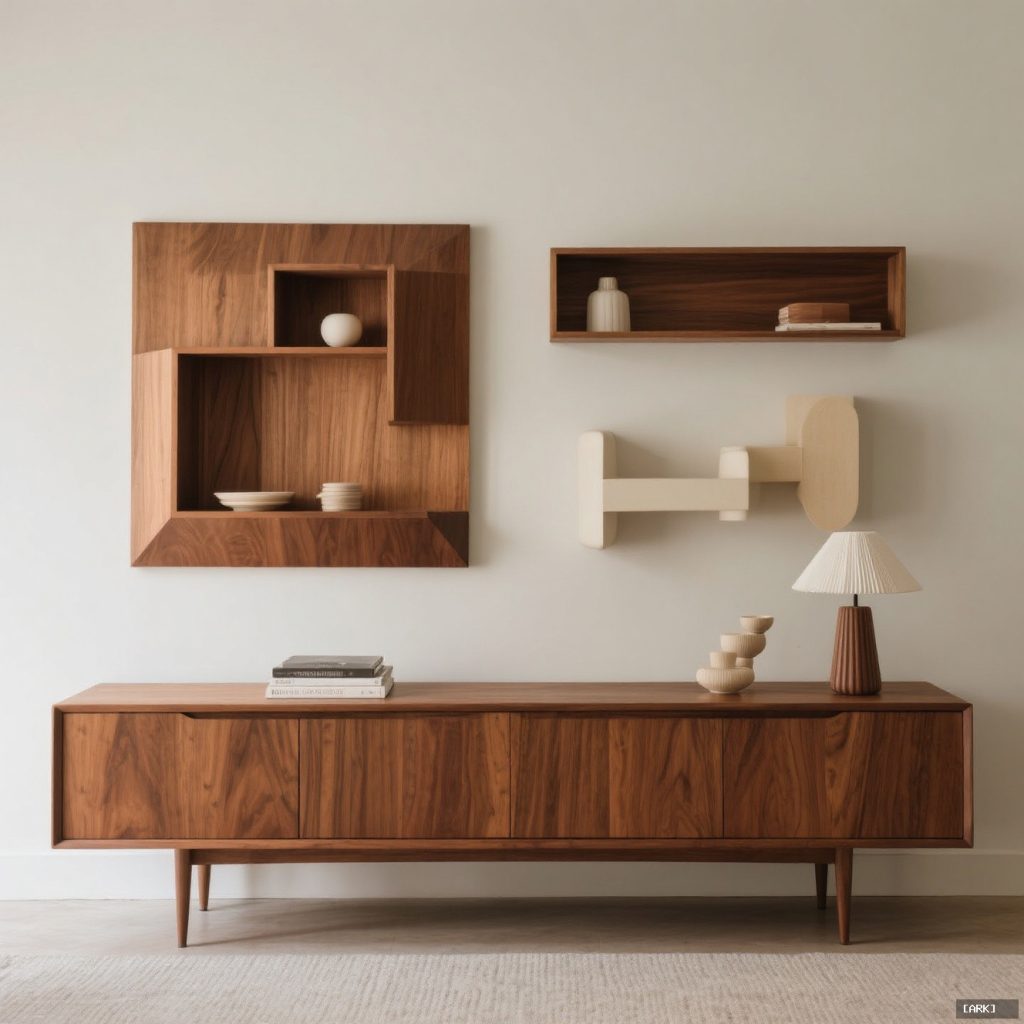
Custom furniture designs fail when they prioritize a striking silhouette over a coherent story. The true value of a bespoke piece lies in its ability to speak your language, transforming a beautiful object into a meaningful artifact within your space.
We’ve all seen it: that one-of-a-kind chair that looks incredible in a showroom but feels awkward and silent in a living room. It doesn’t connect. The problem isn’t craftsmanship or aesthetics. It’s a missing narrative thread. When you commission made-to-order furnishings, you’re not just buying a product. You’re authoring a chapter of your home’s story, or your brand’s identity. The most successful pieces do more than fill a physical need. They articulate a point of view, reinforce a feeling, and create a dialogue between the object and its environment.
The Grammar of Your Space: What is a Design Language?
Think of a design language as the consistent grammar for your environment. It’s the underlying set of principles that gives a collection of items a unified voice. This isn’t about adhering to a strict period style like Art Deco or Scandinavian Minimalism. It’s about identifying and repeating your own core visual and tactile vocabulary.
For custom furniture designs, this language manifests in the details you consistently choose. It’s the specific radius of a rounded corner, repeated on a tabletop, a drawer pull, and a shelf edge. It’s the decision to use mortise and tenon joinery as a visible, celebrated feature across every piece. It’s a commitment to matte finishes over glossy ones, or to organic, irregular textures over perfectly smooth planes.
This consistency is what makes a room feel curated, not collected. A sofa, a bookshelf, and a side table might all be unique, but if they share this common language—the same formal gestures, material palette, and philosophical approach—they converse effortlessly. They tell a single, cohesive story. Without it, you have a room full of statements shouting over each other.
Beyond the Catalog: The Narrative Power of Bespoke Furniture
Off-the-shelf furniture answers a question: “I need a place to sit.” Bespoke furniture asks one: “How do I want to live?” This shift from utility to narrative is where personalized cabinetry and made-to-order furnishings reveal their deepest power.
Consider a home office. You could buy a desk. Or, you could commission a desk that tells your story. Perhaps it incorporates a reclaimed wood from a family barn into its top, anchoring your work in personal history. Maybe its cable management is ingeniously hidden behind a leather panel, speaking to a love of clean lines and hidden complexity. The depth of the drawers is calibrated precisely for your favorite notebooks. The height is tailored to your posture. This desk isn’t just a surface; it’s a tool designed for your specific rhythm of life.
For a brand, this narrative function is even more critical. A retail store’s fixtures, a restaurant’s seating, a studio’s storage—these are silent ambassadors. A tech company might use modular, reconfigurable personalized cabinetry with integrated lighting and seamless surfaces, physically embodying innovation and adaptability. A craft brewery could opt for communal tables made from thick, locally-sourced timber with visible joinery, telling a story of community, authenticity, and skilled hands.
Every material, every joint, every finish is a word. Assembled with intention, they form a physical manifesto of who you are or what your brand stands for.
The Pinboard Pitfall: Where Narrative Goes to Die
The most common failure in bespoke furniture projects isn’t poor execution; it’s a muddled brief. It starts with inspiration—a noble beginning. But inspiration often arrives as a cascade of disparate images: a rustic farmhouse table here, a sleek metallic chair there, a colorful Bohemian textile over there. The client presents a Pinterest board or mood collage bursting with beautiful, yet fundamentally disconnected, ideas.
The designer, eager to please, tries to incorporate them all. The result is a Frankenstein’s monster of trends. A table with a live-edge slab top, hairpin legs, and a glossy epoxy river running through it. It’s visually busy. It’s a collection of moments without a through-line. The narrative drowns in a sea of “and also.”
True collaboration on custom furniture designs requires editing. It demands the courage to say, “This image is beautiful, but it doesn’t serve our core story.” It means committing to a handful of defining principles—warmth, integrity, serenity, boldness—and letting those principles guide every subsequent choice, rejecting anything that dilutes them. The narrative wins when you subtract, not just add.
Sustainability as Story: The Long Narrative
Today, sustainability is often treated as a checkbox: “Made with recycled materials.” But when woven into a design language, it becomes a profound and enduring part of the narrative. Sustainability isn’t just a material choice; it’s a philosophical one that shapes form and function.
A design language built for longevity tells a story of respect. This can mean specifying wood like white oak or black walnut not just for their beauty, but for their inherent durability and hundred-year life cycle. It involves designing for disassembly, using mechanical fasteners instead of permanent glues, so a chair can be repaired or its components recycled. It champions modularity—a shelving system that can be reconfigured as needs change, rather than discarded.
Choosing a local craftsman and locally-sourced materials shrinks the carbon footprint and embeds the piece in a regional story. The narrative expands from “my beautiful table” to “my table, made from ash grown in a managed forest fifty miles away, crafted by a woodworker in my city, built to be repaired and last for generations.” This story of stewardship and intentionality creates a deeper, more responsible connection than any fleeting aesthetic trend ever could.
Finding Your Voice: How to Define a Design Language
You don’t need to be a professional designer to start. Begin by looking past surface aesthetics. Don’t start with “mid-century modern.” Start with your core values and lived experience.
Ask yourself: What atmosphere do I want to cultivate? Is it serene sanctuary or vibrant energy? Do I value heirloom quality or flexible transformation? What are my non-negotiable principles in life? Perhaps “everything must feel grounded and solid,” or “nothing should be purely decorative; all elements must have a purpose,” or “light and air must flow freely through the space.”
These are your foundational constraints. From there, the tangible choices flow. The principle of “grounded” might lead you to solid wood, low-slung profiles, and textured, natural fabrics. The principle of “purpose” might lead to clean lines, integrated storage, and hidden hardware. “Light and air” could translate to open frames, glass, and elevated, leggy forms.
Your language is found at the intersection of your desires and your practical realities. It’s personal, specific, and infinitely more powerful than selecting a style from a menu.
The Power of the Pause: Negative Space as Narrative
One of the most subtle yet powerful tools in narrative-driven design is the use of negative space—the emptiness that shapes the solid. We focus on the wood, the metal, the fabric. But the masterful designer pays equal attention to the gaps between shelves, the shadow cast by a leg, the open volume beneath a console.
These are the pauses and breaths in your story. They provide rhythm, create emphasis, and allow the eye to rest. A piece of personalized cabinetry crammed with features, moldings, and details has no room to breathe. Its narrative is frantic, cluttered, and ultimately exhausting.
Consider a simple, floor-to-ceiling bookcase. The story isn’t just in the wood or the joinery. It’s in the precise spacing between shelves. Wider gaps might speak to a curated collection of art objects, suggesting value and individual focus. Narrower, consistent spacing speaks to the dense, scholarly accumulation of books. The negative space actively participates in telling the tale. In custom furniture designs, emptiness is not a void to be filled; it’s an active, shaping element of the composition.
Your Design Language Starter Kit
- Identify Three Core Values: Boil it down to three words. Tranquility, Integrity, Playfulness. Warmth, Innovation, Order. Let these be your guiding stars for every decision.
- Choose Two Material Families: Limit your palette for cohesion. For example: solid wood (oak, walnut) and natural fiber (linen, wool). Or powder-coated steel and glass. This creates tactile harmony.
- Define One Key Formal Gesture: Establish a signature detail. All edges are softly rounded. All supports are angled at 15 degrees. All doors are full-overlay and handle-less. This creates visual rhythm.
- Select a Primary and Secondary Finish: How do surfaces meet the hand and eye? A primary finish like a hardwax oil for wood, and a secondary like a matte powder coat for metal. Consistency here is key.
- Establish a Hardware Rule: Hardware is jewelry. Decide on a rule: all pulls are recessed, all hinges are invisible, or all metal is brushed brass. This ties details together.
Navigating the Narrative: Common Questions
Does a strong design language limit creativity?
It does the opposite. Absolute freedom can be paralyzing. Clear constraints—a defined palette, a set of formal rules—force inventive problem-solving. Creativity thrives when challenged to work within meaningful boundaries, leading to more coherent and deeply-considered results.
Can I mix different styles if I have a strong language?
Yes, but the mix must happen at the level of principle, not just aesthetics. A rustic, chunky dining table and a sleek, minimalist chair can coexist beautifully if they both exemplify a principle of “truth to materials.” The table shows off its solid planks and joinery; the chair reveals its elegant bentwood frame. Their shared honesty is the unifying language.
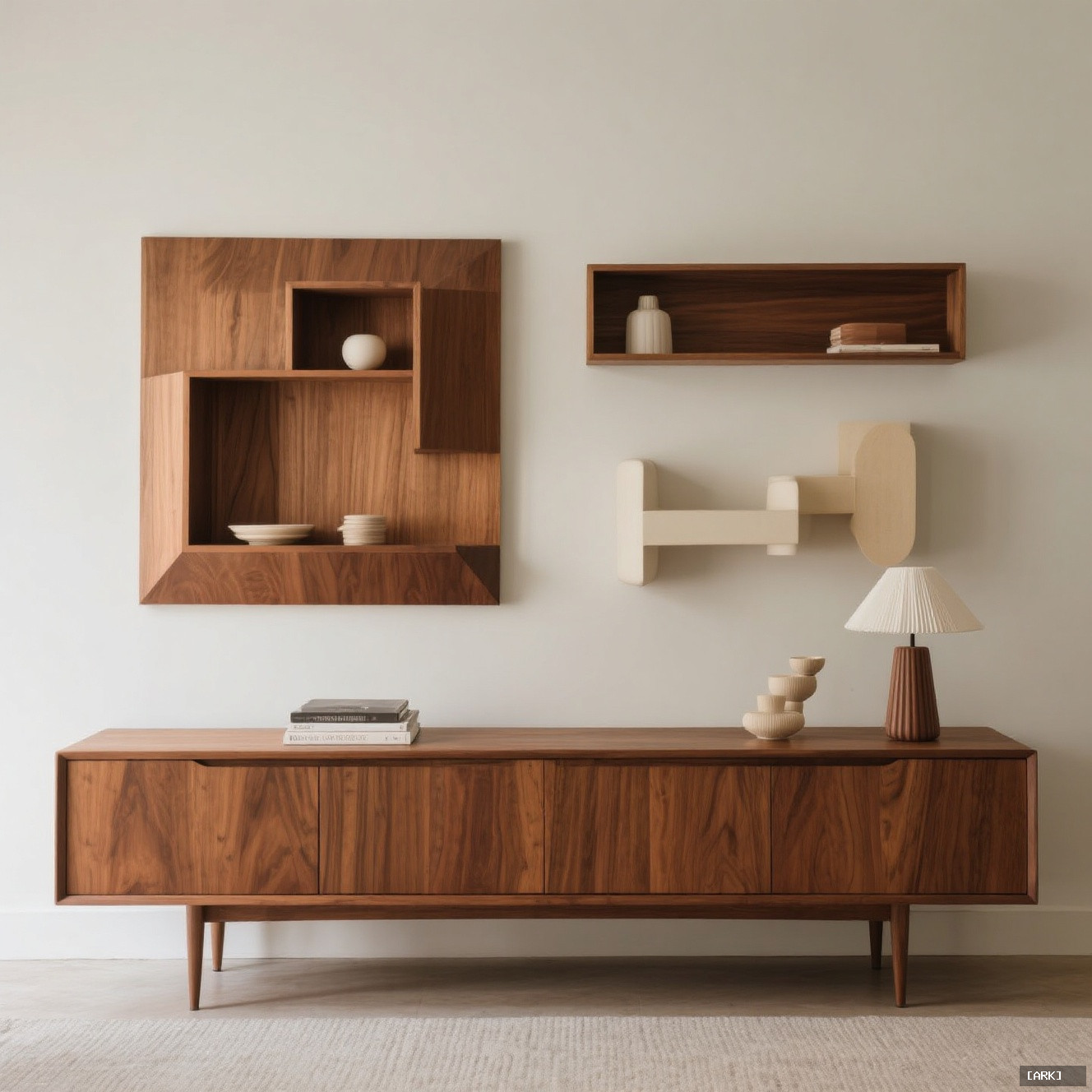
Is this approach only for whole-home projects?
Not at all. The philosophy scales. Apply it to commissioning a single media console. The choice of wood, the decision for open or closed storage, the integration of tech cables, the finish—each conscious choice contributes to a small, complete, and personal story. It’s a perfect place to start.
Sources & Further Reading
About Our Expertise
At Handmyth, our expertise in traditional Chinese craftsmanship informs our approach to custom furniture design. We draw from centuries-old techniques like mortise and tenon joineryu2014a hallmark of Ming dynasty furnitureu2014to create pieces that are not only beautiful but structurally sound for generations. This commitment to authentic, time-tested methods ensures that every bespoke creation tells a story of heritage and durability.
Our deep understanding of Chinese cultural values, such as harmony (u548c) and balance (u5e73u8861), guides the narrative aspect of our designs. We help clients translate personal or brand stories into physical forms using materials like sustainably sourced woods and traditional finishes, creating furniture that embodies both modern needs and timeless principles. This fusion of cultural insight and practical craftsmanship builds trust through transparent, meaningful collaboration.
✨ You Might Also Enjoy

You may also like
Herbal Bead Bracelet: Ancient Chinese Aromatherapy for Modern Wellness | HandMyth™
Original price was: ¥2,199.00.¥1,352.00Current price is: ¥1,352.00. Add to cartPremium Herbal Beads Bracelet: Traditional Medicine Meets Modern Jewelry | Shop HandMyth
Original price was: ¥874.00.¥608.00Current price is: ¥608.00. Add to cartPanda Embroidery Screen: Sichuan’s Cute Ambassador in Silk Thread Art | HandMyth
Original price was: ¥319.00.¥230.00Current price is: ¥230.00. Add to cartPanda Gift Set: Curated Chinese Treasures for Panda Lovers | HandMyth™ (Free Gift Wrap)
Original price was: ¥136.00.¥118.00Current price is: ¥118.00. Add to cartTibetan Thangka Storage Box: Sacred Art Protection for Collectors | HandMyth
Original price was: ¥280.00.¥219.00Current price is: ¥219.00. Add to cartPure Silk Handbag: Hangzhou’s Legendary Silk Weaving for Modern Elegance | HandMyth™
Original price was: ¥874.00.¥786.00Current price is: ¥786.00. Add to cartHand-Painted Silk Scarf: Wearable Art from China’s Silk Road | HandMyth (Artist Signed)
Original price was: ¥1,017.00.¥935.00Current price is: ¥935.00. Add to cartModern Qipao Dress: Timeless Chinese Elegance for Today’s Woman | HandMyth (Custom Fit)
Original price was: ¥2,459.00.¥2,240.00Current price is: ¥2,240.00. Add to cartEmbroidered Chinese Handbag: Suzhou Silk Embroidery Meets Modern Fashion | HandMyth™
Original price was: ¥680.00.¥646.00Current price is: ¥646.00. Add to cart