Courtyard rock garden design is a profound exercise in connection, not just decoration. It transforms a small, enclosed space into a world of texture, time, and quiet contemplation.
Look past the initial simplicity. You’re not just arranging minerals. You’re composing with the raw materials of the planet, inviting geology itself into your daily view. The result is a landscape that feels both ancient and intimately personal.
The Misunderstood Canvas: More Than a Bunch of Rocks
To call it a pile of stones misses the point entirely. A true rock garden is a study in relationships. It’s about the tense dialogue between a jagged shard of basalt and a softly rounded granite river stone. It’s about the expanse of raked gravel that holds them apart, making you feel the distance.
Each element carries a voice. The volcanic rock speaks of cataclysm and fire. The smooth pebble whispers of millennia in a flowing stream. Your role as the designer is to listen, then arrange these voices into a coherent, quiet sentence. The negative space—the gravel, the sand, the patch of moss—is the silence that gives the stones their meaning. This is where the mind settles.
A Biography in Stone: Your Local Geology Map
Every rock you place has a deep history. That slab of layered sandstone? It was once a vast desert dune. The dark, dense stone with visible crystals? It cooled slowly, miles beneath an ancient mountain range. Sourcing stones, especially locally, lets you assemble a tactile map of your region’s geological past.
Suddenly, your courtyard isn’t separate from the wider world. It contains fragments of distant ridges, riverbeds, and volcanic flows. A rock garden grounds your home, quite literally, in the long story of the Earth. It’s a daily, physical reminder that the ground beneath us is dynamic, storied, and alive with history.
Choosing Your Stones: A Question of Philosophy
Material choice is the first major decision, and it goes beyond color or shape. Consider the stone’s origin. Locally quarried stone often has a simpler environmental narrative than exotic specimens shipped across oceans. Its story is of your place.
Then, consider time. Selecting a stone is a statement about permanence. Soft limestone or sandstone will weather. It will develop a patina of lichen, its edges will soften, and it will slowly return to the earth. It embraces change. A hard quartzite or granite might sit unchanged for centuries, a steadfast anchor. Your choice reflects your own stance on transience and legacy within the garden’s microcosm.
The Quiet Thrive: Life in a Dry Landscape
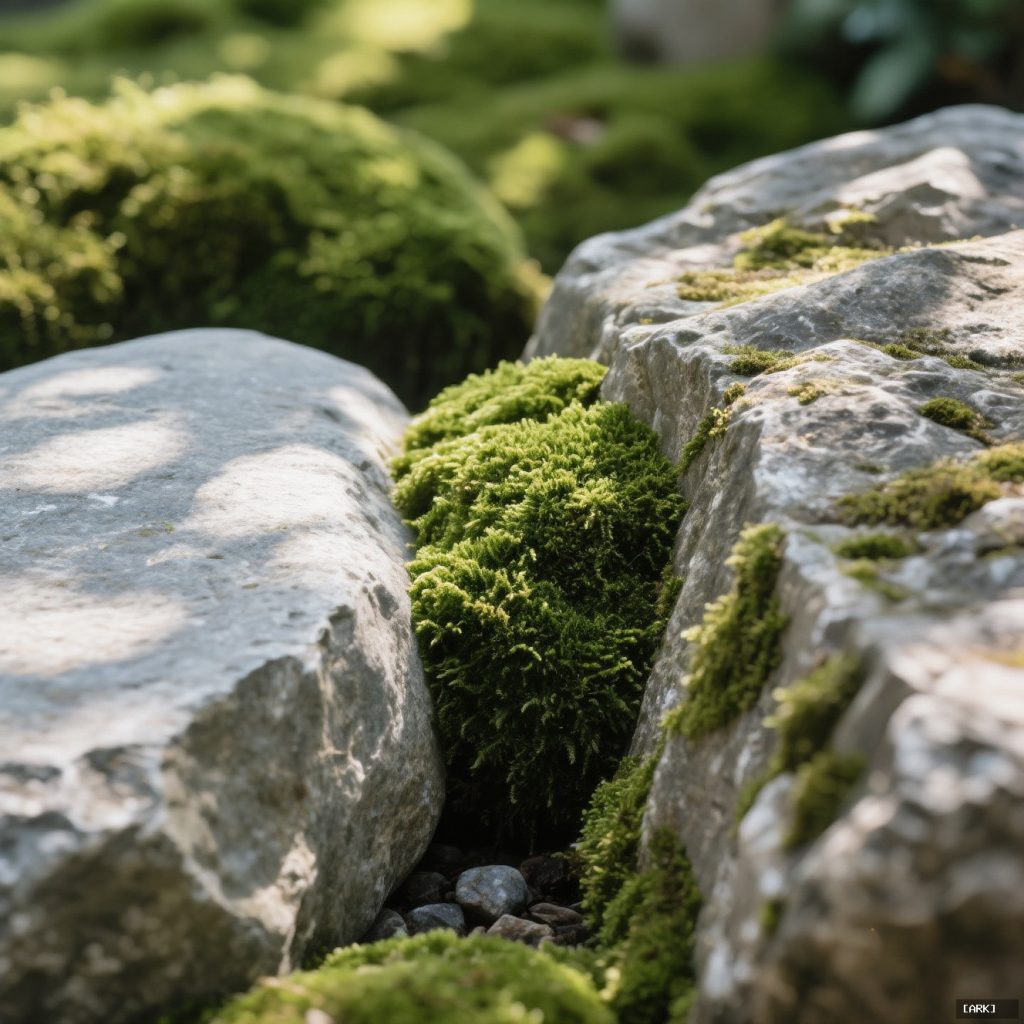
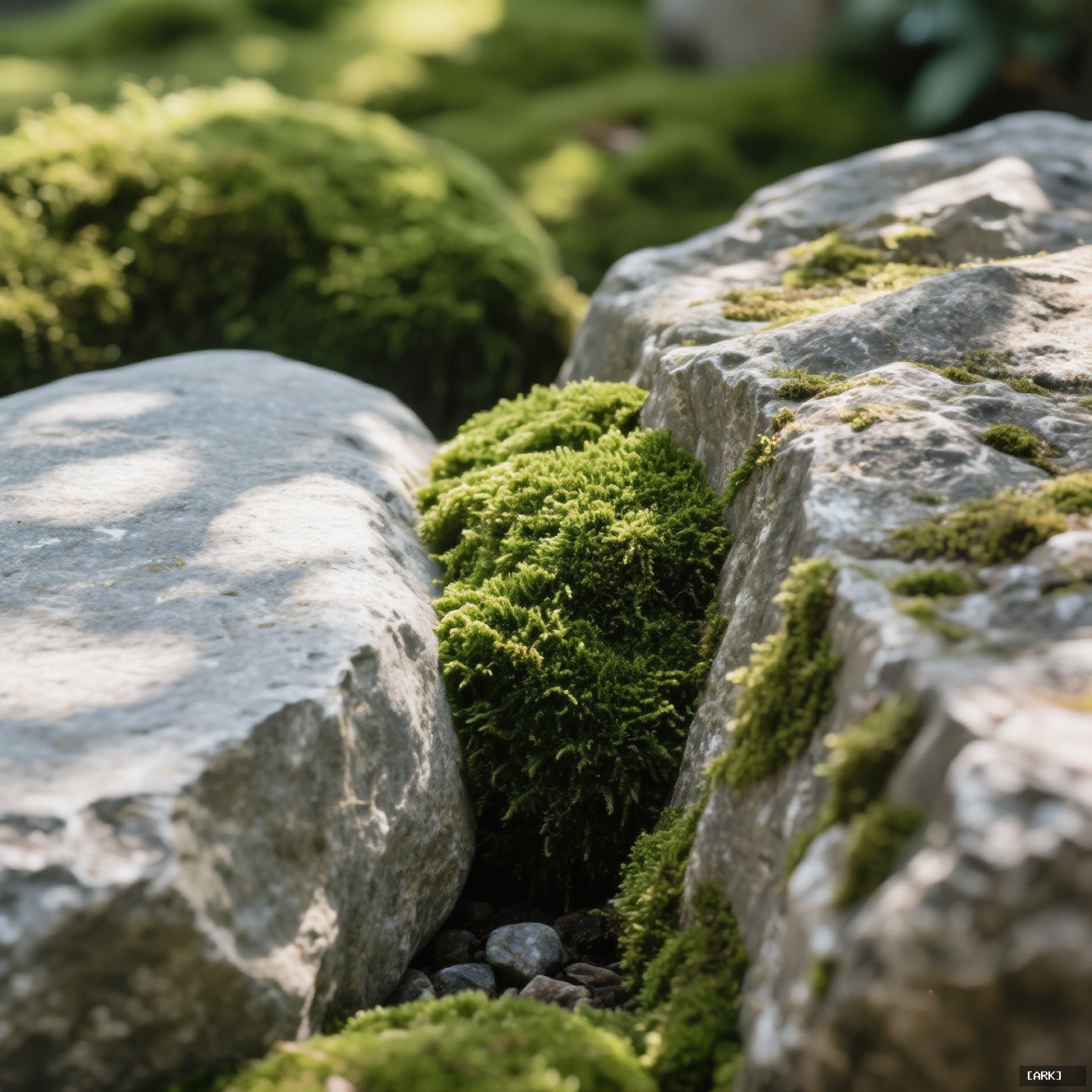
The assumption that a rock garden is barren is a common one. The opposite is true. It supports life, just on a different, often more subtle, scale. Mosses become your velvet carpets, colonizing north-facing stones with lush green. Lichens paint abstract patterns in ochre, gray, and green, transforming boulders into living canvases.
This ecosystem thrives in the micro-climates created by your arrangement. A deep crevice stays damp, sheltering insects. A broad, sun-warmed stone provides a basking spot for pollinators. The goal shifts from actively planting to intelligently fostering. You create the conditions—shade, moisture, shelter—and let these resilient, slow-growing communities establish themselves. It’s a lesson in stewardship that doesn’t require a hose.
The First Step: Start with a Single Conversation
The prospect of designing an entire space can paralyze. Don’t start there. Begin with a single, compelling stone. Find one that speaks to you. Place it in your courtyard, not necessarily in a final spot. Live with it for days.
Watch how the morning light glances off its ridges. See how rain darkens its color. Notice the shadow it casts at noon. Your design grows from this deep observation of one relationship—between the stone, the light, and the space. The second stone is chosen and placed in response to the first. Does it complement its texture? Contrast its color? Extend its line? The garden builds slowly, through a series of considered dialogues, not from a rigid master plan.
Ritual, Not Chore: The Nature of Maintenance
In a courtyard rock garden, maintenance is not a separate burden; it is the primary mode of engagement. Raking the gravel or sand in a karesansui (dry landscape) style garden is a moving meditation. The act is repetitive, focusing the mind. The patterns you create—straight lines, concentric circles, waves—are impermanent. The next rain or gust of wind will erase them, a gentle lesson in non-attachment and the beauty of the fleeting moment.
Weeding a moss bed becomes an exercise in hyper-focused attention, a quiet time to notice new growth or the intricate structure of the plants. This framework transforms upkeep from a weekend task into a core ritual. The garden is experienced through the care it requires.
From Observation to Installation: A Practical Guide
Once the philosophy feels clear, the hands-on work begins. A thoughtful process prevents frustration and leads to a more natural, settled result.
First, become a student of your space. Don’t just glance—observe your courtyard’s sun and wind patterns over a full 24-hour cycle. Where is the midday glare? Where does the shadow linger? This dictates everything from stone placement to plant choices.
When sourcing, visit a local landscape supply yard. Touch the stones. Feel their weight and texture. Look for local varieties; they’ll look like they belong. Always plan for drainage. A 4-6 inch base layer of crushed gravel or compacted road base beneath your feature stones and top dressing is essential to prevent water from pooling and freezing.
Place your largest “anchor” stone first. Conventional wisdom suggests placing it off-center, following principles of asymmetric balance found in many traditional designs. Use a garden hose or rope to play with the boundaries of your garden bed before any digging begins. The shapes should feel organic, never forced.
Choose your ground cover based on light and feel. Fine gravel or sand suits a contemplative, raked garden. Moss thrives in shade and moisture. Creeping thyme or sedum can add softness and fragrance in sunnier spots. Remember, empty space is a design element. Don’t feel compelled to fill every inch.
Finally, consider the night. Simple, low-voltage LED lights, carefully positioned to graze the surface of key stones, can reveal a completely different world of texture and shadow after dark.
Navigating Common Questions
Can I incorporate plants beyond moss? Yes, but with severe restraint. The stones are the protagonists. Plants should be supporting actors. Choose for drought tolerance, miniature scale, and architectural form. A single dwarf conifer, a cluster of blue fescue grass, or a spill of woolly thyme can provide punctuation without overwhelming the composition.
How do I manage weeds? A high-quality, permeable landscape fabric beneath your gravel layer is the standard defense. Yet, some designers make peace with the occasional “volunteer.” A lone, tenacious plant growing from a crack can be seen as the garden’s own spontaneous edit, a touch of wildness in a curated space. You decide.
Is it wrong to move things around later? It’s not wrong—it’s encouraged. A living garden is never truly finished. As a tree grows and changes the light, or as your own perception deepens, moving a stone is a sign of an ongoing relationship. The design evolves as you do.
Sources & Further Pathways
For those looking to deepen their understanding, these resources offer valuable perspectives, from philosophy to practical technique.
Japanese Garden Society. Principles of Karesansui (Dry Landscape). An insightful overview of the traditional aesthetic and philosophical foundations. https://www.jgs.org/publications
Stone Federation Great Britain. Natural Stone and Sustainability. A responsible guide to material sourcing, lifecycle, and environmental impact. https://www.stonefed.org.uk/sustainability
Royal Horticultural Society. Rock Gardens and Alpine Plants. Trusted, practical advice on construction, drainage, and plant selection for temperate climates. https://www.rhs.org.uk/plants/types/rock-gardens
Museum of Fine Arts, Boston. Zen Dry Landscapes. An art historical perspective, examining classic gardens as profound cultural and spiritual expressions. https://www.mfa.org/exhibitions/zen-dry-landscapes
About Our Expertise
Our exploration of courtyard rock garden design draws from centuries of Chinese landscape tradition, where scholars and artists developed sophisticated principles for harmonizing natural elements in confined spaces. These gardens weren't mere decorations but philosophical statements about humanity's relationship with nature, incorporating elements from Chinese literati painting, Taoist contemplation practices, and geomantic principles that continue to influence design today.
The practical techniques described here reflect authentic Chinese craftsmanship approaches, where master gardeners would spend years studying local geology before selecting stones, understanding that each rock carries not just physical weight but cultural significance. From the scholar's rocks (gongshi) prized in Chinese tradition to the careful placement principles derived from feng shui, every aspect of courtyard garden design connects to deeper cultural practices that value harmony, balance, and contemplative engagement with the natural world.
✨ You Might Also Enjoy



You may also like
Herbal Bead Bracelet: Ancient Chinese Aromatherapy for Modern Wellness | HandMyth™
Original price was: ¥2,199.00.¥1,352.00Current price is: ¥1,352.00. Add to cartPremium Herbal Beads Bracelet: Traditional Medicine Meets Modern Jewelry | Shop HandMyth
Original price was: ¥874.00.¥608.00Current price is: ¥608.00. Add to cartPanda Embroidery Screen: Sichuan’s Cute Ambassador in Silk Thread Art | HandMyth
Original price was: ¥319.00.¥230.00Current price is: ¥230.00. Add to cartPanda Gift Set: Curated Chinese Treasures for Panda Lovers | HandMyth™ (Free Gift Wrap)
Original price was: ¥136.00.¥118.00Current price is: ¥118.00. Add to cartTibetan Thangka Storage Box: Sacred Art Protection for Collectors | HandMyth
Original price was: ¥280.00.¥219.00Current price is: ¥219.00. Add to cartPure Silk Handbag: Hangzhou’s Legendary Silk Weaving for Modern Elegance | HandMyth™
Original price was: ¥874.00.¥786.00Current price is: ¥786.00. Add to cartHand-Painted Silk Scarf: Wearable Art from China’s Silk Road | HandMyth (Artist Signed)
Original price was: ¥1,017.00.¥935.00Current price is: ¥935.00. Add to cartModern Qipao Dress: Timeless Chinese Elegance for Today’s Woman | HandMyth (Custom Fit)
Original price was: ¥2,459.00.¥2,240.00Current price is: ¥2,240.00. Add to cartEmbroidered Chinese Handbag: Suzhou Silk Embroidery Meets Modern Fashion | HandMyth™
Original price was: ¥680.00.¥646.00Current price is: ¥646.00. Add to cart