

DIY craft kits are a gateway to creative joy, but their true legacy is written in the materials they leave behind. That box of potential holds a hidden story about what we consume and what we discard.
We’ve all felt the pull. A beautifully photographed kit arrives, promising a few hours of focused, hands-on creation. The satisfaction is real. You follow the steps, you make something with your own hands. But then what? Often, you’re left with a half-skein of specialty yarn you’ll never use again, plastic tools that snap on the second project, and a nagging feeling that the beautiful, finished object came with a hidden cost.
This isn’t about guilt. It’s about a missed opportunity. The very act of making by hand connects us to the physical world in a way scrolling never will. What if that connection didn’t end when the project did? What if our DIY craft kits taught us not just a technique, but a new way of seeing the stuff around us?
Looking at craft supplies through the lens of their entire lifecycle changes everything. It transforms a one-off hobby kit into a starting point—a single node in a vast, ongoing creative network. The goal isn’t perfection, but a better, more thoughtful relationship with the materials that bring our ideas to life.
Unpacking the True Cost of a Kit
Let’s be honest. Most kits are designed for a single brilliant outcome, photographed for social media. The business model depends on you coming back for the next hit of creative novelty. This linear path—box to project to (sometimes) display—ignores the aftermath.
Consider the process of a typical kit. The raw materials are extracted, processed, dyed, and shaped. They’re combined with other components from different supply chains, wrapped in plastic film, placed in a box (often too large), and shipped across continents. We use maybe 80% of what’s inside. The rest—the scraps, the extra beads, the cheap plastic needle—drifts into a drawer, a landfill, or incineration.
The environmental impact of arts and crafts is a rarely discussed facet of consumer culture. From the solvents in paints to the microplastics in synthetic fibers and glitter, our hobbies leave a trace. A sustainable DIY craft kit confronts this reality head-on. It’s not just about the recycled cardboard exterior. True sustainability is woven into the material selection, the design of the project itself, and explicit instructions for what happens after the “final” step.
A kit built around natural, undyed wool and a wooden loom tells a different story than one full of plastic-backed felt and polyester stuffing. One belongs to a biological cycle, eventually returning to the earth. The other belongs to a technical cycle, persisting for centuries in a form that nature doesn’t recognize. The most thoughtful kits consider this entire arc, suggesting how to compost plant-dyed fabric scraps or repurpose the included wooden tools for your next endeavor.
The Materials Tell the Story: How to Assess a Kit’s Lifecycle
So how do you spot the difference on a crowded shelf or a busy website? You become a material detective. Start by tracing the story backwards and forwards.
Look for transparency. Where did the clay, the yarn, the beads originate? Brands committed to a circular mindset will often share this. Is the cotton organic? Is the wood from a sustainably managed forest? Are the metal components recycled? This isn’t just virtue signaling; it’s a map of the kit’s past.
More crucially, ask: where do these materials go when I’m done? This is the silent legacy of most handmade projects. A resin-pouring kit, while popular, generates toxic waste that requires special disposal. A kit for making seed paper from recycled scraps, however, has a clean, closed-loop narrative. The goal is to start seeing craft supplies not as endpoints (“this bead becomes a bracelet”), but as characters in a much longer tale (“this glass bead, made from recycled bottles, will adorn many pieces over my lifetime, and one day be passed on or recast”).
Be deeply wary of certain red-flag materials. Single-use plastics are the obvious villains—flimsy tools, plastic glitter, googly eyes. But also consider mixed materials that can’t be separated for recycling, like plastic-coated papers or metal-and-plastic hybrids. Toxic finishes, solvent-based adhesives, and virgin polyester stuffing have heavy upstream footprints. Prioritize kits that use mono-materials (all one type of easily recyclable or compostable material) or classic, biodegradable components: pure wool, untreated wood, natural clay, linen, paper.
Beyond the Box: Fostering a Circular Creative Mindset
The most powerful thing a DIY craft kit can offer isn’t a finished macramé plant hanger. It’s a new perspective. Can a box of stuff actually teach a circular economy principle? Absolutely, if it’s designed with that intention.
Kits that teach mending, visible or otherwise, are a masterclass in circularity. They reframe a “flaw” as a design opportunity and a torn garment as the beginning of a new story. Similarly, kits based on upcycling—turning an old t-shirt into a rug, or a jar into a terrarium—embed the principle of working with what already exists. They shift creativity from “what new thing can I buy to make?” to “what potential is hidden in what I already have?”
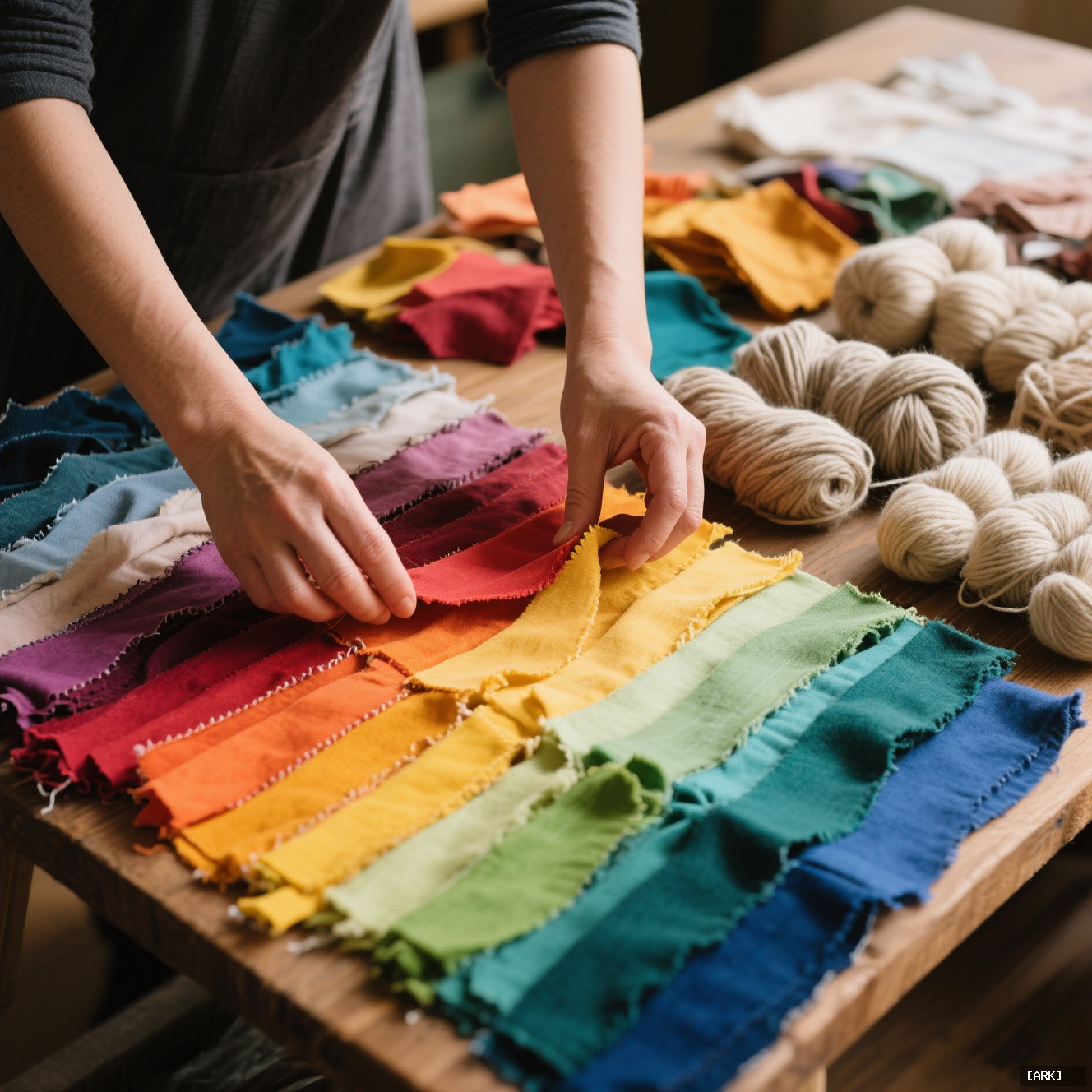
This mindset is the ultimate takeaway. It’s a skill that outlasts the last strand of thread. A kit that teaches you to naturally dye with kitchen scraps (onion skins, avocado pits) gives you a technique you can use for years, long after the included powder dyes are gone. It connects you to seasonal, local color and reduces reliance on chemical dyes. The project becomes a lesson in seeing abundance in the overlooked.
The Scrap Library: Confronting the Leftover Bits
Here lies the heart of the matter. What happens to the tiny leftover buttons, the 12-inch remnant of lovely ribbon, the handful of beads that didn’t fit the pattern? For most kits, this is an unaddressed afterthought. In a sustainable model, it’s the beginning of the next chapter.
A forward-thinking kit addresses this upfront. It might provide a simple muslin bag labeled “Future Projects” for storing scraps. The instructions could include a bonus “mini-idea” for using the extras—turn fabric scraps into a patchwork bookmark, or fuse leftover wax into a new, tiny candle. It might even connect you to local creative reuse centers, where you can donate quality leftovers and find inspiration in other people’s cast-offs.
This builds a system, not just a single outcome. It acknowledges that these tiny remnants are not waste, but the seeds of your next creative spark. It encourages you to start your own “scrap library,” organizing leftovers by material and color. Suddenly, a rainy afternoon project doesn’t require a new purchase; it requires a rummage through your own curated archive of potential. This habit, fostered by a good kit, is where true, lasting sustainability lives.
Your Practical Checklist for Choosing a Kit
- Packaging: Is it minimal, plastic-free, and either reusable or fully compostable? Does it use paper tape instead of plastic?
- Material Origin: Are components natural, recycled, salvaged, or transparently and ethically sourced? Is there a story behind them?
- End-of-Life Plan: Does the kit suggest ways to use scraps, compost materials, or responsibly dispose of anything? Does it normalize this conversation?
- Tool Quality: Are provided tools (brushes, needles, looms) quality items you’ll cherish and reuse, or flimsy single-use throwaways?
- Knowledge Transfer: Does the instruction teach a sustainable technique or principle you can apply beyond this specific kit? Are you learning a system or just following steps?
Navigating Common Questions & Concerns
Isn’t any handmade item better than buying something mass-produced?
Often, yes—you avoid shipping a finished good, and you invest your time and care. But the material footprint still matters. A handmade figurine from virgin polymer clay and plastic paints has an impact. The sweet spot is a project that uses mindful materials and replaces a purchase you would have made. The deeper win is when the act of making changes your consumption habits for good.
Are sustainable DIY craft kits more expensive?
They can carry a higher upfront cost. This usually reflects paying for ethical labor, regenerative agriculture, and small-batch production. Try viewing it as paying for the true, unsubsidized cost of materials and supporting supply chains that value ecological and social health. When you factor in the quality of tools you’ll keep for years and the mindset shift that saves you money later, the cost-per-hour of deeply engaged creativity often balances out.
Can I just make my own sustainable kit?
This is the ultimate goal. Curating your own kit from a creative reuse center, local thrift store finds, and a few key, quality tools is the most circular practice of all. You control the entire lifecycle. You choose the vintage fabric, the second-hand knitting needles, the natural dyes. You become the designer of both the project and its material story. A purchased kit should ideally be a stepping stone to this kind of confident, self-directed creating.
The best DIY craft kits don’t just occupy an afternoon. They change how you see the world. They turn a drawer of leftovers into a treasure chest and a simple project into a lesson in stewardship. They remind us that creativity isn’t about consuming new things, but about forging new relationships with the material world—one thoughtful, handmade project at a time.
Sources & Further Pathways
Ellen MacArthur Foundation: What is a Circular Economy?
Creative Reuse Centers Directory
Sierra Club: The Environmental Impact of Arts and Crafts
✨ You Might Also Enjoy

You may also like
Herbal Bead Bracelet: Ancient Chinese Aromatherapy for Modern Wellness | HandMyth™
Original price was: ¥2,198.00.¥1,352.00Current price is: ¥1,352.00. Add to cartPremium Herbal Beads Bracelet: Traditional Medicine Meets Modern Jewelry | Shop HandMyth
Original price was: ¥874.00.¥608.00Current price is: ¥608.00. Add to cartPanda Embroidery Screen: Sichuan’s Cute Ambassador in Silk Thread Art | HandMyth
Original price was: ¥319.00.¥230.00Current price is: ¥230.00. Add to cartPanda Gift Set: Curated Chinese Treasures for Panda Lovers | HandMyth™ (Free Gift Wrap)
Original price was: ¥136.00.¥118.00Current price is: ¥118.00. Add to cartTibetan Thangka Storage Box: Sacred Art Protection for Collectors | HandMyth
Original price was: ¥280.00.¥219.00Current price is: ¥219.00. Add to cartPure Silk Handbag: Hangzhou’s Legendary Silk Weaving for Modern Elegance | HandMyth™
Original price was: ¥874.00.¥785.00Current price is: ¥785.00. Add to cartHand-Painted Silk Scarf: Wearable Art from China’s Silk Road | HandMyth (Artist Signed)
Original price was: ¥1,017.00.¥935.00Current price is: ¥935.00. Add to cartModern Qipao Dress: Timeless Chinese Elegance for Today’s Woman | HandMyth (Custom Fit)
Original price was: ¥2,458.00.¥2,239.00Current price is: ¥2,239.00. Add to cartEmbroidered Chinese Handbag: Suzhou Silk Embroidery Meets Modern Fashion | HandMyth™
Original price was: ¥680.00.¥645.00Current price is: ¥645.00. Add to cart























