You bought a beautiful, decorative trinket case. It sits on your dresser, holding your favorite pieces. But something feels off. The gap between a beginner’s purchase and an expert’s choice in artistic jewelry boxes is wider than you think. It has little to do with looks and everything to do with a silent, daily dialogue between you, your treasures, and their keeper.

Beyond the Dresser: The Unseen Role of a Jewelry Box
What is the unseen role of an artistic jewelry box that experts understand?
Experts view an artistic jewelry box not merely as storage, but as a functional archive that acts as a curator, conservator, and stage manager for a personal collection. Its primary role is to organize, protect, and elevate the ritual of wearing jewelry, transforming it from a frustrating search into an organized experience. This approach emphasizes preservation and presentation over simple concealment.
We call it a box. We think of it as storage. This is where the misunderstanding begins. An expert doesn’t see a container; they see a curator, a conservator, and a stage manager for a personal collection. A true artistic jewelry box is a functional archive. Its primary job isn’t to hide your jewelry, but to organize, protect, and elevate the entire ritual of wearing it.
Consider your morning routine. You’re half-awake, searching for a specific pair of earrings. In a poorly designed box, this is a frustrating excavation—fingers fumbling through a tangled nest of chains, a earring back lost to a dark corner. In a thoughtfully crafted one, it’s a calm, deliberate selection. The difference is profound. The right box doesn’t just hold things; it honors them. It turns a daily task into a small moment of appreciation. The wrong one, no matter how pretty, becomes a source of minor stress and, as we’ll see, potential damage.
The Hidden Hazards: When Beauty is Only Skin Deep
What hidden hazards in artistic jewelry boxes can damage jewelry over time?
Artistic jewelry boxes with non-pH-neutral or acidic linings can accelerate tarnishing of silver, while particle board or certain glues in compartments may off-gas chemicals that corrode metals and dull gemstones. A 2019 Goldsmiths' Centre report identified improper storage as a key factor in repairable jewelry damage, highlighting that visually appealing exteriors often conceal interiors that actively harm pieces through chemical interactions and poor material choices.
This is the uncomfortable truth many learn too late: a stunning exterior can conceal an interior that’s actively harming your pieces. That plush, velvety lining you run your fingers over? If it’s not pH-neutral or acid-free, it can slowly accelerate the tarnishing of silver. The backing of that ornate compartment, often made from particle board or certain glues, can off-gas chemicals that corrode delicate metals and dull gemstones.
In a 2019 report, The Goldsmiths’ Centre in London analyzed common causes of repairable jewelry damage. Their finding was stark: improper storage was a contributing factor in nearly 30% of cases. “Clients would bring in pieces with unexplained surface corrosion or fabric fibers fused into settings,” one of their master jewelers noted. “Nine times out of ten, we’d trace it back to the box or pouch it was kept in.”
This is the first, non-negotiable checkpoint for moving from beginner to informed buyer. An ornate keepsake container must be inert on the inside. The materials that touch your jewelry are more critical than the carvings on the lid. Look for solid hardwoods (like maple, oak, or walnut), acid-free suede or napped cotton linings, and non-abrasive, natural fabrics. If a seller can’t or won’t specify the interior materials, consider it a red flag.
Building a Protective System: More Than Just Compartments
Okay, so the materials are safe. What about the layout? Throwing everything into a single padded cavity is a recipe for disaster. The gentle weight of a pendant can press against a soft pearl. A diamond’s sharp facet can microscratch the gold on the ring next to it. Compartmentalization isn’t about being fussy; it’s about being a good guardian.
Think of it as creating a neighborhood for your jewelry where everyone gets along. A ring roll or individual slots keeps bands separate and upright. Deep, fabric-lined wells with dividers are perfect for bracelets and bangles, preventing them from knocking together. Necklace hooks that are widely spaced and coated prevent chains from slipping off and tangling into an impossible knot—a universal frustration that a well-designed box completely eliminates.
For organic gems like pearls, opals, and emeralds, humidity control is another expert-level consideration. These stones contain tiny amounts of water and can crack or craze in very dry environments. Some high-end handcrafted storage boxes now include discreet, integrated compartments for silica gel packets, allowing you to regulate the micro-climate without visual clutter.
The Price Paradox: When Expensive Doesn’t Mean Better
What is the price paradox that experts recognize about artistic jewelry boxes?
The price paradox is that a higher price does not guarantee a better jewelry box. Experts note that expensive boxes may feature ornate exteriors with marquetry or hand-painted scenes but conceal cheap, scratchy polyester interiors and flimsy cardboard dividers. You often pay for the facade rather than functional quality. For instance, a $600 box might be unsuitable for costume jewelry, while a well-designed $200 box could safely store heirloom pieces. The key insight is that interior design and construction are the true investment, not just external artistry.
Here’s a liberating realization: a higher price tag does not automatically equal a better box. The market is full of wildly ornate keepsake containers with breathtaking marquetry or hand-painted scenes that, upon opening, reveal a cheap, scratchy polyester interior and flimsy cardboard dividers. You’re paying for the facade, not the function.
“I’ve seen $600 boxes I wouldn’t trust with costume jewelry, and $200 boxes I’d use for heirloom pieces,” says Elena Rossi, a jewelry collector and blogger. “The exterior artistry is a bonus, but the interior design is the investment.”
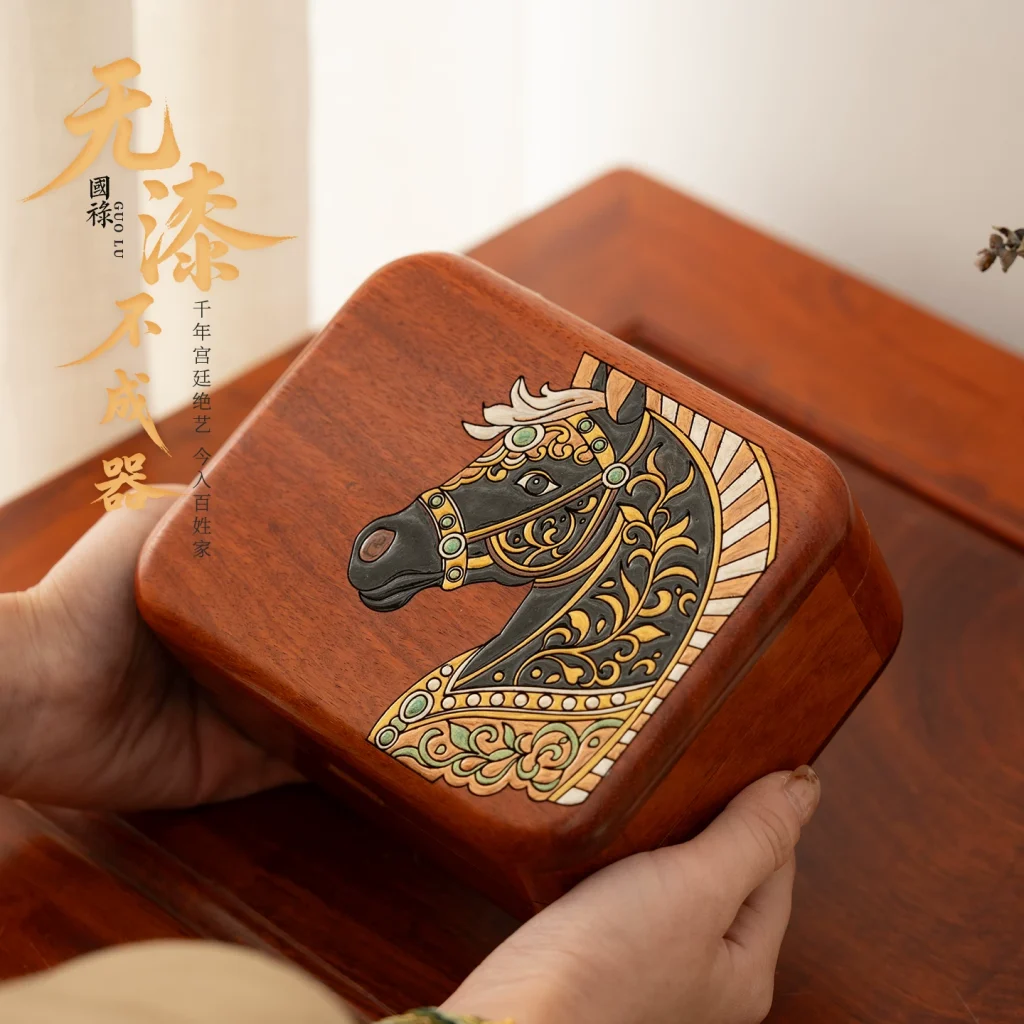
Sometimes, intricate exterior carvings or heavy metalwork can work against the box’s purpose. Deep crevices collect dust and are difficult to clean. Overly heavy lids or fussy clasps can make the simple act of opening it a two-handed chore. The goal is seamless integration into your life. A simpler, beautifully finished box from a known artisan who prioritizes intelligent, protective interiors will always serve you better than a complicated, high-maintenance showpiece.
The true value lies in the marriage of thoughtful design and quality execution. A $250 box with a perfectly tensioned, suede-lined ring bar, smooth-gliding drawers, and secure, felt-covered dividers is an intelligent purchase. It’s a tool that works for you, silently and reliably, for decades.
Auditioning the Empty Stage: The Expert’s Secret Ritual
What is the expert's secret ritual for auditioning an artistic jewelry box before filling it?
Experts audition an empty jewelry box by placing it where it will be used for a week. They repeatedly open and close it to test the hinge action for smoothness and substance, feel the latch, and observe how the interior looks under different lighting conditions, such as morning light and evening lamp glow. They check if the lid angle creates shadows over compartments and ensure everything inside is easily visible. This process ensures the box is functional and aesthetically pleasing in its intended environment before use.
This is perhaps the most telling difference between a casual purchase and a conscious choice. An expert doesn’t just buy a box and immediately fill it. They audition it.
They place the empty box exactly where it will live on the dresser or vanity. For a week, they open and close it. They test the hinge action—is it smooth and substantial, or does it feel weak? They feel the latch. They observe how the interior looks in the morning light versus the soft evening glow from a lamp. Does the angle of the lid create a shadow over the compartments? Is it easy to see everything inside?
This week-long test reveals everything. A box that’s awkward to open, that doesn’t sit stably, or that hides your jewelry in shadow will subtly discourage you from using it. The ritual is everything. The act of selecting jewelry should feel inviting, not like solving a puzzle. If the empty box brings you a small sense of calm and order just to interact with, you’ve found a winner.
Curating a Collection, Not Just Filling a Box
How does the expert approach to curating a collection differ from the beginner's approach when selecting an artistic jewelry box?
Experts view an artistic jewelry box as part of a systemic, forward-looking storage hierarchy for a growing collection, not just a container to fill. They use the central box as an archive for special occasion pieces, heirlooms, and seasonal items. For daily wear, they employ separate modular solutions like leather trays or necklace stands. This approach prioritizes organization, protection, and easy access as the collection evolves, whereas beginners often focus only on immediate storage needs in a single decorative case.
Beginner thinking focuses on the immediate need: “I need a place to put my jewelry.” Expert thinking is systemic and forward-looking: “I am building a collection, and I need a system to grow with it.”
This shift changes everything. Instead of one monolithic decorative trinket case, an expert often employs a hierarchy of storage. The central, artistic jewelry box becomes the archive for special occasion pieces, heirlooms, and seasonal items. Then, separate, modular trays or valets—perhaps a simple leather tray for daily rings, a dedicated stand for a few necklaces in constant rotation—handle the everyday wear.
This system acknowledges reality. You don’t need ceremonial access to your favorite stud earrings every day. By creating a streamlined “daily wear” station, you protect the main box from constant opening and closing, and you make your routine effortless. The main box remains a destination for slower, more meaningful selection. According to a 2021 consumer survey by the home organization platform Hüftgold, people who implemented a tiered system for valuable items reported a 40% higher satisfaction with their possessions, simply because they interacted with them more intentionally.
Modularity is key. Does the artisan offer add-on trays or stackable units? Can the interior configuration be adjusted? A box that allows for adaptation is a box that will never become obsolete.
The Final Measure: When a Container Holds Meaning
What is the final measure that indicates an artistic jewelry box has become a meaningful container?
The final measure is personal but unmistakable: you open the box just to look, rearrange, or appreciate it, and the tangle of necklaces becomes a memory. You wear forgotten pieces because they are visible, and the box itself brings order and beauty to your space, enhancing your relationship with your jewelry. This transition from a simple decorative case to a cherished handcrafted box reflects a process toward intentionality, where the container holds meaning beyond mere storage.
So, how do you know you’ve crossed the threshold? The metrics are personal, but unmistakable.
You find yourself opening the box just to look, to rearrange, to appreciate. The tangle of necklaces is a memory. You wear pieces you’d forgotten because now you can see them. The box itself, sitting quietly on your dresser, brings a sense of order and beauty to the space. It’s no longer just holding your jewelry; it’s enhancing your relationship with it.
In the end, the process from a simple decorative trinket case to a cherished handcrafted storage box is a process toward intentionality. It’s about choosing an object that doesn’t just solve a problem, but enriches a daily practice. It becomes the quiet, beautiful guardian of your stories, a small, personal museum where every piece is preserved, displayed, and ready to be part of your next chapter.
About Our Expertise
Drawing from decades of expertise in Chinese traditional arts, our insights into artistic jewelry boxes are rooted in a deep understanding of craftsmanship and material science. We collaborate with master artisans who specialize in techniques like woodworking, lacquerware, and textile lining, ensuring that every recommendation prioritizes the protection and presentation of your jewelry, reflecting centuries of heritage in functional design.
This guide is built on authentic cultural practices, where jewelry boxes are not merely storage but cherished heirlooms in Chinese tradition. We emphasize materials like solid hardwoods and acid-free linings, trusted by collectors worldwide, to provide reliable advice that safeguards your valuables while honoring the artistic integrity of these handcrafted pieces.
✨ You Might Also Enjoy


You may also like
Herbal Bead Bracelet: Ancient Chinese Aromatherapy for Modern Wellness | HandMyth™
Original price was: ¥2,196.00.¥1,350.00Current price is: ¥1,350.00. Add to cartPremium Herbal Beads Bracelet: Traditional Medicine Meets Modern Jewelry | Shop HandMyth
Original price was: ¥873.00.¥607.00Current price is: ¥607.00. Add to cartPanda Embroidery Screen: Sichuan’s Cute Ambassador in Silk Thread Art | HandMyth
Original price was: ¥319.00.¥230.00Current price is: ¥230.00. Add to cartPanda Gift Set: Curated Chinese Treasures for Panda Lovers | HandMyth™ (Free Gift Wrap)
Original price was: ¥136.00.¥118.00Current price is: ¥118.00. Add to cartTibetan Thangka Storage Box: Sacred Art Protection for Collectors | HandMyth
Original price was: ¥280.00.¥219.00Current price is: ¥219.00. Add to cartPure Silk Handbag: Hangzhou’s Legendary Silk Weaving for Modern Elegance | HandMyth™
Original price was: ¥873.00.¥785.00Current price is: ¥785.00. Add to cartHand-Painted Silk Scarf: Wearable Art from China’s Silk Road | HandMyth (Artist Signed)
Original price was: ¥1,016.00.¥934.00Current price is: ¥934.00. Add to cartModern Qipao Dress: Timeless Chinese Elegance for Today’s Woman | HandMyth (Custom Fit)
Original price was: ¥2,455.00.¥2,237.00Current price is: ¥2,237.00. Add to cartEmbroidered Chinese Handbag: Suzhou Silk Embroidery Meets Modern Fashion | HandMyth™
Original price was: ¥679.00.¥645.00Current price is: ¥645.00. Add to cart