
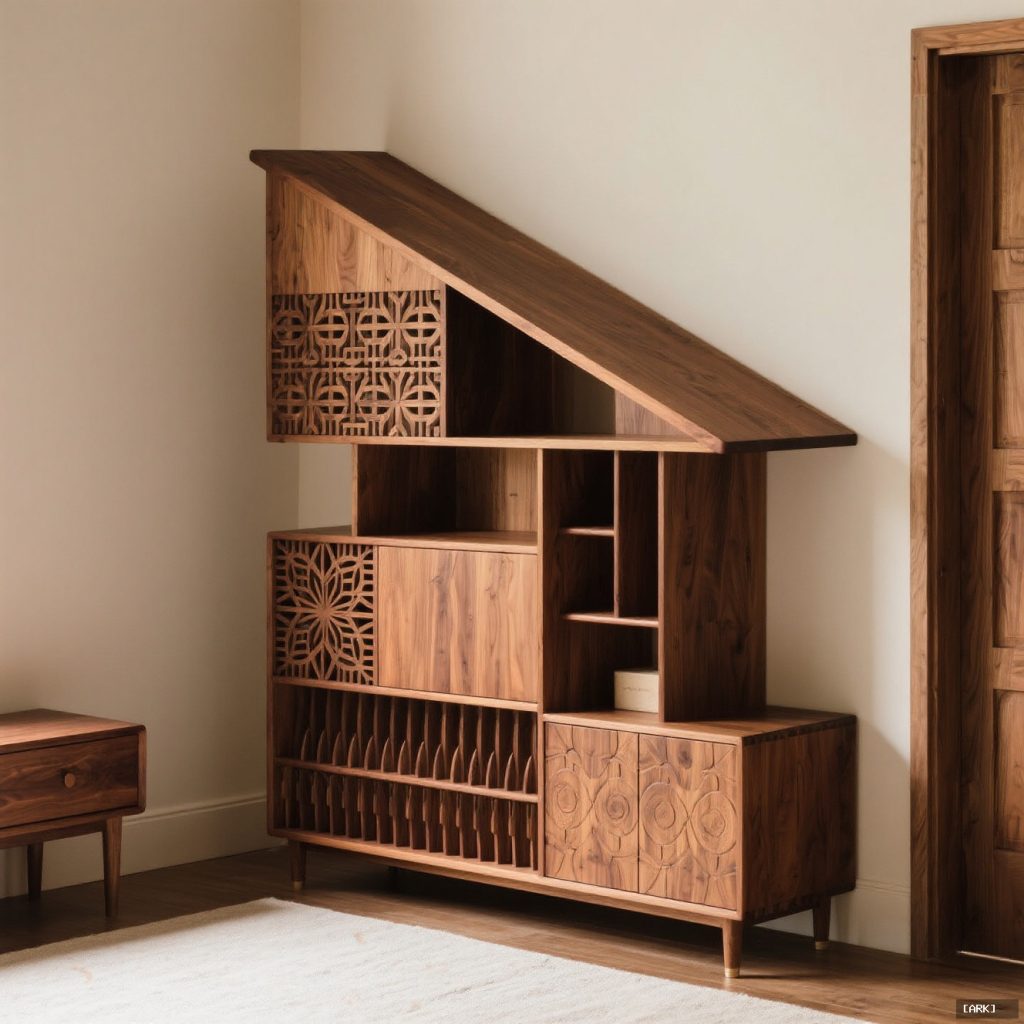
Decorative wooden furniture does more than fill a room. It shapes the rhythm of our days. These ornamental wood furnishings become partners in our quietest, most personal rituals.
Think about the last time you truly relaxed at home. Chances are, a piece of wood was involved. The arm of a favorite chair, worn smooth by countless evenings. The specific drawer that holds your morning tea, its pull fitting perfectly in your hand. This is the unspoken power of decorative wooden furniture: it choreographs the small, sustaining acts of an ordinary life. It’s not passive decor. It’s an active participant.
We often talk about furniture in terms of style or function. But there’s a third, more profound category: ritual. This is where objects transcend their material purpose and become anchors for our well-being. A flat-pack table holds your dinner. A solid oak table, with its warm patina and story in the grain, invites you to gather, to talk, to stay a little longer. That distinction is everything.
The Architecture of Habit
How can a cabinet or a chair support daily wellness? It starts with automation. Our brains are decision-making machines, and they get tired. Every minor choice—where should I write today? where did I put my journal?—drains a tiny bit of mental energy.
Decorative wooden furniture cuts through that noise. It creates physical, tangible anchors for mental routines. A dedicated writing desk isn’t just a surface; it’s a spatial cue. Your body knows what to do when you sit there. A carved side table that always holds your nightly glass of water turns hydration from a thought into a reflex. A specific shelf for a journal makes the act of reflection effortless.
This isn’t about rigid discipline. It’s about creating an environment where good habits feel natural, even inevitable. The right piece of furniture removes friction. It says, “This is the place for that.” When your surroundings support your intentions, consistency stops feeling like a battle.
The Invitation of Wood
So, what transforms a functional item into a ritualistic one? The difference lies in the invitation.
Many modern furnishings are designed for efficiency and disposability. They say, “Use me, for now.” There’s no depth, no texture that asks for more. Ornamental wood furnishings speak a different language. The heft of a solid door. The cool, smooth feel of a polished maple surface. The intricate shadow play within carved timber decor.
These pieces possess a quiet authority. They encourage you to slow down, to engage fully. Running your hand along the rounded edge of a table isn’t just checking for splinters; it’s a moment of connection. The enduring quality of wood—its ability to last generations and develop a richer character over time—subtly cues us to be more present. We treat it with a care we might not afford to temporary things, and in doing so, we treat the moment with more care, too.
Wood, Air, and a Sense of Ease
The calm we often feel in a room rich with wood isn’t just psychological nostalgia. There’s a physical, environmental interaction at play. Wood is hygroscopic. This means it naturally absorbs and releases moisture from the surrounding air.
In a room full of wooden surfaces—your decorative cabinetry, your floor, your furniture—this passive moderation of humidity can create a subtly more comfortable micro-climate. The air can feel less stagnant, less harsh. While the effect is gentle, studies have suggested that interior wood surfaces can contribute to perceived comfort and lower stress responses. Your wooden bookcase is doing more than holding books; it’s quietly, constantly participating in your environment, helping to create a backdrop of physical ease.
The Narrative Layer: Gifts and Heirlooms
When a piece of decorative wooden furniture enters our lives as a gift or an heirloom, its power multiplies. Its function is enveloped by story.
It’s no longer just a cabinet. It’s “the blanket chest my grandfather made.” It’s not merely a bowl; it’s “the one my friend turned on her lathe the year she moved away.” That narrative layers the object with profound meaning. Every time you open that chest or use that bowl, you’re performing a small, unconscious act of connection. The ritual becomes relational. You are, in a quiet way, touching the past or honoring a relationship. This emotional weight dignifies the everyday action, transforming a mundane task into a meaningful gesture.
This is why mass-produced items often feel hollow. They have no story. A handcrafted piece of carved timber decor, or even a well-loved vintage find, comes pre-loaded with a sense of history—either its own, or the potential for the history you will create with it.
Choosing for Daily Life, Not Just for Show
Selecting ornamental wood furnishings for ritual use requires a shift in perspective. Move away from the catalog view and think about intimate, repeated contact.
Prioritize touch over pure spectacle. Before you consider the color or the style from ten feet away, run your hand over the surfaces. Do the edges feel inviting and smooth? Does the joinery look solid and confident, or rushed and hidden? How does the pull of a drawer feel in your grip?
Seek out pieces that reward close-range interaction. The grain should be interesting to trace with a fingertip. The proportions should feel right for your body and your space—a desk at the perfect height, a chair that supports your particular way of sitting. The piece should ask to be used, and its design should make that use a pleasure.
Elevating the Mundane
Can a drawer change how you feel about cooking? Can a box alter your morning routine? Absolutely.
Consider the frustration of searching for a spice in a cluttered cupboard. Now imagine a beautifully fitted, decorative spice drawer, with small, turned wooden dividers keeping everything visible and accessible. The act of cooking shifts from a scavenger hunt to a fluent, almost graceful, performance.
A thoughtfully designed jewelry box with specific, lined compartments turns putting on earrings from a morning fumble into a calm, deliberate moment. When the object that holds your life’s small necessities is itself a considered piece of decorative wooden furniture, the routine feels less like a chore and more like a curated practice. The object bestows dignity upon the action it supports.
Practical Guide: Choosing Wooden Furniture for Ritual
- Engage the Senses: Don’t just look. Feel the wood grain, the edges, the weight of a door. Does it invite touch?
- Define Its Purpose: What specific, daily act will it serve? Be honest. A beautiful desk is useless if you only ever use the kitchen table.
- Check Scale & Flow: Is it the right size for you and your space? Does its placement create a natural, logical path for your habit?
- Assess Endurance: Does it feel solid and well-made? A sense of permanence reinforces the long-term nature of the ritual.
- Listen to Its Story: Does it have a history, or the potential for one? Does it feel like it could become an heirloom?
Common Questions, Thoughtful Answers
- Is solid wood always the best choice for decorative wooden furniture? For pieces meant to anchor daily rituals, usually yes. Solid wood’s durability and its beautiful evolution—developing a patina, bearing the gentle marks of use—mirror and reinforce the long-term, evolving nature of a habit. It ages with you.
- How should I maintain it with daily use? Protect it from true damage (use coasters, avoid direct heat), but embrace the honest wear. Minor scratches and dents become part of its character, a visual record of a life lived with it. This “honest wear” is the opposite of damage; it’s a history.
- Can a modern, minimalist piece feel ritualistic? Without a doubt. Ritual comes from consistent, mindful use, not from ornamental style. The clean, focused lines of a modern maple desk can direct attention and create a sense of calm ceremony just as effectively as an ornate, carved one. The absence of distraction can be its own form of invitation.
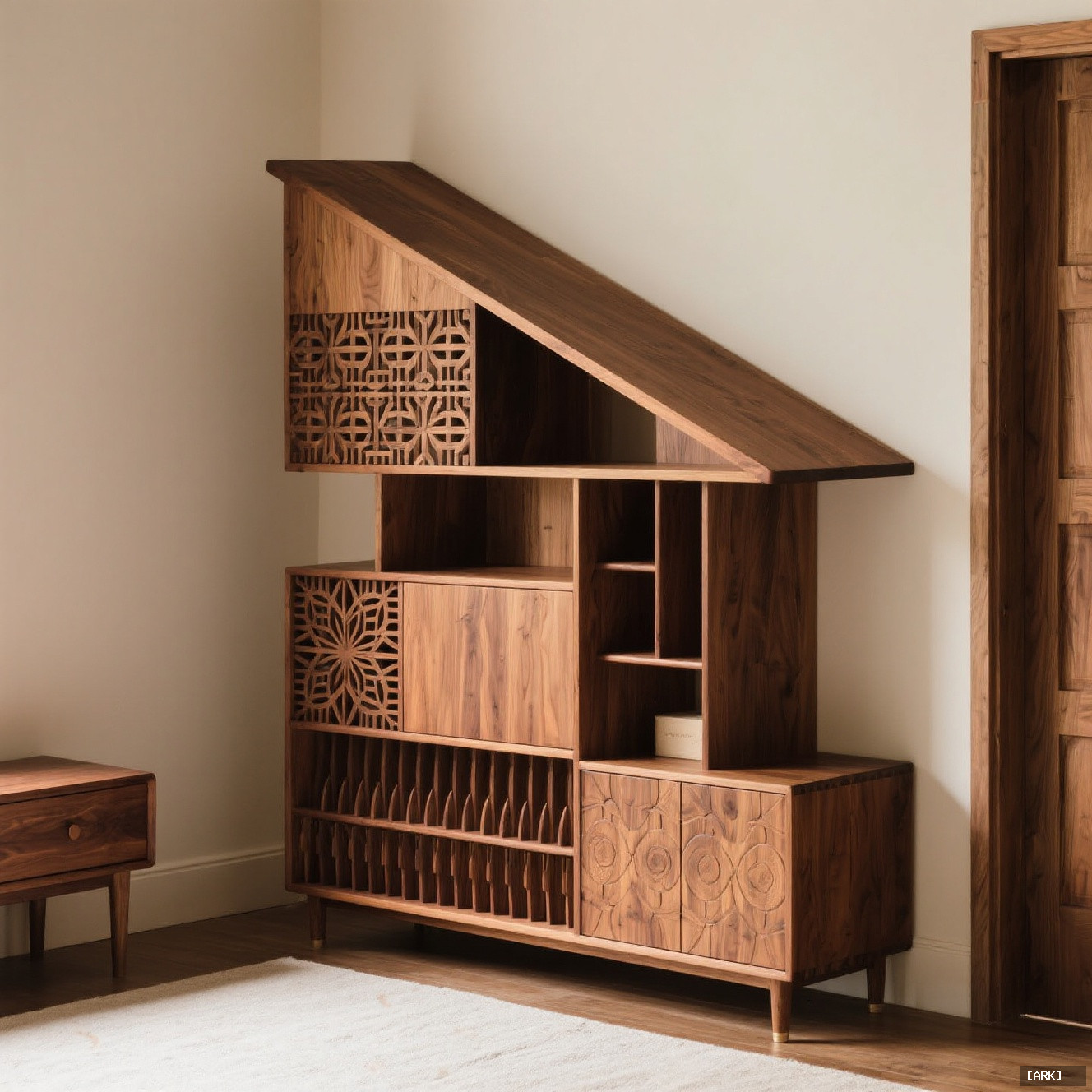
The objects we live with are not silent. Decorative wooden furniture, in particular, has a voice. It speaks through texture, through weight, through the stories carried in its grain. By choosing these pieces not just for their beauty but for their ability to host our lives, we build more than a home. We build a stage for a well-lived day, one small, supported ritual at a time.
Sources & Further Reading
- The School of Life: “The Quiet Power of Everyday Rituals” – https://www.theschooloflife.com/article/the-quiet-power-of-everyday-rituals/
- American Hardwood Information Center: “The Nature of Wood” – https://www.hardwoodinfo.com/
- The Craftsmanship Initiative: “The Stories Our Objects Hold” – https://craftsmanship.net/the-stories-our-objects-hold/
- Psychology Today: “How Our Physical Environment Shapes Our Habits” – https://www.psychologytoday.com/us/blog/the-science-behind-behavior/202111/how-our-physical-environment-shapes-our-habits
- Research on wood and physiological stress: “Effects of interior wood finishes on the autonomic nervous system” – https://www.ncbi.nlm.nih.gov/pmc/articles/PMC5116449/
✨ You Might Also Enjoy

You may also like
Herbal Bead Bracelet: Ancient Chinese Aromatherapy for Modern Wellness | HandMyth™
Original price was: ¥2,199.00.¥1,352.00Current price is: ¥1,352.00. Add to cartPremium Herbal Beads Bracelet: Traditional Medicine Meets Modern Jewelry | Shop HandMyth
Original price was: ¥874.00.¥608.00Current price is: ¥608.00. Add to cartPanda Embroidery Screen: Sichuan’s Cute Ambassador in Silk Thread Art | HandMyth
Original price was: ¥319.00.¥230.00Current price is: ¥230.00. Add to cartPanda Gift Set: Curated Chinese Treasures for Panda Lovers | HandMyth™ (Free Gift Wrap)
Original price was: ¥136.00.¥118.00Current price is: ¥118.00. Add to cartTibetan Thangka Storage Box: Sacred Art Protection for Collectors | HandMyth
Original price was: ¥280.00.¥219.00Current price is: ¥219.00. Add to cartPure Silk Handbag: Hangzhou’s Legendary Silk Weaving for Modern Elegance | HandMyth™
Original price was: ¥874.00.¥786.00Current price is: ¥786.00. Add to cartHand-Painted Silk Scarf: Wearable Art from China’s Silk Road | HandMyth (Artist Signed)
Original price was: ¥1,017.00.¥935.00Current price is: ¥935.00. Add to cartModern Qipao Dress: Timeless Chinese Elegance for Today’s Woman | HandMyth (Custom Fit)
Original price was: ¥2,459.00.¥2,240.00Current price is: ¥2,240.00. Add to cartEmbroidered Chinese Handbag: Suzhou Silk Embroidery Meets Modern Fashion | HandMyth™
Original price was: ¥680.00.¥646.00Current price is: ¥646.00. Add to cart























