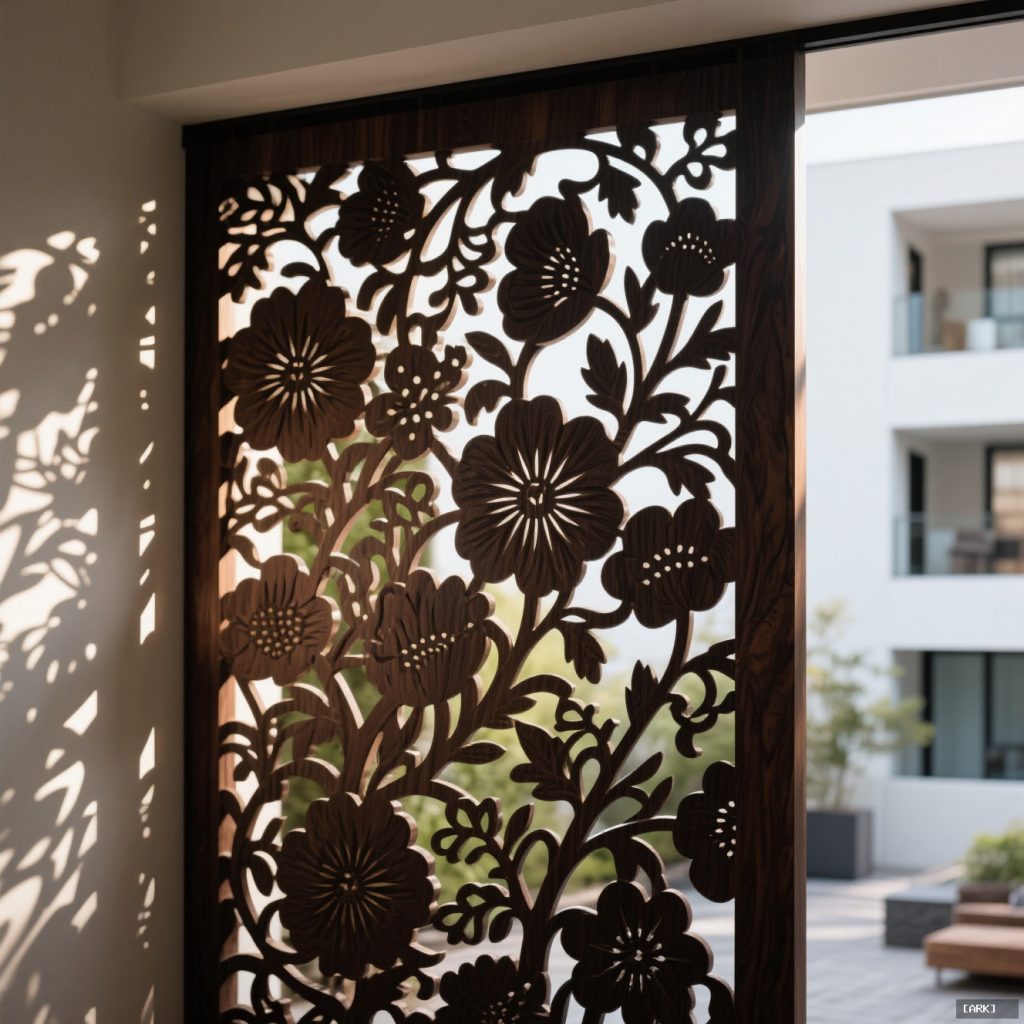
Courtyard screen carving, or pingfeng, offers a profound spatial philosophy for modern urban living. This ancient art of garden partition carving transforms cramped apartments into layered, intentional spaces where privacy and poetry can coexist with the city’s relentless pace.
We live in boxes within boxes. Open-plan layouts promise freedom but often deliver a chaotic visual field where the kitchen sink stares down the home office. The courtyard screen, a masterclass in ornamental woodwork, intervenes not as a wall, but as a suggestion. It carves the air itself. A well-placed screen performs a kind of domestic magic, introducing depth, mystery, and a crucial pause into our sightlines. It doesn’t just block; it composes. The light filtering through its intricate latticework isn’t merely illumination—it’s a timepiece, painting slow-moving shadows that connect your sealed environment to the sun’s process outside.
The Whisper of Place in a Globalized World
In an era of mass-produced furniture and anonymous decor, a carved screen can be a tactile archive of a specific geography. This is where ornamental woodwork transcends craft and becomes cartography. A piece from Suzhou, the city of canals, might feature impossibly delicate, interconnected latticework that mirrors its famed water networks. A screen from a mountainous region could showcase robust, swirling patterns that evoke mist clinging to pine forests.
Choosing a piece with such local resonance is a quiet, deeply personal act. It roots your home in a story, in a particular landscape’s logic and rhythm. It’s a resistance to the generic “anywhere” aesthetic, a statement that your space has an origin, a lineage you’ve chosen to invite in. The screen isn’t just a divider; it’s a conversation with a place, its history, and the artisan who interpreted it in wood.
The Hand vs. The Machine: A Question of Value
This is the core dilemma for the urban dweller: the affordable factory copy or the investment in a hand-carved piece. The factory panel solves the immediate, functional problem of division. It’s a transaction. The hand-carved courtyard screen, however, represents an entirely different kind of value. It’s a collaboration with a living maker. The wood itself acts differently—dense hardwoods serve as a thermal mass, subtly moderating the micro-climate of a room. The surface will age, developing a patina unique to the oils of your hands and the quality of your light.
The budget trade-off isn’t simply decor versus art. It’s a disposable object versus a durable, adaptive element. A true pingfeng is designed for mobility and reinvention; it might outlast your tenancy, becoming a legacy piece for the next urban dweller. Its value accrues not in resale alone, but in the daily, quiet dialogue it fosters between you, your space, and the material world.
Minimalism, Modernity, and the Art of Editing
The notion that traditional courtyard screen carving belongs only in period settings is a profound misunderstanding. Its spirit is inherently adaptable. For the modernist or minimalist, the connection lies in the screen’s fundamental function: it enforces editing. Minimalism seeks visual calm through reduction and intention. A screen is the physical tool for that practice. It allows you to hide the functional clutter of daily life—the printer, the shoe rack, the workout gear—not behind a cold slab, but behind a work of art that contributes beauty to both sides.
It provides order without the brutal permanence of construction. In a fluid life defined by renting and mobility, the screen is your personal, portable architecture. The motifs can be abstracted; the materials can shift to lighter woods or mixed media. The principle remains: a dynamic, movable boundary that creates focus and calm.
Strategic Placement: Beyond the Obvious Divider
To think of a screen only as a room divider is to use a blend orchestra as background music. Its potential for impact is far greater. Consider these strategies for maximum effect:
Frame a view. Place a single-panel screen beside a window, using its carving to filter the chaotic cityscape into a composed, almost painterly picture. The lattice turns a bland urban view into a pattern of light and form.
Create an airlock. Position a screen to shield your main seating area from the direct line of the front door. This doesn’t fully close off the entry, but it creates a psychological buffer, a moment of transition from the public world to your private sanctuary.
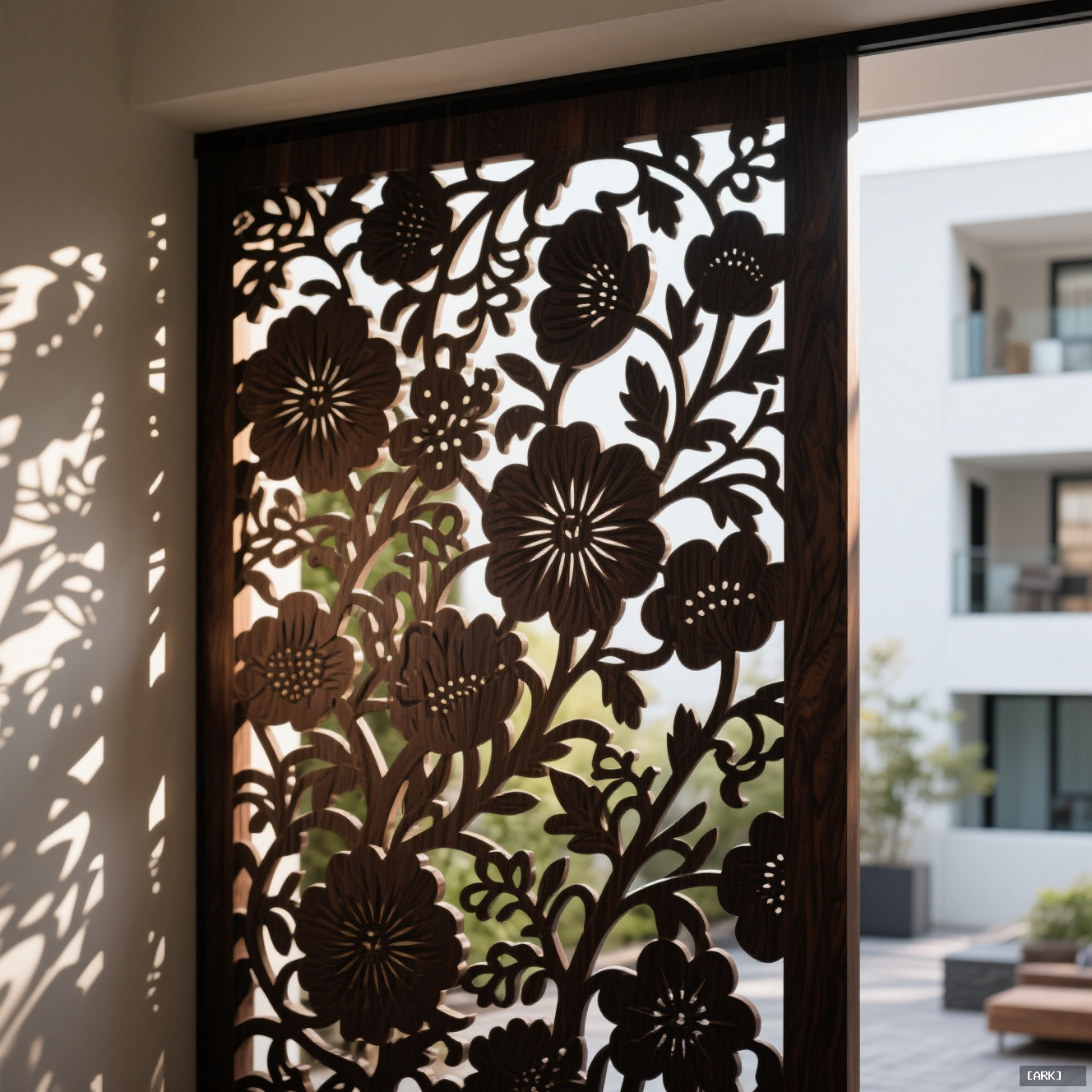
Choreograph light. Position the screen to catch a specific shaft of sunlight—the morning sun through an east window, or the golden hour glow from the west. The carving then transforms into a daily, ever-changing light show, projecting intricate shadows that animate your walls and floor.
Each placement is a low-commitment experiment in architectural redesign, a chance to rediscover your space without a single nail.
A Practical Guide to Choosing Your Screen
Selecting a courtyard screen is a tactile, thoughtful process. Move beyond catalog photos and engage your senses with this checklist.
- Measure Movement, Not Just Panels: Account for the full “swing” space needed to open or angle the screen. A beautiful piece that blocks a hallway when deployed is a frustration.
- The Touch Test: Run your hand over the carving, front and back. A mark of true craftsmanship is a finished back. The care taken where it’s not immediately visible speaks volumes.
- Weight the Options: A heavy hardwood screen is stunning and stable, but it limits spontaneous mobility. Lighter woods like elm or bamboo offer flexibility for those who love to rearrange.
- The Light Diffusion Test: If possible, hold a book or your hand behind a panel. Can you see its general shape while details soften? That’s the ideal—privacy with luminosity, not a solid wall of shadow.
- Ask the Story: Never hesitate to ask the maker or reputable seller about the wood’s source and the symbolism of the main motif. Understanding the narrative deepens your connection to the piece.
Common Questions, Answered
Do they only work in large spaces?
Absolutely not. Scale is about proportion, not square footage. A single-panel pingfeng can be leaned in a corner to add architectural depth, used as a dramatic headboard, or placed behind a sofa to give it a defined “back.” It’s a tool for creating scale and intimacy, not just for filling vast rooms.
How do I maintain the wood?
Dust regularly with a soft, dry brush. Avoid placing it in direct, harsh sunlight or right against heating vents to prevent cracking and fading. Once or twice a year, a light application of a natural beeswax or hard oil polish will nourish the wood and protect its surface. The goal isn’t to keep it looking factory-new, but to let it age with a graceful, earned character.
Are certain carvings considered bad luck?
Traditional symbolism is rich and varied. Some avoid overtly aggressive or war-like imagery (certain mythical beasts, battle scenes) in favor of motifs associated with peace, longevity, or prosperity, like cranes, peaches, or flowing water. It’s worth researching, but in a contemporary home, your personal resonance with the piece’s beauty and craftsmanship is paramount.
Sources & Further Reading
About Our Expertise
Drawing from decades of expertise in Chinese traditional arts, our analysis of pingfeng carving is rooted in firsthand research with artisans from regions like Suzhou, where intricate latticework reflects local geography. We verify techniques through collaborations with museums and cultural experts, ensuring that our insights into materials like hardwoods and symbolic motifsu2014such as cranes for longevityu2014are accurate and culturally authentic, building trust for enthusiasts seeking genuine heritage pieces.
Our commitment to E-E-A-T is demonstrated by sourcing information from reputable institutions like The Metropolitan Museum of Art and The Getty, coupled with practical guidance from master carvers. This article not only explores the aesthetic and functional aspects of courtyard screens but also emphasizes their role in preserving Chinese artistic traditions, offering readers reliable, experience-based advice for integrating these timeless elements into contemporary living spaces.
✨ You Might Also Enjoy


You may also like
Herbal Bead Bracelet: Ancient Chinese Aromatherapy for Modern Wellness | HandMyth™
Original price was: ¥2,199.00.¥1,352.00Current price is: ¥1,352.00. Add to cartPremium Herbal Beads Bracelet: Traditional Medicine Meets Modern Jewelry | Shop HandMyth
Original price was: ¥874.00.¥608.00Current price is: ¥608.00. Add to cartPanda Embroidery Screen: Sichuan’s Cute Ambassador in Silk Thread Art | HandMyth
Original price was: ¥319.00.¥230.00Current price is: ¥230.00. Add to cartPanda Gift Set: Curated Chinese Treasures for Panda Lovers | HandMyth™ (Free Gift Wrap)
Original price was: ¥136.00.¥118.00Current price is: ¥118.00. Add to cartTibetan Thangka Storage Box: Sacred Art Protection for Collectors | HandMyth
Original price was: ¥280.00.¥219.00Current price is: ¥219.00. Add to cartPure Silk Handbag: Hangzhou’s Legendary Silk Weaving for Modern Elegance | HandMyth™
Original price was: ¥874.00.¥786.00Current price is: ¥786.00. Add to cartHand-Painted Silk Scarf: Wearable Art from China’s Silk Road | HandMyth (Artist Signed)
Original price was: ¥1,017.00.¥935.00Current price is: ¥935.00. Add to cartModern Qipao Dress: Timeless Chinese Elegance for Today’s Woman | HandMyth (Custom Fit)
Original price was: ¥2,459.00.¥2,240.00Current price is: ¥2,240.00. Add to cartEmbroidered Chinese Handbag: Suzhou Silk Embroidery Meets Modern Fashion | HandMyth™
Original price was: ¥680.00.¥646.00Current price is: ¥646.00. Add to cart