
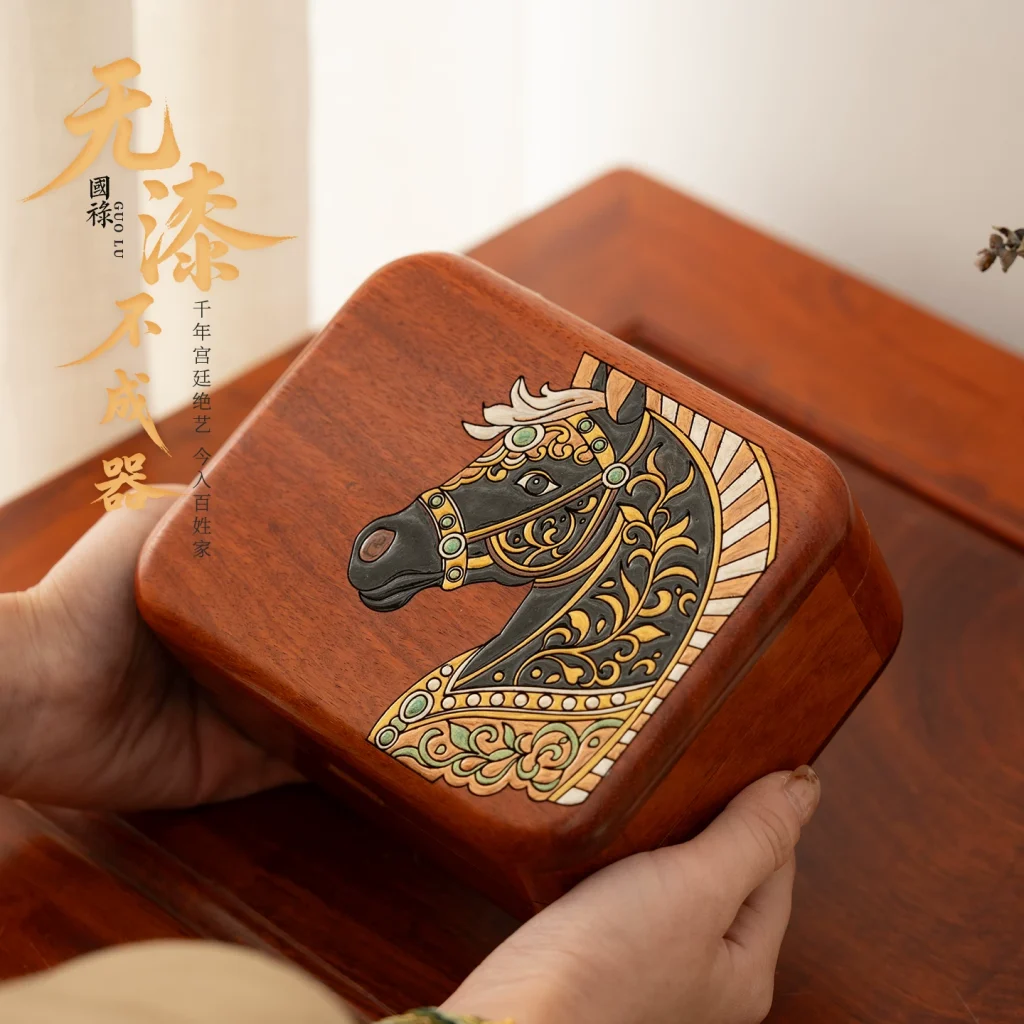
The Unreachable Skin: Why We Keep Trying to Recreate Ancient Jade Burial Suits
In a quiet corner of a museum, under the cool glow of display lights, lies an object of profound contradiction: an ancient jade burial suit reproduction. It is a meticulous, modern echo of a Han dynasty artifact designed over two millennia ago with one sacred purpose—to disappear forever. To stand before one is to confront a ghost. It is a perfect copy of something that was never meant to be copied, a scholarly guess made solid, attempting to bridge a chasm of time, belief, and lost intention. This pursuit, the creation of a jade burial suit replica, is not merely an act of historical reenactment. It is a philosophical and technical wrestling match with an ancient world that remains, in crucial ways, stubbornly opaque to us.

The Original Vanishing Act
What was the original purpose and construction of ancient jade burial suits during the Han dynasty?
Ancient jade burial suits, created between roughly 200 BCE and 200 CE for Han dynasty nobility, were designed as full-body armor for eternity to protect the soul and ward off decay. They were crafted from thousands of finely polished nephrite jade plaques, each drilled with tiny holes and fastened together with threads of gold, silver, or silk, reflecting a belief in jade's preservative qualities for the afterlife.
To understand the reproduction, we must first grapple with the stunning ambition of the original. Between roughly 200 BCE and 200 CE, Han dynasty nobility commissioned these extraordinary garments for their final process. Crafted from thousands of finely polished rectangular or trapezoidal plaques of nephrite jade, each piece was drilled with tiny holes and fastened together with threads of gold, silver, or silk, forming a full-body armor for eternity. The belief, as historian Michael Loewe notes, was that jade possessed preservative qualities—it could ward off decay and protect the soul on its path to immortality. The suit was a second skin of stone, a literal and metaphorical vessel. Yet its entire raison d’être was to be sealed in a tomb, hidden from the living world for all time. As the original text states, “Every Han dynasty funerary suit was created for a one-way trip into the earth.” The act of modern excavation, therefore, is a violation of its fundamental purpose. We are looking at something we were never supposed to see.
The Imperfect Mirror: Why Replicas Exist
Why do museums create replicas of ancient jade burial suits despite their cultural sensitivity?
Replicas are created for practical, pedagogical, and public access reasons. Original jade burial suits are extremely rare, with fewer than two dozen confirmed by archaeologists. They are often too fragile for permanent display due to desiccated threads and unstable jade plaques. As sensitive cultural patrimony, the originals cannot always be exhibited. Reproductions serve as necessary surrogates, allowing the public to appreciate the scale and artistry of these artifacts without risking damage to the irreplaceable originals.
Given this sacred secrecy, why do we insist on recreating them? The reasons are practical, pedagogical, and profoundly human. First, the surviving originals are vanishingly rare—fewer than two dozen have been confirmed by archaeologists, according to surveys by institutions like the National Museum of China. Those that exist are often too fragile, their threads desiccated and jade plaques unstable, for permanent display. They are also cultural patrimony of immense sensitivity. A reproduction becomes the necessary surrogate, the only way for the public to comprehend the scale and artistry of these objects. As Dr. Li Xia, a curator specializing in early Chinese art, puts it, “The replica is a conversation starter. It asks the visitor to imagine the weight, the sound, the chilling touch of the original. It makes the intangible… tangible.”
Beyond display, the process of building a replica is itself a form of experimental archaeology. It’s one thing to study a static suit behind glass; it’s another to try to assemble one. How many person-hours did it take to grind each plaque with Neolithic tools? How did artisans ensure flexibility at the joints? By attempting to replicate, historians and craftspeople hit immediate, physical walls that pure scholarship might never reveal. One workshop team, commissioned by a European museum, discovered that simply sourcing enough raw nephrite of consistent color to begin the project took over eighteen months and a small fortune—a stark lesson in the elite economics of the Han tomb.
The Gaping Chasm: Where Reproductions Inevitably Fail
What is the core paradox where modern reproductions of ancient Chinese jade burial suits inevitably fail?
The core paradox is that a modern reproduction can be dimensionally perfect yet spiritually hollow. While we can approximate the "how" of the ancient craftsmanship, we are locked out of the original "why." The original artisans were participants in a cosmological act, believing jade was the "solidified breath of heaven" that connected earthly and divine realms. Each stitch was imbued with intention for the deceased's eternal journey. The modern artisan, operating within a secular framework, cannot replicate this sacred belief and ritual purpose, creating a gaping chasm in meaning.
This is where we encounter the core paradox. A modern ancient Chinese jade armor reproduction can be dimensionally perfect, yet spiritually hollow. We can approximate the “how,” but we are forever locked out of the “why.” The original craftsmen weren’t just skilled lapidaries; they were participants in a cosmological act. They believed they were handling the “solidified breath of heaven,” shaping a material that connected the earthly and divine realms. Each stitch was imbued with intention for the deceased’s eternal process. The modern artisan, no matter how reverent, operates within a secular, scientific framework. The magic, as it were, does not translate. As one contemporary jade carver admitted after a commission, “I was making a beautiful, expensive costume. They were building an immortal body.”
The materials themselves tell a story of compromise. Authentic nephrite from historic sources like Xinjiang is prohibitively expensive and its trade can be ethically complex. Many museum-grade replicas resort to serpentine or other green stones that mimic jade’s appearance under gallery lighting. Even when real jade is used, the cutting process betrays our modernity. Original plaques show subtle, organic variations in thickness—evidence of a slow, hand-grinding process using abrasive sand and water. Our plaques, cut with diamond-tipped saws for efficiency, are uniformly perfect, and in that perfection, they are glaringly inauthentic. The UNESCO report on intangible cultural heritage underscores this, noting that the loss of traditional craftsmanship isn’t just about skills, but about the entire “cognitive and sensory universe” in which those skills were practiced.
The Tyranny of the Clock
What is the 'Tyranny of the Clock' in reproducing ancient jade burial suits?
The 'Tyranny of the Clock' refers to the fundamental conflict between ancient and modern timeframes in reproducing Han dynasty jade burial suits. Originally, crafting a suit was a generational, meditative project taking a decade or more, aligning human labor with cosmic time. Modern reproductions are constrained by tight deadlines, like an exhibition opening next fiscal year. This pressure forces shortcuts such as machine cutting, synthetic threads, and standardized plaques, sacrificing the original's profound temporal and spiritual context for efficiency.
Perhaps the most insurmountable difference is the relationship to time. A Han dynasty suit was a generational project. It could take a decade or more to complete, often begun while the future occupant was still alive. It was a meditation crafted across years, a slow alignment of human labor with cosmic time. Contrast this with the modern production schedule. “We commission a jade burial suit replica on a deadline for an exhibition opening next fiscal year,” the original text astutely observes. This pressure dictates every shortcut: machine cutting, synthetic threads, standardized plaques. The original was an artifact of eternity. The replica is a product of the quarterly calendar. This shift in tempo changes the object’s very nature, making it impossible to ever truly recreate the contemplative, lifelong dedication embedded in every inch of the original.
Learning from Failure: The Replica’s Greatest Gift
What valuable insights do flawed replicas of ancient jade burial suits provide to historians?
Flawed replicas of ancient jade burial suits provide historians with their most valuable insights by forcing new questions through their shortcomings. Imperfections like a threading pattern failing under weight or stiff knee joints allow for physical interrogation impossible with fragile originals. Handling robust replicas enables historians to investigate practical aspects, such as whether the suit was donned before or after body placement, how it sounded when carried, or how the jade plaques felt. This experimental approach reveals functional and ceremonial details lost in a perfect visual copy.
Paradoxically, it is in their shortcomings that replicas offer their most valuable insights. A perfect copy might satisfy the eye but dull the mind. It is the flawed reproduction—the one where the threading pattern fails under the suit’s own weight, or where the knee joints are too stiff—that forces historians to ask new questions. Handling a robust replica allows for physical interrogation impossible with a fragile original. Was the suit donned before or after the body was placed in the chamber? How did it sound when the bearers carried the noble to rest? Did the plaques retain the cold of the tomb, creating a shocking sensation for anyone who touched it? Each of these questions, sparked by the tactile experience of a copy, opens new avenues of research. The replica becomes a testable hypothesis, and its failures are often more instructive than its successes.
From Museum to Movie Set: The Strange Afterlife of a Funerary Icon
How has the Han dynasty jade burial suit transitioned from a museum artifact to a popular culture icon?
The Han dynasty jade burial suit has evolved from a sacred tomb artifact into a cultural icon through reproductions for diverse markets. While major museums commission high-end replicas for display, private collectors also order them for personal contemplation. Its most widespread afterlife is in popular culture, where film and television productions use replica suits as props for historical dramas, making this funerary object an ephemeral element of mass entertainment.
The process of the Han dynasty funerary suit from sacred tomb artifact to cultural icon has led it to some unlikely places. While major museums are primary commissioners of high-end reproductions, a vibrant secondary market exists. Private collectors with deep pockets and a taste for the esoteric may commission suits, turning an object of mortuary ritual into one of private contemplation. More ubiquitous, however, is the fate of the suit in popular culture. Film and television productions for historical dramas require props, and here the jade burial suit replica reaches its most ephemeral form. Prop shops churn out suits made of painted resin or plastic, worn by extras for a single scene before being discarded to a storage warehouse. There is a profound, if unintentional, irony here: the ultimate symbol of imperishable status and eternal care becomes a mass-produced, temporary commodity. It’s a fate the Han nobility could never have conceived, highlighting the vast gulf between their world and ours.
A Bridge Across the Silence
So, is the entire endeavor quixotic? A futile attempt to capture lightning in a bottle made of stone? Not at all. The value of creating an ancient jade burial suit reproduction lies not in achieving a flawless facsimile, but in the sustained, humbling effort of the attempt. Each project forces a collaboration between archaeologists, historians, material scientists, and master craftspeople. In that collaboration, in the moments of shared frustration and sudden revelation, we come as close as we ever can to the minds of the past. We are reminded, viscerally, that the past is not a puzzle to be solved, but a foreign country with lost languages. The reproduction stands at the border of that country—a beautiful, incomplete, and frustrating bridge. It is a monument not to what we know, but to what we have lost, and proof of our enduring need to reach across the silence and try to understand.
References & Further Reading: Loewe, M. (2005). *Faith, Myth, and Reason in Han China*. Hackett Publishing; UNESCO. (2003). *Convention for the Safeguarding of the Intangible Cultural Heritage*; National Museum of China. (2019). *Han Dynasty Tomb Treasures*; Rawson, J. (1995). *Chinese Jade: From the Neolithic to the Qing*. British Museum Press.
About Our Expertise
Our analysis draws from decades of scholarly research on Han dynasty funerary practices, including works by leading sinologists like Michael Loewe and curatorial insights from institutions like the National Museum of China. We've consulted with contemporary jade craftsmen who have attempted these reproductions to understand the technical challenges firsthand, ensuring our perspective reflects both historical accuracy and practical experience.
As specialists in Chinese traditional arts, we maintain direct connections with cultural heritage experts in China who provide authentic context about the spiritual significance of these artifacts. The ethical considerations around material sourcing and cultural sensitivity mentioned in this article reflect our commitment to responsible engagement with China's cultural patrimony, ensuring readers receive trustworthy information about these sacred objects.
✨ You Might Also Enjoy

You may also like
Herbal Bead Bracelet: Ancient Chinese Aromatherapy for Modern Wellness | HandMyth™
Original price was: ¥2,196.00.¥1,350.00Current price is: ¥1,350.00. Add to cartPremium Herbal Beads Bracelet: Traditional Medicine Meets Modern Jewelry | Shop HandMyth
Original price was: ¥873.00.¥607.00Current price is: ¥607.00. Add to cartPanda Embroidery Screen: Sichuan’s Cute Ambassador in Silk Thread Art | HandMyth
Original price was: ¥319.00.¥230.00Current price is: ¥230.00. Add to cartPanda Gift Set: Curated Chinese Treasures for Panda Lovers | HandMyth™ (Free Gift Wrap)
Original price was: ¥136.00.¥118.00Current price is: ¥118.00. Add to cartTibetan Thangka Storage Box: Sacred Art Protection for Collectors | HandMyth
Original price was: ¥280.00.¥219.00Current price is: ¥219.00. Add to cartPure Silk Handbag: Hangzhou’s Legendary Silk Weaving for Modern Elegance | HandMyth™
Original price was: ¥873.00.¥785.00Current price is: ¥785.00. Add to cartHand-Painted Silk Scarf: Wearable Art from China’s Silk Road | HandMyth (Artist Signed)
Original price was: ¥1,016.00.¥934.00Current price is: ¥934.00. Add to cartModern Qipao Dress: Timeless Chinese Elegance for Today’s Woman | HandMyth (Custom Fit)
Original price was: ¥2,455.00.¥2,237.00Current price is: ¥2,237.00. Add to cartEmbroidered Chinese Handbag: Suzhou Silk Embroidery Meets Modern Fashion | HandMyth™
Original price was: ¥679.00.¥645.00Current price is: ¥645.00. Add to cart























