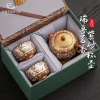
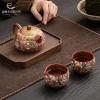
This comprehensive guide explores the cultural significance and practical applications of this traditional craft. Whether you are a collector, practitioner, or curious learner, you will find valuable insights here.
Why does a ceramic sake set matter for sustainability?
A ceramic sake set isn’t just drinkware—it’s a quiet protest against planned obsolescence. When you pick up a wheel-thrown Japanese sake decanter, you’re holding a piece of kiln-fired earth that can outlive you by centuries. Unlike the cheap glass or plastic alternatives that crack or cloud within a few years, a well-made ceramic set stays functional and beautiful for generations. That durability alone slashes the carbon footprint of your drinking habit over time.
I still remember my first real tokkuri—a little stoneware decanter from a market in Kyoto. It had a tiny chip on the rim, and the seller apologized profusely, knocking half the price off. Ten years later, that chip is still there, and the set pours sake like the day I bought it. Try that with a plastic bottle from a discount store. You can’t. The plastic will have warped, cracked, or just started tasting like regret. Ceramic doesn’t do that. It stays honest.
First, the material math.
Clay is abundant, firing requires intense heat, but the energy is a one-time cost. Once fired, the piece needs zero additional energy for decades. Compare that to a glass sake bottle set that might be recycled (energy-intensive) or a plastic one that degrades into microplastics. Ceramic’s lifecycle is almost circular: it can be crushed into grog for new pottery or simply returned to the earth as inert material. No leaching, no forever chemicals.
Think about what happens when a ceramic cup breaks. You sweep up the pieces. Maybe you toss them in the garden as drainage. They don’t turn into microscopic particles that end up in fish. They just sit there, being clay, until they slowly break down into more clay. That’s not true for most modern materials. A ceramic sake set, when it finally reaches the end of its very long life, becomes part of the ground again. That’s a kind of sustainability you can’t get from a plastic flask or even a metal one.
How does the collector mindset connect to sustainability?
Collectors of vintage ceramic drinkware often develop an instinct for longevity. They can spot a kiln-fired piece with genuine patina versus a new mass-produced replica from a single glance. That same instinct—looking for evidence of handwork, slight asymmetries, unglazed foot rings—trains you to value objects that were made to last. It’s the opposite of the “buy-use-toss” culture. When you collect, you become a steward, not just a consumer.
I’ve watched friends go from buying plastic tumblers at the grocery store to hunting down vintage sake sets on eBay. The shift is subtle at first. They start noticing how a piece feels in the hand, how the glaze catches the light, how the base is stamped. Then they start caring about where it came from. That’s when sustainability kicks in. You stop wanting new things. You start wanting old things that are still good.
Authenticity checks that double as sustainability filters.
A genuine Japanese sake decanter from a small pottery will have minor irregularities: a slight wobble when set on a flat surface, a visible seam where the potter’s thumb pinched the clay. Mass-produced sets from large factories are perfectly round, perfectly weighted, and perfectly lifeless. That lifelessness is often a sign of cheap glaze containing lead or other heavy metals, which leach into hot sake. Authentic, hand-crafted pieces use food-safe glazes because the potter’s reputation depends on it.
Here’s a trick I learned from a potter in Arita: run your finger around the inside rim of a sake cup. If it feels rough or sharp, put it back. That rough edge means the glaze was applied sloppily, probably in a factory where speed matters more than safety. A handmade piece will have a smooth, deliberate finish because the potter took the time to wipe the rim clean. That attention to detail is the same reason the piece will last longer. It’s not just aesthetics. It’s engineering.
What is the non-obvious connection between sake sets and soil health?
Here’s the weird link: traditional Japanese ceramic production relies on local clay beds. When you buy a ceramic sake set from a region like Tokoname or Arita, you’re supporting an economy that values local soil as a resource. That economic incentive leads communities to protect their clay sources from strip-mining and pollution. In contrast, globalized ceramic production often uses clay shipped from halfway across the world, with no local accountability for where the clay came from or how it was extracted.
I once visited a small pottery in Tokoname where the owner showed me the clay pit behind his workshop. It was just a hole in the ground, maybe twenty feet deep, with layers of different colored clay visible in the walls. He’d been digging clay from that same spot for forty years. His father had done it before him. His grandfather too. That kind of relationship with the land doesn’t exist when you’re buying clay from a supplier in another country. You don’t care about the pit because you can’t see it.
How to Choose Sake Set
When learning how to choose sake set, consider the clay type, glaze, and capacity. Tokkuri (flasks) typically hold 180-360ml, while guinomi (cups) hold 30-90ml. Matcha lovers often prefer rustic Shigaraki ware, while modern minimalists lean toward Hasami porcelain.
Practical Tips and Techniques
Mastering this craft requires patience and practice. Start with basic techniques, invest in quality tools, and do not hesitate to make mistakes. They are part of the learning journey.
Local clay means local care.
Pottery towns in Japan have maintained their clay beds for centuries precisely because the clay is the foundation of their livelihood. That creates a feedback loop: the community protects the soil, the soil yields fine ceramics, the ceramics sell, and the cycle continues. Your purchase of a sake bottle set from such a town is a vote for that cycle over the extractive model.
When you buy a set from Tokoname, you’re not just buying a decanter. You’re buying a piece of a system that has worked for hundreds of years. The clay comes from the hill behind the workshop. The glaze is mixed from local ash and minerals. The kiln is fired with wood from nearby forests. Everything is connected. Compare that to a generic sake set from a big-box store. That clay might have been dug from a pit in Thailand, shipped to China for forming, glazed with chemicals from Germany, and then shipped to your doorstep. The carbon footprint is enormous, and nobody is responsible for the mess.
Practical checklist: choosing a sustainable ceramic sake set
If you’re in the market for a ceramic sake set, here’s how to pick one that will last and that supports the right kind of production.
How to Care for Ceramic Sake Set
Proper maintenance ensures longevity. How to care for ceramic sake set: hand-wash with mild detergent, avoid extreme temperature changes, and never put unglazed pottery in the dishwasher. For stained interiors, use a baking soda paste.
- Weight and feel: Pick it up. A heavy, balanced piece suggests dense, well-kneaded clay—less likely to chip or crack. If it feels hollow or too light, it might be mass-produced and fragile.
- Glaze edge: Run your finger along the rim of the tokkuri (decanter) and the guinomi (cups). A smooth, even glaze line indicates careful application; rough patches mean potential lead exposure. Also check the inside of the decanter neck—that’s where sloppy glaze jobs show up.
- Maker’s mark: Flip the base. A hand-carved or stamped mark from a known kiln (like Tokoname-yaki) adds provenance and assurance of traditional methods. If there’s no mark, it might still be good, but you’re taking a gamble.
- Water test: Fill the decanter with water, let it sit for 10 minutes, then check for seepage. Porous ceramics aren’t necessarily bad—they’re often unglazed on purpose—but they require special care. If water leaks through, the piece wasn’t fired hot enough, and it might not be food-safe.
- Ask the seller: “Where was the clay sourced?” If they can’t answer, assume it’s from an unknown pit. That doesn’t mean it’s bad, but it weakens the sustainability claim. A good seller will know exactly where their clay comes from.
I always do the water test before buying a ceramic sake set online. If the seller doesn’t allow returns, I skip it. There’s no excuse for selling porous ceramic drinkware without warning the buyer. A good piece should hold water without any leakage.
Common questions about ceramic sake sets
Can I put a ceramic sake set in the dishwasher?
Technically yes, but you’ll shorten its life. The high heat and harsh detergents can dull the glaze over time. Hand-wash with mild soap and a soft sponge. Your grandchildren will thank you. I ruined a beautiful set by running it through the dishwasher once. The glaze got a cloudy film that never came off. Never again.
Is unglazed ceramic safe for sake?
Yes, if it’s from a reputable maker. Unglazed interiors are traditional for some styles—the clay imparts a subtle earthy flavor. But avoid unglazed pieces from unknown sources; they might not be fired hot enough to be non-porous and could harbor bacteria. The rule of thumb: if the clay feels chalky or rough, it’s probably underfired. If it feels smooth and dense, it’s fine.
What’s the difference between a sake set and a wine decanter set?

Size and shape. Sake decanters (tokkuri) are narrower and taller to control the pour of a delicate liquid. Wine decanters are wide-bottomed for aeration. Using a wine decanter for sake aerates it too much, flattening the flavor. Also, sake cups are small—usually one or two sips. Wine glasses are big enough to swirl. Don’t mix them up. Your sake will taste flat, and your host will give you a look.
Sources & further reading
- Studio Pottery and Environmental Impact
- Tokoname Pottery Guide
- Lead in Ceramic Glazes
- Sustainable Ceramics Overview
- Authenticity in Handmade Japanese Ceramics
Where to Buy Authentic Sake Set
Quality matters. Where to buy authentic sake set? Look for Japanese pottery studios on Etsy, visit specialty tea & sake shops in your city, or explore curated collections on HandMyth. Avoid mass-produced imitations—handcrafted pieces carry the artisan’s soul.
Explore More on HandMyth
Discover authentic, handcrafted pieces that embody centuries of tradition. Visit our collection to find unique items that resonate with your aesthetic and spiritual pursuits.
✨ You Might Also Enjoy
You may also like
Herbal Bead Bracelet: Ancient Chinese Aromatherapy for Modern Wellness | HandMyth™
Original price was: ¥2,200.00.¥1,353.00Current price is: ¥1,353.00. Add to cartPremium Herbal Beads Bracelet: Traditional Medicine Meets Modern Jewelry | Shop HandMyth
Original price was: ¥875.00.¥608.00Current price is: ¥608.00. Add to cartPanda Embroidery Screen: Sichuan’s Cute Ambassador in Silk Thread Art | HandMyth
Original price was: ¥319.00.¥231.00Current price is: ¥231.00. Add to cartPanda Gift Set: Curated Chinese Treasures for Panda Lovers | HandMyth™ (Free Gift Wrap)
Original price was: ¥136.00.¥118.00Current price is: ¥118.00. Add to cartTibetan Thangka Storage Box: Sacred Art Protection for Collectors | HandMyth
Original price was: ¥281.00.¥219.00Current price is: ¥219.00. Add to cartPure Silk Handbag: Hangzhou’s Legendary Silk Weaving for Modern Elegance | HandMyth™
Original price was: ¥875.00.¥786.00Current price is: ¥786.00. Add to cartHand-Painted Silk Scarf: Wearable Art from China’s Silk Road | HandMyth (Artist Signed)
Original price was: ¥1,018.00.¥936.00Current price is: ¥936.00. Add to cartModern Qipao Dress: Timeless Chinese Elegance for Today’s Woman | HandMyth (Custom Fit)
Original price was: ¥2,460.00.¥2,241.00Current price is: ¥2,241.00. Add to cartEmbroidered Chinese Handbag: Suzhou Silk Embroidery Meets Modern Fashion | HandMyth™
Original price was: ¥680.00.¥646.00Current price is: ¥646.00. Add to cart