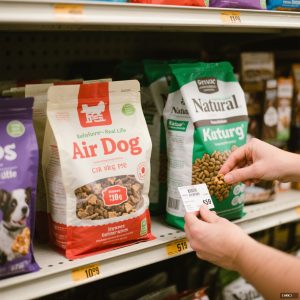
Human-grade dog food is a phrase that dominates modern pet store shelves, promising a level of care we can feel good about. But this premium pet nutrition ideal is often more about our human psychology than our dog’s biology.
We see that label and imagine a chef preparing a meal fit for our own plate, then lovingly serving it to our waiting pup. It feels like an act of pure devotion, a tangible upgrade from the anonymous brown kibble of yesteryear. The marketing is brilliant because it taps directly into our desire to provide the absolute best, equating the quality of our dog’s bowl with the depth of our love. Yet, this emotional pull can cloud the more practical, and sometimes more important, questions about what constitutes a truly high-quality canine diet. The process from that alluring label to your dog’s digestive system is far more complex, filled with regulatory gray areas, logistical hurdles, and the simple fact that a dog’s nutritional needs are not a mirror of our own.
Decoding the Label: The Legal Void Behind “Human-Grade”
Let’s start with the term itself. “Human-grade” sounds definitive, official, and reassuring. In reality, it’s a claim with a very specific and limited legal meaning when applied to pet food. The U.S. Food and Drug Administration (FDA) does not regulate the term “human-grade” for pet food. Instead, the claim hinges entirely on the ingredients.
For a product to be labeled human-grade, every single ingredient, as well as the finished product, must be stored, handled, processed, and transported in a manner consistent with current Good Manufacturing Practices (cGMPs) for human edible foods. Essentially, the ingredients must be suitable for human consumption before they go into the pet food pot. It’s a sourcing and handling standard, not a nutritional guarantee.
The crucial distinction? The final product is still pet food. It is not held to the same safety and nutritional standards as a can of soup or a bag of salad. Its nutritional adequacy is governed by the Association of American Feed Control Officials (AAFCO) model regulations, which provide guidelines for complete and balanced nutrition for different life stages. So, a bag of human-grade dog food must still carry an AAFCO nutritional adequacy statement—the same as a high-quality kibble that doesn’t make the human-grade claim. The label tells you about the origin of the parts, not necessarily the superiority of the whole nutritional picture.
The “Vet-Approved” Stamp: Credential or Collaboration?
Another pillar of the premium pet nutrition world is the “vet-approved” or “veterinarian-recommended” seal. This, too, requires a discerning eye. Often, this label is the result of a co-branding agreement or an endorsement deal between a pet food company and a veterinary practice or group. It is not a standardized, independently verified nutritional seal like the AAFCO statement.
This doesn’t automatically make it meaningless, but it does require context. “Approval” often signifies that the formula meets basic AAFCO standards—a baseline most reputable brands achieve. True, deep veterinary nutrition involves formulation by a board-certified veterinary nutritionist, a specialized credential that is relatively rare. When evaluating a high-quality canine diet, look beyond the “vet-approved” banner. Check the company’s website to see if they employ a full-time veterinary nutritionist on staff. Look for transparency about who formulates the recipes. An endorsement is a marketing relationship; a staff nutritionist is a commitment to the science.
The Kitchen Reality: When the Ideal Meets Your Freezer
The fantasy of feeding fresh, human-grade dog food often comes with a logistical blueprint: a subscription service, a monthly delivery of insulated boxes, and a dedicated freezer drawer (or an entire chest freezer) humming away in your garage. For many, this is a manageable trade-off for perceived quality. For the apartment dweller, the city slicker with a galley kitchen, or the person who already struggles with freezer Tetris, this isn’t a minor detail—it’s a deal-breaker.
This is where the myth of premium pet nutrition collides with real-life constraints. The idealized display of care can become a source of daily stress if it doesn’t fit your living reality. The good news is that a high-quality canine diet does not require a commercial-grade appliance. Excellent, complete nutrition can come from shelf-stable kibble, high-quality canned food, or freeze-dried raw options that reconstitute with water. These formats offer tremendous nutritional value without dominating your physical and mental space. Choosing a diet that fits seamlessly into your life is a profound act of care, ensuring you can sustain it consistently without resentment or hassle.
Ingredient Theater: What Appeals to You vs. What Nourishes Them
Flip over a bag of premium dog food and you’ll often see a roster of ingredients that wouldn’t be out of place on a trendy café menu: quinoa, blueberries, kale, coconut oil, sweet potato. These are marketing gold, speaking directly to the health-conscious pet owner. But are they nutritional gold for your dog?
Often, their benefit is minimal compared to their cost and headline appeal. Dogs are not small, furry humans. Their digestive systems and nutritional requirements are different. They thrive on consistent, balanced nutrition derived primarily from digestible animal-based proteins and fats. The source of those nutrients matters less to their biology than the balance and bioavailability. A dog’s system is remarkably efficient at deriving nutrients from what we might consider “lesser” parts of an animal—livers, kidneys, hearts, cartilage. These organ meats and connective tissues are often more vitamin- and mineral-dense than muscle meat alone. The pursuit of pristine chicken breast or sirloin in a dog food may be overlooking the most nutrient-rich components of the animal, all in the name of appealing to a human sense of what is “good.”
This isn’t to say these premium ingredients are harmful. But their presence often serves to justify a higher price tag to you, not to provide a dramatically superior diet for your dog. The core of a vet-approved dog meal should be high-quality, named protein sources (chicken, beef, salmon), appropriate fats, and necessary vitamins and minerals, whether they arrive in a glossy fresh form or a dense kibble.
The Anxiety of Choice: Is Your Search for Perfect Hurting Your Dog?
Perhaps the most counterproductive side effect of the human-grade dog food movement is the anxiety it can breed in well-meaning owners. The cycle is familiar: deep-dive online research, analysis paralysis over brands, a costly switch to a new “perfect” food, followed by weeks of scrutinizing your dog’s stool and energy levels, only to read a concerning forum post and start the process all over again.
This anxiety-driven quest can create more household tension for you and genuine digestive turmoil for your dog. Canine gastrointestinal systems value consistency above all. Frequent diet changes can disrupt the delicate balance of the gut microbiome, leading to soft stools, gas, and discomfort. A stable, complete, and balanced diet from a trusted manufacturer—even if it’s not the absolute trendiest or most Instagram-worthy option—often trumps a chaotic rotation of theoretically “perfect” meals. Your peace of mind and your dog’s digestive peace are critical components of a true high-quality canine diet.
Cutting Through the Noise: A Practical Evaluation Framework
Forget the flashy terms for a moment. When you strip away the marketing, evaluating dog food comes down to a few concrete steps.
- The AAFCO Statement is Non-Negotiable: This is the single most important item on the bag. Look for the phrase “[Product Name] is formulated to meet the nutritional levels established by the AAFCO Dog Food Nutrient Profiles for [Life Stage, e.g., adult maintenance, growth].” This is your baseline guarantee of completeness.
- First Ingredient Clarity: The first ingredient should be a specific, named animal protein source: “deboned chicken,” “salmon meal,” “lamb.” Vague terms like “meat” or “poultry” are red flags.
- Transparency and Expertise: Does the brand provide a way to contact them? Do they openly discuss who formulates their diets? The presence of a veterinary nutritionist on staff is a strong positive signal.
- The Lifestyle Test: Be brutally honest with yourself. Can you store, prepare, and afford this food consistently for the next decade? If the answer is no, it’s not the right food, no matter how good it looks on paper.
- The Ultimate Judge: Your dog. Observe their energy, the health of their coat and skin, the firmness of their stool, and their overall vitality. These are the most telling reviews you will ever get.
Navigating Common Premium Food Dilemmas
A few specific questions tend to arise when sifting through premium pet nutrition claims.
What about the grain-free and heart disease concern? The FDA has investigated a potential link between certain grain-free diets (often those high in legumes like peas and lentils) and the development of canine dilated cardiomyopathy (DCM) in dogs not genetically predisposed to the disease. The investigation is ongoing, and the science is complex. If you are considering a grain-free diet, a conversation with your veterinarian is essential. For most dogs, grains are a digestible source of carbohydrates and are not harmful.
Are by-products the enemy? This is a classic case of a misunderstood term. “By-products” in the context of high-quality pet food often refer to organ meats—liver, heart, kidney, lung. These are nutritional powerhouses, packed with vitamins and minerals often more concentrated than in muscle meat. The concern should be the quality control of the brand, not the automatic dismissal of this entire ingredient category. A reputable company using named by-products (e.g., “chicken liver”) is likely providing excellent nutrition.
Should I rotate proteins for variety? Only if your dog has an iron stomach. Some dogs enjoy and tolerate variety, but many others thrive on dietary consistency. Frequent protein rotation is a common trigger for intermittent digestive upset in sensitive dogs. If you find a complete diet that your dog does well on, there’s usually no biological need to change it.
Sources & Further Reading

FDA: Pet Food Labels General
AAFCO: Understanding Pet Food
Tufts University Petfoodology
AVMA: Pet Food Safety
✨ You Might Also Enjoy

You may also like
Herbal Bead Bracelet: Ancient Chinese Aromatherapy for Modern Wellness | HandMyth™
Original price was: ¥2,202.00.¥1,354.00Current price is: ¥1,354.00. Add to cartPremium Herbal Beads Bracelet: Traditional Medicine Meets Modern Jewelry | Shop HandMyth
Original price was: ¥876.00.¥609.00Current price is: ¥609.00. Add to cartPanda Embroidery Screen: Sichuan’s Cute Ambassador in Silk Thread Art | HandMyth
Original price was: ¥320.00.¥231.00Current price is: ¥231.00. Add to cartPanda Gift Set: Curated Chinese Treasures for Panda Lovers | HandMyth™ (Free Gift Wrap)
Original price was: ¥136.00.¥118.00Current price is: ¥118.00. Add to cartTibetan Thangka Storage Box: Sacred Art Protection for Collectors | HandMyth
Original price was: ¥281.00.¥219.00Current price is: ¥219.00. Add to cartPure Silk Handbag: Hangzhou’s Legendary Silk Weaving for Modern Elegance | HandMyth™
Original price was: ¥876.00.¥787.00Current price is: ¥787.00. Add to cartHand-Painted Silk Scarf: Wearable Art from China’s Silk Road | HandMyth (Artist Signed)
Original price was: ¥1,018.00.¥936.00Current price is: ¥936.00. Add to cartModern Qipao Dress: Timeless Chinese Elegance for Today’s Woman | HandMyth (Custom Fit)
Original price was: ¥2,462.00.¥2,243.00Current price is: ¥2,243.00. Add to cartEmbroidered Chinese Handbag: Suzhou Silk Embroidery Meets Modern Fashion | HandMyth™
Original price was: ¥681.00.¥647.00Current price is: ¥647.00. Add to cart