Folk toy making is far more than a nostalgic craft. It is the direct, unvarnished transmission of cultural DNA through the simple act of creating play. These objects are historical whispers, shaped by hands that knew scarcity, local materials, and a universal need.
We often frame them as rustic artifacts, charmingly primitive. But to stop there is to miss their profound weight. Each whittled animal, each stitched doll, is a compacted lesson in survival, ecology, and social values. They were a child’s first teachers, long before books. Today, in a world of digital perfection and disposable plastic, their gritty authenticity and human-centric creation offer a form of visual and philosophical relief. This isn’t about recreating the past perfectly. It’s about engaging with a process that reconnects us to material, place, and a slower, more mindful way of making.
The Soul of the Object: Folk Toy vs. Factory Toy
Place a brightly colored, injection-molded action figure next to a corn husk doll. The difference is immediate, visceral. One is a product of global supply chains and focus-grouped design. The other feels like it grew from the earth.
A factory toy answers a market demand. It is engineered for mass appeal, durability in shipping, and maximum play value per square inch of shelf space. Its origin is a boardroom; its life cycle is planned obsolescence.
A folk toy answers a human need within a razor-specific context. It is born from immediacy. A scrap of wood from the kindling pile. Leftover wool from mending a sock. Dried clay from the riverbank. The maker’s environment, skills, and the known desires of a specific child—a sibling, a cousin, a neighbor—are its only design software. There is no prototype. Its form is iterative memory, passed down and subtly altered with each generation’s hands.
The factory toy shouts its features. The folk toy whispers its story. You can feel the knife strokes in the wood, see the tension in the stitching. This imperfection isn’t a flaw; it’s the signature of its making, the proof of its human origin. It carries the grit of its creation, not the sterile polish of a production line.
Whispers in Wood: Toys as Silent History Books
Before widespread literacy, how did a culture teach its children what mattered? It taught through touch. Folk toys were the primary texts of this tactile education.
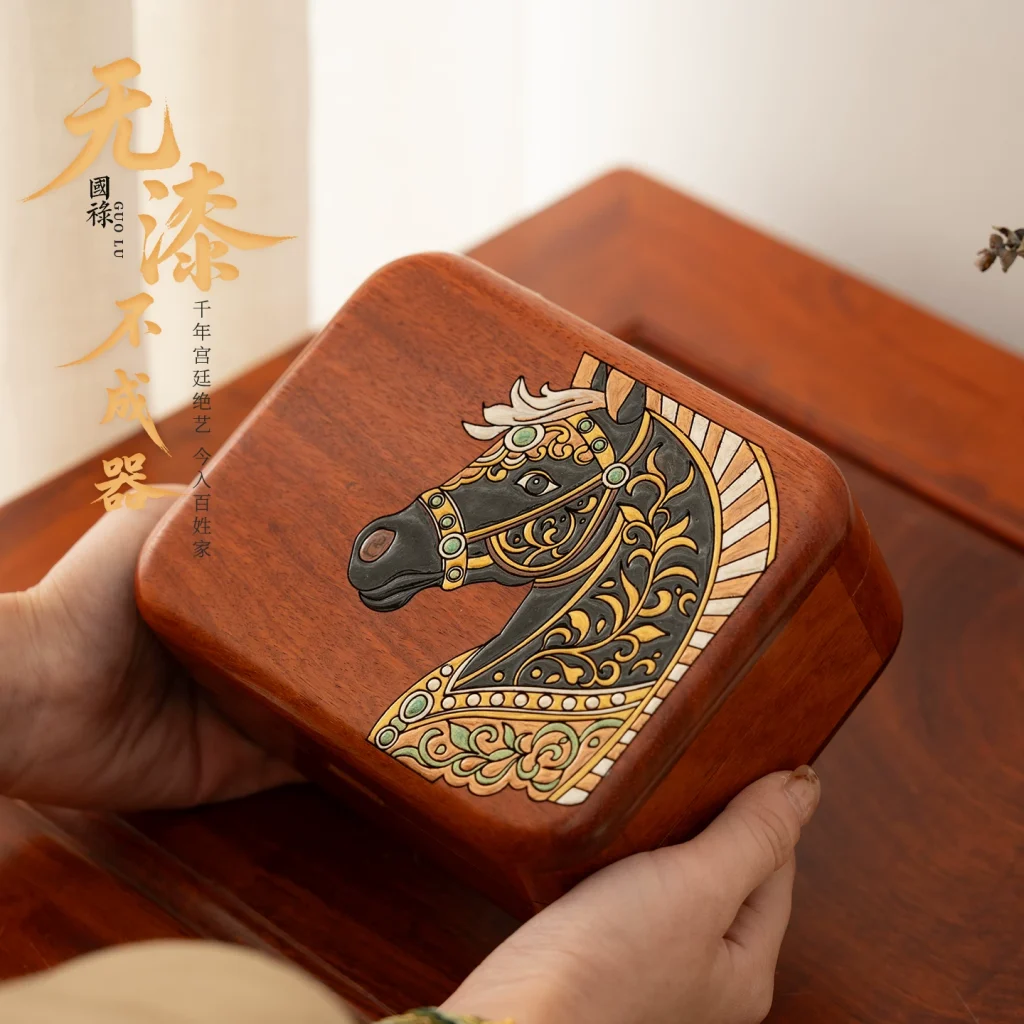
A simple whittled horse wasn’t just a representation of an animal. It reflected the livestock that pulled plows, carried goods, and meant the difference between a thriving community and a starving one. The care taken in its shaping taught a child, subtly, to value that creature.
A doll’s clothing meticulously replicated local textile patterns, hairstyles, and layers of dress. Through play, a child internalized social roles, ceremonies, and daily rituals. The materials themselves were a map of the local ecology. Birch bark from the northern forests, river clay from the floodplain, sheep’s wool from the hillside flock. A child holding that toy was literally holding a piece of their homeland.
These objects encoded practical knowledge. A spinning top taught physics. A puzzle knot taught problem-solving. A set of carved animals taught the hierarchy of the farm or the forest. They passed on social values—cooperation, resourcefulness, care for belongings—in the only language a young child truly understands: the language of play. They were not distractions from life, but preparations for it.
The Algorithm and the Awl: Why Folk Toys Captivate Us Now
Scroll through any social media platform. The visuals are often hyper-saturated, digitally smoothed, and algorithmically optimized for engagement. They can feel synthetic, weightless.
Then a video appears of hands turning a lathe, shaping a rough block of cherry into a humming top. Or a close-up of needle pulling thread through homespun linen to form a doll’s smile. The effect is jarring, in the best way.
In a feed saturated with synthetic perfection, the imperfect, tactile reality of folk toy making creates a powerful aesthetic and philosophical contrast. The grain of the wood, the slight asymmetry of a hand-carved wheel, the visible mark of a chisel—these read as “authentic” in a curated world. We are drawn to the evidence of the human hand.
This phenomenon isn’t about a fetish for historical accuracy. It’s a form of visual relief. It’s a craving for tangible slowness. Sharing or watching these acts of creation is a tiny, conscious rebellion against the disposable. It’s a brief immersion in a process where time is measured in careful strokes, not in notifications. The object becomes proof of focus, a relic of attention in an age of distraction. We’re not just looking at a toy; we’re witnessing a different relationship between maker, material, and time.
Beyond the Rustic Aesthetic: Finding Relevance, Not Kitsch
The danger for any traditional craft in the modern age is reduction to a decorative aesthetic. We see it in mass-produced “primitive” dolls with factory-applied “distressing,” or in rustic-chic home decor that borrows the look but none of the spirit.
Folk toy making avoids this fate when the focus shifts decisively from reproducing a “look” to engaging with the underlying process. It’s the critical difference between buying a distressed doll from a big-box store and learning to hand-stitch a simple cloth figure using a traditional closure like a blanket stitch.
The true relevance lies in the mindfulness of the making. It’s in the connection to a material you’ve sourced or prepared yourself—feeling the difference between pine and oak, understanding how wool felt shrinks. It’s in grappling with the very constraints that shaped the original forms: limited tools, scarce materials, the need for durability.
When you work within those constraints, you aren’t just copying an antique. You’re problem-solving like your ancestors did. You begin to understand why a joint is pegged instead of glued, why paint was sparingly used, why forms are simplified. The practice becomes a dialogue with the past, not a costume. It transforms from a decoration into a discipline, one that cultivates patience, resourcefulness, and a deep appreciation for the intelligence embedded in seemingly simple objects.
The Social Byproduct: Toys and the Fabric of Community
The most non-obvious impact of folk toy making might lie not in the object itself, but in the social space of its creation. We often romanticize the solitary artisan, but in many traditions, toy making was a profoundly communal side activity.
Imagine a shepherd whittling a small animal from a spare piece of wood while minding the flock. A group of women braiding straw dolls or stitching cloth figures during an evening gathering, sharing stories as their hands worked. A grandfather showing a grandchild how to smooth the edges of a spinning top by the fire.
In these scenarios, the toy was a byproduct. The primary product was social cohesion. The act of making reinforced community bonds and facilitated intergenerational contact. Skills and stories flowed naturally. An elder’s knowledge was transmitted not through a lecture, but through guided hands—”Hold the knife this way,” “Pull the thread tight here.”
The toy, once finished, was both a gift for a child and proof of a functioning social web. It represented care, shared time, and embedded knowledge. It signaled that a child was known and valued within that web. In this light, the health of a folk toy tradition can be a subtle indicator of the health of community connection itself. Its decline often mirrors a fragmentation of those informal, intergenerational spaces of shared labor and learning.
Where to Begin: A Practical Path, Not a Prescription
Feeling the pull to engage with this tradition can be intimidating. It feels like you need a vast historical knowledge or master-level skills. You don’t. The spirit of folk toy making is accessibility. Here is a mindset, not a rigid checklist, to guide you.
Start with material, not an image. Go outside. Find a straight, smooth stick. Collect some smooth stones from a creek bed. Gather fallen pinecones or interesting seed pods. Let the material suggest the form. A forked stick might become a slingshot or a doll. A flat stone might become a canvas for a simple painted figure.
Look inward before looking globally. Research one simple form from your own ethnic or regional heritage. Was there a traditional clapping doll, a jumping jack, a specific type of whistle or noisemaker? This personal connection grounds the practice and makes it a process of discovery about your own cultural landscape.
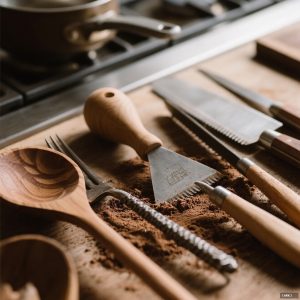
Limit your tools. A sharp pocket knife, a hand drill, a needle, some strong thread, sandpaper. The goal is to feel the resistance of the material, to collaborate with it, not dominate it with power tools. The learning is in the feedback between your hand and the wood or cloth.
Make it for someone. If possible, make a toy with a specific child in mind. Let their age and likely play guide your design choices. Will it be chewed on? It needs safe, non-toxic finishes. Will it be dragged through the dirt? It needs sturdy construction. This focus moves the project from an abstract exercise to an act of tangible care.
Most importantly, embrace the wobble. A lopsided doll, a top that spins with a drunken charm, a whistle that requires just the right breath—these “flaws” are where the soul lives. They are the marks of your unique hands on the material, the signature of a first attempt, a learning process made visible. They connect you directly to every novice maker throughout history who also started with imperfect, heartfelt creations.
Navigating Common Questions
Isn’t this just for grandparents or ultra-traditionalists?
Not at all. While it honors tradition, the core principles are strikingly modern and countercultural: radical resourcefulness, deep connection to local materials and place, mindful creation over passive consumption. These are antidotes to the anxieties of digital overload and environmental waste. It appeals to anyone seeking a more grounded, hands-on way of being in the world.
Do I need expensive tools or rare skills?
The opposite is true. Folk toys arise from the most universal tools imaginable: a sharp knife, a needle, an awl, strong hands, and observational eyes. The required skill is not technical mastery, but the ability to see possibility in the ordinary—to look at a gourd and see a rattle, or at a scrap of fabric and see a companion.
Are folk toys safe by modern standards?
This requires thoughtful adaptation. Historical toys often used materials we now know are hazardous, like lead-based paints or small, easily detached parts. The intelligent approach is to recreate the form and spirit using modern, non-toxic finishes (like milk paint or food-safe oils) and secure construction techniques. Always consider the age of the child and supervise play appropriately. We can honor the past without replicating its risks.
Sources & Further Pathways
- The Strong National Museum of Play: History of Toys Collection https://www.museumofplay.org/collections/history-of-toys/
- American Folk Art Museum: Material Culture Essays https://folkartmuseum.org/exhibitions/material-culture/
- V&A Museum of Childhood: Traditional Toys https://www.vam.ac.uk/moc/collections/traditional-toys
- UNESCO Intangible Cultural Heritage Lists (search “toy making”) https://ich.unesco.org/en/lists
- Center for the Study of Traditional American Arts: Craft Essays https://cstaa.org/resources

The quiet act of folk toy making is an invitation. It asks us to slow down, to look at the materials already around us with new eyes, and to remember that the most powerful gifts often carry the marks of the hands that made them. It’s not about building a museum in your home. It’s about picking up a piece of wood and starting a conversation—with the material, with the past, and with your own capacity to create something real.
✨ You Might Also Enjoy

You may also like
Herbal Bead Bracelet: Ancient Chinese Aromatherapy for Modern Wellness | HandMyth™
Original price was: ¥2,199.00.¥1,352.00Current price is: ¥1,352.00. Add to cartPremium Herbal Beads Bracelet: Traditional Medicine Meets Modern Jewelry | Shop HandMyth
Original price was: ¥874.00.¥608.00Current price is: ¥608.00. Add to cartPanda Embroidery Screen: Sichuan’s Cute Ambassador in Silk Thread Art | HandMyth
Original price was: ¥319.00.¥230.00Current price is: ¥230.00. Add to cartPanda Gift Set: Curated Chinese Treasures for Panda Lovers | HandMyth™ (Free Gift Wrap)
Original price was: ¥136.00.¥118.00Current price is: ¥118.00. Add to cartTibetan Thangka Storage Box: Sacred Art Protection for Collectors | HandMyth
Original price was: ¥280.00.¥219.00Current price is: ¥219.00. Add to cartPure Silk Handbag: Hangzhou’s Legendary Silk Weaving for Modern Elegance | HandMyth™
Original price was: ¥874.00.¥786.00Current price is: ¥786.00. Add to cartHand-Painted Silk Scarf: Wearable Art from China’s Silk Road | HandMyth (Artist Signed)
Original price was: ¥1,017.00.¥935.00Current price is: ¥935.00. Add to cartModern Qipao Dress: Timeless Chinese Elegance for Today’s Woman | HandMyth (Custom Fit)
Original price was: ¥2,459.00.¥2,240.00Current price is: ¥2,240.00. Add to cartEmbroidered Chinese Handbag: Suzhou Silk Embroidery Meets Modern Fashion | HandMyth™
Original price was: ¥680.00.¥646.00Current price is: ¥646.00. Add to cart