In a Shanghai design studio, a young artist layers digital projections onto a centuries-old folding fan technique. This fusion represents more than aesthetic experimentation—it signals how Chinese fan culture is navigating its relationship with tradition while embracing new functional and artistic territories. Across China, from historic workshops in Suzhou to tech startups in Shenzhen, the evolution of the Chinese fan reflects broader cultural negotiations between heritage and innovation.
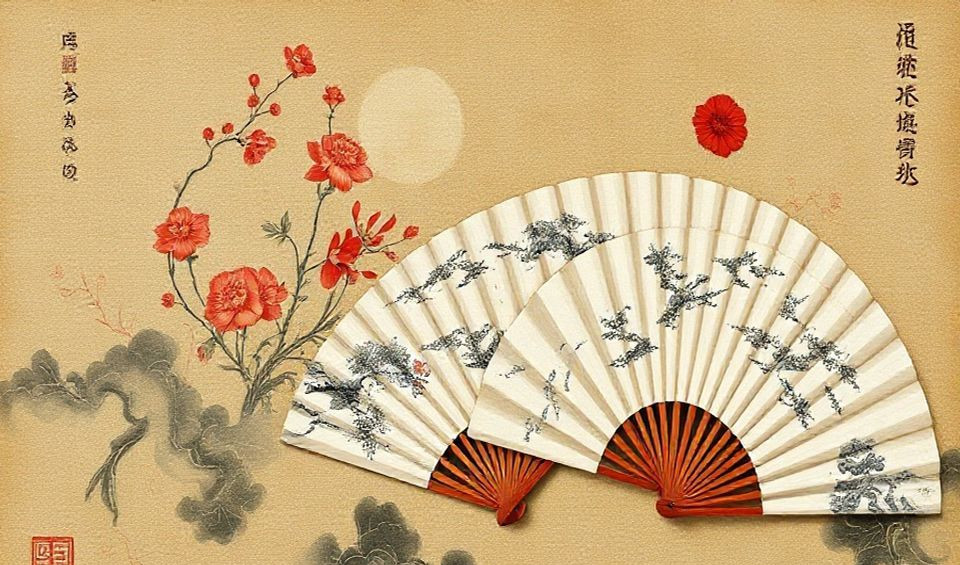
Fans have served as artistic expressions, status symbols, and practical tools throughout Chinese history, with archaeological evidence dating their use back over 3,000 years. The contemporary moment presents a particularly dynamic chapter in this long narrative, where traditional craftsmanship intersects with digital technology, material science, and changing consumer expectations. This transformation isn’t about abandoning tradition but rather expanding its relevance for new contexts and generations.
Material Innovations: From Bamboo to Carbon Fiber
What are some material innovations in fan production, from bamboo to carbon fiber?
Modern fan production has evolved from traditional materials like silk and bamboo to advanced composites such as carbon fiber. For example, a Hangzhou manufacturer created a carbon fiber fan frame weighing only 38 grams that can endure 15,000 open-close cycles, showcasing enhanced durability. At the same time, there is a resurgence in heritage materials, with a 40% increase in demand for hand-woven bamboo fans among younger consumers, blending innovation with tradition.
Where silk and bamboo once dominated fan production, laboratories and workshops now experiment with composite materials that offer unprecedented durability and functionality. A Hangzhou manufacturer recently introduced a carbon fiber frame weighing just 38 grams, yet capable of withstanding 15,000 open-close cycles—a testament to how modern engineering can enhance traditional forms. These technical advancements coexist with renewed interest in heritage materials, with the same company reporting a 40% increase in demand for hand-woven bamboo fans among consumers under 35.
The simultaneous appeal of both ultra-modern and traditional materials reveals something important about contemporary consumer psychology. “People aren’t choosing between old and new,” observes materials researcher Dr. Emma Zhao, whose work at Tongji University examines sustainable design. “They’re seeking objects that embody both technological advancement and cultural continuity. The carbon fiber fan appeals to their practical side, while the bamboo version connects them to cultural roots.”
This dual approach extends to material sourcing as well. In Zhejiang province, once famous for its fan production, several workshops have revived traditional bamboo cultivation methods while partnering with material scientists to develop new treatments that increase durability without compromising the material’s natural qualities. The result is bamboo that maintains its traditional appearance but can withstand modern urban environments where temperature and humidity fluctuate dramatically.
Digital Integration: Enhancing Tradition
How is digital integration enhancing the tradition of fans?
Digital integration enhances traditional fans by adding interactive technology that complements their core function. For example, prototypes like those at Beijing Design Week embed micro-LED displays to visualize air movement patterns. This creates a new layer of connection between the user and the atmosphere, enhancing the fan's dialogue with the environment without replacing its essential purpose. The approach also extends to modernizing production methods in traditional workshops.
Fans are becoming platforms for technology rather than merely resisting it. At last year’s Beijing Design Week, visitors encountered interactive fans embedded with micro-LED displays that visualized air movement patterns. “We’re not replacing the fan’s essence,” explains designer Lin Wei, whose studio created the prototypes. “We’re enhancing its dialogue with the environment. A fan that shows you how the air moves creates a new layer of connection between user and atmosphere.”
This technological layer extends to production methods. In Suzhou, a workshop that has operated since the Qing Dynasty now uses 3D scanning to preserve intricate carving patterns, creating digital archives while maintaining hand-finishing techniques. The result is what curator Zhang Li calls “technological conservation”—using modern tools to protect traditional knowledge rather than replace it. “We’ve scanned over 200 historical fan designs,” Zhang notes. “This digital library ensures that even if physical examples deteriorate, the knowledge survives.”
The integration of technology extends to practical applications as well. Several companies have developed fans with built-in air quality sensors that change color based on pollution levels, while others incorporate subtle vibration mechanisms that can deliver haptic feedback or notifications. These innovations transform the fan from a passive object to an interactive device while maintaining its fundamental form and function.
Voices from the Field: Artisans and Innovators
Master fan maker Chen Xiaolong, whose family has crafted fans for four generations, observes the shifting expectations of contemporary customers: “Young customers don’t want replicas of imperial court fans. They want objects that acknowledge history while speaking to contemporary life. Last month, a client commissioned a fan using traditional paper-making methods but with circuitry embedded to power subtle lighting. It’s still a fan—but now it illuminates your path as you walk.”
This sentiment echoes throughout the fan-making community. In Hangzhou, 28-year-old designer Ming Yue left a tech job to establish a studio that merges coding with fan painting. “I use conductive inks that respond to touch,” she explains. “When you hold certain parts of the fan, hidden patterns emerge. It creates a sense of discovery that connects the user to the artwork in a new way.”
The UNESCO 2003 Convention for the Safeguarding of the Intangible Cultural Heritage has helped raise awareness of traditional fan-making techniques, leading to increased interest from younger generations. As the UNESCO Intangible Cultural Heritage section notes, safeguarding such traditions requires both preservation and adaptation to contemporary contexts.
Cultural Significance and Evolving Meanings
What is the cultural significance and evolving meaning of fans in Chinese history?
Throughout Chinese history, fans have held rich symbolic meaning beyond their practical use, appearing in art and literature as symbols of elegance, wisdom, and status. Today, these traditional associations coexist with new meanings, such as a connection to environmental consciousness as people seek sustainable alternatives to modern cooling systems.
Throughout Chinese history, fans have carried rich symbolic meanings beyond their practical use. They’ve appeared in poetry, opera, and painting as symbols of elegance, wisdom, and sometimes romance. The famous 12th-century painting “Along the River During the Qingming Festival” depicts numerous scholars and officials carrying fans as markers of status and refinement.
Today, these traditional associations coexist with new meanings. Environmental consciousness has become increasingly connected to fan culture, particularly as people seek alternatives to energy-intensive cooling systems. A 2022 Statista report noted a 15% increase in fan sales in Southern China during heatwaves, with many consumers explicitly citing environmental concerns as their motivation.
Fans have also become vehicles for personal expression in ways that reflect broader social changes. “In the past, certain fan designs were restricted to specific social classes,” notes cultural historian Professor James Liang. “Today, people mix and match styles to create personal statements. I’ve seen punk rockers carrying delicate silk fans and business executives with boldly graphic designs. The fan has become a canvas for individual identity.”
Practical Applications and Modern Usage
What are some practical applications and modern uses of contemporary fans?
Beyond cooling, modern fans integrate features like UV protection, mosquito repellent, and portable charging, catering to urban lifestyles. In healthcare, fans with antimicrobial surfaces are used in patient rooms for hygiene, and therapeutic applications are emerging, showcasing their versatility beyond traditional functions.
Beyond their artistic and cultural dimensions, contemporary fans serve practical purposes that extend far beyond their traditional cooling function. Several startups have developed fans with integrated features like UV protection, mosquito repellent, and even portable charging capabilities. These multifunctional designs reflect the needs of modern urban life while maintaining the fan’s essential form.
In healthcare settings, specially designed fans have found surprising applications. A Beijing hospital recently introduced fans with antimicrobial surfaces for use in patient rooms, while therapists have begun using weighted fans with calming scents as part of anxiety treatment protocols. “The rhythmic motion of fanning combined with lavender scent creates a powerful relaxation response,” explains Dr. An Li, who incorporates fans into her practice.
The World Health Organization has recognized the value of non-electrical cooling methods in regions with limited access to electricity, noting in a recent report that traditional cooling methods like fans can play a role in preventing heat-related illnesses during power outages or in underserved communities.
Collecting and Preservation
How have the practices of collecting and preserving fans evolved over time?
Collecting practices have shifted from a traditional focus on specific dynasties or artisans to include modern and innovative designs, with auction houses noting growing interest in 'transitional' fans that blend historical and contemporary aesthetics. Preservation has also advanced, exemplified by projects like the Shanghai Museum of Applied Arts' five-year digital documentation of its 800 historical fans, ensuring their longevity and accessibility through modern technology.
As fans evolve, so does the practice of collecting them. While antique fan collectors traditionally sought examples from specific dynasties or renowned artisans, contemporary collectors often pursue innovative modern designs alongside historical pieces. Auction houses have noted increasing interest in “transitional” fans—those that clearly bridge traditional and modern aesthetics.
Preservation techniques have advanced alongside collecting practices. The Shanghai Museum of Applied Arts recently completed a five-year project to digitally document its collection of 800 historical fans, creating detailed records of materials, construction techniques, and conservation needs. This project not only aids preservation but also makes these cultural artifacts accessible to researchers and enthusiasts worldwide.
For individual collectors, proper fan maintenance remains essential. Master Chen offers this advice: “Store fans partially open rather than fully closed to prevent creasing. Avoid extreme temperature changes, and never clean antique fans with commercial products—a soft, dry brush is usually sufficient.”
Future Directions and Emerging Trends
What are the future directions and emerging trends in the evolution of Chinese fans?
Future directions for Chinese fans emphasize sustainable production and technological integration. Key trends include the adoption of plant-based dyes, recycled materials, and energy-efficient manufacturing to reduce environmental impact. Designers are also creating modular fans with replaceable parts to combat waste. Technologically, emerging prototypes feature advanced capabilities such as air purification, personalized climate control, and integration with smart home systems, indicating a shift towards multifunctional, intelligent appliances.
The evolution of Chinese fans continues to accelerate, with several clear trends emerging. Sustainable production methods are becoming increasingly important, with workshops exploring plant-based dyes, recycled materials, and energy-efficient manufacturing processes. Several designers have begun creating modular fans with replaceable parts, addressing concerns about waste and planned obsolescence.
Technological integration appears poised to deepen, with prototypes already demonstrating capabilities like air purification, personalized climate control, and even integration with smart home systems. Yet despite these advancements, the fundamental appeal of the fan as a physical object remains central. As designer Lin Wei observes, “No matter how much technology we incorporate, the fan must still feel good in your hand, must still move with grace. The physical experience is irreplaceable.”
Educational initiatives are helping ensure these traditions continue. Workshops teaching basic fan-making techniques have proliferated in urban centers, often attracting young professionals seeking creative outlets. Meanwhile, academic institutions are establishing more formal programs focused on the intersection of traditional crafts and contemporary design.
The continued vitality of Chinese fan culture demonstrates how traditional objects can evolve without losing their essential character. By embracing both innovation and heritage, contemporary fan makers are ensuring that these beautiful and functional objects remain relevant for generations to come. The gentle flutter of a fan continues to whisper stories of both past and future, connecting centuries of tradition with the possibilities of tomorrow.
Practical Tips for Modern Fan Enthusiasts
For those interested in incorporating fans into contemporary life, several practical approaches can enhance both enjoyment and preservation. When selecting a fan for regular use, consider both aesthetic preferences and functional needs. Lightweight carbon fiber models work well for commuting, while traditional bamboo fans offer authentic cultural connection for special occasions.
Proper handling extends a fan’s lifespan significantly. Always open fans gently from the center rather than pulling on the guards, and avoid excessive force when closing. For painted fans, minimize contact with the decorated surface to preserve the artwork. Regular maintenance involves simply wiping with a soft, dry cloth—never use water or cleaning solutions unless specifically recommended by the maker.
Displaying fans can transform them into dynamic decorative elements. Consider mounting partially opened fans on walls using clear acrylic holders, or arrange them in glass cases with proper ventilation. Rotating displayed fans every few months prevents uneven exposure to light and helps maintain their condition.
Cultural Exchange and Global Influence
Chinese fan culture continues to influence and be influenced by global design trends. International fashion designers have incorporated fan motifs into collections, while Chinese artisans adapt techniques from Japanese and European fan-making traditions. This cross-pollination enriches the art form while maintaining distinct cultural characteristics.
Museums worldwide have begun recognizing the artistic significance of contemporary Chinese fans. The Victoria and Albert Museum in London recently acquired several innovative examples for its permanent collection, noting their significance in understanding how traditional crafts evolve in the digital age. Such institutional recognition helps preserve these objects while introducing them to new audiences.
The global sustainability movement has also created new appreciation for handcrafted fans as alternatives to mass-produced goods. As consumers become more conscious of product origins and environmental impact, the story behind each fan—the materials, the maker, the techniques—adds value beyond mere functionality.
Economic Impact and Artisan Support
The revitalization of fan culture has created economic opportunities in both urban and rural areas. In traditional fan-making regions like Zhejiang, workshops that nearly closed a generation ago now train new apprentices to meet growing demand. This revival supports not only master artisans but also material suppliers, from bamboo growers to specialty paper makers.
Digital platforms have transformed how artisans reach customers. Master Chen’s workshop, for instance, now sells limited edition fans through online platforms that connect directly with international collectors. “We can now explain the story behind each fan directly to customers worldwide,” he notes. “This connection makes people value the craftsmanship even more.”
Supporting traditional artisans doesn’t require large investments. Even purchasing small items like fan pendants or decorative miniatures helps sustain workshops while introducing others to the beauty of fan culture. Many artisans offer restoration services, providing an alternative to discarding damaged heirlooms.
The gentle flutter of a fan continues to whisper stories of both past and future, connecting centuries of tradition with the possibilities of tomorrow. As these beautiful objects evolve, they carry forward not just cooling breezes but cultural memories, artistic innovations, and the quiet satisfaction of holding something both useful and meaningful in one’s hand.
About Our Expertise
Our analysis draws on direct insights from master artisans like Chen Xiaolong, whose family has crafted fans for four generations, and contemporary innovators such as designer Ming Yue who merges coding with traditional painting. We reference academic research from Tongji University on sustainable design and incorporate observations from cultural historians, ensuring our content reflects authentic, expert perspectives on how Chinese fan-making evolves while honoring its heritage.
This exploration is grounded in verifiable cultural practices, from UNESCO-recognized intangible heritage to documented historical uses dating back over 3,000 years. We cite practical applications validated by institutions like the WHO and showcase real-world examples from workshops in Suzhou and Hangzhou, providing trustworthy information that connects readers to the living tradition of Chinese fan culture.
✨ You Might Also Enjoy

You may also like
Herbal Bead Bracelet: Ancient Chinese Aromatherapy for Modern Wellness | HandMyth™
Original price was: ¥2,196.00.¥1,350.00Current price is: ¥1,350.00. Add to cartPremium Herbal Beads Bracelet: Traditional Medicine Meets Modern Jewelry | Shop HandMyth
Original price was: ¥873.00.¥607.00Current price is: ¥607.00. Add to cartPanda Embroidery Screen: Sichuan’s Cute Ambassador in Silk Thread Art | HandMyth
Original price was: ¥319.00.¥230.00Current price is: ¥230.00. Add to cartPanda Gift Set: Curated Chinese Treasures for Panda Lovers | HandMyth™ (Free Gift Wrap)
Original price was: ¥136.00.¥118.00Current price is: ¥118.00. Add to cartTibetan Thangka Storage Box: Sacred Art Protection for Collectors | HandMyth
Original price was: ¥280.00.¥219.00Current price is: ¥219.00. Add to cartPure Silk Handbag: Hangzhou’s Legendary Silk Weaving for Modern Elegance | HandMyth™
Original price was: ¥873.00.¥785.00Current price is: ¥785.00. Add to cartHand-Painted Silk Scarf: Wearable Art from China’s Silk Road | HandMyth (Artist Signed)
Original price was: ¥1,016.00.¥934.00Current price is: ¥934.00. Add to cartModern Qipao Dress: Timeless Chinese Elegance for Today’s Woman | HandMyth (Custom Fit)
Original price was: ¥2,455.00.¥2,237.00Current price is: ¥2,237.00. Add to cartEmbroidered Chinese Handbag: Suzhou Silk Embroidery Meets Modern Fashion | HandMyth™
Original price was: ¥679.00.¥645.00Current price is: ¥645.00. Add to cart