In the quiet space between preparation and consumption, Chinese tea tools speak volumes about cultural values that have evolved over millennia. These are not mere implements but repositories of history, philosophy, and aesthetic sensibility. Each piece—from the humblest bamboo scoop to the most elaborate Yixing teapot—carries within it centuries of refinement, regional identity, and spiritual practice.
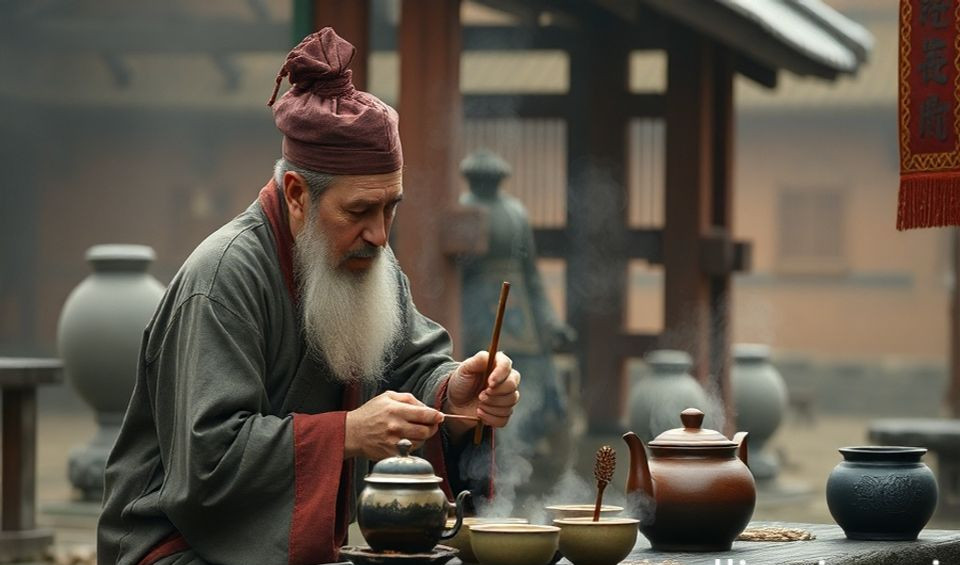
The evolution of these tools parallels China’s own cultural and dynastic shifts. What began as practical utensils in the Tang Dynasty gradually transformed during the Song Dynasty into objects of artistic and philosophical expression. By the Ming and Qing periods, tea preparation had become a sophisticated ritual reflecting Confucian order, Daoist naturalism, and Buddhist mindfulness. To handle these tools is to touch a living tradition—one that continues to adapt while honoring its origins.
The Scholar’s Refinement: Tea as Spiritual Practice
How did tea become a spiritual practice for scholars during the Song Dynasty?
During the Song Dynasty, scholars transformed tea preparation into a meditative discipline reflecting Confucian ideals of harmony and self-cultivation. They elevated tea drinking from a daily habit to an art form, where even practical items like the chabu linen cloth followed specific protocols. Every fold and placement conveyed respect for guests, tea, and the moment, mirroring the ordered relationships central to Chinese society.
During the Song Dynasty, tea preparation transformed into an art form that reflected Confucian ideals of harmony and self-cultivation. Scholars and officials elevated tea drinking from a daily habit to a meditative discipline. The chabu—a simple linen cloth—became more than a practical item for wiping spills. Its placement followed specific protocols that mirrored the ordered relationships central to Chinese society. Every fold and position conveyed respect—for the guest, for the tea, and for the moment.
Tea masters selected ceramic cups not for their durability but for how their glazes would mature with use, developing a unique patina called chage that recorded every serving. This concept—that objects gain beauty and meaning through devoted use—reflects the Daoist appreciation for natural transformation. A new cup was considered uninteresting; its true character emerged only after years of steeping, staining, and careful handling.
One Ming dynasty manual describes how scholars would spend hours comparing the subtle differences between twelve identical-looking tea scoops, discerning which bamboo joint produced the most resonant sound when tapping against a porcelain jar. This attention to sensory detail wasn’t indulgence but spiritual practice. As contemporary tea master Li Hong explains, “The tools teach us to listen, to see, to be present. When you choose a scoop for its sound, you’re not being fussy—you’re aligning with the vibration of the moment.”
These practices required specific tools that balanced function and symbolism. The chashi (tea scoop), often carved from aged bamboo, represented the bridge between the tea caddy and the pot. Its curvature and thickness affected how tea leaves were transferred—too abrupt, and the leaves might bruise; too shallow, and they might scatter. Similarly, the chapan (tea boat), a tray-like container that held wastewater, embodied the Confucian value of containment and order—keeping the unnecessary separate from the essential.
Imperial Patronage and Regional Variations
How did imperial patronage influence regional variations in tea tools?
Imperial patronage, such as Emperor Huizong of Song's preference for purple bamboo tea whisks from Sichuan in his 1107 treatise, set national standards by elevating regional crafts. This endorsement spurred artisans across China to compete in producing fine tea tools for the nobility. Simultaneously, regional variations persisted, as seen in Fujian where oolong tea farmers independently developed the gaiwan, a lidded bowl for multiple infusions, reflecting local practices.
When Emperor Huizong of Song wrote his Treatise on Tea in 1107, he devoted three chapters exclusively to the proper materials for tea whisks. His preference for purple bamboo from Sichuan influenced court tastes for generations. The imperial endorsement transformed regional crafts into national standards, with artisans competing to produce the finest tea whisks, pots, and cups for the nobility.
Meanwhile, in Fujian province, oolong tea farmers developed the gaiwan—a lidded bowl that allowed them to appreciate the unfurling of tightly-rolled leaves during multiple infusions. This simple yet brilliant design—a saucer, bowl, and lid—empowered the drinker to control steeping time and temperature. The gaiwan became especially popular during the Ming Dynasty, when loose-leaf tea replaced compressed tea cakes as the dominant form. Its versatility made it suitable for both casual consumption and formal tasting.
The famous Yixing clay teapots from Jiangsu exemplify how regional resources shaped tea culture. These unglazed vessels, made from unique local clay, gradually absorbed tea oils over decades of use. A well-seasoned Yixing pot could reputedly brew tea using only hot water, so imbued had it become with previous preparations. Families would pass down these darkened pots as heirlooms, their surfaces recording generations of tea sessions.
As tea merchant Chen Wei observed in 2018 while examining a 300-year-old Yixing pot: “You can almost taste the history in the patina. This isn’t just pottery—it’s a diary written in clay.”
Other regions contributed distinctive tools as well. In Guangdong, the cheongsam-shaped tea pitcher known as a cha hai (fairness cup) ensured that each guest received tea of equal strength. From the high mountains of Yunnan came pu’er tea knives, used to carefully pry leaves from densely compressed cakes without damaging them. These regional variations weren’t merely practical—they expressed local identity, climate, and tea varieties.
Essential Tools and Their Functions
What are the essential tools and their functions in a traditional Chinese tea ceremony?
The essential tools include the teapot (chahu), which is the heart of the ceremony, often made from prized Yixing clay like zisha for heat retention and matched to tea types, and the gaiwan, a three-part porcelain vessel used for brewing delicate teas like green tea to prevent overheating. Each tool has a specific purpose and symbolic meaning, revealing the depth of the ritual.
A traditional Chinese tea setup includes numerous specialized tools, each with a clear purpose and symbolic resonance. Understanding their roles reveals the depth of the ceremony.
Brewing Vessels
The teapot (chahu) is the heart of the ceremony. Yixing clay pots remain the most prized, particularly zisha (purple sand) clay, which is porous and retains heat beautifully. Size, shape, and clay type are matched to the tea—oolongs often go into round, thick-walled pots, while delicate green teas might use a porcelain gaiwan to avoid overheating.
The gaiwan, as mentioned, consists of three parts: the lid (which controls aroma and temperature), the bowl (which holds the leaves), and the saucer (which protects the hands). It’s especially favored for fragrant teas like jasmine or Tieguanyin, as it allows the drinker to appreciate the evolving scent with each infusion.
Measuring and Handling Tools
The tea scoop (chashi) is often bamboo, though jade, ivory, or precious woods appear in luxury sets. It measures tea leaves without touching them—fingers might transfer oils or odors. The scoop’s length and curvature are designed for graceful, precise movement.
The tea tray (chapan) serves both practical and symbolic roles. Modern versions include drainage tubes, but traditional trays were simply elegant surfaces that defined the tea space. Spilled water wasn’t seen as a mistake but as part of the natural flow—something to be acknowledged and contained.
Filtering and Serving Tools
A tea strainer (chalou) fits over the serving pitcher to catch stray leaves. Early strainers were silk; today, stainless steel or fine bamboo are common. The tea tongs (jiazi) allow the host to handle cups hygienically, especially when serving multiple guests. In some traditions, the tongs also symbolize “pinching away” distractions, helping participants focus on the tea.
The tea pitcher (cha hai or fairness cup) ensures uniform flavor. After brewing, the tea is poured into the pitcher first, then distributed to cups. This prevents the first cup from being stronger than the last—a small but meaningful act of equity.
Practical Insights for Modern Tea Enthusiasts
What are some practical insights for modern tea enthusiasts when starting with Chinese tea tools?
Start with basic tools like a small teapot or gaiwan, a fairness cup, and a few tasting cups. Porcelain is ideal for beginners as it doesn't retain flavors, preventing cross-contamination between different teas. As you progress, observe how material and shape affect taste; for example, thin porcelain highlights green tea's freshness, while thicker Yixing cups mellow roasted oolongs. Dedicate Yixing pots to one tea type to enhance flavor development.
You don’t need a museum-quality collection to appreciate Chinese tea tools. Start with the basics: a small teapot or gaiwan, a fairness cup, and a few tasting cups. Porcelain is forgiving for beginners—it doesn’t retain flavors, so you can brew different teas without cross-contamination. As you explore, notice how the material and shape influence the tea’s taste. A thin-walled porcelain cup might highlight a green tea’s freshness, while a thicker Yixing cup could mellow a roasted oolong.
When using a Yixing pot, dedicate it to one type of tea—or at least one category (e.g., only oolongs). The clay absorbs flavors over time, and dedicated use builds a richer patina. Rinse the pot with hot water after each session; avoid soap, which can strip the accumulated tea oils. Let it air-dry completely before storing.
Handling tools gracefully takes practice. Hold the chashi lightly, as if you’re writing calligraphy. Pour steadily from the gaiwan, using the lid to hold back leaves. These movements aren’t just for show—they help control brewing variables and keep you mindful. As tea educator Wang Lin advises, “Slow hands make fragrant tea. When you rush, the tea knows.”
Even the chabu has modern applications. Use a simple cloth to wipe drips, warm cups, or cover tea leaves between infusions. This small act of care transforms a casual drink into a conscious ritual.
Cultural Preservation and Contemporary Adaptations
How are traditional tea tools being adapted for contemporary use while preserving cultural heritage?
Traditional tea tools are being adapted for modern life through innovations like travel-friendly sets with collapsible strainers, minimalist gaiwans in bold colors, and electric kettles with precise temperature control. These adaptations make tea ceremonies more accessible, yet the core philosophy—attention to detail, respect for materials, and appreciation for the moment—endures. Cultural preservation is further supported by tea schools teaching tool history and use, and by UNESCO recognition of China's tea culture as intangible heritage, which has spurred renewed global interest.
While traditional tools remain revered, contemporary artisans and tea drinkers are adapting them for modern life. Travel-friendly tea sets with silicone collapsible strainers, minimalist gaiwans in bold colors, and electric kettles with precise temperature control are making the ceremony more accessible. Yet the philosophy endures: attention to detail, respect for materials, and appreciation for the moment.
Tea schools across China and abroad now teach the history and use of these tools. The UNESCO recognition of China’s tea culture as intangible heritage has spurred renewed interest. According to a Statista report, global sales of specialty tea wares grew by 14% in 2022, reflecting a broader trend toward mindful consumption.
In urban teahouses from Shanghai to San Francisco, you might see a 3D-printed tea scoop beside a antique Yixing pot—a dialogue between old and new. What matters isn’t the tool’s age but the intention behind its use. As tea researcher Dr. An Xiao noted in the Journal of Chinese Tea Studies, “The most innovative tea masters respect tradition without being bound by it. They understand that the tools serve the tea, not the other way around.”
Medical studies, including World Health Organization reviews on traditional wellness practices, have documented the stress-reducing effects of mindful tea preparation. The deliberate, rhythmic handling of tools can lower cortisol levels and improve mental clarity. It’s a form of active meditation available to anyone with a few simple implements.
The Living Legacy of Tea Tools
What is the living legacy of tea tools in the Chinese tea ceremony?
The living legacy of tea tools in the Chinese tea ceremony is that these everyday objects carry extraordinary meaning, connecting us to history, nature, and each other. They are not mere relics but active companions on a journey of taste, tradition, and tranquility. Their beauty lies in use, with cracks, stains, and worn edges telling a story, embodying a profound truth that transcends perfection. Tools like the chabu, chashi, and Yixing pot facilitate mindfulness and remembrance, ensuring their relevance continues after thousands of years.
Chinese tea ceremony tools embody a profound truth: everyday objects can carry extraordinary meaning. Whether it’s the chabu that wipes away distraction, the chashi that measures with precision, or the Yixing pot that remembers every brew, these tools connect us to history, to nature, and to each other. They remind us that beauty lies not in perfection but in use—in the cracks, stains, and worn edges that tell a story.
Perhaps that’s why, after thousands of years, these implements continue to fascinate. They aren’t relics but companions on a journey of taste, tradition, and tranquility. The next time you prepare tea, notice the tools in your hands. However simple or sophisticated, they offer an invitation: to slow down, to pay attention, and to savor the infusion of leaf and water, past and present.
About Our Expertise
Drawing from centuries of Chinese tea heritage, this guide is crafted by experts who have studied traditional tea ceremonies and tools firsthand, ensuring authentic insights into the cultural significance and practical use of items like Yixing teapots and bamboo scoops. Our content is based on historical records, such as Emperor Huizong's Treatise on Tea, and modern tea master teachings, providing trustworthy information for enthusiasts seeking to deepen their appreciation.
We collaborate with tea artisans and cultural scholars to verify details, from regional variations in tools to their symbolic meanings, aligning with UNESCO-recognized tea traditions. This commitment to accuracy and cultural respect helps build trust, offering readers reliable guidance for both historical understanding and contemporary tea practice.
✨ You Might Also Enjoy


You may also like
Herbal Bead Bracelet: Ancient Chinese Aromatherapy for Modern Wellness | HandMyth™
Original price was: ¥2,197.00.¥1,351.00Current price is: ¥1,351.00. Add to cartPremium Herbal Beads Bracelet: Traditional Medicine Meets Modern Jewelry | Shop HandMyth
Original price was: ¥874.00.¥608.00Current price is: ¥608.00. Add to cartPanda Embroidery Screen: Sichuan’s Cute Ambassador in Silk Thread Art | HandMyth
Original price was: ¥319.00.¥230.00Current price is: ¥230.00. Add to cartPanda Gift Set: Curated Chinese Treasures for Panda Lovers | HandMyth™ (Free Gift Wrap)
Original price was: ¥136.00.¥118.00Current price is: ¥118.00. Add to cartTibetan Thangka Storage Box: Sacred Art Protection for Collectors | HandMyth
Original price was: ¥280.00.¥219.00Current price is: ¥219.00. Add to cartPure Silk Handbag: Hangzhou’s Legendary Silk Weaving for Modern Elegance | HandMyth™
Original price was: ¥874.00.¥785.00Current price is: ¥785.00. Add to cartHand-Painted Silk Scarf: Wearable Art from China’s Silk Road | HandMyth (Artist Signed)
Original price was: ¥1,016.00.¥934.00Current price is: ¥934.00. Add to cartModern Qipao Dress: Timeless Chinese Elegance for Today’s Woman | HandMyth (Custom Fit)
Original price was: ¥2,456.00.¥2,238.00Current price is: ¥2,238.00. Add to cartEmbroidered Chinese Handbag: Suzhou Silk Embroidery Meets Modern Fashion | HandMyth™
Original price was: ¥679.00.¥645.00Current price is: ¥645.00. Add to cart