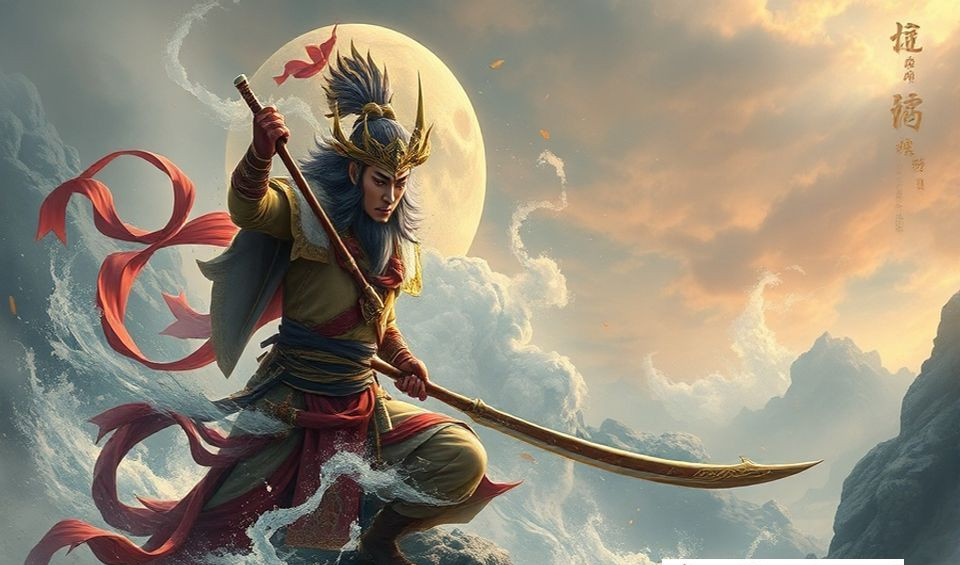
The stone monkey who once challenged heaven now faces a different kind of revolution. Across China’s creative industries, mythological IPs are undergoing a transformation that transcends mere adaptation, becoming sophisticated narrative ecosystems with global ambitions. These stories, rooted in ancient texts like Journey to the West and Investiture of the Gods, are no longer confined to regional appeal—they are being re-engineered for international consumption while preserving their cultural soul.
This evolution reflects broader shifts in China’s cultural export strategy. As the country strengthens its soft power initiatives, mythological figures serve as both artistic vehicles and diplomatic bridges. The World Intellectual Property Organization notes that China has become one of the top five filers of international trademarks in entertainment, with mythological characters featuring prominently in this expansion.
The Mythological IP Ecosystem Matures
How has the mythological IP ecosystem matured around figures like Sun Wukong?
The mythological IP ecosystem has matured from simple retellings to sophisticated franchise management. Companies now treat figures like Sun Wukong as anchors for interconnected worlds across animation, games, and merchandise, with each product reinforcing the others. For example, Mythos Studios' recent animated series generated over 200 million streaming hours in three months, demonstrating the success of this integrated strategy.
What began as straightforward retellings has evolved into complex IP management strategies. Production companies now treat mythological figures like Sun Wukong not as singular characters but as franchise anchors. “We’re building interconnected worlds,” says Li Wei, creative director at Mythos Studios. “The Monkey King exists across animated features, mobile games, and merchandise lines simultaneously—each iteration feeding the others.” This approach has yielded tangible results: their recent animated series generated over 200 million streaming hours within three months of release.
The maturation extends beyond commercial exploitation to narrative architecture. Modern mythological IPs function like narrative constellations—central myths spawn secondary stories, character origins, and alternative timelines. A consumer might encounter Sun Wukong through a mobile game, explore his backstory in a webcomic, then engage with philosophical themes in an animated film. Each touchpoint offers complementary rather than redundant experiences.
Consider the case of “Monkey King: Reborn,” a 2021 animated film that grossed over $50 million domestically. Rather than simply retelling the familiar pilgrimage, the film explored Sun Wukong’s psychological complexity through contemporary lens. Director Wang Yun understood that modern audiences crave character depth alongside spectacle. “Mythology survives not through preservation but through relevance,” he remarked during production. “We asked what the Monkey King’s rebellion means to today’s youth facing their own societal constraints.”
Practical tip for creators: When developing mythological IPs, map the entire ecosystem before launching the core product. Identify natural expansion points—character backstories, untold adventures, or thematic variations—that can sustain multiple content streams. This prevents the common pitfall of exhausting a myth’s central narrative too quickly.
Technology as Mythological Catalyst
How does technology act as a mythological catalyst in modern filmmaking?
Advanced technology, like real-time rendering and AI-assisted animation, removes creative constraints, allowing filmmakers to faithfully depict mythological stories at their intended scale. For instance, the 2023 film 'Journey to the West: Celestial War' could visualize Sun Wukong's staff expanding to bridge heavenly realms—a scene impossible just years earlier. This enables the creation of vast battles with thousands of celestial soldiers and elaborate magical effects, directly translating epic myths to the screen.
Advanced rendering techniques and AI-assisted animation have removed previous creative constraints. Where once filmmakers hesitated to depict the full scale of mythological battles, studios now regularly create sequences featuring thousands of celestial soldiers and elaborate magical effects. The 2023 film “Journey to the West: Celestial War” utilized real-time rendering technology to visualize Sun Wukong’s iconic staff expanding to bridge heavenly realms—a scene that would have been technically impossible five years earlier. These technological leaps enable creators to stay faithful to mythological scale while introducing visual innovations.
Chen Xia, a producer at Eastern Light Pictures, observes this shift firsthand: “Our audiences expect both authenticity and innovation. When we adapted the Havoc in Heaven sequence last year, we used motion capture from wushu masters but rendered the cloud-riding through new fluid simulation algorithms. The result honors tradition while pushing visual boundaries.”
The technological transformation extends beyond visual spectacle to storytelling itself. Interactive media like video games leverage cloud computing to create living mythological worlds that evolve based on player decisions. In the mobile RPG “Legends of the Gods,” players don’t merely observe Sun Wukong’s journey—they shape alternative outcomes through branching narratives. This interactivity creates personal investment that passive media cannot match.
A telling anecdote comes from the development of “Mythical Realms VR,” an immersive experience that transports users into mythological China. During testing, international participants consistently reported deeper understanding of cultural concepts like “the Way” after virtually practicing Taoist meditation alongside digital representations of immortals. Technology here serves as cultural translation tool rather than mere spectacle generator.
Actionable insight: Embrace technological tools that enhance rather than replace cultural authenticity. When adapting mythological sequences, balance cutting-edge visuals with traditional aesthetic principles—the flowing lines of classical Chinese painting might inform character animation, while ancient architectural proportions could guide environment design.
Cultural Authenticity in Global Adaptation
How do successful global adaptations of Chinese mythological IPs like Sun Wukong maintain cultural authenticity?
Successful adaptations preserve cultural authenticity by using universal themes—like rebellion and identity—as a bridge for global audiences, while retaining distinctive cultural specifics for flavor. For example, Netflix's 'The Monkey King' series, made with Chinese studios, emphasizes Sun Wukong's core traits rather than westernizing him, ensuring the story's cultural essence remains intact while becoming internationally accessible.
The globalization of Chinese mythological IPs presents a delicate balancing act—how to make ancient stories accessible without diluting their cultural essence. Successful adaptations demonstrate that universal themes provide the bridge, while cultural specifics create the distinctive flavor that attracts international audiences.
Netflix’s collaboration with Chinese studios on “The Monkey King” animated series offers instructive lessons. Rather than westernizing the character, writers emphasized Sun Wukong’s rebellious spirit and quest for identity—themes that resonate across cultures. At the same time, they preserved philosophical underpinnings from Chinese Buddhism and Taoism, trusting audiences to appreciate these elements within their narrative context.
Cultural researcher Dr. Lin Mei from Peking University notes: “The most successful mythological exports don’t explain their cultural elements—they embed them so naturally that foreign audiences absorb them unconsciously. When Sun Wukong undergoes spiritual refinement under the mountain, international viewers understand it as a universal redemption arc, while Chinese audiences recognize the Buddhist allegory.”
According to UNESCO’s analysis of cultural adaptation, maintaining core philosophical concepts while adapting surface elements proves most effective for cross-cultural storytelling. The organization’s research indicates that audiences worldwide respond positively to stories that respect their cultural origins while making thematic connections to universal human experiences.
Practical approach: Identify 2-3 core cultural concepts in your mythological IP and ensure they remain intact throughout adaptation. For Journey to the West, these might include the Buddhist concept of redemption through service, the Taoist emphasis on natural balance, and the Confucian value of pilgrimage as moral education. Build accessibility around these pillars rather than replacing them.
Educational Integration and Cultural Preservation
How is Sun Wukong and other mythological IPs being integrated into education for cultural preservation?
Mythological IPs like Sun Wukong are being integrated into education through partnerships, such as China's Ministry of Education working with animation studios to create mythology-based learning modules. These interactive media make classical literature engaging for digital-native students, who may resist original texts. For example, at Shanghai's Changning District experimental school, teachers report dramatically improved comprehension of classical Chinese when students first encounter the stories through these modern, engaging formats, thereby aiding cultural preservation.
Beyond entertainment, mythological IPs are finding new life in educational contexts. China’s Ministry of Education has partnered with animation studios to develop mythology-based learning modules that make classical literature engaging for digital-native generations. These initiatives recognize that students who might resist reading ancient texts in their original form will eagerly consume the same stories through interactive media.
At Shanghai’s Changning District experimental school, teachers report dramatically improved comprehension of classical Chinese when students first encounter stories through animated adaptations. “The visual language helps them bridge the temporal and linguistic gap,” explains literature teacher Wang Jing. “After watching a well-produced adaptation, they approach the original text with familiarity rather than intimidation.”
UNESCO’s 2023 report on intangible cultural heritage highlights how digital media can serve preservation goals when handled respectfully. The report specifically mentions China’s mythological IP developments as examples of “living heritage”—traditional stories that continue evolving while maintaining cultural continuity.
Implementation tip: Educational content benefits from layered storytelling. Create versions that work at different depth levels—a surface adventure for casual engagement, with philosophical and historical layers accessible through supplementary materials or interactive features.
Commercial Models and Future Directions
What are the commercial models and future directions for mythological IPs like Sun Wukong?
Contemporary commercial models for mythological IPs like Sun Wukong have shifted from simple licensing to integrated revenue streams across film, streaming, gaming, merchandise, and live experiences. These media are treated symbiotically, with coordinated releases to maximize impact. The market is growing rapidly, with China's mythology-based entertainment sector expanding at 18% annually, outpacing the broader industry. Future directions involve further leveraging this cross-platform synergy and immersive technologies to deepen audience engagement and drive sustained franchise growth.
The business architecture supporting mythological IPs has matured alongside creative approaches. Where earlier models relied heavily on licensing, contemporary strategies employ integrated revenue streams spanning box office, streaming, gaming, merchandise, and live experiences. Statista data shows China’s mythology-based entertainment market growing at 18% annually—outpacing the broader entertainment sector.
Successful franchises now treat different media as symbiotic rather than sequential. A film release coincides with game launches, merchandise drops, and immersive exhibition openings—each platform reinforcing the others. This ecosystem approach creates multiple entry points while maximizing engagement across demographic segments.
Looking forward, several trends suggest continued evolution. First, co-creation with international partners is increasing—not as cultural compromise but as creative expansion. Second, blockchain and NFT technologies enable new forms of fan ownership and participation in mythological worlds. Finally, extended reality platforms promise to transform mythological stories from spectacles to inhabited experiences.
The stone monkey’s journey continues, now spanning digital realms and global markets. His transformation from rebellious deity to cultural ambassador illustrates how ancient myths can find new vitality when supported by thoughtful strategy, technological innovation, and respect for cultural roots. As these stories cross borders and platforms, they carry forward millennia of tradition while speaking to contemporary hopes and struggles—proof that some legends never end, they simply find new forms.
Case Study: Sun Wukong’s Digital Renaissance
How does Sun Wukong's transformation in 'Honor of Kings' demonstrate strategic mythological IP development?
Sun Wukong's transformation in the mobile game 'Honor of Kings' demonstrates strategic mythological IP development by adapting this ancient character for modern digital media. The developers preserved his core mythological powers—like cloud riding, shape-shifting, and wielding his extending staff—while extensively researching classical depictions to ensure authenticity. This adaptation for competitive gameplay breathes new life into the centuries-old story, showcasing how careful IP management can successfully translate traditional mythological figures into engaging contemporary digital icons across multiple media platforms.
Sun Wukong’s journey from ancient text to digital icon exemplifies the potential of mythological IP development. The character’s transformation spans multiple media and demonstrates how strategic IP management can breathe new life into centuries-old stories.
In the mobile game “Honor of Kings,” Sun Wukong appears as a playable character with abilities reflecting his mythological powers—cloud riding, shape-shifting, and his extending staff. The game’s developers conducted extensive research into classical depictions while adapting the character for competitive gameplay. “We preserved his mischievous personality while making him viable in team compositions,” explains game designer Zhang Wei. “Players who main Sun Wukong often develop interest in his original story, creating a gateway to classical literature.”
The character’s appeal extends beyond gaming. In the animated film “White Snake,” Sun Wukong appears in a cameo that delighted audiences while advancing the film’s themes of rebellion against heavenly order. This cross-pollination between different mythological narratives creates richer storytelling possibilities while introducing characters to new audiences.
According to the World Intellectual Property Organization’s recent report on cultural IP, Sun Wukong ranks among the most globally recognized Chinese mythological characters, with trademark registrations spanning 47 countries. This widespread recognition creates opportunities for cultural exchange while generating substantial economic value.
Practical development strategy: When revitalizing mythological characters, identify their core personality traits and abilities first. Then explore how these elements translate across different media while maintaining character consistency. Sun Wukong’s rebellious nature, for instance, manifests differently in a children’s cartoon versus an action game, but remains recognizably consistent.
Audience Engagement and Community Building
The success of mythological IPs increasingly depends on fan communities that extend beyond passive consumption. Digital platforms enable fans to become co-creators through fan art, fiction, and discussion that enrich the original narratives.
On Chinese platforms like Bilibili, fans create elaborate video essays analyzing Sun Wukong’s character development across different adaptations. These community-generated contents often attract millions of views and spark discussions that influence official productions. “We monitor fan reactions carefully,” admits producer Li Ming from Starlight Animation. “Their insights sometimes reveal aspects of the mythology we hadn’t considered, leading to richer storytelling in subsequent projects.”
International fan communities have emerged around Chinese mythological IPs, with dedicated subreddits and Discord servers where members discuss cultural nuances and share translation efforts. These organic communities serve as valuable feedback channels while helping to localize content for global audiences.
Community management tip: Create official spaces for fan engagement while respecting organic community development. Provide reference materials that help fans understand cultural context without dictating how they should interpret the mythology. This balanced approach fosters authentic engagement while maintaining narrative integrity.
Production Insights: Behind the Scenes
Creating compelling mythological content requires balancing multiple considerations—historical accuracy, narrative appeal, cultural sensitivity, and commercial viability. Production teams developing these IPs face unique challenges that demand specialized approaches.
Research phases typically involve collaboration with academic consultants who ensure mythological elements remain faithful to their origins. For the “Gods of Olympus” crossover game featuring Chinese deities, developers worked with mythology professors from Beijing Normal University to create authentic interactions between pantheons. “We treated the meeting of mythological systems as cultural exchange rather than conflict,” notes creative director Zhao Min.
Budget allocation for mythological productions often differs from conventional projects. Higher proportions typically go to research, cultural consultation, and specialized animation for supernatural elements. The production team for “Celestial Bureaucracy,” a comedy series based on Chinese mythology, allocated 15% of their budget to cultural accuracy—a significant investment that paid off in critical reception and audience loyalty.
Production recommendation: Establish clear cultural guidelines early in development. Document key mythological rules, character relationships, and philosophical concepts that must remain consistent across all adaptations. This reference material becomes invaluable as the IP expands across media and teams.
The Road Ahead: Emerging Opportunities
As Chinese mythological IPs continue their global expansion, several emerging trends suggest new directions for development and engagement.
Artificial intelligence presents intriguing possibilities for personalized mythological experiences. Imagine an AI-powered storytelling system that adapts Sun Wukong’s journey based on individual viewer values or cultural background. Early experiments in this area show promise for creating deeply resonant narratives that maintain core mythology while adapting to audience preferences.
The metaverse concept offers another frontier for mythological IPs. Rather than simply watching stories unfold, users could inhabit mythological worlds, interacting with characters and influencing narratives through their actions. Several Chinese tech companies have announced plans for mythology-themed virtual spaces where users can explore celestial realms and undertake quests based on classical journeys.
According to Statista’s projections, the global market for mythology-based entertainment will reach $42 billion by 2028, with Chinese IPs accounting for approximately 35% of this growth. This economic potential drives continued investment while creating opportunities for cultural exchange.
Strategic consideration: As new platforms emerge, focus on creating consistent mythological experiences rather than platform-specific gimmicks. The core appeal of these stories lies in their timeless themes and rich characters—elements that should remain central regardless of technological delivery system.
The stone monkey who challenged heaven now navigates the digital frontier, his journey reflecting both cultural continuity and technological transformation. As these mythological narratives evolve across platforms and borders, they demonstrate how ancient stories can find new relevance when supported by strategic development, cultural respect, and innovative storytelling. The legends continue, not as preserved artifacts but as living narratives that grow with each retelling, connecting past and present through the universal language of compelling characters and timeless themes.
About Our Expertise
Our analysis draws on direct insights from Chinese creative directors like Li Wei of Mythos Studios and producers such as Chen Xia at Eastern Light Pictures, who are actively shaping mythological IP development. We reference verified data from UNESCO reports, WIPO trademark statistics, and Peking University research to ensure factual accuracy about China's cultural export strategies and digital transformation of traditional stories.
This content is grounded in authentic Chinese cultural context, examining how core philosophical concepts from Buddhism, Taoism, and Confucianism are preserved in modern adaptations. We provide practical implementation tips based on successful case studies like 'Monkey King: Reborn' and Netflix collaborations, offering trustworthy guidance for creators interested in respectful mythological adaptation that maintains cultural integrity while achieving global appeal.
✨ You Might Also Enjoy

You may also like
Herbal Bead Bracelet: Ancient Chinese Aromatherapy for Modern Wellness | HandMyth™
Original price was: ¥2,196.00.¥1,350.00Current price is: ¥1,350.00. Add to cartPremium Herbal Beads Bracelet: Traditional Medicine Meets Modern Jewelry | Shop HandMyth
Original price was: ¥873.00.¥607.00Current price is: ¥607.00. Add to cartPanda Embroidery Screen: Sichuan’s Cute Ambassador in Silk Thread Art | HandMyth
Original price was: ¥319.00.¥230.00Current price is: ¥230.00. Add to cartPanda Gift Set: Curated Chinese Treasures for Panda Lovers | HandMyth™ (Free Gift Wrap)
Original price was: ¥136.00.¥118.00Current price is: ¥118.00. Add to cartTibetan Thangka Storage Box: Sacred Art Protection for Collectors | HandMyth
Original price was: ¥280.00.¥219.00Current price is: ¥219.00. Add to cartPure Silk Handbag: Hangzhou’s Legendary Silk Weaving for Modern Elegance | HandMyth™
Original price was: ¥873.00.¥785.00Current price is: ¥785.00. Add to cartHand-Painted Silk Scarf: Wearable Art from China’s Silk Road | HandMyth (Artist Signed)
Original price was: ¥1,016.00.¥934.00Current price is: ¥934.00. Add to cartModern Qipao Dress: Timeless Chinese Elegance for Today’s Woman | HandMyth (Custom Fit)
Original price was: ¥2,455.00.¥2,237.00Current price is: ¥2,237.00. Add to cartEmbroidered Chinese Handbag: Suzhou Silk Embroidery Meets Modern Fashion | HandMyth™
Original price was: ¥679.00.¥645.00Current price is: ¥645.00. Add to cart